Can You Mount a Vending Machine on a Wall?
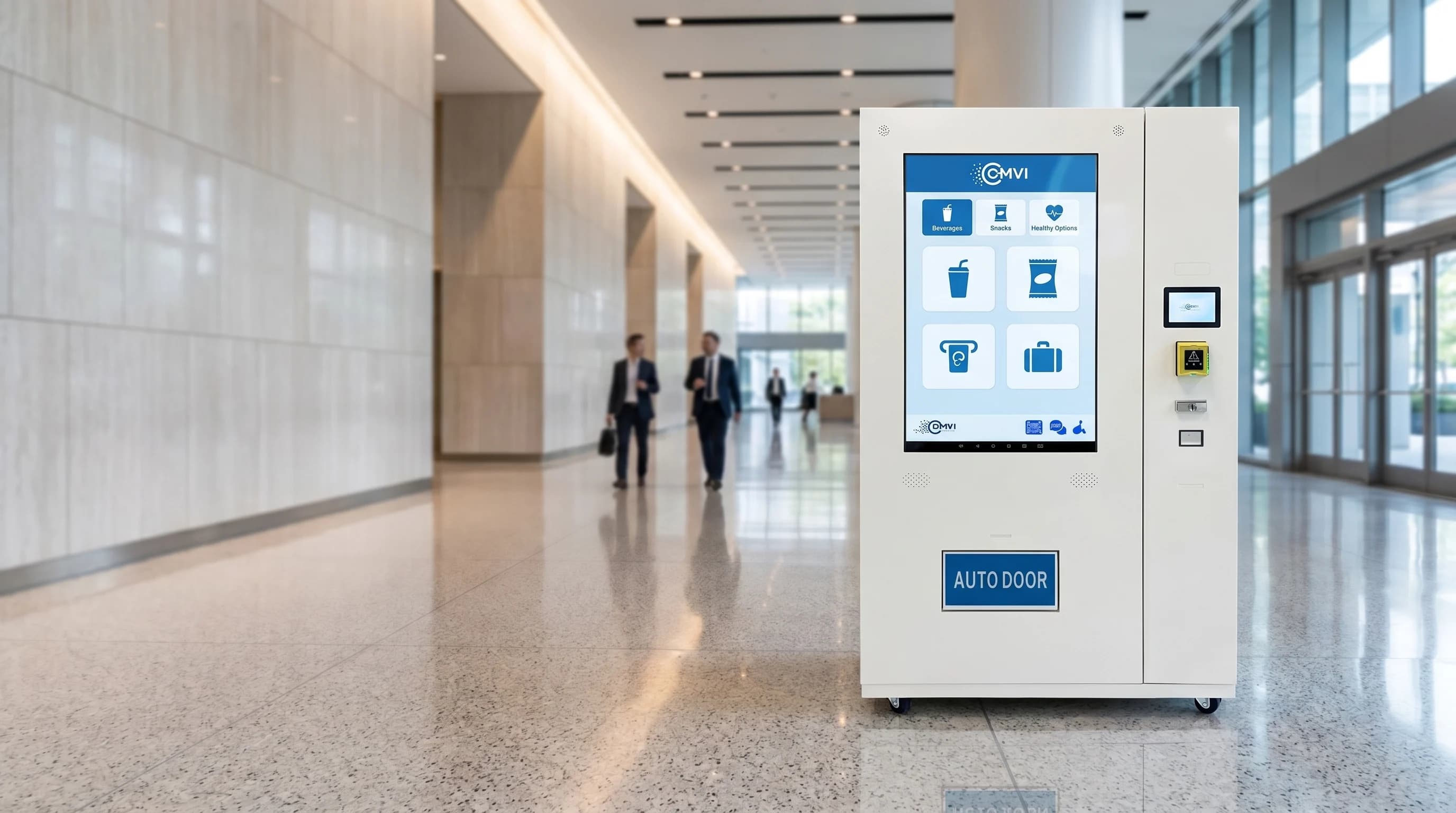
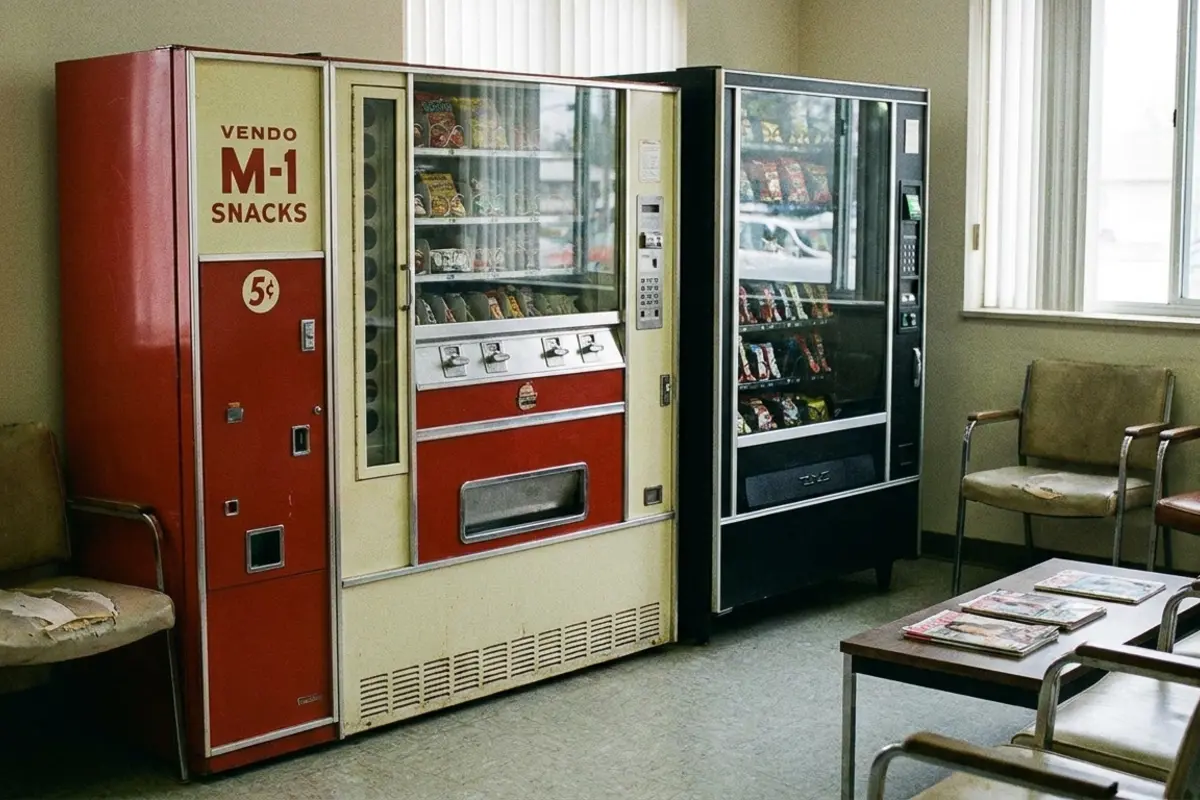
Most people picture a vending machine as a freestanding unit: a large metal cabinet sitting on the floor, taking up floor space, requiring enough clearance around it for customers to approach and retrieve their purchase. That image describes most of the vending machines in the world.
Current DMVI vending machine financing: DMVI no longer offers all-inclusive leases. Standard machine financing is subject to approval, with a 25%–50% machine deposit depending on stock status and the remaining machine balance paid in 12 monthly payments starting 30 days after shipment at 8%–15% interest, based on repayment ability and other approval conditions. The quote confirms the deposit percentage. All applicable upfront costs are due at signing, including the wrap, optional topper, payment terminal, annual software license, shipping, and sales tax. Financing is not guaranteed; DMVI reserves the right to deny financing. A UCC filing applies, and a personal guarantee may be required. See the vending machine financing terms for details.
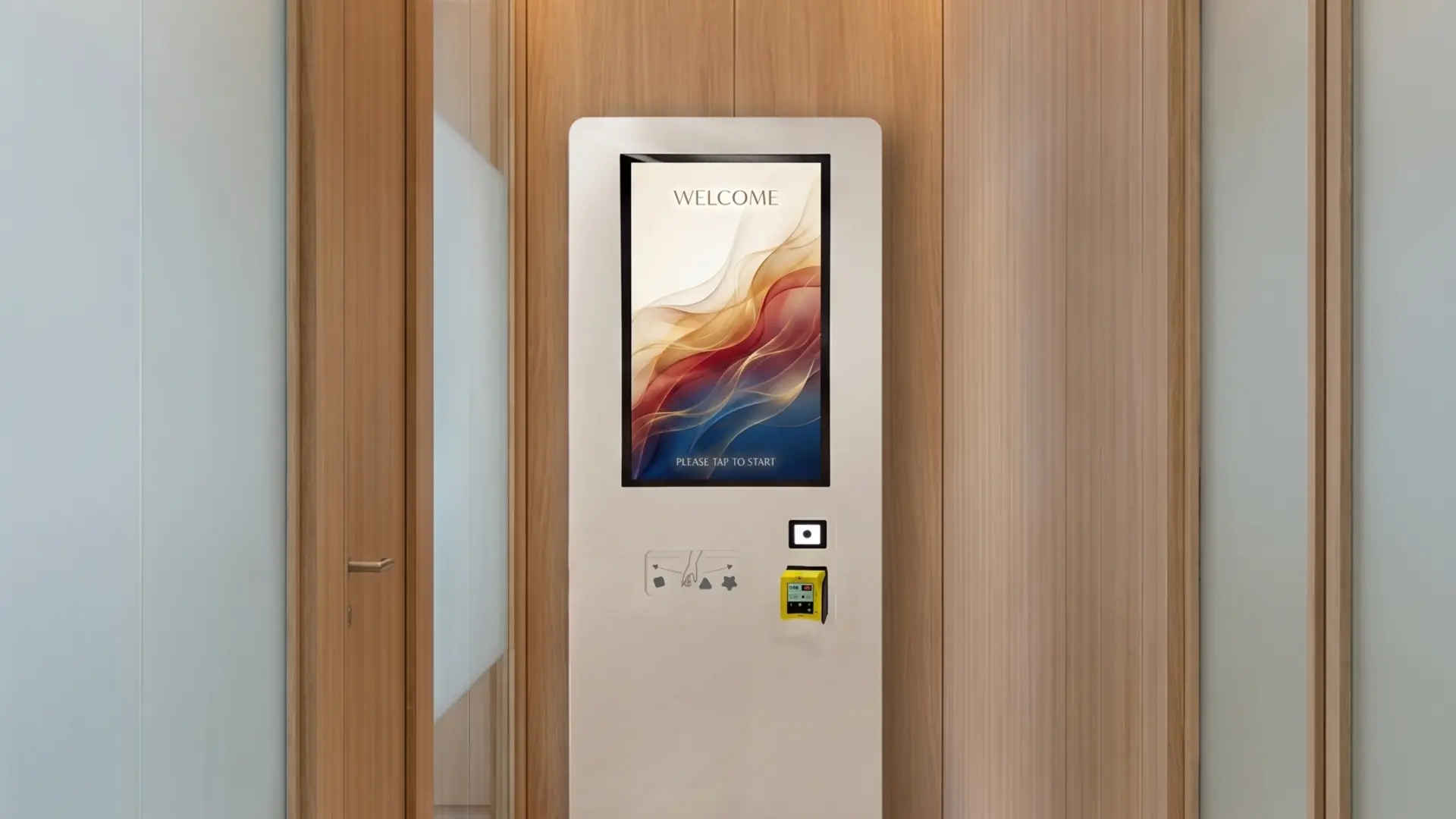
Wall-mounted vending machines are a distinct product category that exists specifically for contexts where a freestanding machine either does not fit physically or does not fit the environment aesthetically. The machine mounts directly to a wall, uses no floor space, and dispenses product to the customer from a wall-level unit rather than from a floor cabinet.
This guide covers what wall-mounted vending machines are, how they are installed, what they can dispense, where they work best, and how they compare to freestanding formats for specific deployment contexts.
What a Wall-Mounted Vending Machine Is
A wall-mounted vending machine is a vending unit designed to be secured to a wall rather than placed on the floor. The machine's mounting system attaches to the wall structure, and the unit operates at a height appropriate for customer access, typically positioned so the touchscreen interface and product retrieval point are at a comfortable height for a standing adult.
Wall-mounted machines are not a simplified or stripped-down version of a freestanding machine. DMVI's Wall-Mounted format includes the same core capabilities as their freestanding lineup: a touchscreen display, Nayax NFC cashless payment hardware (Apple Pay, Google Pay, tap-to-pay), VendingTracker cloud management with live inventory monitoring, and purpose-built dispensing mechanisms appropriate for the product being sold.
The difference is form factor, not capability. A wall-mounted machine takes up zero floor space. It is integrated into the wall surface rather than placed in front of it. In locations where floor space is limited, expensive, or aesthetically important, this distinction is commercially significant.
DMVI's Wall-Mounted machine starts at $4,995, and the Wall-Mounted XL is available at $5,995. DMVI no longer offers all-inclusive leases. Standard machine financing is subject to approval, with a 25%–50% machine deposit depending on stock status and the remaining machine balance paid in 12 monthly payments starting 30 days after shipment at 8%–15% interest, based on repayment ability and other approval conditions.
How Wall-Mounted Vending Machines Are Installed
Installing a wall-mounted vending machine is different from placing a freestanding unit. It requires physical attachment to the wall structure and access to electrical supply at the installation location.
Wall structure assessment. A wall-mounted vending machine carries the weight of the machine plus the product inventory loaded inside it. The wall it mounts to needs to be structurally capable of supporting that combined load at the mounting points. Drywall alone over a standard stud frame may support the mount if the studs are correctly located; masonry or concrete walls provide more reliable load distribution. The installation team assesses the wall structure before mounting.
Mounting hardware. The machine attaches to the wall through mounting hardware rated for the machine's weight and load. DMVI's installation team handles this as part of the deployment process, the operator does not need to source or specify mounting hardware independently.
Electrical access. The machine requires a power connection at the installation location. The electrical supply should be accessible near the intended mounting location. If electrical access is not near the installation point, a licensed electrician may need to extend the circuit before the machine is installed.
Height and clearance. The machine is mounted at a height that positions the touchscreen interface and product retrieval at accessible levels for a standing adult. Adequate clearance in front of the machine for customers to approach and retrieve their purchase is factored into the installation plan.
DMVI handles installation and operator training as part of every machine deployment. The operator does not manage the installation independently. The wall-mounted vending machines business guide covers the format in more depth including revenue ranges and location strategy.
What Products Work in a Wall-Mounted Machine
The wall-mounted format handles the same specialty product categories as DMVI's freestanding machines, with product capacity appropriate for the machine's compact form factor.
Products that work well in the wall-mounted format share the same characteristics as any vending machine deployment: consistent packaging dimensions, structural integrity under dispensing, and price points that support the economics of the deployment location.
Specialty packaged products, trading cards and collectibles in standard sealed packaging, beauty and personal care products in standard retail packaging, supplements and fitness products in consistent packaging formats, small electronics accessories, are all appropriate for the wall-mounted format's channel configuration.
The wall-mounted machine's capacity is lower than DMVI's freestanding M-Series formats. It is appropriate for a focused product assortment rather than maximum variety. Operators who want to offer 30 to 50 different product SKUs from one machine would look at the Option 4 or M-Series formats. Operators who want 8 to 15 focused SKUs in a compact, space-efficient installation are well-served by the wall-mounted format.
The what to sell in a vending machine guide covers product selection across all machine formats. The Pokémon vending machine buyer's guide covers the collectibles category specifically.
Where Wall-Mounted Vending Machines Work Best
The deployment contexts where wall-mounted machines outperform freestanding alternatives are those where floor space is the primary constraint.
Hotel corridors. A narrow corridor cannot accommodate a freestanding vending machine without obstructing the passage. A wall-mounted machine in the same corridor takes up zero floor space and is available to guests at any hour without obstructing movement. The hotel vending machines guide covers the hospitality vending context in detail.
Boutique fitness studios and gym ancillary spaces. A boutique gym with a tight footprint, a spin studio, a yoga studio, a small personal training facility, may not have floor space for a freestanding machine but can mount a unit in the lobby or locker room area. The wall-mounted format enables a product retail point in locations where freestanding retail infrastructure simply does not fit.
Beauty salons, spas, and wellness facilities. Service-based businesses with premium interiors where a large freestanding machine would disrupt the aesthetic can integrate a wall-mounted unit that fits the environment visually while providing automated retail capability.
Medical and clinical waiting areas. Waiting rooms that need to maintain clear floor space for patient movement and wheelchair access can use wall-mounted vending machines to provide product access without floor space compromise.
Retail store interiors. A boutique retailer that wants to add a 24/7 automated retail point for a specific product category, a beauty store with a fragrance sample machine, a sports retailer with a supplement vending point, can install a wall-mounted unit without giving up merchandising floor space.
University dormitory corridors and residence halls. Dormitory hallways are typically narrow. A wall-mounted machine serves the corridor population without obstructing movement through the hall.
Wall-Mounted vs Freestanding: How to Choose
The choice between a wall-mounted and freestanding format comes down to three factors: available space, required product capacity, and the aesthetics of the deployment location.
Available space. If the deployment location has adequate floor space, a large lobby, a dedicated alcove, a break room with room to spare, freestanding formats offer more product capacity and inventory depth. If floor space is limited, the wall-mounted format is often the only practical option.
Product capacity. The wall-mounted format holds fewer SKUs than the Option 4 or M-Series freestanding machines. An operator who needs to stock a wide variety of products across multiple categories should evaluate freestanding formats. An operator who wants a focused assortment of 8 to 15 high-performing products is well-served by the wall-mounted format's capacity.
Aesthetics. A wall-mounted machine integrates into the wall surface more seamlessly than a large freestanding cabinet. In premium environments, luxury hotel corridors, high-end spas, boutique retail interiors, the wall-mounted format is often the appropriate choice for aesthetic reasons independent of space constraints.
The custom vending machines vs off-the-shelf guide covers the broader machine format selection framework, including how to evaluate different configurations for specific deployment contexts.
Revenue Expectations for Wall-Mounted Vending
DMVI's confirmed field data shows Wall-Mounted machine operators generating $800 to $3,000 per month in gross revenue at strong placement locations. The specific outcome at any deployment depends on foot traffic, product selection, price points, and demographic alignment between the product and the location's customer population.
Evaluate wall-mounted machine economics using realistic transaction volumes, product margins, venue commission, restocking, software, and the actual approved monthly financing payment. A focused assortment can suit a compact location, but the machine must cover all costs rather than an obsolete advertised payment.
The vending machine business profitability guide covers the economic framework for evaluating wall-mounted and freestanding machine deployments.
The Visual Impact of a Wall-Mounted Machine
One practical advantage of wall-mounted vending machines that operators in premium deployment contexts consistently note is the visual integration with the surrounding environment. A freestanding vending cabinet placed in a hotel corridor or a boutique spa waiting area reads as an industrial object dropped into a curated space. A wall-mounted unit, sized appropriately and positioned correctly, reads as part of the wall, integrated retail rather than an afterthought.
This distinction matters for the venue relationships that operators need to secure strong placements. A boutique hotel that has invested significantly in the aesthetic of its corridors is not going to approve a large freestanding cabinet that competes with the design. The same hotel may readily approve a wall-mounted machine that fits the space visually. The machine that gets the placement is the one that the venue can say yes to.
DMVI's machines include a touchscreen interface that displays the operator's product assortment. Contact DMVI directly to discuss branding and customization options for the specific machine format being evaluated. The vending machine showcase design guide covers how visual presentation, including the touchscreen interface and the machine's external appearance, affects both venue approval and customer conversion rates.
What the Revenue Range Means in Practice
DMVI's confirmed field data for the Wall-Mounted format shows operators generating $800 to $3,000 per month in gross revenue at strong locations. That range reflects the variation across different products, locations, and customer demographics, not a guarantee for any specific deployment.
The lower end of that range reflects a machine at a moderate-traffic location with a product assortment that is reasonably matched to the demographic but not optimally tuned. The upper end reflects a machine at a high-traffic premium location with a product that is well-matched to the demographic and priced at a level that captures the willingness to pay in that context.
For a financed wall-mounted machine, calculate breakeven from the approved payment schedule and the location's complete operating costs. Track recovery of the deposit and signing costs separately. Neither a small number of daily sales nor positive cash flow is guaranteed.
This is also why the wall-mounted format is a practical starting point for first-time operators who want to deploy at a premium venue, generate real data about their product and location, and make the second machine decision based on that evidence. Compare the full upfront and monthly costs in the approved quote for each format; a lower machine price does not by itself establish the risk or profitability of a deployment.
Pairing Wall-Mounted With Freestanding in the Same Venue
Some operators deploy both formats within the same venue: a wall-mounted machine in one high-traffic corridor and a larger freestanding machine in a lobby or common area. This approach serves different customer moments within the same property while managing floor space efficiently.
In a hotel property, for example, a wall-mounted machine on the guest room floor corridor captures the late-night convenience purchase from a guest who wants something without going to the lobby. A larger freestanding machine in the lobby serves a different customer, the guest checking in, the visitor in the lobby, the person waiting for a meeting, with more product variety and higher visual impact.
VendingTracker manages both machines in the same dashboard. Inventory alerts, sales data, and machine health monitoring are visible for both units from a single operator account. The administrative complexity of managing two formats at one venue is minimal because the management infrastructure is the same.
Evaluating Your Wall Honestly Before Committing
The most important preparation step for a wall-mounted vending machine deployment is an honest assessment of the wall. Not every wall in a candidate location is suitable, and discovering that after ordering a machine creates a timeline and logistics problem that is avoidable.
The things to confirm before committing to a wall-mounted installation: Is the wall load-bearing or partition? What is the wall's surface material, drywall, plaster, masonry, concrete? Where are the studs located, and are they at standard spacing? Is there an electrical outlet near the intended mounting location, or will electrical work be needed? Are there any plumbing, HVAC ducts, or conduit runs in the wall at the intended mounting height that would conflict with the mount hardware?
A general contractor or handyperson can answer all of these questions in a brief assessment of the space. This is worth doing before the machine order is placed, not after. DMVI's installation team handles the mounting process, but they need a wall that is appropriate for mounting when they arrive. Discovering a problem during installation creates delays and costs that the pre-installation assessment prevents.
Negotiating Placement for a Wall-Mounted Machine
The wall-mounted format has a practical advantage in venue placement negotiations that operators in premium locations have found useful: the machine's zero floor-space footprint removes one of the most common objections venue managers raise when approached about a vending machine installation.
A boutique hotel, a high-end spa, or a premium fitness studio that would decline a large freestanding cabinet may readily approve a wall-mounted machine that uses no floor space and integrates visually with the wall. The question shifts from "where would we put this thing" to "where on the wall would make the most sense."
That conversation is easier than the freestanding placement conversation, and the result is access to premium venues that would be closed to a larger machine format. For operators specifically targeting premium hospitality and wellness properties, the wall-mounted format is not just a space-efficient option. It is often the machine format that gets the venue to say yes.
Conclusion
Wall-mounted vending machines are a real and commercially viable product category, not a niche modification of a standard machine. They are engineered for floor-space-constrained deployment contexts, include the same smart technology as DMVI's freestanding lineup, and generate strong per-machine revenue at the right locations with the right products. The format works where a freestanding machine cannot fit, and in some premium environments, where a freestanding machine would fit but a wall-mounted unit is the better aesthetic choice.
DMVI's Wall-Mounted machine starts at $4,995. Start the conversation at digitalmediavending.com.
Sources
Need vending without giving up floor space?
DMVI can help compare wall-mounted, slimline, and compact machine formats for constrained locations.