Hotel Vending Machines and Unattended Retail: The 24-Hour Revenue Opportunity for Hospitality Businesses
Every hotel has a version of the same problem. The restaurant closes at 10pm. The gift shop locks at 9pm. The minibar is expensive, manually tracked, and disliked by guests and housekeeping alike. And yet guests arrive at midnight, need a bottle of water or a snack at 2am, want to buy a phone charger before an early flight, or need a personal care item they forgot.
Current DMVI vending machine financing: DMVI financing is subject to approval, with a 25%–50% machine deposit depending on stock status and the remaining machine balance paid in 12 monthly payments at 8% simple interest. The quote confirms the deposit percentage. All applicable upfront costs are due at signing, including the wrap, optional topper, payment terminal, first-year software subscription, shipping, and sales tax. Financing is not guaranteed; DMVI reserves the right to deny financing. A UCC filing applies, and a personal guarantee may be required. See the vending machine financing terms for details.
The choice for most properties has historically been between an expensive staffed option and nothing. The hotel vending machine and, more broadly, automated retail for hospitality changes that equation. It generates revenue from hotel guests who have need and willingness to pay, operates 24 hours without staff, requires no inventory staff or cashier, and provides a service guests actually want.
This guide is written for hotel general managers, revenue managers, and hospitality operations teams evaluating what automated retail machines can do for a property, which formats work in which areas of a hotel, what products perform best, and what hospitality operators need from their hardware and software.
Why Hotels Need Automated Retail
The case for hotel vending machines and unattended retail is built on a specific set of guest behaviors that do not change with trends or seasonality.
Guests arrive at all hours. A late-arriving business traveler, a leisure guest who missed dinner, a family checking in after a long drive, all of them have immediate needs that the hotel's staffed retail channels cannot serve at 11pm, midnight, or 3am. The hotel that has an automated retail machine in its lobby or corridor converts those needs into revenue. The hotel that does not sends the guest to a gas station or a 24-hour convenience store nearby.
Guests prefer convenience to savings. Hotel guests consistently demonstrate willingness to pay convenience pricing, above pharmacy or grocery store retail, for immediate access to items they need. A business traveler who forgot their phone charger will pay $25 or more for immediate access at the property rather than hunting down a nearby electronics retailer. A guest who wants a snack at midnight will pay $6 to $8 for it from an in-lobby machine rather than driving or walking for a cheaper option.
Staffed retail has hard limits. A hotel gift shop generating meaningful revenue requires a trained employee, covers only certain hours, and occupies dedicated floor space with significant overhead. For many properties, particularly limited-service, select-service, and smaller boutique hotels, a fully staffed retail operation does not pencil out. Unattended retail does, because the machine operates without labor cost.
Additional revenue with limited overhead. According to Kande VendTech's 2024 vending industry data, 71% of US vending transactions were cashless in 2024, and the average cashless vending transaction is 37% higher than the equivalent cash transaction. A hotel vending machine or automated retail installation capturing 20 to 50 transactions per day at $8 to $20 per transaction produces $160 to $1,000 per day in gross revenue without a staff member.
What Products Sell Best in Hotel Automated Retail
Hotel guest purchase behavior is well-documented from decades of minibar and gift shop data, and it applies directly to automated retail machine product selection. The products that sell consistently in hotel unattended retail share common characteristics: they address an immediate need, they are priced at a premium the guest accepts willingly, and they are available nowhere else on the property at that hour.
Personal care essentials. Shampoo, conditioner, body wash, toothbrush, toothpaste, deodorant, and similar travel essentials are the highest-velocity category in hotel automated retail. Guests who packed poorly, had a toiletry confiscated at airport security, or simply ran out drive significant daily transaction volume in this category. Travel-size packaging fits vending machine channels well and supports premium per-unit pricing.
Snacks and specialty food. Late-night food is a near-universal guest need. The guest who missed dinner, the business traveler who worked past the restaurant's closing time, the child in a family room who needs something to eat at 9pm, all represent purchasers for snacks, protein bars, and specialty food items stocked in a lobby or corridor machine.
Beverages. Bottled water, energy drinks, and premium beverages are high-frequency, high-margin items in hotel automated retail. A guest who needs water for their medication, wants an energy drink before an early meeting, or simply wants to avoid the $8 bottle from the minibar will purchase from a machine in the corridor.
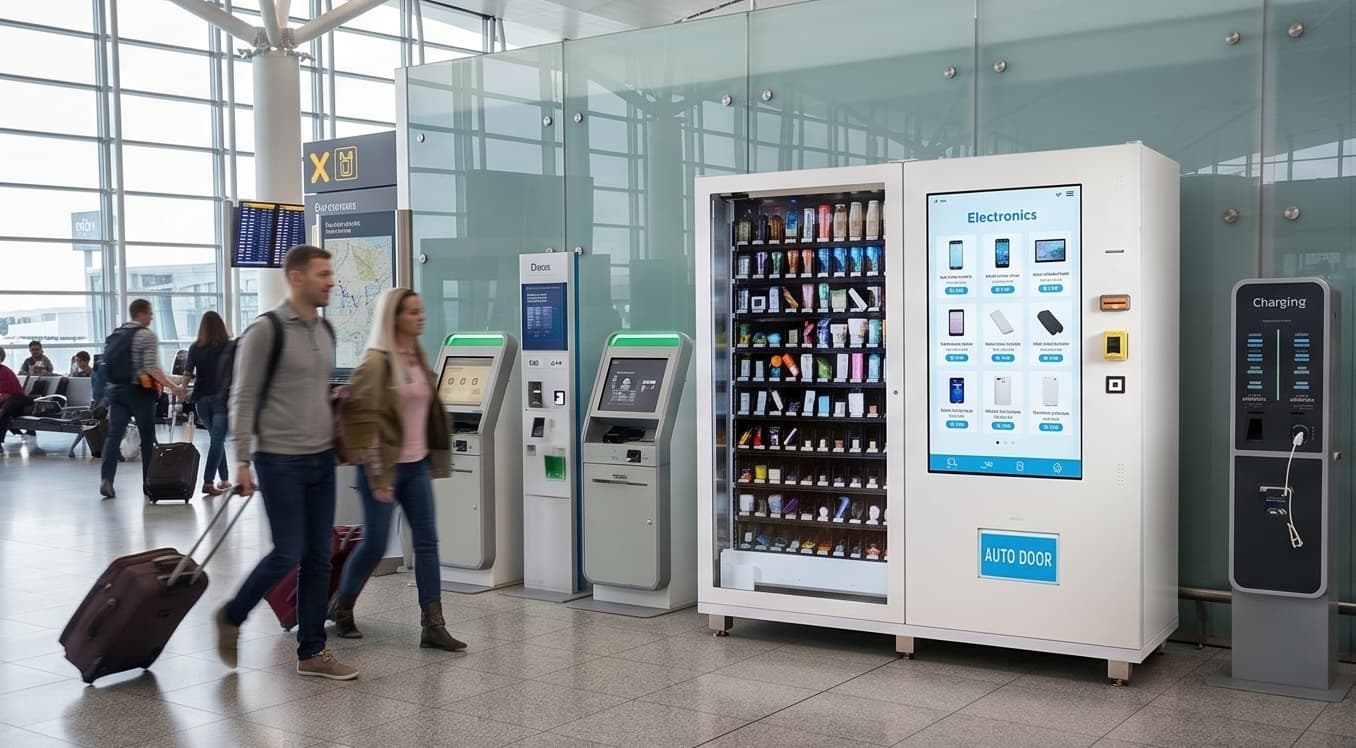
Electronics and accessories. Phone chargers, earbuds, charging cables, and tech accessories are disproportionately high-value purchases in hotel environments. A guest who left their charger at home has no convenient alternative. Automated retail machines with electronics capability, requiring dispensing systems appropriate for the packaging format, serve this category effectively. Average transaction values for electronics accessories run $15 to $35 or more.
Health and wellness products. Pain relievers, antacids, allergy medication (where permitted), and similar OTC health items address specific guest needs at specific moments. A guest with a headache at 11pm will pay $8 for a two-pack of ibuprofen from a lobby machine. A guest with an upset stomach will pay $12 for antacids. These are high-margin, low-velocity items that earn their place in any hotel automated retail assortment.
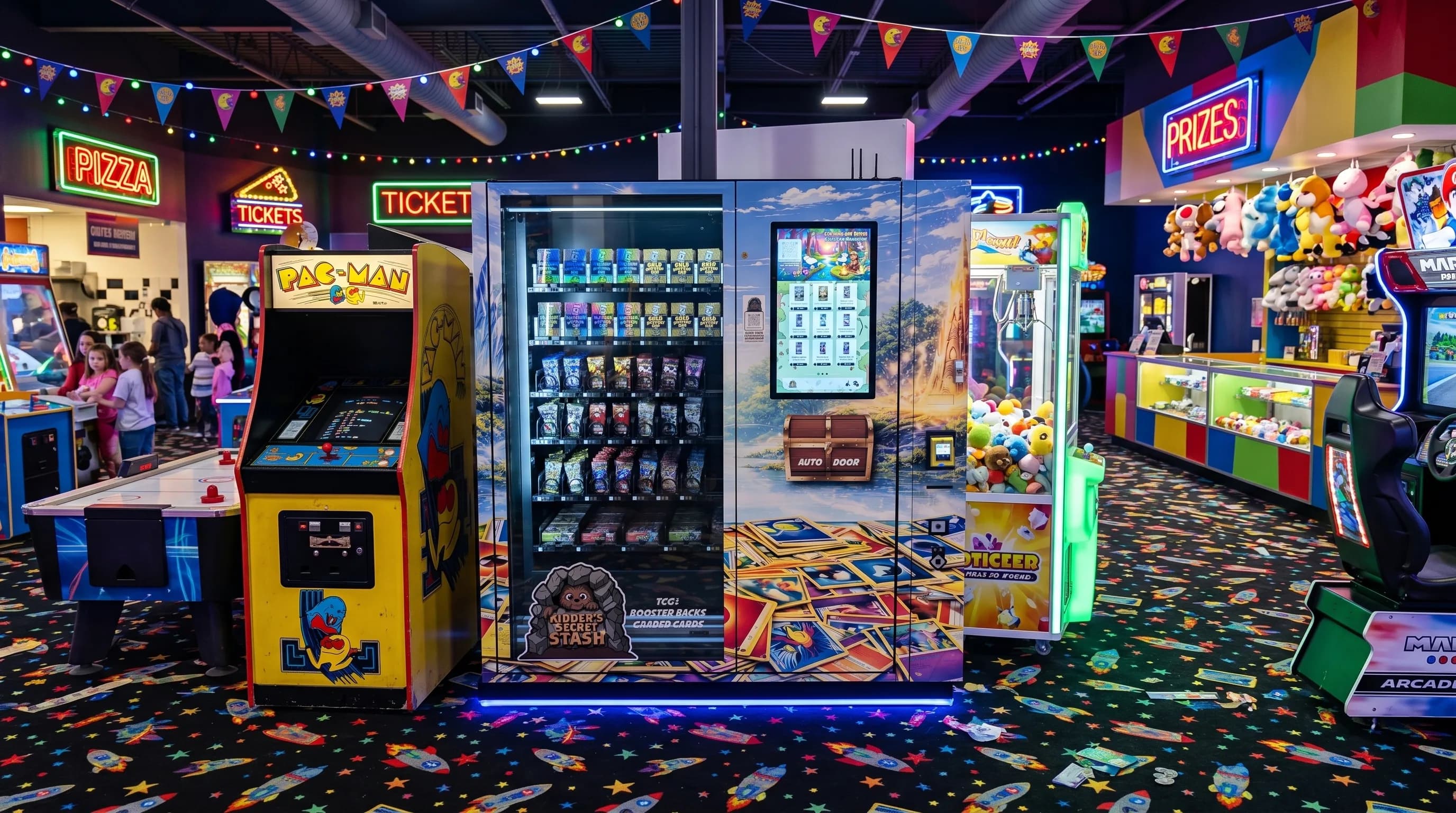
Specialty and branded amenities. Boutique and lifestyle hotel properties increasingly use automated retail machines to offer branded merchandise, locally sourced specialty items, and curated amenity products as extensions of the property's identity. A machine stocked with locally made artisan products, property-branded merchandise, or premium regional food items creates a retail experience that reinforces the hotel's positioning.
Where in a Hotel Do Automated Retail Machines Perform Best?
Placement strategy within a hotel property matters as much as product strategy. Not all hotel locations produce equivalent vending machine revenue, and the machine format appropriate for each location type differs.
Lobby and check-in area. The lobby is the highest-traffic location in any hotel. Every guest passes through it on arrival and departure. A machine placed in the lobby serves arriving guests who need immediate essentials and departing guests who want a last purchase before heading to the airport. Larger format machines. DMVI's Smart VM or M-Series configurations, are appropriate for lobby placements where visual impact and product capacity both matter.
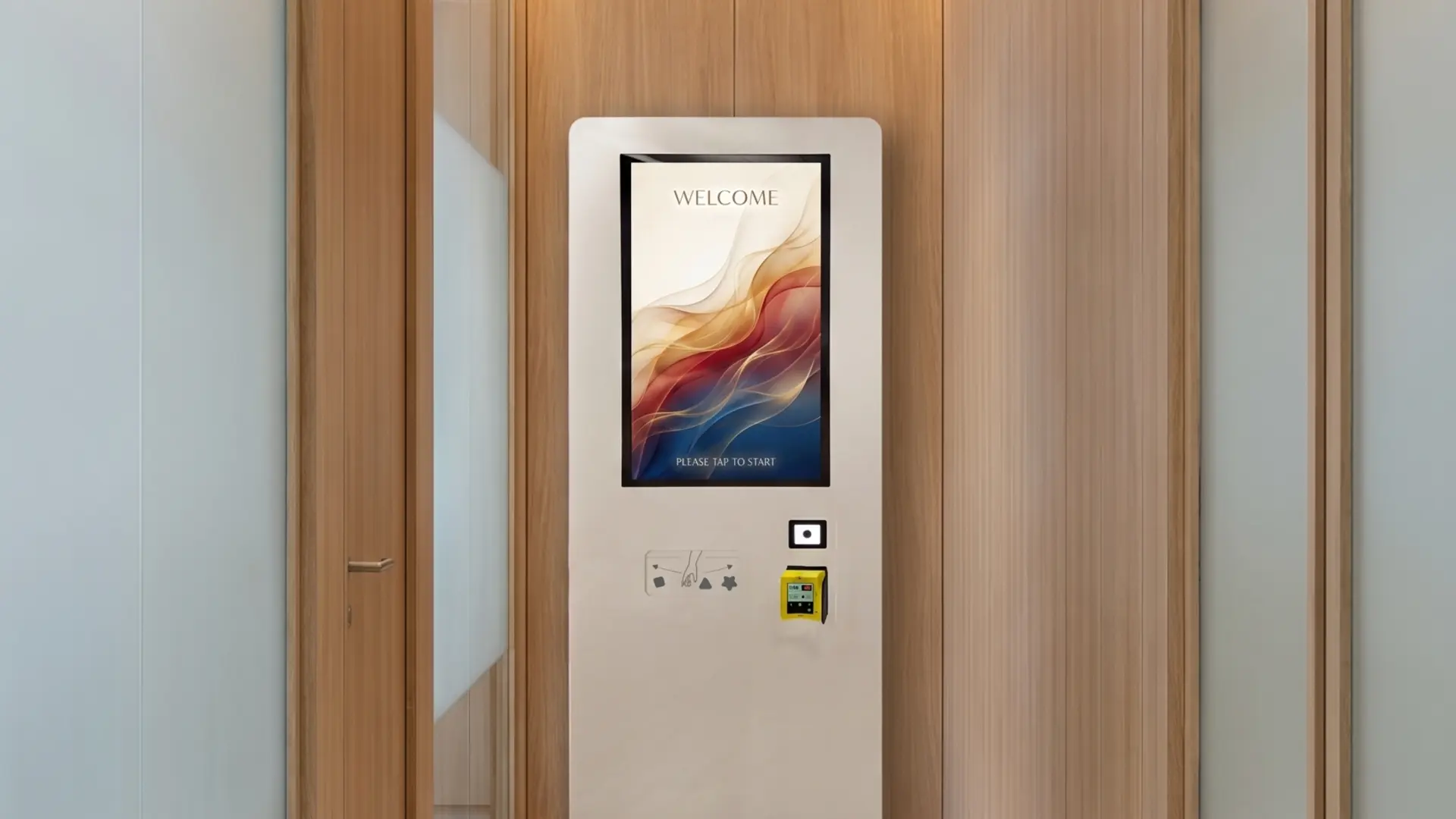
Guest room floor corridors. Corridor placement catches guests at the moment they realize they need something without having to make a trip to the lobby. A wall-mounted or compact Smart VM machine on a guest room floor serves the midnight water run, the forgotten toothbrush at 11pm, and the early-morning protein bar without requiring the guest to change out of pajamas. DMVI's wall-mounted vending machine is specifically designed for this deployment context, it occupies zero floor space, mounts flush to the corridor wall, and maintains the property aesthetic.
Pool and fitness center areas. Hotel fitness centers and pool areas create specific purchase occasions: guests finishing a workout who need a protein supplement, guests coming off the pool deck who want sunscreen or a towel, guests in swimwear who want a cold beverage. Automated retail machines adjacent to these areas capture demand that the fitness center itself cannot serve.
Business center and conference areas. Business hotels with conference facilities serve a specific population of meeting attendees and business travelers who make purchases at predictable times: early morning before sessions, during breaks, and after the conference day ends. Machines in business center areas can stock snacks, energy drinks, phone accessories, and office supplies targeted to this population.
Parking garage and entry points. Hotels with significant drive-to-stay populations benefit from machines positioned near parking entrances or garage elevator lobbies, capturing purchases from guests arriving by car who are loading or unloading.
The Right Machine Format for Different Hotel Contexts
No single machine format is optimal for every hotel location. The property type, the corridor width, the guest demographic, and the product category all inform which automated retail format makes sense where.
Wall-mounted vending machines are the right format for guest room corridors, fitness center entrances, and any location where floor space is not available or where a freestanding machine would obstruct traffic flow. Digital Media Vending International's wall-mounted units mount directly to the corridor wall, include a 21-inch or larger touchscreen, and run VendingTracker software for remote management. They are the most space-efficient format and the appropriate entry point for a first hotel deployment.
Smart VM mid-size cabinets serve hotel lobbies, pool areas, and business center locations where moderate to higher product capacity is needed and a freestanding installation is appropriate. Larger screen sizes and greater SKU capacity make them more visible and commercially capable than a wall-mounted unit.
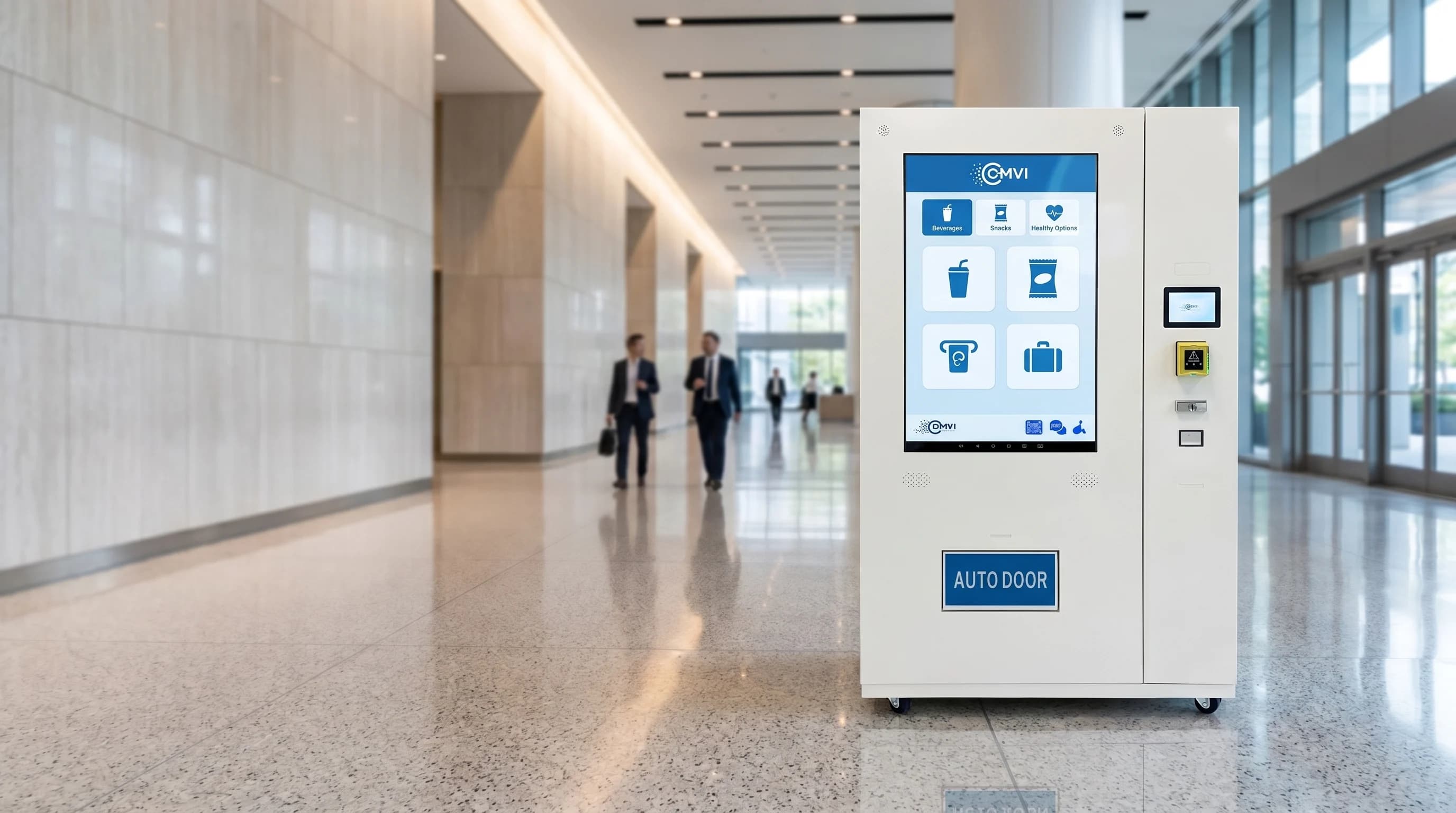
M-Series large-format machines are appropriate for high-traffic lobby deployments at full-service or resort properties where the machine functions as a prominent retail installation rather than a convenience amenity. The largest screens, up to 50 inches, create a visual presence that stops foot traffic and drives impulse purchases across a wide product range.
Smart lockers serve hotels that want to offer pre-ordered product pickup, secure electronics lending, or controlled-access amenity distribution, a different use case from standard vending machine retail but served by the same VendingTracker software platform.
What Hotel Operators Need From Automated Retail Hardware and Software
Evaluating automated retail machines for a hotel property requires attention to a different set of priorities than a standalone vending operator would apply.
Visual and aesthetic compatibility. Hotel properties invest significantly in their physical environment and brand experience. A vending machine that looks like a break room appliance is not appropriate for a boutique hotel lobby. DMVI machines with large clear windows, large touchscreens, and configurable exterior graphics integrate with a property's visual standards rather than contradicting them.
Remote management without on-property technical staff. Most hotels do not have vending machine technicians on staff. The automated retail machine must be manageable by general property management staff using straightforward software. VendingTracker provides live inventory monitoring, machine health alerts, and remote pricing control through a browser interface that does not require technical expertise to operate.
Restocking integration with existing operations. Hotel properties prefer that automated retail machines can be restocked by existing housekeeping or operations staff, or by a third-party supplier, without requiring specialized technical knowledge. DMVI machines are designed for operator-managed restocking, with VendingTracker's inventory alerts indicating when and which products need replenishment.
Cashless payment as a baseline. Hotel guests overwhelmingly pay without cash. NFC contactless, mobile wallet, and card tap payment is the expected standard in hospitality automated retail. All DMVI machines include these payment capabilities.
US-based support for a managed service expectation. Hotel operators expect service responses measured in hours, not days. US-based manufacturing, installation support, and technical assistance from DMVI match the managed service expectation of hospitality operations.
Digital Media Vending International for Hotel and Hospitality Automated Retail
Digital Media Vending International (DMVI) is a Sebastopol, California-based custom vending machine manufacturer, Made in California certified, with more than 2,000 deployments across 22 countries since 2009.
DMVI builds automated retail machines for hospitality deployments across the full property footprint: wall-mounted units for guest room corridors, Smart VM configurations for lobby and pool areas, and M-Series large-format machines for resort and full-service hotel lobby installations. Every machine includes VendingTracker software, live inventory by SKU, daily sales reporting, pricing controls, planogram management, and machine health monitoring, all accessible from a browser without visiting the machine.
Hotel properties evaluating their first machine typically start with a wall-mounted unit in a guest room corridor or a Smart VM in the lobby, validate the product mix and revenue performance over three to six months using VendingTracker data, and expand to additional locations as the data confirms which products and placements perform.
Machines start at approximately $4,995. Installation, machine configuration to the property's product specifications, and operator training are included.
Visit digitalmediavending.com to discuss automated retail machine options for your property.
Calculating the Revenue Case for Hotel Automated Retail
Property managers evaluating automated retail machines for their hotel need a revenue model, not just a concept. Here is a framework for estimating the revenue contribution of a hotel vending machine installation before committing to hardware.
Step 1: Estimate daily transaction volume. Start with daily occupied room count. For a property averaging 150 occupied rooms per night, assume 10 to 25% of guests make at least one automated retail purchase during their stay, based on industry data from similar deployments. That yields 15 to 38 daily transactions from guest purchases. Add transactions from hotel staff during shift breaks and any walk-in traffic from adjacent venues for a total daily transaction estimate.
Step 2: Estimate average transaction value. Transaction value depends entirely on product mix. A lobby machine stocked with personal care, snacks, beverages, and phone accessories at $5 to $25 per item produces average transaction values of $10 to $18. A machine stocked only with $2 water bottles produces a very different average. Build your product assortment first, then calculate the realistic average.
Step 3: Calculate gross monthly revenue. Multiply daily transaction estimate by average transaction value by 30 days. A machine generating 25 daily transactions at $12 average produces $9,000 per month in gross revenue.
Step 4: Apply product cost. Subtract product cost, typically 40 to 55% of retail price depending on the category. At 50% product cost, the $9,000 gross machine produces $4,500 in gross margin.
Step 5: Apply any commission or placement fee. Hotel properties that charge the machine operator a placement fee, either a flat monthly fee or a percentage of gross revenue, would deduct this from gross margin. If the hotel is operating the machine directly, this step is internal accounting rather than an external cost.
Step 6: Subtract machine financing and restocking costs. Use the monthly payment from your approved financing agreement. Restocking labor, estimated from the staff hours required to visit and restock the machine, is the remaining variable cost.
For an illustrative machine generating $9,000 gross per month with $4,500 gross margin and $200 in monthly restocking labor, $4,300 remains before financing, venue commission, and overhead. Subtract the actual quoted monthly payment and all other costs to estimate net contribution; this is not a financing quote or a guaranteed return.
The model should be run conservatively. Use the low end of the transaction volume range for initial projections and validate against actual VendingTracker data in the first 60 to 90 days of operation. Adjustment is straightforward: product mix, pricing, and restocking frequency can all be tuned using VendingTracker without any hardware modification.
Conclusion
Hotel vending machines and automated retail installations are not a legacy afterthought. They are a genuine revenue channel that matches what hotel guests actually need, at the hours they need it, without the overhead of staffed retail.
The hospitality properties generating the most from automated retail treat it as a managed revenue channel: deliberate product selection, placement that captures guest traffic at the right moment, and software visibility into what is selling and what is not. Digital Media Vending International builds the hardware and software for this approach, machines starting at $4,995, US-based support, and VendingTracker managing the operation remotely.
Start the conversation at digitalmediavending.com.
Sources
- Digital Media Vending International — Official Website
- Kande VendTech — Vending Machine Industry Statistics 2024
- Statista — US Hotel and Lodging Industry
- IBISWorld — Hotels and Motels in the US
- GetBiopak — The Ultimate Guide to the Vending Machine Business in 2026
- American Hotel and Lodging Association
Planning hotel vending or unattended retail?
DMVI builds hotel-ready vending machines, wall-mounted units, smart lockers, and micro market formats managed through VendingTracker.