New vs Used Vending Machine: What the True Cost of Buying Second-Hand Actually Looks Like
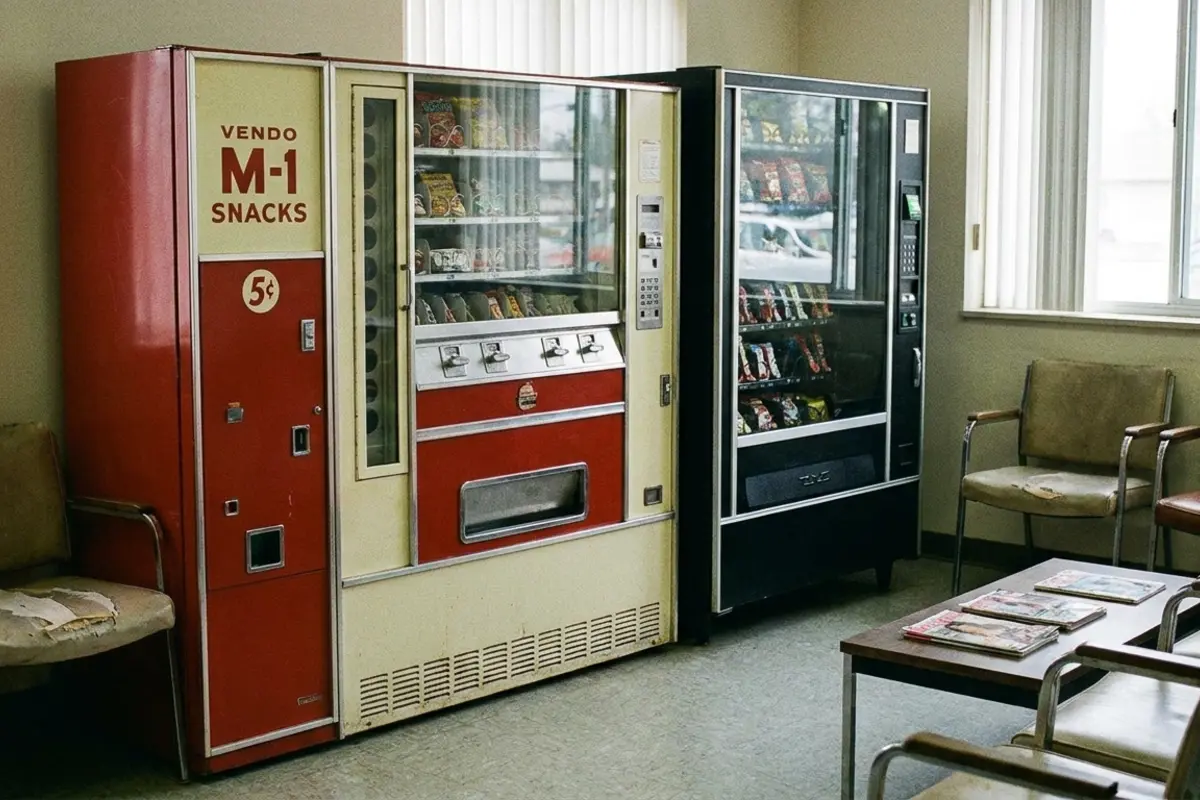
The most common first reaction a new vending machine operator has when seeing the price of a new smart vending machine is to search for a used one. The logic is intuitive: the machine is the machine, a used one is cheaper, and the savings can go into product inventory or a second machine. This logic produces a category of vending machine operator that consistently underperforms the market.
Current DMVI vending machine financing: DMVI no longer offers all-inclusive leases. Standard machine financing is subject to approval, with a 25%–50% machine deposit depending on stock status and the remaining machine balance paid in 12 monthly payments starting 30 days after shipment at 8%–15% interest, based on repayment ability and other approval conditions. The quote confirms the deposit percentage. All applicable upfront costs are due at signing, including the wrap, optional topper, payment terminal, annual software license, shipping, and sales tax. Financing is not guaranteed; DMVI reserves the right to deny financing. A UCC filing applies, and a personal guarantee may be required. See the vending machine financing terms for details.
The used vending machine market is not a bad market. There are legitimate used machines available at prices well below new, and there are scenarios where buying used makes financial sense. But the price on the used machine listing is not the cost of the used machine. The cost includes everything the listing does not mention: the payment hardware that cannot accept the way 71% of vending customers want to pay, the software that does not exist, the warranty that expired three owners ago, the refurbishment costs that the previous owner decided were someone else's problem, and the revenue lost while all of these gaps are identified and addressed.
This guide walks through every element of the new versus used vending machine comparison that purchase price alone misses. The goal is not to argue that used machines are always the wrong choice, it is to ensure that buyers who are considering a used machine are comparing total cost of ownership, not just purchase price.
What Used Vending Machine Sellers Do Not Tell You
The secondary market for vending machines includes machines at every point on the quality spectrum: recently decommissioned units from operators who upgraded, refurbished machines from dedicated resellers, machines pulled from poorly maintained routes, and overseas-manufactured cabinets that were never suited to the specialty vending use case in the first place.
A listing that says "used vending machine, good condition, $1,500" does not tell you:
Whether the machine has cashless payment hardware, and if so, whether it is current enough to support NFC contactless payment.
Whether the machine has any cloud connectivity or telemetry, and if not, what it would cost to add it.
What the maintenance history is, whether it has been serviced regularly or ignored between operators.
Why the previous operator is selling it. Machines that are sold because the operator is exiting the business in good standing are very different from machines sold because the location failed or the machine has persistent problems.
Whether the machine was manufactured in the US with accessible parts and support infrastructure, or imported with limited domestic service capacity.
Whether the dispensing mechanism is appropriate for the product the buyer wants to sell, a coil system sized for chips will not reliably dispense specialty products.
These are not minor details. Each one has a dollar cost associated with it, and collectively they determine whether the "cheaper" used machine is actually cheaper over any meaningful operating period.
The Cashless Payment Problem
The single most commercially significant issue with older vending machines is outdated payment hardware. According to Kande VendTech's 2024 vending industry data, 71% of all US vending transactions were cashless in 2024, with cashless customers spending an average of 37% more per transaction than cash customers. A vending machine that cannot process contactless payments is leaving the majority of its potential transactions uncaptured.
Many used vending machines available on the secondary market have one of three payment hardware configurations:
Cash only. The machine accepts coins and dollar bills and nothing else. In 2026, a cash-only vending machine at any location with a non-cash-dominant customer base, students, hotel guests, gym members, gaming venue attendees, fails to capture the majority of transactions. The customers are there. The payment method is not.
Magnetic stripe card only. An older generation of cashless payment hardware accepted magnetic stripe card swipes. This excludes NFC contactless, tap-to-pay, Apple Pay, and Google Pay, the payment methods that most customers use by default in 2026. A machine with mag-stripe-only card payment is partially cashless but excludes the fastest-growing and most frequently used payment methods.
Outdated NFC hardware. Some machines have older NFC-capable readers that are not certified for current contactless payment standards or that do not support mobile wallets. These may process some contactless transactions while failing on others.
Adding current cashless payment hardware. Nayax, which DMVI includes as standard on all new machines, to an existing machine costs $300 to $800 for the hardware plus installation, assuming the machine's hardware and software architecture can support the integration. Some older machines cannot integrate current payment hardware without significant technical modification.
New DMVI machines ship with Nayax cashless payment hardware as standard. The payment infrastructure is configured and tested before the machine leaves the factory. There is no upgrade, no separate purchase, no integration complexity for the operator to navigate.
The Software and Telemetry Gap
A smart vending machine, the category that commands the highest rents at premium locations, attracts the highest-value deployments, and generates the data that operators need to manage a profitable route, is defined by its cloud connectivity and management software. Without telemetry, a machine is a mechanical appliance that the operator visits to check.
Most used vending machines on the secondary market have one of the following software situations:
No software at all. Legacy machines with no cloud connectivity report nothing. Inventory is checked by physical inspection. Sales are inferred from product count, not transaction data. Machine health is unknown until something fails. Managing a route of even three or four of these machines is fundamentally different from managing three or four machines with VendingTracker, it is a hands-on operation rather than a data-driven one.
Proprietary legacy software. Some machines have manufacturer-specific software that may have been discontinued, requires subscription fees for continued access, or provides limited functionality compared to current platforms. A machine locked into a discontinued software platform provides diminishing operational value over time.
Outdated telemetry hardware. Machines with older IoT hardware may have connectivity standards (2G, 3G cellular) that telecommunications providers have deprecated in parts of the US, rendering the telemetry non-functional in areas where those networks no longer operate.
Adding cloud connectivity and management software to a machine that does not have it is not a trivial modification. It requires compatible hardware, software integration, and ongoing subscription costs. For machines that cannot support current telemetry standards, the modification may not be technically feasible without replacing the machine's core hardware.
New DMVI machines ship with VendingTracker included, no additional software purchase, no integration project, no subscription negotiation. The platform is configured at installation and operational from the first transaction.
Warranty, Support, and the Cost of the Unknown
A new vending machine from a US manufacturer comes with a warranty period and access to the manufacturer's technical support. A used vending machine comes with neither.
The warranty on a new DMVI machine covers manufacturing defects and hardware issues that arise during the warranty period. For an operator whose machine is generating revenue from day one, the warranty is an insurance policy against equipment failures that would otherwise require out-of-pocket repair costs during the period when the machine's revenue stream is being established.
The support relationship with a US manufacturer is the more durable long-term value. When a new DMVI machine needs service, a mechanical issue flagged by VendingTracker, a payment hardware question, a telemetry configuration problem, the operator calls California-based DMVI support. The technician knows the machine's specifications, has access to appropriate parts, and can diagnose issues remotely through VendingTracker's telemetry data.
A used machine's support relationship is with whoever the operator can find to service it. For a US-manufactured machine from a reputable manufacturer, an independent service technician familiar with the brand may be available. For an overseas-manufactured machine with limited domestic service infrastructure, finding parts and service is significantly more difficult. The cost of a repair that should take two hours and $200 in parts can become a week of downtime and $800 in service fees when the parts are not domestically available and the technician is not familiar with the machine.
The Total Cost of Ownership Calculation
Comparing a used vending machine to a new one requires building a 24 to 36 month total cost of ownership model rather than comparing purchase prices.
Used machine scenario (illustrative):
-
Purchase price: $1,500
-
Cashless payment hardware upgrade: $500
-
Refurbishment and mechanical check: $300
-
Software/telemetry subscription (if applicable): $200/year = $600 over 3 years
-
Lost revenue during setup and troubleshooting (estimated 2 weeks): varies by expected revenue
-
Repair costs over 3 years (unknown history, no warranty): unknown but higher than new
-
No manufacturer support for product-specific configuration
Total 3-year cash outlay on equipment: $2,900+ before repair costs
New DMVI Wall-Mounted machine scenario:
-
Machine purchase price: $4,995
-
Financing cash flow: the quoted 25%–50% machine deposit and all upfront costs at signing, followed by 12 monthly payments starting 30 days after shipment on the remaining balance at 8%–15% interest, based on repayment ability and other approval conditions, subject to approval
-
First-year VendingTracker software subscription: paid at signing as an upfront cost
-
Payment terminal: paid at signing as an upfront cost
-
Installation and training: included
-
California-based manufacturer support: included
-
Warranty coverage: included
-
No surprise refurbishment costs
Total 3-year equipment cost: $4,995 purchase price, or deposit plus $3,816 in monthly payments when financed
The gap between the used and new machine narrows considerably when total cost of ownership is modeled. The monthly-payment total is not the full machine price; it sits alongside the initial deposit in a financing structure. And this calculation does not include the revenue differential between a fully cashless-capable machine with telemetry and a machine that cannot process 71% of potential transactions.
DMVI's guide to how much vending machines cost provides a detailed 2026 pricing comparison across machine categories and configurations.
The US-Manufactured vs Imported Distinction
Used vending machine listings frequently include overseas-manufactured cabinets, machines built to lower cost specifications in China or other markets and imported for US sale. These machines are available at lower prices than domestically manufactured alternatives for the same reason that most products manufactured overseas cost less than domestically manufactured equivalents.
The cost differential is real and front-loaded. The operational disadvantages emerge over time:
Parts availability. When an overseas-manufactured machine needs a specific component, a motor, a payment hardware bracket, a specific conveyor belt part, sourcing that part domestically may be difficult or impossible. Waiting weeks for an international parts shipment means weeks of machine downtime.
Service knowledge. US service technicians are familiar with US-manufactured and domestically distributed machines. Overseas-manufactured machines may require specialized knowledge that independent technicians do not have, reducing the operator's service options.
Software compatibility. Some overseas-manufactured machines use proprietary software ecosystems designed for their home market, with limited compatibility with US payment networks, telemetry platforms, or operational software.
DMVI is a Made in California certified manufacturer. Their machines are built in Sebastopol, California, with US-based supply chains, US-based technical support, and US-based parts availability. When a DMVI machine needs service, the parts are available and the support team speaks from the same manufacturing knowledge that built the machine.
For operators evaluating the Pokémon-specific new vs used comparison, DMVI's dedicated guide covers the collectible category specifically.
When a Used Vending Machine Makes Sense
This guide is not an argument that used vending machines are always the wrong choice. There are legitimate used machine scenarios:
Testing a product concept before committing to a full machine purchase. An operator who wants to confirm that a specific product sells at a specific location before committing to a $12,995 Option 4 may find that a lower-cost used machine for initial testing is financially sensible, accepting the operational limitations during the test period.
A fully refurbished machine with verified cashless hardware and software from a reputable reseller. The used machine market includes professional refurbishers who recondition machines to operational standard, install current payment hardware, and provide a short-term warranty on the refurbished unit. These machines are more expensive than raw used machines but represent a genuinely different value proposition than a machine sold as-is with unknown history.
A specific DMVI machine available on the secondary market from an exiting operator. A used DMVI machine from an operator who is selling a working route is a very different proposition from a generic used machine from an unknown source. DMVI's manufacturing standards, US support infrastructure, and VendingTracker compatibility all apply to the used DMVI machine. The buyer is getting the brand's operational value at a used machine price point.
For the majority of first-time operators deploying a machine at a premium location with the intent to generate meaningful revenue, a new machine with a US manufacturer warranty, current cashless payment hardware, and included management software is the more financially sound choice when total cost of ownership is modeled honestly.
Digital Media Vending International: What New Includes
A new DMVI machine includes, from day one: Nayax NFC and contactless cashless payment hardware configured and tested. VendingTracker cloud management platform active and configured for the operator's product mix. Custom vinyl wrap with the operator's brand. Custom shelf layout for the specific product being sold. Branded touchscreen UI. California-based technical support. Installation and operator training at the deployment location.
Machines start at $4,995 for the Wall-Mounted format. DMVI no longer offers all-inclusive leases. Standard machine financing is subject to approval, with a 25%–50% machine deposit depending on stock status and the remaining machine balance paid in 12 monthly payments starting 30 days after shipment at 8%–15% interest, based on repayment ability and other approval conditions.
Visit digitalmediavending.com to compare format options and get pricing.
Making the Final Decision
The new versus used vending machine decision reduces to a specific question: at what purchase price does a used machine's total cost of ownership become lower than a new machine's total cost of ownership over the same period?
For a new Wall-Mounted machine starting at $4,995, use the approved quote to compare the deposit, 12 balance payments, interest, payment terminal, software, and other signing costs. Compare this total with a used machine's purchase price, upgrades, refurbishment, maintenance, and software over the same evaluation period. The three-year ownership comparison is not a three-year DMVI financing term.
For operators who have a specific used DMVI machine available from an exiting operator, the calculation is different. A used DMVI machine retains the manufacturing quality, the US support infrastructure, and the VendingTracker compatibility. The question becomes whether the used price plus any necessary maintenance represents a meaningful saving over a financed new machine. In many cases, a used DMVI machine from a verifiable source at a reasonable price is genuinely the better option, and in those cases, buying used makes clear financial sense.
The key is doing the comparison on total cost of ownership rather than purchase price. That calculation takes 20 minutes and prevents the most common mistake in vending machine purchasing.
The purchase price comparison between new and used is rarely the right comparison. Total cost of ownership, modeled over 24 to 36 months, is. Do that comparison before committing to either option.
Conclusion
The used vending machine option is appealing because the purchase price is lower. The total cost of ownership, including cashless payment hardware gaps, software absence, refurbishment, warranty absence, and the operational revenue difference between a fully capable machine and a limited one, often tells a different story.
Digital Media Vending International's new machines start at $4,995. DMVI no longer offers all-inclusive leases. Standard machine financing is subject to approval, with a 25%–50% machine deposit depending on stock status and the remaining machine balance paid in 12 monthly payments starting 30 days after shipment at 8%–15% interest, based on repayment ability and other approval conditions. Account for the payment terminal, annual software license, and other upfront costs at signing, plus later operating costs, when comparing new and used equipment.
Start the conversation at digitalmediavending.com.
Sources
Comparing new and used vending machine options?
DMVI can walk through the real cost of machine hardware, cashless payment, software, warranty, and long-term support.