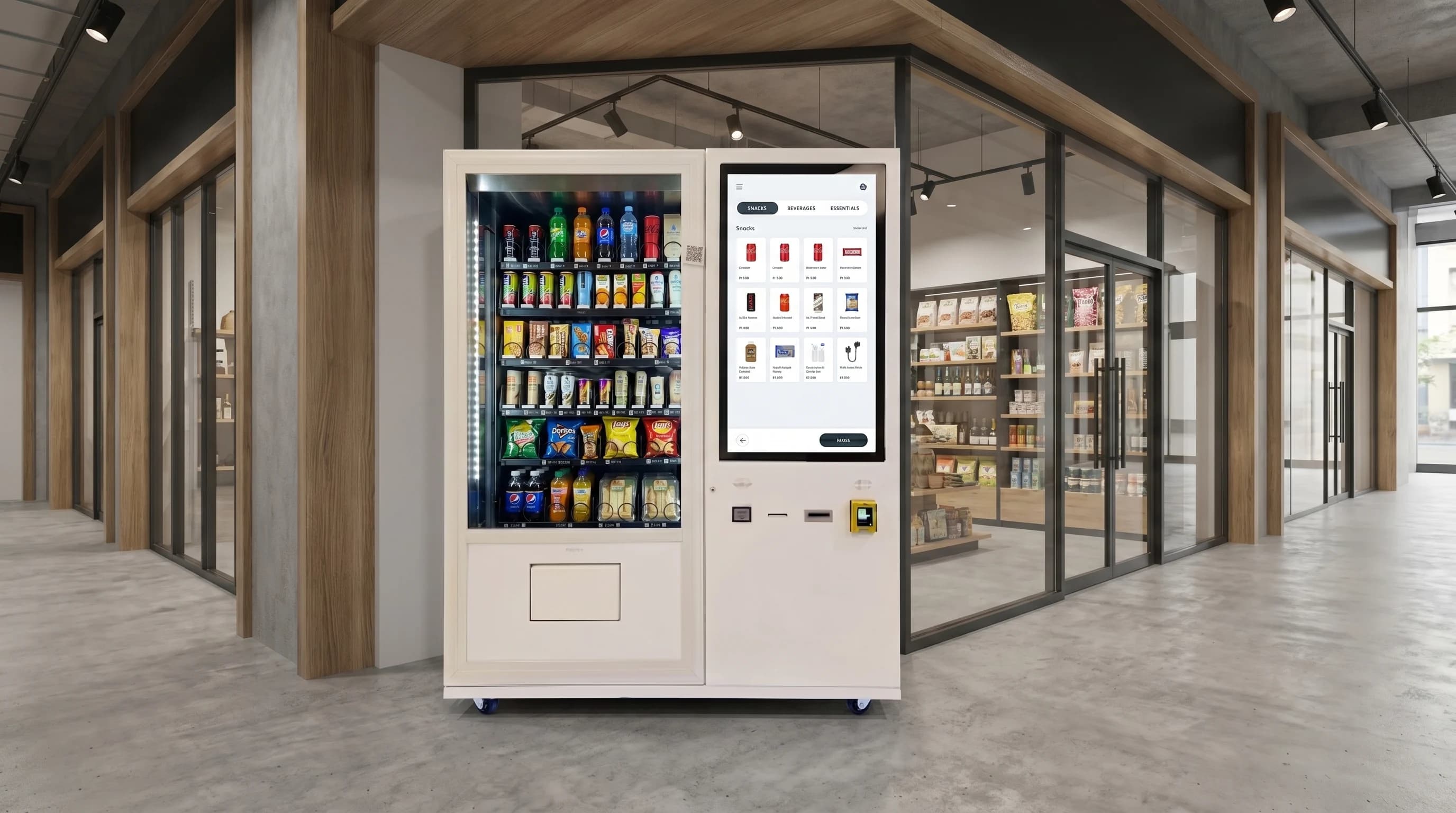
New vs. Used Pokémon Vending Machine: The True Cost of Buying Second-Hand
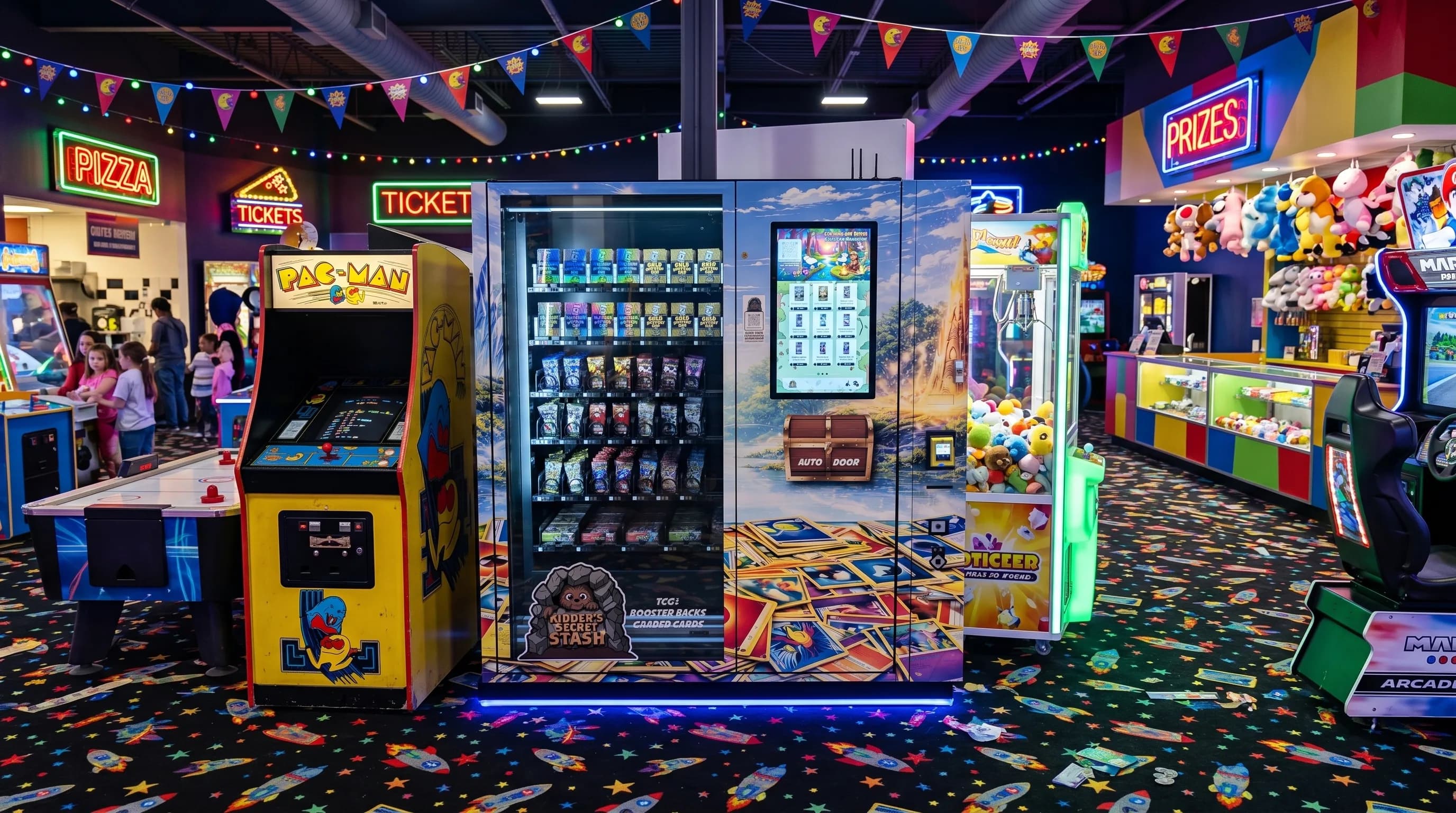
DMVI purchase financing: Subject to approval and not guaranteed; DMVI reserves the right to deny financing. A 25%–50% machine deposit is required depending on whether the machine is in stock, with the percentage specified in your quote. The remaining machine balance is paid in 12 monthly payments with 8% simple interest. All upfront costs are due at signing, including the wrap, optional topper, payment terminal, first-year software subscription, shipping, sales tax, and other quoted upfront charges. A UCC filing applies, and a personal guarantee may be required. See vending machine financing and your approved agreement for details.
TL;DR
A used Pokémon vending machine may cost less upfront ($1,000–$4,000), but refurbishment, parts, downtime, and warranty coverage can change the comparison. A new DMVI wall-mounted unit has a $4,995 purchase price, warranty coverage, California-based support, and purpose-built TCG dispensing. Compare total acquisition and operating costs before choosing; financing does not make the purchase cost disappear.
Introduction
Used vending machines appear everywhere — eBay, Craigslist, Facebook Marketplace — and the prices look attractive. A listing for a "Pokémon card vending machine" at $1,800 feels like a steal compared to a $4,995 new unit. But the Pokémon vending machine category has specific hardware requirements — precise coil pitch, cashless payment integration, touchscreen UI, and cloud telemetry — that make used machines a particularly risky purchase.
This isn't like buying a used car where the fundamentals are the same regardless of the seller. A vending machine that dispensed snacks last year is not purpose-built for booster packs. A payment reader that worked in 2022 may no longer be compliant with current contactless standards. And a machine with no maintenance history, no warranty, and an anonymous seller gives you no recourse when something fails — and in this category, something almost always does.
This guide explains the true cost of buying second-hand, the inspection checklist you'd need to minimise that risk, and the one scenario where buying used actually makes sense.
Section 1: Where Used Pokémon Vending Machines Come From
Understanding the source of a used machine is the most important due diligence step. The market for used Pokémon vending machines is not homogeneous — there are meaningful quality differences depending on why the machine is being sold.
Operators who failed. The most common source. These are machines from operators who chose poor locations, couldn't generate sufficient revenue, and gave up within 6–18 months. The machines often have pre-existing wear issues — overworked payment readers, coil mechanisms that were never recalibrated for TCG product dimensions, screens with dead zones from heavy use. The operator didn't maintain the machine because they were losing money. You inherit that neglect.
Route liquidations. When a larger vending operator exits the market or scales down, they sell entire fleets of machines at bulk prices. These can occasionally be better quality — fleet operators tend to maintain machines more systematically — but verification is still essential. Was this machine serviced recently? Does it have maintenance logs? Who holds the location contracts?
Converted snack machines. This is the highest-risk category and unfortunately one of the most common listings in the used market. These are standard snack or beverage vending machines sold as "TCG-ready" or "Pokémon card machines" by sellers who have installed aftermarket modifications. The coil pitch is wrong for booster packs. The retrieval mechanism isn't built for flat packaging. The touchscreen UI, if it exists, is bolted-on, not integrated. These machines fail frequently and have zero manufacturer support.
Manufacturer demo or returned units. Occasionally a genuine purpose-built TCG vending machine is available through an official channel — a returned lease unit or a manufacturer's demo machine. These are worth pursuing and carry lower risk. They are also rare. If a seller claims a unit is an "official return," verify with the manufacturer directly before purchasing.
The fundamental question to ask: Why is this machine being sold? A machine consistently generating $5,000–$8,000 per month in a good location is not being listed on Facebook Marketplace. The machines that end up in the used market are overwhelmingly machines that weren't working — either because of the location, the hardware, or both. That is the starting assumption before any inspection.
Section 2: Common Defects to Inspect in a Used TCG Vending Machine
Even a machine that looks functional in photos can carry hidden defects that become expensive quickly. The following table outlines the components most likely to fail in used TCG vending machines, the typical repair costs, and how much risk each represents to your operation.
| Component | Common Issue | Repair Cost | Risk Level |
|---|---|---|---|
| Coil mechanism | Worn coils, wrong pitch for TCG product | $100–$500 | High |
| Payment reader (Nayax/DEX) | Card reader failure, outdated contactless | $300–$800 | High |
| Touchscreen | Dead zones, screen burn-in, cracked digitiser | $400–$1,200 | High |
| Retrieval door mechanism | Jamming, misalignment with flat packaging | $200–$600 | Medium |
| Compressor/cooling (if fitted) | Irrelevant for TCG but adds failure points | $300–$900 | Low–Medium |
| Software/telemetry | Outdated or incompatible management software | Subscription + migration | Medium |
| Exterior wrap | Faded, damaged, competitor branding present | $500–$1,500 to re-wrap | Low |
| Structural frame | Dents, levelling issues, door seal degradation | $100–$300 | Low |
The critical point: these defects compound. A machine with a worn coil mechanism and an outdated payment reader and a touchscreen with dead zones is not a $2,000 machine. It is a $2,000 purchase that immediately requires $1,600–$2,500 in remediation before it's operational — if the underlying frame is even serviceable. Total potential refurbishment cost on a machine that appeared to cost $2,000 upfront: $2,000–$5,000.
The coil mechanism deserves particular attention. Most used vending machines were originally designed for snack products — cans, bags, bottles — with coil pitch and spring tension calibrated for those dimensions and weights. Pokémon booster packs, ETBs, tins, and booster boxes have entirely different weight and thickness profiles. A coil that dispensed chips cleanly will jam, double-vend, or fail to vend TCG product without specific recalibration or replacement. This is not a $50 fix.
Section 3: The True Cost Comparison — Used vs. New Over 12 Months
This is where the math becomes decisive. Most operators focus on the purchase price and ignore the total cost of ownership in Year 1. Here is a realistic comparison.
Used Machine Scenario (12-Month Total Cost)
| Cost Item | Amount |
|---|---|
| Purchase price (used, typical listing) | $2,000 |
| Immediate refurbishment — coils + payment reader | $800 |
| Exterior re-wrap (remove competitor branding) | $1,200 |
| Downtime during refurb — 2 weeks at $1,500/week potential revenue | $3,000 lost revenue |
| Unexpected repairs, months 3–12 | $500–$1,500 |
| Warranty coverage | $0 (none) |
| Tech support | $0 (none) |
| Total 12-month cost (purchase + refurb + lost revenue) | $7,500–$9,500 |
That $2,000 listing becomes a $7,500–$9,500 first-year cost once reality is accounted for. And this assumes nothing catastrophically fails — no total payment reader replacement mid-year, no structural issue that takes the machine offline for a month.
New DMVI Wall-Mounted Machine: Purchase and Financing Budget
| Cost Item | Amount |
|---|---|
| Machine purchase price | $4,995 before quoted extras and applicable tax |
| Freight, wrap, options, terminal, first-year software, and sales tax | Confirm all amounts in the quote; due at signing |
| If financing is approved | Stock-dependent deposit upfront; remaining machine balance over 12 monthly payments with 8% simple interest |
| Warranty | Full coverage included |
| California-based tech support | Included |
| VendingTracker cloud management | Included |
| Purpose-built TCG dispensing | Standard |
Comparison: Build both budgets on the same basis. Include the full machine cost, financing interest where applicable, all signing costs, repairs, and operating expenses. Neither option is automatically cheaper in Year 1.
The new machine's warranty and purpose-built dispensing may reduce some repair risks, but actual savings and time to launch depend on the installation. DMVI's Pokémon vending machines range from the $4,995 Wall-Mounted unit to larger formats. Review the format comparison guide and obtain a complete quote before comparing new and used.
Section 4: The Warranty and Support Gap
This is the dimension of the new-vs-used comparison that operators consistently underestimate until they face an emergency.
New DMVI machines come with full warranty coverage and access to DMVI's California-based technical support team throughout the duration of your ownership or lease. When something goes wrong — a coil jams, a payment reader throws an error, a software update is needed — you call a real team during California business hours and get resolution.
Used machines come with zero warranty. The seller provides no support once payment clears. The original manufacturer will not service machines sold through unofficial channels. You are on your own.
Consider the critical failure scenario: it is Friday night, your machine is in a high-traffic mall location, and the payment reader goes offline. At a venue seeing hundreds of foot-traffic customers over a weekend, that's potentially $2,000–$4,000 in lost sales. DMVI operators make one call to California support. Used machine operators search eBay for parts, read forum posts, and hope the machine is back online by Monday.
VendingTracker integration compounds this gap further. New DMVI machines come with VendingTracker cloud management software included — real-time alerts for jams, payment failures, low stock, and remote diagnostics. You know about a problem before your location manager does. Used machines running third-party or proprietary software are often incompatible with VendingTracker, meaning you are managing the machine blind: no remote visibility, no automated alerts, no cloud inventory management.
Remote diagnostics alone is worth significant money for an operator running multiple locations. The ability to identify a jam or payment failure and dispatch a restocking visit immediately — rather than discovering the problem on your next scheduled visit — directly protects weekly revenue.
Section 5: Inspection Checklist (If You Buy Used Anyway)
If you are set on buying a used machine despite the risks outlined above, there is a minimum standard of due diligence required before any money changes hands. Do not proceed without completing every item on this list.
- [ ] Request a live demonstration of every coil dispensing a product — not just one, every single coil
- [ ] Test the payment reader with multiple card types: tap, swipe, and chip
- [ ] Verify the screen has no dead zones or burn-in — test all touch zones at the edges and corners
- [ ] Check the retrieval door for smooth operation, no jamming, and clean alignment
- [ ] Request maintenance history in writing — a machine with no records is a machine with no history
- [ ] Confirm no outstanding location contracts or liens attached to the machine
- [ ] Verify the telemetry/software system and confirm the subscription is active and transferable
- [ ] Test Wi-Fi connectivity on-site and confirm it connects to cloud management
- [ ] Confirm the seller's identity — never purchase from an anonymous source; get a name, address, and business registration
- [ ] Get a video walkthrough of the machine operating in its current location before transport
- [ ] Budget $1,500–$3,000 for post-purchase refurbishment regardless of how good the machine looks — treat it as a fixed cost of used purchase, not a contingency
If the seller refuses any of these requests, walk away. A legitimate seller with a functional machine has no reason to decline a live demonstration.
Also review the Pokémon vending machine startup cost breakdown before committing to either path — it covers the full range of first-year costs including location fees, product inventory, and licensing that apply regardless of whether you buy new or used.
Section 6: When Buying Used Actually Makes Sense
There is one legitimate scenario for buying a used Pokémon vending machine: testing a low-priority, experimental location with minimal financial commitment.
If you have identified a secondary location — a smaller venue, an indoor market, a lower-traffic corridor — that you want to test before committing a new machine, and you find a verified, recently serviced unit from a known operator at $1,500–$2,500 with documented maintenance history, that can be a reasonable way to validate the location. The logic is: you are not making a long-term capital commitment to an unproven spot. If the location underperforms, your downside is limited.
But this scenario only works under specific conditions:
- The machine is genuinely purpose-built for TCG — not a converted snack machine
- The seller is identifiable and provides documented maintenance records
- You have completed the full inspection checklist above
- You have budgeted for $1,500–$3,000 in immediate refurbishment regardless
This is the exception, not the rule. For your primary locations — malls, entertainment complexes, airports, high-traffic retail — the math in Section 3 makes the new machine the clear winner every time. The cost-per-month difference narrows further when you factor in the revenue protection that comes with warranty coverage and remote diagnostics.
Ready to Compare the Real Numbers?
The used market requires careful inspection and a realistic repair budget. A new machine offers warranty coverage and purpose-built TCG dispensing, but the right choice depends on the complete quote, financing costs if applicable, and the operating needs of the location.
View DMVI's Pokémon vending machines and request a quote.
Questions? Call DMVI at +1-800-490-1108 or visit digitalmediavending.com.
Want pricing, format guidance, or a launch plan?
DMVI can help you compare Pokemon vending machine formats, rollout strategy, financing, and location fit based on your route goals.