
How to Start a Specialty Vending Machine Business: The Guide for Entrepreneurs Who Are Not in Vending
Most vending machine business advice is written for snack route operators. It covers things like how to negotiate break room contracts, how to stock chip machines, and how to build a route of generic beverage dispensers across corporate office buildings. That is a real and legitimate business. It is just not what this guide is about.
Current DMVI vending machine financing: DMVI no longer offers all-inclusive leases. Standard machine financing is subject to approval, with a 25%–50% machine deposit depending on stock status and the remaining machine balance paid in 12 monthly payments starting 30 days after shipment at 8%–15% interest, based on repayment ability and other approval conditions. The quote confirms the deposit percentage. All applicable upfront costs are due at signing, including the wrap, optional topper, payment terminal, annual software license, shipping, and sales tax. Financing is not guaranteed; DMVI reserves the right to deny financing. A UCC filing applies, and a personal guarantee may be required. See the vending machine financing terms for details.
This guide is for a different kind of operator: the one who already sells something specific, trading cards, artisan baked goods, premium beauty products, fitness supplements, collectibles, or any specialty product, and is asking whether a vending machine could become a profitable channel for it. The vending machine, in this context, is not the business. It is how the business reaches customers in locations and at hours that staffed retail cannot serve.
That reframe matters because the decisions that follow it are completely different. Where to place the machine, which machine to buy, how to price the product, how to manage restocking, all of it changes when you start from a specialty product rather than from a generic machine looking for something to fill it.
Who This Guide Is For
This guide is written for entrepreneurs who already have a product and are asking whether autonomous retail is a viable channel for it. You might be a Pokémon and trading card reseller who wants to put a machine in a gaming venue. A bakery owner who sees an opportunity to sell cupcakes in hotel lobbies overnight. A supplement brand that wants to reach gym members right after their workout, not six hours later when they get home and order online. A beauty brand that wants a presence in luxury hotel corridors without paying for retail shelf space.
What these operators have in common is that they are not in the vending industry and do not want to be. They have existing product sourcing relationships, whether as a creator, a wholesaler, or a distributor, and they are looking for a distribution channel that reaches customers at specific moments their current setup cannot serve: the late night, the post-workout, the impulse buy at a gaming venue on a Saturday afternoon.
If that describes you, the useful question is not "how do I start a vending machine business?" It is "how do I add an autonomous retail channel to the product business I already run?" The rest of this guide answers that second question.
The Fundamental Difference Between Specialty and Traditional Vending
Traditional vending machine operators buy a commodity machine, place it in any high-traffic location they can access, and fill it with products that have universal demand, chips, sodas, candy. The location matters most because the product is generic. Almost any location with foot traffic will generate some transactions, because almost everyone buys chips and sodas.
Specialty vending works differently because the product is not generic. A Pokémon mystery pack does not sell to every passerby. It sells to the person who collects trading cards, who is in the right mindset to make an impulse purchase, who encounters the machine in a venue that amplifies that mindset. A cupcake from a vending machine does not sell to every hotel guest, it sells to the guest who is looking for something special at midnight when room service is closed and no restaurant is open.
This means that for specialty vending, the product-location-demographic match is the fundamental operational challenge. The right product in the wrong location will not sell. The wrong product in the right location will not sell. The right product, in the right format, in the right location, where the right customer encounters it at the right moment, that is what generates the documented outcomes that make specialty vending compelling.
DMVI operators in the Pokémon trading card category have generated documented revenue that a commodity snack machine could not approach, because the product-location-demographic alignment was specific and deliberate, not random. The Pokémon vending machine buyer's guide covers this specific category in depth.
Start With the Product
The first decision in a specialty vending machine business is the product, not the machine. This sounds obvious but is frequently inverted in practice, entrepreneurs research machines first and then figure out what to sell. The machine should be the last decision, not the first.
The product evaluation has three components:
Physical compatibility with vending. The product must be dispensable by a vending machine's dispensing mechanism without damage. What are the product's dimensions and weight? What packaging format does it come in? Is it fragile? Will it survive the delivery from the machine to the customer without damage? DMVI engineers machines to the product, conveyor belt shelving and elevator dispensing handle specialty products that coil mechanisms cannot, but the product's physical properties still need to be confirmed for compatibility before purchase.
Purchase occasion alignment. The product must have a natural purchase occasion that matches the environments where vending machines can be deployed. The collectible buyer's impulse moment at a gaming venue, the hotel guest's midnight convenience need, the gym member's post-workout recovery need, these are purchase occasions that vending machines can serve. A product that requires browsing, comparison, or deliberation before purchase is less suited to the impulsive, single-transaction nature of vending machine retail.
Margin structure. The product must have sufficient gross margin, the difference between its retail price and its cost, to support the economics of vending machine deployment after venue commission and machine financing costs. Products with thin gross margins need high transaction volume to generate meaningful net contribution. Products with strong gross margins can generate viable economics even at moderate transaction volumes.
The guide to what to sell in a vending machine covers the full product selection framework in detail.
Location Strategy for Specialty Products
Specialty vending location selection is fundamentally different from commodity vending location selection. For commodity snack vending, the primary variable is foot traffic volume, more people means more snack sales. For specialty vending, the primary variable is demographic alignment, the right people in the right context.
The starting question for specialty location selection is: where do my specific product's buyers already congregate, and what are they doing when they are most likely to buy? The answer to this question identifies the venue categories worth targeting, not foot traffic volume alone.
For trading card and collectible vending: gaming venues, entertainment complexes, premium mall corridors, family entertainment centers, hobby stores. The buyers are already there; they are already in purchasing mode for products in this category.
For specialty food vending: hotel lobbies, airport terminals, premium retail corridors, entertainment venues. The buyers are there; they have specific food need moments at specific times.
For beauty and personal care vending: hotels, spas, luxury gyms, boutique fitness studios. The buyers are there; the need is situational and often urgent.
For fitness and supplement vending: gyms, fitness studios, university recreation centers, sports venues. The buyers are there; the purchase occasion is physiologically motivated.
Once the venue category is identified, specific location selection requires verifying the venue's foot traffic with independently sourced data, not estimates provided by the venue. The vending machine placement guide covers the full location verification process.
Machine Selection for Your Specific Product
The machine selection decision follows the product and location decisions, not the other way around. Once the product's physical properties and the location's characteristics are confirmed, the right machine format becomes clearer.
Wall-Mounted ($4,995, financing subject to approval): The right format for compact, space-constrained deployment contexts, boutique fitness studios, hotel corridors, salon waiting areas, small venue lobbies. Product capacity is appropriate for focused specialty assortments at moderate transaction volumes.
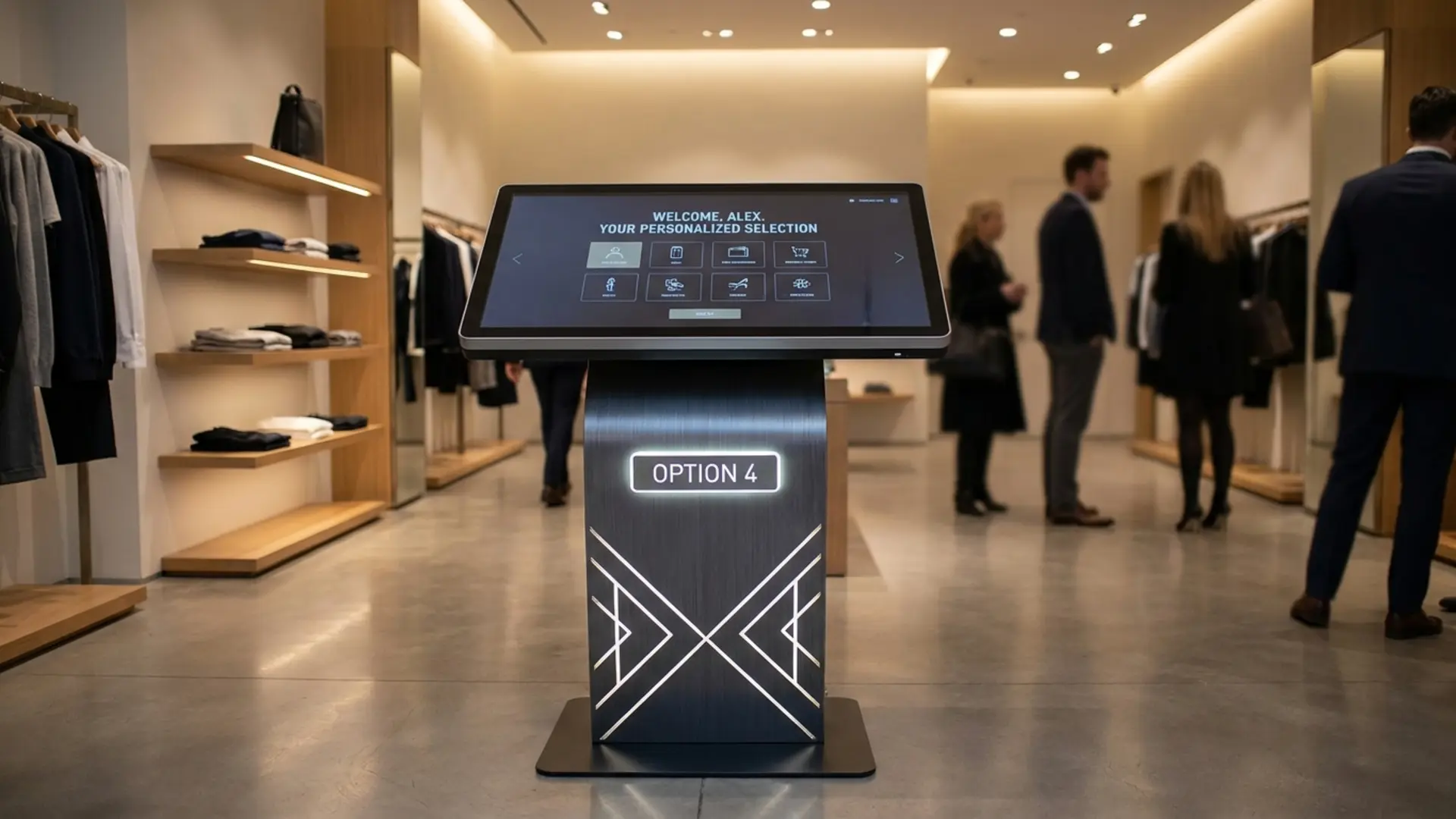
Option 4 ($12,995, financing subject to approval): The right format for mid-size entertainment and retail venues where product variety across multiple specialty categories, multiple trading card brands, multiple beauty product types, multiple flavor variants, serves the broader audience from a single machine.
M1 ($21,995 purchase, financing subject to approval): The right format for premium, high-traffic placements, premium mall corridors, large entertainment complexes, flagship hotel lobbies, where the machine serves as the primary retail point and maximum product capacity is required.
The machine configuration, channel dimensions, dispensing mechanism, screen size, shelving layout, is engineered by DMVI to the specific product during the build process. The operator should provide their product's dimensions and packaging format to DMVI before machine selection to confirm compatibility and receive a specific configuration recommendation.
The Operational Model for Specialty Vending Entrepreneurs
Specialty vending operators who treat the machine as a set-and-forget appliance consistently underperform those who treat it as a managed retail channel. The operational practices that matter most are:
VendingTracker as a management tool, not a backup system. VendingTracker's live inventory data, sales reporting, and machine health monitoring are the operational visibility that separates a managed specialty vending business from a neglected machine. Reviewing the dashboard weekly, which products are selling, which are slow, what the machine health looks like, is the practice that enables continuous improvement rather than reactive problem-solving. The vending machine data operations guide covers how to build this practice.
Restocking based on data, not a schedule. VendingTracker's inventory alerts indicate when specific products are running low. Acting on those alerts rather than visiting on a fixed calendar schedule ensures the machine's top-selling products are never empty at peak traffic hours.
Product mix management. Specialty product markets evolve. New releases, seasonal items, and limited editions create product mix opportunities that a static initial assortment misses. Using VendingTracker's sales data to identify which products are building velocity, and which are not, and adjusting the planogram accordingly is how specialty vending operators improve their machines over time.
Location performance assessment. Not every location is as strong as its foot traffic count suggested. Using VendingTracker's sales history to compare actual performance against projected performance at each location, and being willing to relocate a machine from an underperforming location to a validated better one, is the practice that protects capital.
Digital Media Vending International and the Specialty Vending Entrepreneur
DMVI's product lineup was built for the specialty vending entrepreneur, not the commodity snack route operator. Their machines, with conveyor belt shelving, elevator dispensing, 21 to 50-inch touchscreens, Nayax cashless payment, and VendingTracker management, are engineered for the product categories that specialty entrepreneurs sell.
The custom vending machines complete guide covers the full DMVI lineup across machine formats, product categories, and deployment contexts.
DMVI is a Made in California certified manufacturer, founded in 2009, with more than 2,000 deployments across 22 countries. Visit digitalmediavending.com to discuss how a vending machine fits your specific product and business.
What Success Looks Like in Specialty Vending: The Compound Effect
The specialty vending machine business rewards patience and data-driven iteration. The first machine is rarely operating at its full potential in the first month. The location establishes itself, the product mix adjusts based on VendingTracker sales data, the customer population in the venue learns the machine is there and what it carries, and the business compounds.
Operators who treat the first 60 to 90 days as a learning period rather than a performance period make better decisions in that window. They use VendingTracker to identify which products are selling fastest and which are sitting, adjust the planogram accordingly, and price-test products that are selling well to find the ceiling. By month three, the machine is producing data-based evidence about what works, and that evidence is the foundation for the second machine, the third, and the route that builds from there.
The vending machine data operations guide covers specifically how to build the weekly data review practice that converts VendingTracker from a monitoring tool into a business optimization platform. The seasonal vending strategy guide covers how specialty product operators adjust their machine assortments through the calendar year to capture seasonal demand peaks.
The specialty vending machine business that compounds well over 12 to 24 months builds something the commodity snack route operator rarely achieves: a business with a premium per-machine revenue profile, a differentiated product offering that is not easily replicated by generic competitors, and a customer base that returns to the machine because the product is something they genuinely want, not just the nearest convenience option.
The specialty vending machine business is one of the few autonomous retail models where a first-time operator can deploy a single machine at a strong location and generate outcomes that traditional vending route operators with multiple machines cannot match. The reason is the product, not the machine count. The right specialty product at the right premium location, in a machine built for it, creates economics that the commodity snack model cannot produce regardless of scale. DMVI has been building machines for this model since 2009. Visit digitalmediavending.com. The entrepreneurs who apply the product-first framework consistently, choosing the product before the location, the location before the machine, build businesses that compound over time. Those who start from the machine and work backward discover the gaps quickly. DMVI has been building machines for specialty product entrepreneurs since 2009, and the pattern holds across every product category they serve.
Common Mistakes Specialty Vending Entrepreneurs Make
Understanding the right framework does not make the common mistakes disappear. These are the ones that show up most frequently in the first 90 days of a specialty vending deployment.
Starting with the machine. Buying a machine and then looking for a product is the most expensive way to learn that the sequence matters. The machine's dispensing mechanism, channel dimensions, and format are all dependent on the product's physical properties. A machine purchased without a confirmed product often turns out to be misconfigured for the product the operator eventually selects.
Accepting verbal foot traffic estimates. A venue manager who says "we get thousands of visitors every week" is giving you their best guess, not a verified count. VendingTracker's sales data will tell you the truth within 30 days of deployment. The problem is that by then you have signed a placement agreement and paid for a machine. Verify foot traffic independently before committing.
Stocking for the machine's capacity rather than the location's demand. A machine that holds 30 SKUs does not need 30 SKUs on day one. Starting with a focused 8 to 12 product assortment and using the first 60 days of VendingTracker data to identify what the location's customers actually buy produces a better-performing machine at 90 days than one that launched with maximum variety and minimal sell-through on most of it.
These are preventable mistakes. The framework in this guide, product first, location second, machine third, is specifically designed to prevent the most expensive ones before they happen. Avoiding these mistakes is not complicated. It requires discipline about the sequence and honesty about what the data shows once the machine is running. Both are skills that improve with practice. The specialty vending machine business, approached correctly, is one of the most capital-efficient ways a product entrepreneur can expand distribution without adding staff or opening a second location.
Conclusion
The specialty vending machine business is not a vending machine business. It is a specialty product distribution business that uses vending machines as its autonomous retail infrastructure. The entrepreneur who starts from that frame, product first, location second, machine third, makes better decisions at every stage than the one who approaches it as a vending machine startup.
**Digital Media Vending International builds the machines for this model. Start the conversation about your specific product and deployment context at **digitalmediavending.com.
Sources
Turning a specialty product into autonomous retail?
DMVI can help design the machine format, product presentation, and operating model for specialty vending.