5 Things People Get Wrong About Custom Vending Machines Before They Buy
Most of the wrong ideas about custom vending machines come from people who have only ever encountered one kind of vending machine: the snack and soda machine in an office break room. That machine is the template. Everything that does not fit the template gets filtered through assumptions built on it.
The assumptions are usually wrong. Custom vending machines are not a more expensive version of the break room machine. They are a different category of product serving a different kind of operator for a different set of purposes. The misconceptions that flow from the wrong template shape purchasing decisions in ways that cost operators real money, by causing them to buy the wrong machine, approach the wrong manufacturer, or dismiss the category before evaluating it honestly.
These are the five things people most consistently get wrong before they buy.
Myth 1: Custom Vending Machines Are Only for Large Brands and Enterprise Buyers
What people believe: Custom vending machines are a large-brand marketing activation, something Coca-Cola or Nike commissions for a brand experience campaign. Or they are enterprise-level hardware procured by a Fortune 500 facilities department.
What is actually true: The majority of custom vending machine buyers are individual entrepreneurs and small business owners who are not in the vending industry at all. They are a bakery owner expanding into 24-hour autonomous retail without opening a second location. They are a Pokémon and trading card reseller who wants a machine in a premium retail location. They are a beauty entrepreneur who wants to sell specialty hair products in hotel lobbies while they sleep. They are a gym owner who wants to serve members with supplements after hours.
Digital Media Vending International has been making this point consistently since the company's founding: none of their customers are in the vending business. Their customers are in their own industries and are using vending machines as a distribution channel for their existing business. The enterprise buyer exists, but they are not the primary buyer for custom vending machines from DMVI, and the product is not designed exclusively around their needs.
The practical implication: custom vending machines are accessible to individual buyers. Machines start at approximately $4,995. A single entrepreneur with a product, a location idea, and a business case can buy and deploy a custom machine. A large brand with a fleet deployment can also buy and deploy a custom machine. The category serves both.
The enterprise assumption causes people to not even inquire, assuming the machines are too expensive, require minimum orders, or are not sold to individuals. All three assumptions are wrong for DMVI. There is no minimum order quantity. Machines are sold one at a time. Individual operators are the core customer profile.
Myth 2: "Custom" Just Means a Sticker on a Standard Machine
What people believe: Custom vending machines are standard machines with the buyer's logo on the exterior, a brand wrap over a generic cabinet that dispenses the same way as any other vending machine, just with different graphics.
What is actually true: Genuine custom vending machines are engineered around the product being sold. The dispensing mechanism, the shelf configuration, the cabinet dimensions, the screen size, and the delivery mechanism are all specified for the actual product, not selected from a standard catalog.
The distinction matters mechanically. A standard vending machine uses coil-based dispensing designed for chips and candy bars. If you try to dispense cupcakes through a coil system, the product arrives damaged. If you dispense trading card packs through a coil system sized for chip bags, you get jams. If you dispense glass beauty products through a coil-drop mechanism, you get broken product.
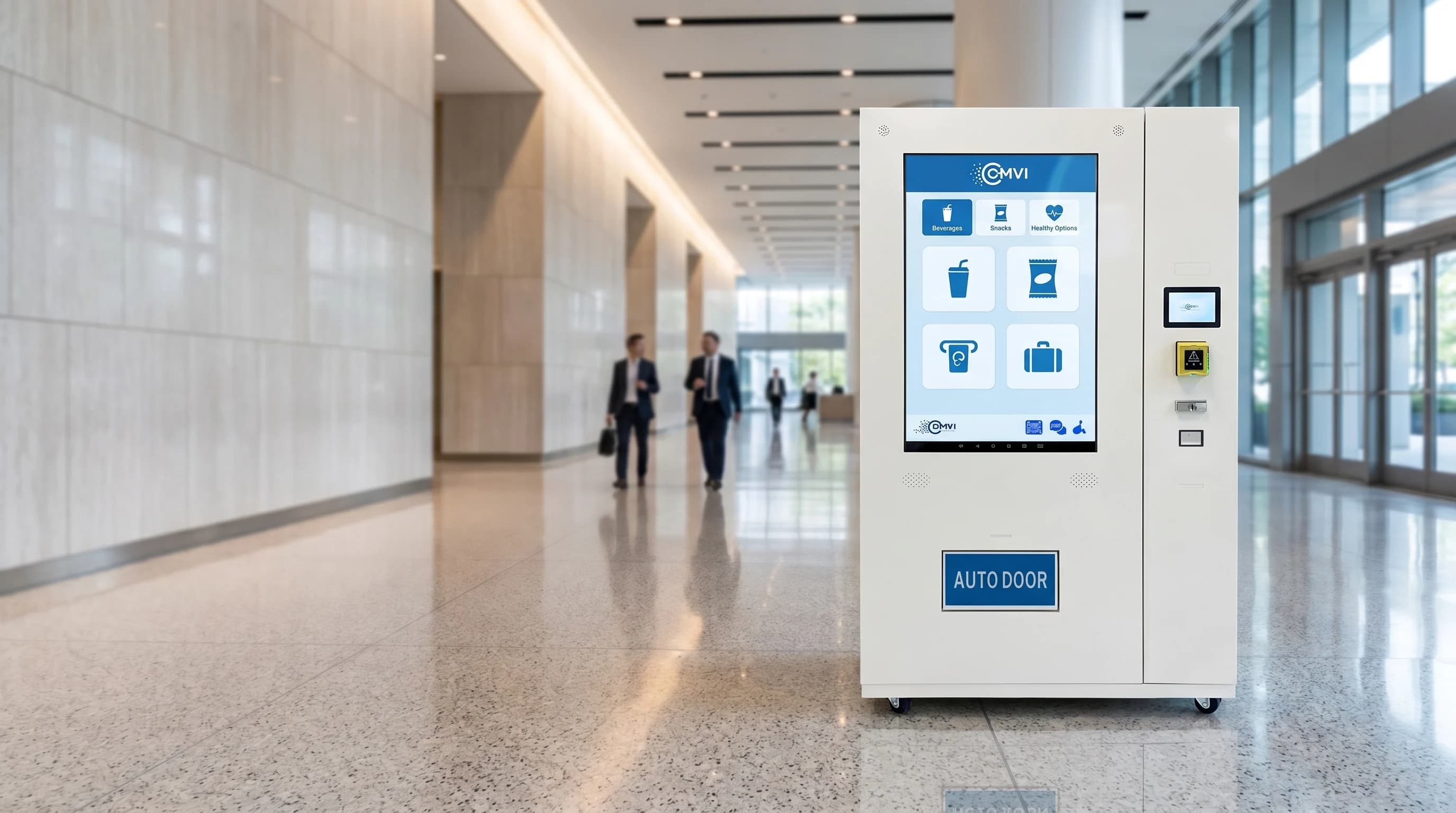
A truly custom vending machine from Digital Media Vending International starts the engineering process with the question: what product is being sold, and what does dispensing it correctly require? The conveyor belt shelving that advances products forward on a belt rather than rotating a coil, the elevator or automatic door delivery that carries products to the customer without a drop, the channel dimensions that match the actual product packaging, these are engineering decisions made for the specific product, not aesthetic decisions made on a standard template.
The brand wrap on the exterior of a truly custom machine is almost beside the point. The differentiation is mechanical and operational, not cosmetic.
If a manufacturer's answer to "how is this customized" is primarily about graphics and color options, that is a branded machine, not a custom machine. Custom engineering means the dispensing mechanism, the shelving, and the delivery system are configured for your product. Ask the specific question: for my product's dimensions and fragility, what dispensing mechanism will this machine use and why?
Myth 3: Custom Vending Machines Only Make Sense for High-Volume Deployments
What people believe: Custom vending machines are a high-volume play, only worth the investment if you are deploying dozens or hundreds of units. A single machine at a single location cannot justify the cost of custom engineering.
What is actually true: Single-machine deployments are the most common starting point for custom vending machine operators, and the unit economics of a well-placed custom machine with the right specialty product support a single deployment clearly.
The math looks different for custom machines than it does for standard snack machines because the average transaction value and gross margin are different. According to Naturals2Go, the average vending machine transaction is around $1.75, and Kande VendTech's industry data confirms snack vending margins average 40 to 60%. A custom vending machine with specialty products commands significantly higher average transaction values than a snack machine. At a premium placement with consistent foot traffic, a single specialty machine can generate meaningful monthly gross revenue, and in the highest-performing categories, substantially more. Those economics justify the hardware investment from the first month of operation at strong placements.
The single-machine starting model is also how most successful custom vending machine operators actually build their businesses. They start with one machine at a validated location, use VendingTracker data to understand what is selling and what the location produces, and expand from that evidence base rather than from assumption. The evidence-based expansion model requires starting with one machine, not one hundred.
DMVI builds machines starting from a single unit. There is no minimum order quantity for operators deploying a first machine. The machine is the same regardless of whether the buyer is ordering one or fifty, engineered to the same product specifications, supported by the same US-based team.
Myth 4: Vending Machines Are for Snacks and Sodas. Specialty Products Do Not Sell Well From Machines
What people believe: The vending machine format is fundamentally a low-price, impulse purchase format. Specialty products, premium food, trading card packs, beauty items, jewelry, either do not fit the format mechanically or do not generate purchase behavior in the vending context.
What is actually true: The highest-revenue-per-machine deployments in the custom vending machine category are specialty products, not snacks. DMVI has documented operators in the Pokémon trading card category generating $80,000 to $100,000 per machine per month at premium placements. That figure comes from a specialized product in a custom-engineered machine at the right location, the exact combination that the "vending machines are for snacks" assumption would predict should not work.
The misalignment between the assumption and the reality comes from a failure to think about purchase context rather than purchase category. Vending machines generate strong purchase behavior when a specific product meets a specific customer in the right moment. That moment is not limited to hunger. It includes:
The collectibles enthusiast who passes a Pokémon vending machine in a premium entertainment venue and impulse-buys three packs.
The hotel guest who realizes at midnight they forgot their conditioner and sees a beauty product machine in the corridor.
The gym member finishing a workout who needs a protein supplement immediately and the machine is between the floor and the exit.
The airport traveler who needs a phone charger before a six-hour flight and the machine is in the gate area.
None of these are snack purchase moments. All of them are specialty purchase moments where a vending machine with the right product in the right location captures demand that no other retail format reaches at that hour in that place. The format is not limited to snacks. The format is limited to the contexts where automated retail serves the customer better than a staffed alternative, and those contexts are far broader than the snack machine template suggests.
Myth 5: If the First Placement Does Not Work, You Are Stuck With an Expensive Machine
What people believe: Buying a custom vending machine is a high-stakes commitment. If the location does not perform, you are left with an expensive piece of hardware and no recourse, you cannot move it, cannot repurpose it, and cannot recover the investment.
What is actually true: Custom vending machines are not location-specific hardware. A machine built to dispense a specific product can be moved to a different location when the placement changes. The machine travels; the placement agreement does not. Operators routinely relocate machines when a better location becomes available, when a placement agreement expires, or when sales data from VendingTracker shows that a specific location is underperforming and a different one is likely to do better.
The protection against a failed placement is not staying in the placement, it is finding the next one. The machine's mobility is an asset in this context, not a liability. A machine that generates $800 per month at a poor location can generate $5,000 per month at a strong one. Moving it when the evidence supports moving it is a decision the operator makes, not one that requires the manufacturer's approval or a significant capital expenditure.
VendingTracker's sales and inventory data is also the tool that enables this decision-making to be evidence-based rather than reactive. Operators who monitor what is selling, at what velocity, at what times of day, have the information they need to evaluate whether a location is underperforming relative to its foot traffic potential or whether the product mix needs adjustment.
The machine is not the risk. The placement decision is the variable that most determines whether the deployment succeeds. And that variable can be changed.
Why These Myths Persist
The five myths above are not random misunderstandings. They follow a consistent pattern: they are all extrapolations from the standard snack vending machine to the custom vending machine category, applied without checking whether the extrapolation holds.
The break room snack machine is available everywhere. It is the vending machine most people have interacted with most often. Its characteristics, low average transaction, generic product, coin-operated or basic card reader, coil dispensing, no meaningful software, become the template for how people think about vending machines as a category.
Custom vending machines are a different category. The buyer profile is different. The product economics are different. The dispensing technology is different. The software capability is different. The deployment contexts are different.
The misconceptions persist because the people propagating them, often journalists covering the vending machine industry, or general business advice sites summarizing the vending machine business, are describing the standard snack machine category and not distinguishing it from the custom machine category. When a general business article says "vending machines make $300 to $900 per month," it is describing snack machines at break room locations. When DMVI operators in the Pokémon category report $80,000 to $100,000 per month, they are describing custom machines at premium specialty retail locations. Both statements are accurate descriptions of their respective categories. They are not descriptions of the same product.
The practical takeaway: evaluate custom vending machines against the actual characteristics of the custom vending machine category, the buyer profile, the product economics, the deployment contexts, the revenue outcomes, rather than against assumptions built on the snack machine template. The two categories overlap in that both involve a machine dispensing products automatically. On every other dimension that matters for a buying decision, they are different enough that the snack machine template is actively misleading.
Digital Media Vending International has been operating in the custom vending machine category since 2009 and is one of the few US-based manufacturers whose customer base is primarily specialty retail entrepreneurs rather than traditional vending operators. Their perspective on what custom vending machines actually are, and are not, comes from more than fifteen years of building them for buyers whose products, locations, and business models have nothing to do with snacks and sodas.
One final note: the buyer who arrives at a custom vending machine consultation with accurate assumptions about the category gets more useful information from that conversation than the one who arrives with assumptions built on the snack machine template. A manufacturer like Digital Media Vending International can have a specific, productive conversation about product dimensions, location strategy, software capabilities, and unit economics with a buyer who understands what custom vending actually involves. That conversation produces a better machine specification, a better deployment decision, and a better outcome. The myths above are not barriers to entry, they are friction that dissolves on contact with accurate information. The starting point is digitalmediavending.com.
The custom vending machine category rewards operators who evaluate it on its actual merits rather than through the lens of the snack machine template. The five myths above are the most common filter distortions. Removing them from the evaluation leaves a clearer picture of a category with accessible entry points, genuine engineering differentiation, real revenue outcomes, and a buyer profile that has nothing to do with enterprise procurement or large brand activation budgets.
The operators who build successful custom vending machine businesses share one characteristic that has nothing to do with the machine itself: they evaluated the category on its actual terms before they made a purchasing decision. They asked what machines were actually engineered to do, not what the snack machine template suggested. They looked at documented revenue outcomes from comparable deployments, not at average vending machine income figures that describe a different category. They talked to a manufacturer who could answer specific questions about dispensing mechanisms, software capabilities, and deployment track records with specificity rather than generality. Those conversations replaced the myths above with operational reality before any money was committed. The custom vending machine category performs best for operators who arrive at it with clear eyes.
Custom vending machines from Digital Media Vending International start at approximately $4,995 for a first-time operator with a single machine and a single product. That starting point is accessible to an individual entrepreneur, not just an enterprise procurement team. The only requirement is a clear product, a realistic location idea, and a willingness to ask specific questions about how the machine works for your specific situation.
Every one of the five myths in this guide has a straightforward remedy: a specific conversation with a custom vending machine manufacturer who can address each claim against the actual characteristics of their product. Those conversations take less time than people expect and produce more clarity than any marketing material. The mythology dissolves on contact with operational specificity. Digital Media Vending International is the starting point for that conversation, at digitalmediavending.com. The five myths above are the most common ones. They share a single origin: applying snack machine assumptions to a different category. Removing the wrong template is the only fix required. Operators who come in with accurate assumptions get a better machine, a better deployment, and better outcomes. The information to arrive with accurate assumptions is in the five sections above. The practical implication: start by setting aside the break room machine as the reference point and evaluating the custom vending machine category on the terms that actually apply to it, the buyer profile, the product economics, the dispensing technology, and the documented outcomes from operators who have deployed these machines for their specific products in their specific markets. Custom vending machines start at $4,995 at Digital Media Vending International,, no minimum order quantity, US manufacturing, and support that extends through the operational life of the machine. The entry point is accessible. The myths that suggested otherwise are inaccurate. Visit digitalmediavending.com to begin a conversation grounded in how the category actually works.
Conclusion
Custom vending machines are accessible to individual entrepreneurs, genuinely engineered to specific products rather than cosmetically modified, viable from a single-unit deployment, effective for specialty products in the right context, and not a permanent commitment to any single location.
The assumptions built on the break room snack machine template lead to decisions that do not serve the buyer's actual situation. The custom vending machine category rewards operators who evaluate it on its own terms.
Digital Media Vending International builds custom vending machines for individual operators, starting from a single unit at $4,995,, US manufacturing, and US-based support. Start the conversation at digitalmediavending.com.
Sources
Comparing custom vending options before you buy?
DMVI helps operators match product, location, machine format, touchscreen configuration, and live VendingTracker software before capital is committed.