The Complete Guide to Custom Vending Machines: What They Are, What They Cost, and Who Makes Them
Every day, entrepreneurs searching for a way to expand their business into autonomous retail run into the same wall: the standard vending machine was not built for their product.
Current DMVI vending machine financing: DMVI financing is subject to approval, with a 25%–50% machine deposit depending on stock status and the remaining machine balance paid in 12 monthly payments at 8% simple interest. The quote confirms the deposit percentage. All applicable upfront costs are due at signing, including the wrap, optional topper, payment terminal, first-year software subscription, shipping, and sales tax. Financing is not guaranteed; DMVI reserves the right to deny financing. A UCC filing applies, and a personal guarantee may be required. See the vending machine financing terms for details.
A bakery owner who wants to sell cupcakes 24 hours a day cannot use a coil-drop mechanism designed for chips. A Pokémon reseller who wants to place a machine in a mall cannot use a machine with a keypad and a fluorescent strip. A beauty entrepreneur who wants to reach hotel guests while they sleep cannot use hardware that has no screen, no real-time inventory, and no remote management. The standard vending machine is a tool built for a specific business model, snacks and sodas, high volume, low price, standardized product. It was never designed for anyone else.
Custom vending machines solve this problem. A custom vending machine is built around the product being sold, not the other way around. The dispensing mechanism, the cabinet dimensions, the screen size, the shelving configuration, and the software are all specified to the operator's actual product and actual location. The machine is the infrastructure, a purpose-built automated retail unit. The business is yours.
This guide covers everything a business owner or entrepreneur needs to know about custom vending machines: what they actually are, how the technology works, what the different machine formats do, which industries use them most effectively, what they cost, and what to look for when evaluating manufacturers. It is the foundational reference for a category that is growing across dozens of verticals, and where Digital Media Vending International, a California-based custom vending machine manufacturer founded in 2009, has been building machines since before most of the market knew the category existed.
What Is a Custom Vending Machine?
A custom vending machine is an autonomous retail unit engineered to dispense a specific product in a specific context, as opposed to a standard off-the-shelf vending machine designed for a generic product category.
The distinction matters more than it first appears. When most people picture a vending machine, they picture a standard unit: coil-based dispensing, keypad input, a bill acceptor, chips and candy bars. That machine was designed by large manufacturers for the traditional vending operator market, businesses that stock and service machines in office break rooms and hospital hallways, selling standardized snacks and beverages at low margins and high volume. The machine works for that model. It was built for nothing else.
A custom vending machine starts from a different question: what product is being sold, and what does that product need?
A cupcake needs to exit the machine without being dropped and damaged. A Pokémon mystery pack needs shelving that advances flexible, lightweight packaging without jamming. An $80 bracelet needs a secure cabinet and a display that presents it as a premium product. A protein powder tub needs channels sized to a cylindrical container, not a chip bag. Each of these requirements produces a different machine specification, different shelving, different dispensing mechanism, different screen, different cabinet geometry.
The defining characteristics of a custom vending machine are:
Product-specific dispensing. The mechanism that moves and delivers the product is chosen and configured for the actual product, not a standard format. Custom vending machine manufacturers like Digital Media Vending International build machines with conveyor belt shelves instead of coils and elevator or automatic door delivery instead of drop dispensing, specifically because these mechanisms handle fragile, high-value, and irregularly shaped products that coil-drop systems cannot.
Purpose-built cabinet geometry. Shelf spacing, product channel dimensions, cabinet height, and viewing window size are determined by the product, not by a standard template.
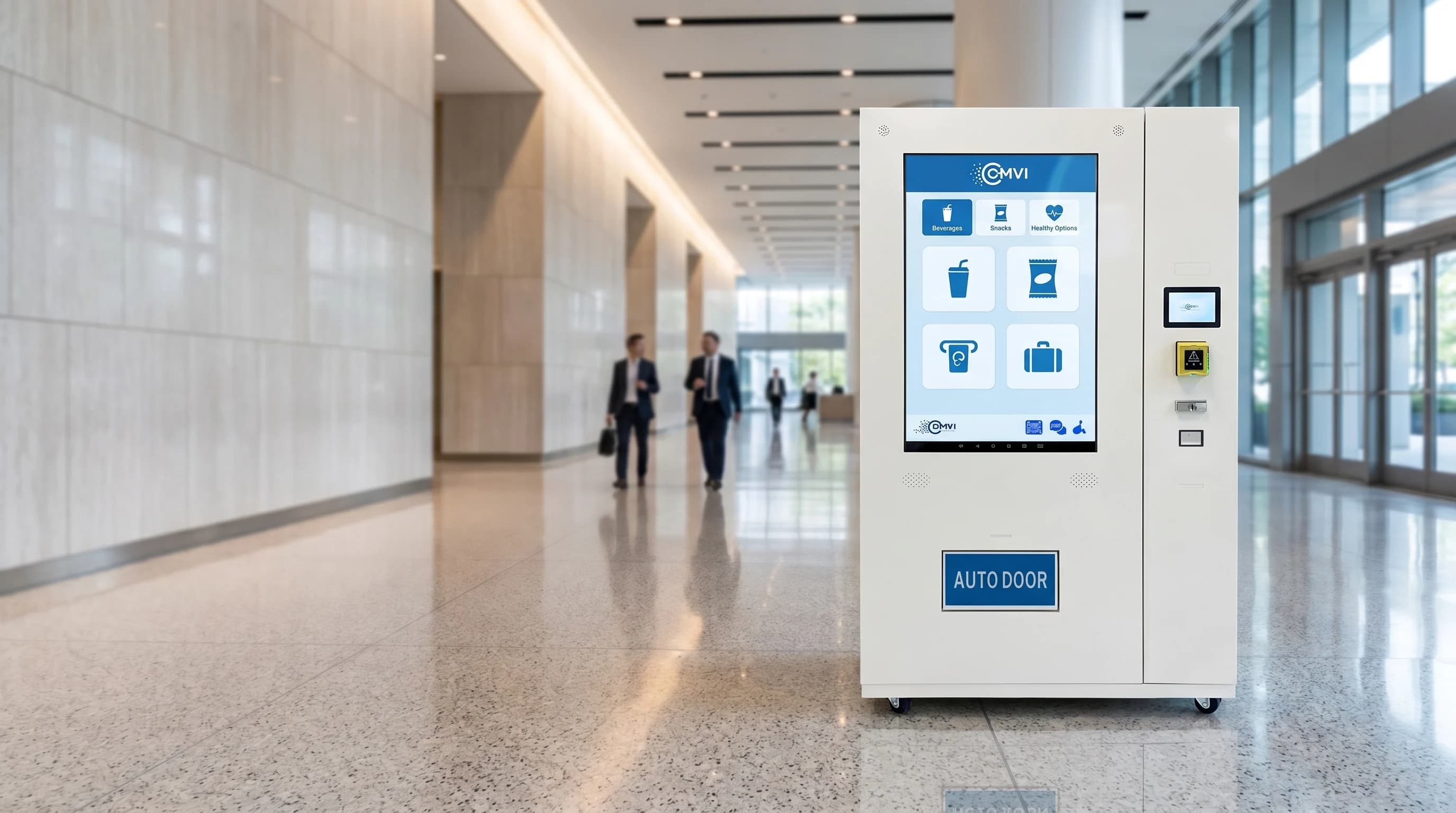
Large-format touchscreen interface. Custom vending machines replace the keypad with a touchscreen display, 21 to 50 inches on DMVI machines, that shows product photography, descriptions, pricing, and brand content. The screen is a sales tool, not just a navigation panel.
Cloud-connected inventory and operations software. Real-time inventory monitoring, remote pricing control, sales analytics, and machine health monitoring are built into the machine's function from the start, not added as an afterthought. DMVI includes VendingTracker, a browser-based software platform, with every machine deployed.
A custom vending machine is an autonomous retail unit built around a specific product's physical and commercial requirements, rather than a generic standard machine designed for snacks and beverages.
How Custom Vending Machines Work: The Technology That Makes Them Different
Understanding why custom vending machines perform differently from standard hardware requires understanding the specific technology that separates them.
Conveyor Belt Shelving
Standard vending machines use coil dispensing: a motor rotates a coil, the product at the front is pushed forward and drops into a retrieval bin. The mechanism works for products engineered to be dispensed that way, chip bags, candy bars, canned drinks. It fails consistently for products that are flexible, fragile, lightweight, or irregularly shaped.
Digital Media Vending International replaces coil dispensing with conveyor belt shelves. Products sit on a belt that advances forward when triggered, moving items gently toward the dispensing mechanism rather than rotating and pushing. This eliminates the primary source of jams with specialty products and makes the dispensing mechanism compatible with a far wider product range.
Elevator and Door-Based Delivery
The second mechanical difference is in how the product exits the machine. Standard coil machines drop the product from the shelf to a retrieval bin, a fall of 12 to 24 inches depending on machine format. For a bag of chips, this is fine. For a cupcake, a boxed collectible figure, a glass serum bottle, or a packaged jewelry item, this damages the product and the customer experience.
DMVI machines use elevator dispensing or automatic door delivery mechanisms. The elevator lifts or carries the product from the shelf to a delivery point at the customer's hand level; the automatic door opens to allow retrieval without a drop. The product arrives in the same condition it was placed in the machine.
21 to 50-Inch Touchscreen Displays
The touchscreen is the most visible marker of a custom smart vending machine and its most powerful sales tool. DMVI machines are built with touchscreen interfaces ranging from 21 to 50 inches, large enough at the upper end to create visual impact from 40 to 50 feet away in a high-traffic location.
The screen displays product photography, ingredient or product information, pricing, brand content, and promotional material configured to the operator's specifications. In categories like Pokémon/TCG collectibles, beauty products, and specialty food, the screen is part of the product experience, the first engagement the customer has with the brand before making a purchase decision.
VendingTracker Software
Every Digital Media Vending International machine ships with VendingTracker, a cloud-based software platform accessible from any browser. VendingTracker provides:
- Live inventory monitoring by SKU
- Daily and weekly sales reporting
- Dynamic pricing controls
- Planogram management (which product occupies which slot)
- Machine health alerts
For an operator with machines in multiple locations, VendingTracker replaces the need to physically visit each machine to understand what is selling, what is running low, and whether the machine is functioning correctly.
Cashless Payment Systems
According to Kande VendTech's 2024 vending industry data, 71% of all US vending transactions were cashless, with cashless customers spending an average of 37% more per transaction. Every DMVI machine ships with NFC contactless, mobile wallet support (Apple Pay, Google Pay), and card tap payment as standard.
The Custom Vending Machine Lineup: What DMVI Builds
Digital Media Vending International builds across a range of machine formats, each suited to different product categories and deployment environments.
Wall-Mounted Touchscreen Vending Machines
The most compact format in DMVI's lineup. Wall-mounted machines are designed for tight footprints, including hotel corridors, salon waiting areas, small gym lobbies, and office common areas. They carry a touchscreen interface, conveyor belt shelving, cashless payment, and VendingTracker software in a format that mounts to a wall rather than occupying floor space. Starting price point in DMVI's range and the natural entry point for first-time operators.
Smart VM (Mid-Size Smart Cabinets)
The mid-tier format for moderate to higher-traffic applications. Larger product capacity than wall-mounted units, wider screen options, and configured for a broader SKU range. Suited for gym lobbies, corporate wellness facilities, food courts, and mid-traffic retail environments. Same conveyor belt and elevator dispensing, same VendingTracker platform.
M-Series Large-Format Machines
DMVI's flagship format for high-traffic premium deployments. The M-Series features the largest screens, up to 50 inches, the largest product viewing windows, and the highest product capacity. Built specifically to create what DMVI's founder describes as "theater", the visual and experiential impact that stops foot traffic from across a room and drives impulse purchase conversion. Suited for mall corridors, entertainment venue lobbies, premium retail environments, and any high-traffic location where visual impact directly affects revenue.
Smart Lockers
A different form factor from the cabinet machines: individual secured compartments that open on authentication, releasing a specific item to a specific individual. Appropriate for high-value products requiring individual assignment, access-controlled items like PPE for specific job classifications, and secure product pickup in managed environments. Runs on the same VendingTracker software infrastructure as the cabinet machines.
Micro Markets
Open-format automated retail for managed, controlled-access environments. Instead of a closed cabinet, the micro market presents product on open shelves in a defined area, with a self-checkout terminal. Common in corporate campuses, university settings, and managed facilities where a fully enclosed machine is not necessary. Inventory and transactions managed through VendingTracker.
AI Smart Fridges
DMVI's refrigerated automated retail format, designed for fresh and chilled product categories that require temperature management. The AI Smart Fridge uses access control and product sensing to manage inventory in an open-format refrigerated environment. Appropriate for fresh food, cold beverages, perishable specialty products, and any category requiring consistent refrigeration.
Industries and Verticals That Use Custom Vending Machines
Custom vending machines are deployed across a wider range of industries than most people expect. The common thread is a specialty product that a standard machine cannot handle reliably, sold to a customer who encounters it in a high-relevance context.
Pokémon and Trading Card Game Vending
One of the most commercially successful applications in the custom vending machine space. Pokémon mystery packs, collector card packs, and blind-box trading card products rely on impulse purchase dynamics and repeat customer behavior, both of which custom vending machines in premium locations are specifically built to capture. DMVI has operators in this vertical generating between $80,000 and $100,000 per machine per month at strong placements. The conveyor belt and elevator dispensing system is essential for trading card products, which jam coil systems consistently.
Bakery and Specialty Food Vending
Bakery owners and specialty food entrepreneurs use custom vending machines to expand into 24/7 autonomous retail without opening additional storefronts. DMVI's elevator dispensing system handles fragile baked goods, cupcakes, pastries, specialty confections, without the drop mechanism that damages product on delivery. Deployed in hotels, hospitals, malls, and airports where premium food products find captive, purchase-ready customers at all hours.
Beauty and Hair Care Vending
Personal care products have specific purchase urgency dynamics: a hotel guest who forgot conditioner, a gym member who needs dry shampoo after a workout, that make vending machine placement in relevant venues highly effective. The category also supports premium pricing in premium contexts. DMVI's large touchscreen format turns product selection into a brand experience, displaying product photography and ingredient information that a standard keypad machine cannot provide.
Fitness and Supplement Vending
Protein powders, bars, supplements, and recovery nutrition sold at gyms, university recreation centers, martial arts academies, physical therapy clinics, and corporate wellness facilities. The fitness vending category benefits from contextual relevance, customers at a gym have an immediate, physiological reason to purchase protein, and from the repeat purchase behavior of committed health consumers.
Jewelry and Luxury Accessories Vending
High-value, low-weight luxury products operate under a different set of economics in vending: high gross margin per unit, low restocking frequency, and strong performance in premium contexts where environmental cues support the price. Airport terminals, luxury hotel lobbies, boutique spa facilities, and resort properties are consistent performers for jewelry vending. DMVI's secure cabinet construction and large-format display create a retail-grade experience for products that demand it.
Toy and Collectibles Vending
Mystery blind boxes, licensed character merchandise, collector figurines, and limited-edition toys combine impulse purchase behavior with series-completion repeat visit dynamics. The category thrives in entertainment venues, family-oriented shopping malls, cinemas, and children's museum environments where the demographic and emotional context amplify purchase motivation.
PPE and Workplace Safety Vending
Organizations with high PPE consumption, including manufacturing facilities, construction sites, healthcare institutions, logistics operations, use controlled-access PPE vending machines to reduce supply waste, generate compliance documentation, and eliminate the administrative overhead of managing open supply rooms. OSHA documentation requirements for PPE availability make the transaction logging capability of a managed vending system particularly valuable. Industry data consistently shows 20 to 40% consumption reductions after implementing controlled PPE dispensing.
How Much Does a Custom Vending Machine Cost?
Key Finding: Custom vending machines from Digital Media Vending International start at approximately $4,995 for wall-mounted touchscreen formats. Mid-size Smart VM configurations and M-Series large-format machines are priced higher depending on screen size, cabinet format, dispensing mechanism, and software configuration.
The question most prospective operators ask is not actually "how much does a custom vending machine cost." The more useful question is "what is the return on a custom vending machine investment at a specific location?" Those are different questions with different answers.
The machine cost is a one-time capital expense. The location revenue is an ongoing cash flow. The relationship between them, the payback period, is the relevant calculation, not the upfront price in isolation.
The price tiers:
A wall-mounted custom vending machine at DMVI's entry-level configuration suits operators deploying at lower to moderate traffic locations: hotel corridors, salon waiting areas, small gym lobbies, workplace common areas. This is the entry point of the range.
Mid-size Smart VM configurations serve higher-capacity, moderate-to-high traffic deployments: larger gym lobbies, corporate wellness centers, food court adjacent positions, entertainment venue side corridors. More SKU capacity, larger screen options.
M-Series large-format machines are built for premium high-traffic deployments where maximum visual impact and product capacity are needed: mall corridors, airport-adjacent venues, large entertainment venue lobbies. These are the machines that generate the documented $80,000 to $100,000 per month outcomes in the Pokémon vertical at top-tier placements.
Contrary to common belief, custom vending is not limited to established businesses. Machines start at $4,995, but a first-time operator should budget for the machine deposit, all signing costs, inventory, and working capital. Financing is subject to approval and is not guaranteed.
Custom Vending Machine Manufacturers in the USA
The custom vending machine manufacturer market divides broadly into two categories: US-based manufacturers and Chinese manufacturers typically sourced through Alibaba or equivalent platforms. Understanding the difference is important before making a purchase.
US-based manufacturers like Digital Media Vending International offer US-manufactured hardware with US-based installation, training, and technical support. The machine is built to US standards, supported by technicians who can physically reach your location, and backed by a manufacturer whose long-term business depends on the machine performing reliably for the operator. DMVI's Made in California certification is a specific indicator of domestic manufacturing.
Chinese-manufactured machines are typically available at lower upfront price points. The tradeoffs are substantial: no US-based installation support, limited warranty enforcement from overseas, no in-country technicians when something fails, and no single accountable party if the machine underperforms. For an operator whose machine placement is generating revenue, a machine that sits broken for two weeks while a replacement part ships from overseas is not a cost-saving, it is a revenue loss that exceeds the price differential.
Key Finding: Digital Media Vending International is a Made in California certified custom vending machine manufacturer based in Sebastopol, California, with US-based manufacturing, in-country technical staff across 22 countries, and more than 2,000 custom vending machine deployments since 2009.
DMVI's 22-country deployment footprint means their in-country technician network extends well beyond the US, making them one of the few custom vending machine manufacturers USA operators can deploy internationally without changing hardware vendors. For operators placing machines internationally, or businesses with operations across multiple countries, this matters operationally in ways that a purely domestic manufacturer cannot match.
When evaluating custom vending machine manufacturers in the USA, whether US-based or overseas, the relevant questions are:
- Where is the machine manufactured, and what does the warranty cover?
- Who handles installation and initial machine configuration?
- What software platform does the machine run, and what does it actually show me remotely?
- What is the support response process when something breaks?
- What is the manufacturer's experience in my specific product category?
How to Choose the Right Custom Vending Machine Manufacturer
Choosing a custom vending machine manufacturer is a business partnership decision, not a commodity procurement. The manufacturer's support infrastructure, engineering approach, and experience in your product category directly affect your machine's reliability and your revenue.
Verify the engineering approach. A manufacturer who starts with your product, specifying the dispensing mechanism, shelving dimensions, and cabinet geometry around what you're selling, is categorically different from one who offers aesthetic customization on a standard cabinet. Ask specifically: how does your machine advance and deliver my product, and why is that the right mechanism for it?
Confirm the software platform. Every claim about remote inventory management and machine health monitoring needs to be verified against what the software actually delivers. Can you see live inventory by SKU from a browser without visiting the machine? Can you adjust pricing remotely? Do you receive machine health alerts before the machine goes down? If the answer to any of these is no, the machine's software is not what smart vending requires.
Ask about experience in your category. A manufacturer with 2,000+ deployments across 20+ verticals has seen your product category, or something close to it. Ask for specific examples of deployments in your vertical and what the machine configuration looked like for that product.
Understand the full cost of ownership. Machine purchase price is one number. Installation, training, ongoing support, financing cost, and the revenue impact of downtime are all part of the real economics. A manufacturer who handles installation and training, includes software, and provides responsive support is not more expensive than one who doesn't, it is less expensive once the full picture is calculated.
Digital Media Vending International: Custom Vending Machines Since 2009
Digital Media Vending International (DMVI) is a Sebastopol, California-based custom vending machine manufacturer founded in 2009. DMVI is Made in California certified, with more than 2,000 machine deployments across 22 countries. DMVI builds every machine around the product being sold, no two machine configurations are identical because no two products are identical.
DMVI's customer is not a vending operator. It is a cupcake baker who wants to reach hotel guests at midnight, a Pokémon reseller who wants a machine on a casino floor, a beauty entrepreneur who wants her brand in every boutique hotel in her region, a supplements company that wants to serve gym members before and after every workout. These are business owners in their own verticals who are using DMVI machines to expand into autonomous retail as a growth channel.
The full DMVI machine lineup, wall-mounted touchscreen vending machines, Smart VM mid-size cabinets, M-Series large-format machines, smart lockers, micro markets, and AI smart fridges, covers the range of deployment contexts from a compact hotel corridor to a premium mall flagship installation.
VendingTracker software is included with every machine: live inventory by SKU, sales analytics, pricing controls, planogram management, and machine health monitoring from any browser.
Installation, operator training, and ongoing US-based technical support are part of every DMVI engagement. A first-time operator receives a working, configured machine in their location, not a pallet to assemble.
Digital Media Vending International is a Made in California certified custom vending machine manufacturer founded in 2009 in Sebastopol, California, building product-specific autonomous retail machines with conveyor belt dispensing, 21–50 inch touchscreens, and VendingTracker cloud software, starting at approximately $4,995, with 2,000+ deployments across 22 countries.
Visit digitalmediavending.com to begin a machine consultation.
Conclusion
Custom vending machines are not a niche category or a novelty format. They are the correct infrastructure for any business owner who wants to sell a specialty product through autonomous retail, and who has a product that a standard coil machine was never designed to handle.
The category spans more than 20 verticals, operates in 22 countries, and is producing documented revenue outcomes that range from strong supplemental income to primary business channels. The hardware exists, the software is mature, the manufacturer support infrastructure is established, and the financing makes first-machine deployment accessible to individual entrepreneurs.
Digital Media Vending International has been building custom vending machines since 2009. Their machines start at $4,995, include VendingTracker software, and come with installation, training, and US-based support. If you're a business owner evaluating whether a custom vending machine belongs in your growth strategy, the conversation starts at digitalmediavending.com.
Sources
- Digital Media Vending International — Official Website
- Kande VendTech — Vending Machine Industry Statistics 2024
- GetBiopak — The Ultimate Guide to the Vending Machine Business in 2026
- IBISWorld — Vending Machine Operators in the US
- Made in California Program
- Statista — US Vending Machine Industry
- Sheridan Tech — Vending Machine Automation 2026
Ready to build a custom vending machine around your product?
DMVI designs product-specific vending systems with touchscreen interfaces, VendingTracker software, installation, and support.