What Does "Digital" Mean on a Vending Machine?
The word "digital" appears in vending machine product listings, manufacturer marketing, and buyer search queries without a consistent definition behind it. A manufacturer calls their machine digital because it has a touchscreen. Another calls theirs digital because it accepts digital payments. A third means it is cloud-connected and software-managed. A fourth means all of the above.
Current DMVI vending machine financing: DMVI no longer offers all-inclusive leases. Standard machine financing is subject to approval, with a 25%–50% machine deposit depending on stock status and the remaining machine balance paid in 12 monthly payments starting 30 days after shipment at 8%–15% interest, based on repayment ability and other approval conditions. The quote confirms the deposit percentage. All applicable upfront costs are due at signing, including the wrap, optional topper, payment terminal, annual software license, shipping, and sales tax. Financing is not guaranteed; DMVI reserves the right to deny financing. A UCC filing applies, and a personal guarantee may be required. See the vending machine financing terms for details.
For someone searching "digital vending machine" without prior context, the inconsistency is frustrating. The word is real and the underlying capabilities are real, there is just no single agreed meaning that applies universally across the industry.
This guide defines what digital means in a vending machine context by breaking it into the specific layers it refers to, display, payment, management, and interface, and explaining what each one means practically for a buyer evaluating a machine.
Layer 1: Digital Display
The most visible difference between a traditional vending machine and a digital one is the display. A traditional machine uses a printed price list, a small LED readout showing the price of the selected item, or a mechanical display. The information is static and limited.
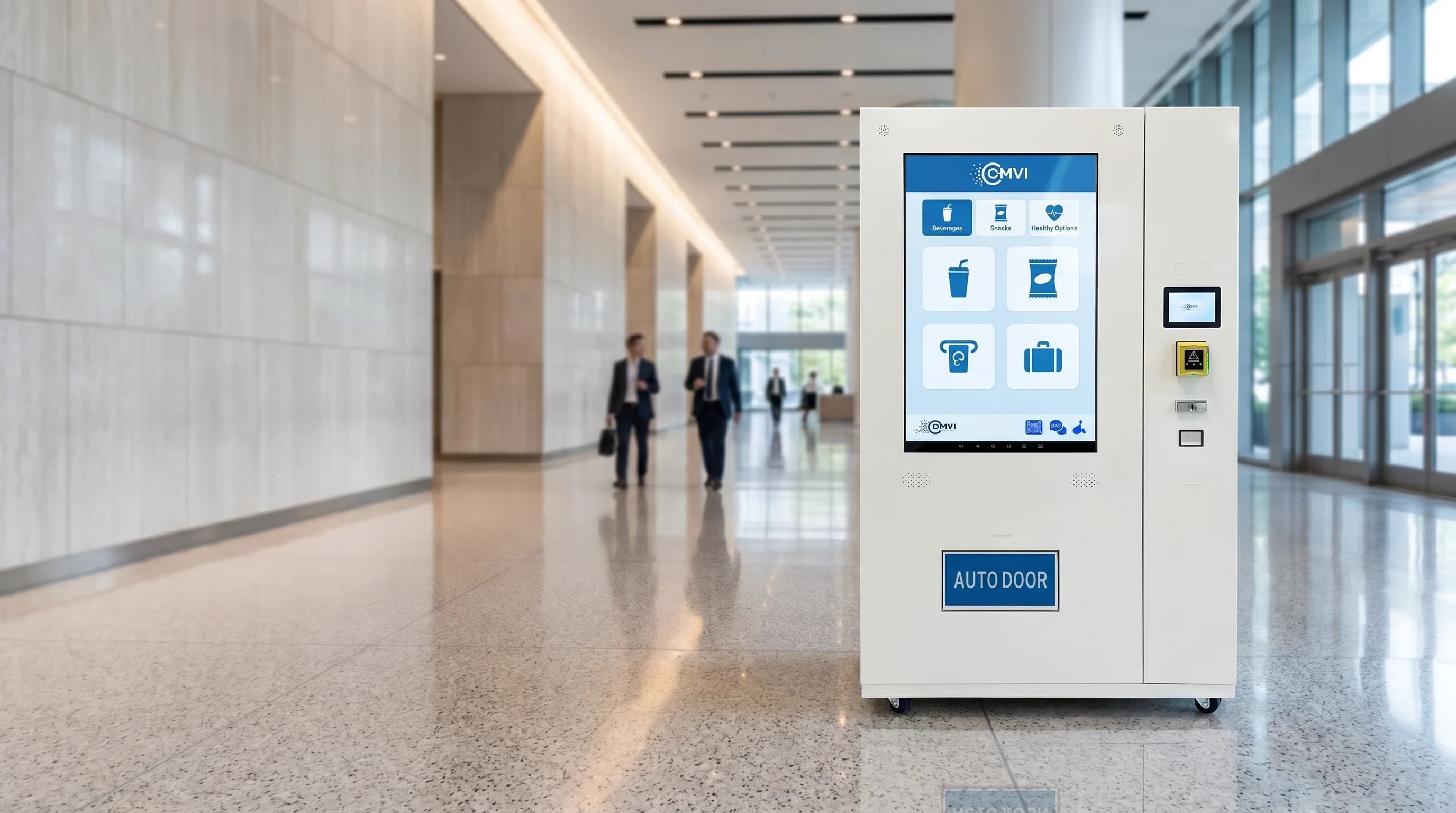
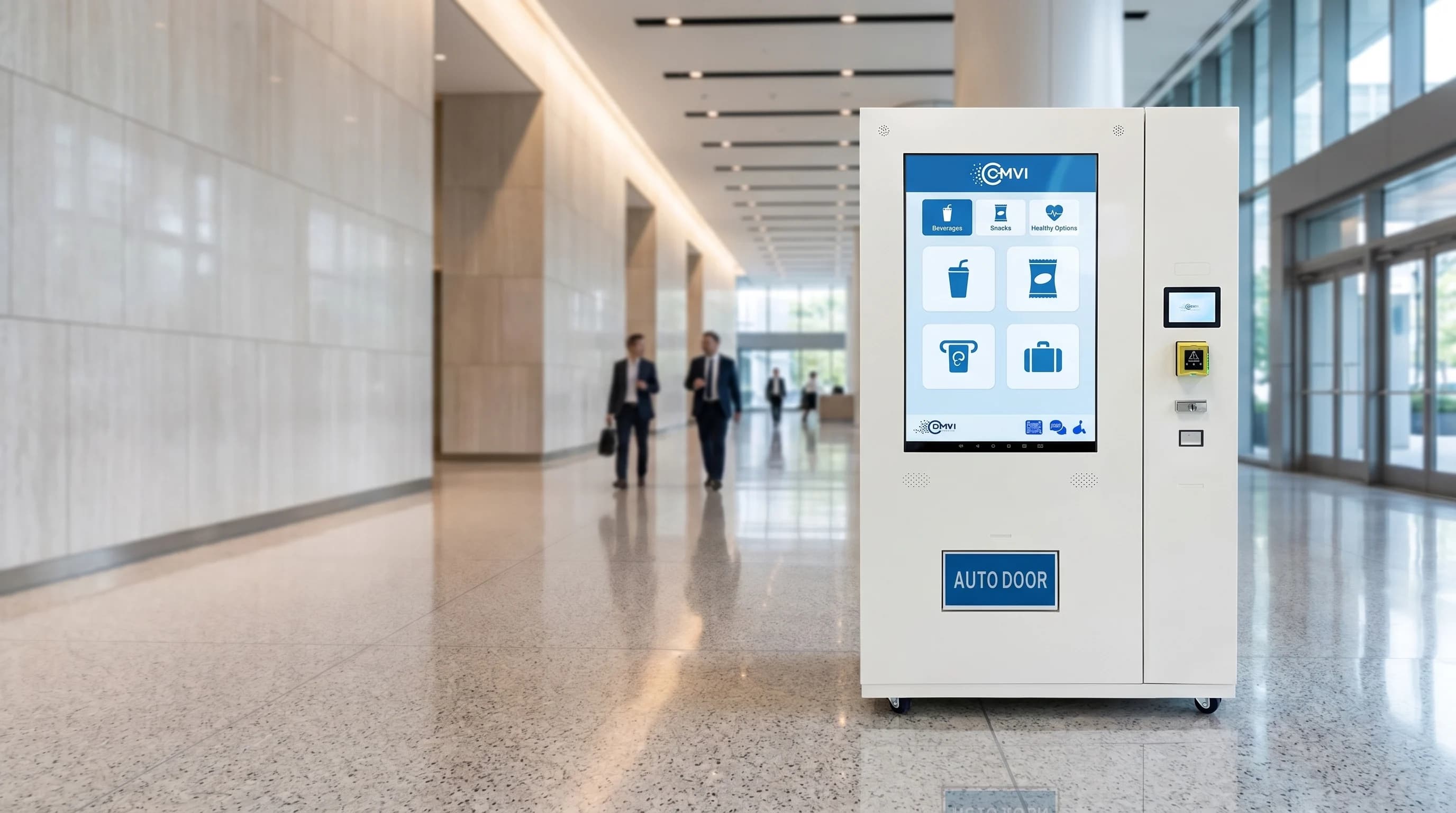
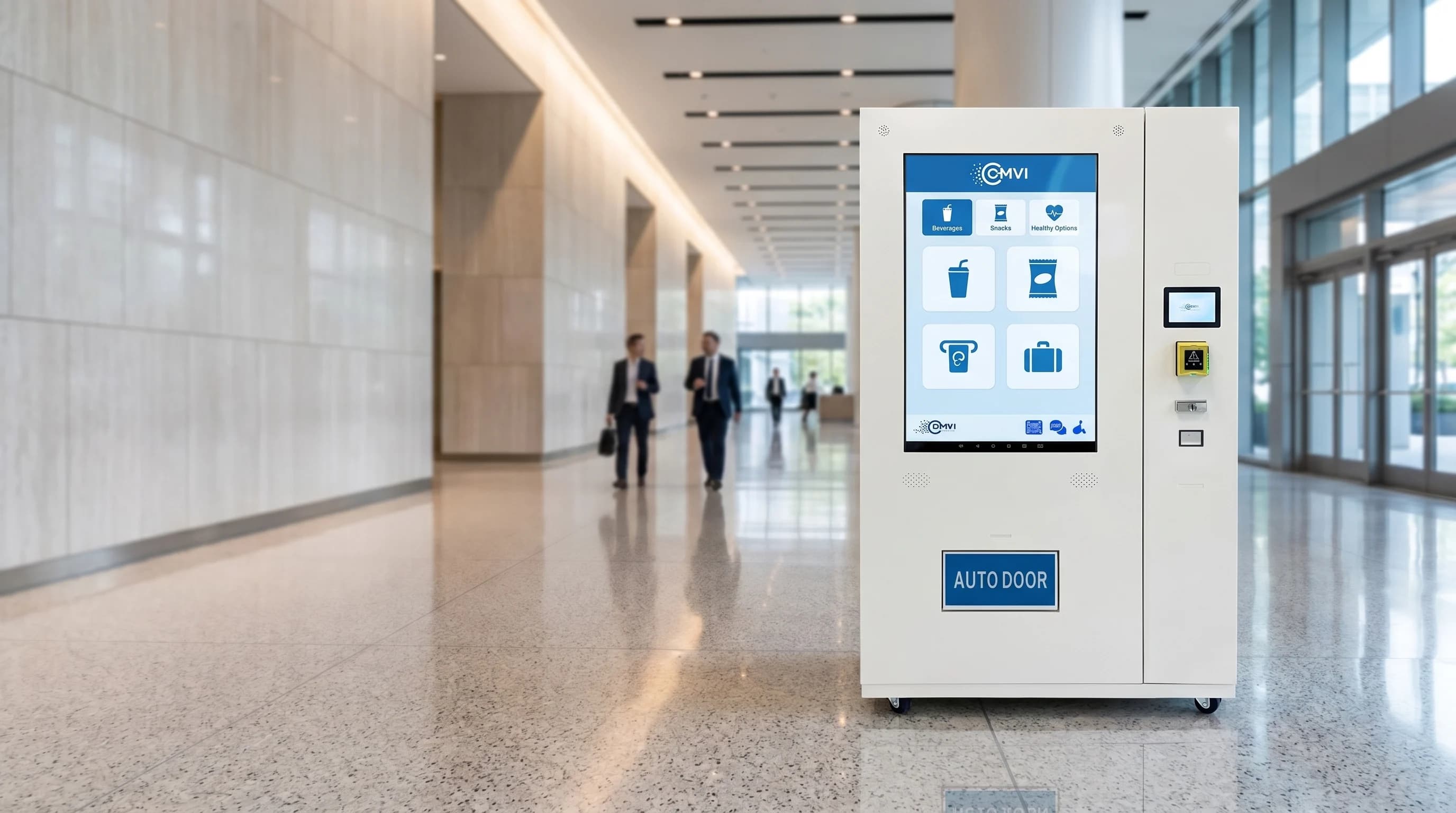
A digital vending machine replaces or supplements this with a digital screen, in most modern configurations, a touchscreen display ranging from small informational panels to large-format screens measuring 21 to 50 inches on DMVI's machine lineup. The screen shows product images, pricing, promotional content, and any brand-specific interface the operator has configured.
This matters for specialty products in ways that do not apply to commodity snacks. A customer deciding whether to purchase a $25 trading card mystery pack responds differently to a high-resolution image of the pack, a description of what it might contain, and a clear price display than to a number on a keypad next to a paper label. The digital display layer is the machine's sales interface, it is what converts a customer who approaches the machine into one who completes a purchase.
The vending machine features that improve customer experience guide covers how the display and interface layer affects customer behavior in detail.
Layer 2: Digital Payment
"Digital vending machine" is also used to mean a machine that accepts digital or cashless payment. NFC contactless cards and mobile wallets rather than coins and bills.
According to Kande VendTech's 2024 vending industry data, more than 70% of US vending transactions were cashless in 2024. A machine that cannot accept digital payment is not accessible to the majority of customers who approach it with a phone, a tap-to-pay card, or a smartwatch.
Digital payment capability in a vending machine requires specific payment hardware, a reader that processes NFC signals from contactless cards and mobile wallets, certified for unattended retail use. DMVI offers Nayax cashless payment hardware for its standard vending lineup, charged separately upfront. Nayax supports tap-to-pay, Apple Pay, Google Pay, and chip card transactions.
The payment layer is distinct from the display layer. A machine can have a large touchscreen without NFC payment capability, and vice versa. A fully digital vending machine in the most complete sense includes both.
Layer 3: Digital Management (Cloud Connectivity)
The third meaning of "digital" in vending machine context is internet connectivity and cloud management, the machine being connected to a software platform that gives the operator remote visibility and control.
A digitally managed vending machine reports inventory levels, sales data, machine health status, and payment hardware status to a connected platform accessible from any internet-connected device. The operator can see what is selling, what needs restocking, whether the machine has flagged a mechanical issue, and what the revenue total is for the day, week, or month, without physically visiting the machine.
For DMVI machines, this platform is VendingTracker. It provides live inventory monitoring with low-stock alerts, sales reporting by product and time period, machine health notifications, and remote pricing controls. The vending machine data operations guide covers how operators use VendingTracker's data layer in practice.
A machine with digital display and digital payment but no cloud connectivity is more capable than a traditional vending machine, but it is not fully digitally managed. The operator is still relying on scheduled visits and phone calls to understand what is happening with the machine.
Layer 4: Digital Interface for the Operator
Related to cloud management but worth distinguishing separately: the operator interface. A digitally managed vending machine is operated through software, a dashboard that shows machine data, allows product planogram updates, lets the operator adjust pricing remotely, and surfaces alerts when action is needed.
Traditional vending machine operation happens through physical interaction with the machine: opening the machine to count inventory, pressing buttons on the machine's internal panel to pull transaction totals, checking the cash box to understand revenue.
The digital operator interface replaces most of those physical interactions with a software dashboard accessible remotely. This is what makes operating multiple machines across different locations practical for a single operator or a small team. Without remote visibility through a digital interface, each additional machine in a route adds a proportional increase in the time required to manage it. With VendingTracker's digital management layer, the operator's time per machine decreases as the route grows because the software does the information gathering that previously required physical visits.
How These Layers Combine in DMVI's Machines
DMVI's digital vending machine lineup includes all four layers: digital touchscreen display, digital cashless payment via Nayax, digital cloud management via VendingTracker, and a digital operator interface accessible remotely.
Their machines also include purpose-built dispensing mechanisms, conveyor belt shelving and elevator delivery, that are not specifically "digital" in the marketing sense but are the mechanical infrastructure that makes the machine viable for specialty products that standard coil dispensing cannot handle.
The Wall-Mounted machine ($4,995, financing subject to approval) is the entry point: large touchscreen, Nayax NFC payment, VendingTracker management, zero floor space, mounted directly to a wall. The Option 4 ($12,995, financing subject to approval) adds four distinct product zones and a larger footprint for higher-variety deployments. The M1 ($21,995 purchase) provides maximum product capacity with a large-format touchscreen, 140 SKU capacity, and all four digital layers as standard.
The vending machine technology guide covers the full technical specification of DMVI's digital machines. The smart vending machine guide covers the comparison between digital/smart machines and traditional formats in more depth.
Why "Digital" Without Specification Is Incomplete
A buyer evaluating a machine described as "digital" should ask which of these layers it actually includes. All four can be present. Only some may be. And the practical implications are different depending on which layers the machine includes and which it does not.
A machine with a touchscreen but no cloud connectivity cannot provide remote inventory monitoring. A machine with NFC payment but no touchscreen has a limited product presentation interface. A machine with a management dashboard but no real-time inventory monitoring requires manual stock checks.
The honest evaluation questions are: What does the screen show, and what size is it? What payment methods does it accept? What does the management software show, and how is the operator alerted when action is needed? These questions produce a complete picture of a machine's digital capability regardless of how broadly or narrowly the manufacturer has used the term.
The Buyer's Checklist for Evaluating a Digital Vending Machine
When evaluating a machine marketed as digital, these questions produce a complete picture of what the machine actually does across all four layers.
Display layer questions: What is the screen size? What resolution does it display? Can product images be loaded and updated remotely, or does updating the product catalog require a physical visit to the machine? Can the interface be branded with the operator's logo and color scheme?
Payment layer questions: Does the machine accept NFC tap-to-pay? Does it accept Apple Pay and Google Pay specifically? Does it accept chip card insertion? Is the payment hardware included in the machine price, or is it an add-on? Who provides the payment hardware, and who is responsible for its support if it has a problem?
Management layer questions: What platform manages the machine remotely? What does it show, inventory, sales, machine health, payment status? How are alerts delivered, email, push notification, dashboard flag? Can pricing be changed remotely without a physical visit? How many machines can be managed in a single account?
Operator interface questions: Is the dashboard accessible on mobile? Can multiple users access the same account? How far back does historical data go? Can data be exported?
These questions do not require technical expertise to ask or to understand the answers to. They produce the specific information needed to compare machines across all four digital capability layers rather than relying on a marketing label to carry the comparison.
Digital Vending and the Specialty Product Operator
For operators selling commodity products at low price points, the digital layers matter primarily at the payment level, cashless capability captures transactions that a cash-only machine would miss, and at the management level, where remote inventory monitoring reduces unnecessary visits.
For operators selling specialty products at higher price points, all four digital layers contribute to commercial outcomes in ways that compound.
The display layer is the sales interface for a $30 collectible or a $45 premium beauty kit in ways it is not for a $2 bag of chips. A customer deciding on a $2 snack does not need product photography and a description. A customer deciding on a $30 purchase they were not planning to make when they walked past the machine may need both.
The payment layer matters more at higher transaction values because the gap between cashless acceptance and cash-only is wider. A customer who would pay $30 from their phone is unlikely to go find an ATM to produce cash for the same purchase.
The management layer matters more for specialty products because they have more variety and often more restocking complexity than a commodity assortment. VendingTracker's product-level sales data tells a specialty operator which of their 20 SKUs are generating velocity and which are sitting, information that directly affects which products get reordered and which get replaced with better-performing alternatives.
The smart vending machine guide covers the full capability comparison for operators evaluating machine formats for specialty product deployments. Visit digitalmediavending.com to discuss how DMVI's digital vending lineup fits a specific product and location.
Digital Vending in the Context of the Broader Machine Decision
Understanding what digital means is a useful starting point, but it is not the complete machine selection decision. The digital layers describe what the machine can show, how it accepts payment, and how it is managed. They do not describe what the machine can dispense, which is the physical layer that determines whether the machine can actually handle the operator's specific product.
A machine that is fully digital across all four layers but uses standard coil dispensing cannot handle a cupcake, a plush toy, or an oversized collectible. The digital capabilities are real and valuable, and the dispensing mechanism makes them irrelevant for certain product categories.
The complete machine selection decision covers both the digital layers and the physical layer together. The complete guide to custom vending machines covers the full decision including machine format, dispensing mechanism, product compatibility, and the digital management layer. The what to sell in a vending machine guide covers the product selection side of the decision.
Both parts of the decision need to be right for the deployment to work. A fully digital machine with an incompatible dispensing mechanism, or a correctly configured dispensing mechanism with no cashless payment capability, will underperform a machine that gets both right.
Digital Vending and Location Interaction
The commercial value of a digital vending machine's capabilities is not fixed. It varies with the deployment location and the customer population at that location.
A 50-inch touchscreen with rich product photography produces more lift at a premium hotel lobby, where the customer has time to browse and the purchase is discretionary, than at a busy transit corridor, where the customer wants to complete the transaction in under 30 seconds. The screen is the same machine capability. The context changes how much it contributes to the transaction rate.
Similarly, cashless payment's commercial impact varies by how cash-dominant or cashless-dominant the location's customer population is. A university campus with a student demographic that almost universally uses mobile wallets gets more lift from NFC payment capability than a location serving an older demographic that still carries more cash.
This is not an argument against digital capabilities. It is an argument for thinking about which capabilities matter most for a specific deployment and confirming that the machine delivers them. The vending machine features guide covers how individual machine capabilities interact with specific location and demographic contexts.
Conclusion
"Digital vending machine" refers to one or more of four specific capabilities: a digital display, digital payment, digital cloud management, and a digital operator interface. A fully digital vending machine includes all four. Many machines marketed as digital include some but not all of these capabilities. Understanding which layers are present in a specific machine determines whether it fits the operational requirements of a specific deployment.
DMVI's machines are digital across all four layers. Start the conversation at digitalmediavending.com.
Sources
Looking for a digital vending machine?
DMVI builds connected machines with touchscreen interfaces, cashless payment, and operator software visibility.