Vending Machine Passive Income: What the Numbers Actually Look Like
Vending machines appear in almost every "passive income" list published on the internet. The pitch is intuitive: you place a machine, stock it, and it generates money while you sleep. No employees, no fixed hours, no customer service. Pure unattended revenue.
That pitch is not wrong. But it is incomplete in ways that matter for anyone who wants to evaluate vending honestly before committing to a machine purchase.
This guide gives you the real revenue numbers for different vending machine formats, a clear eyed description of what "passive" actually means in this context, and the factors that determine whether a vending deployment generates meaningful income or sits in a corridor converting nobody.
Why Vending Gets Called Passive Income
The "passive income" label sticks to vending because the operating model is structurally different from a business that requires your physical presence to generate revenue.
A staffed retail store requires you or an employee to be there during operating hours. A vending machine operates 24 hours a day, 7 days a week, without anyone present. Customers can purchase at 2 a.m. on a Tuesday. The machine does not call in sick. It does not need breaks. It does not require you to be in the same building.
That structural difference is real. A well placed vending machine with the right product genuinely generates revenue without your active presence for most of its operating time. The "passive" label, while a simplification, reflects something true about the model.
The simplification is in what it omits: the machine still requires restocking, cleaning, occasional maintenance, inventory management, and strategic optimization. These activities don't happen constantly, but they happen regularly. "Low active" is a more precise description than "passive." The operational distinction matters because it changes the revenue math. A truly passive investment generates returns with no ongoing attention. A vending machine generates returns with ongoing but limited attention, and that attention affects performance directly.
What "Low Active" Looks Like in Practice
The typical time investment for a single vending machine deployment, once it is installed and running, is:
Restocking visits. Depending on the machine's sales volume and capacity, restocking frequency ranges from once a week to once every two to three weeks. A high volume machine in a premium location might need restocking twice a week. A lower traffic machine might go three weeks between visits. Each restocking visit is typically 30 to 90 minutes.
Remote monitoring. VendingTracker, with an annual license paid separately upfront, gives operators real time inventory visibility from any device. Instead of driving to a location to check inventory levels, an operator logs in and sees exactly which SKUs need restocking and when. This replaces a significant portion of the "check visit" that traditional vending operators required.
Pricing and SKU adjustments. Remote pricing controls through VendingTracker allow operators to adjust prices and evaluate product performance without a site visit. This is where performance optimization happens, and it is genuinely a desk activity rather than a field activity.
Maintenance responses. Modern digital vending machines are reliable, but mechanical equipment develops issues. A conveyor jam, a payment terminal glitch, or a software update that needs confirmation can occasionally require a technician visit. DMVI machines are supported by US based technical staff, which reduces the operator's need to troubleshoot independently.
Location relationship management. If your machine is in a mall corridor, hotel lobby, or other leased location, there is an ongoing relationship with the location owner or manager. This typically involves periodic communication, revenue share reporting, and occasional negotiation, but it is not a daily or weekly demand on your time.
Across these activities, a single machine operator who has chosen a good location and a product with genuine demand typically invests fewer than 10 hours per month in machine management after the initial setup and learning curve. That is meaningfully different from a staffed business while being meaningfully different from a truly hands off financial instrument.
Revenue Ranges by Machine Type: Confirmed Numbers
Revenue performance for vending machines varies significantly by machine format, product category, and location quality. The following ranges come from confirmed Digital Media Vending International operator data.
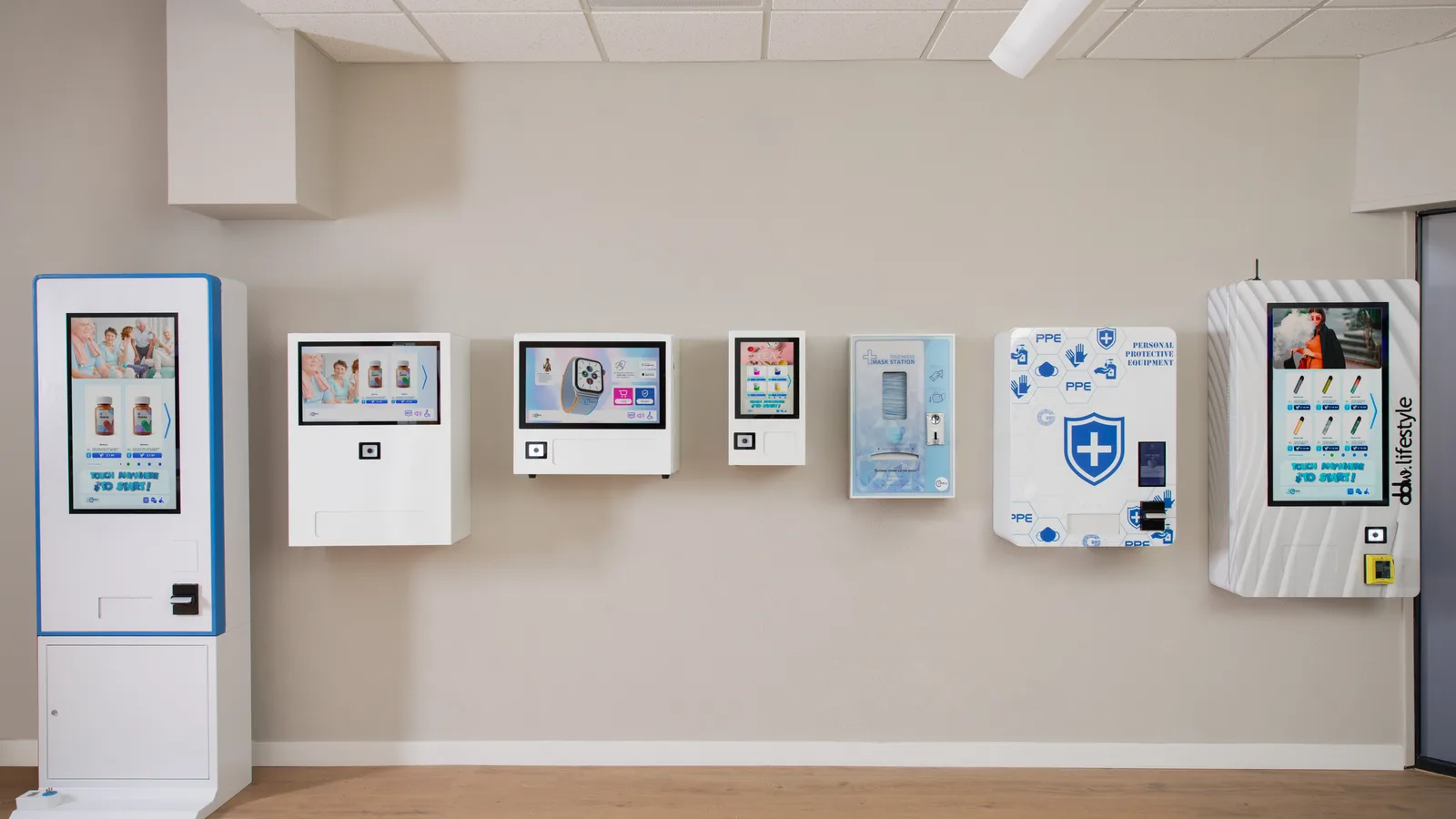
Wall Mounted Vending Machine ($4,995)
DMVI's Wall Mounted machine generates between $800 and $3,000 per month in gross revenue for operators.
At $800 gross per month with a 50% product margin, an operator nets approximately 106/month), rent or revenue share, and product acquisition costs. At $3,000 gross per month with a 60% margin, an operator nets approximately $1,800 before those same costs.
The Wall Mounted format works well in locations with consistent foot traffic and limited floor space: hotel corridors, gym lobbies, salon waiting areas, and specialty retail environments where the machine occupies wall space instead of floor space.
Option 4 ($12,995)
DMVI's Option 4 generates between $3,000 and $12,000 per month in gross revenue depending on location and product strategy.
At $6,000 gross per month (the midpoint) and a 50% margin, an operator nets approximately $3,000 before the quoted monthly financing payment and other operational costs. For an operator comparing the Option 4 to the Wall Mounted unit at roughly the same product type, the higher capacity and multi zone format justify the higher cost when location foot traffic supports the volume.
M1 ($21,995)
The M1 is DMVI's flagship format and their most widely deployed machine. Revenue data for M1 operators shows the widest range in the lineup:
$6,000 to $7,000 per month at conservative performance. At 50% margin, this generates approximately $3,000 to $3,500 net before the quoted monthly financing payment and other costs.
$25,000 to $30,000 per month for strong performers. At 50% margin, this generates approximately $12,500 to $15,000 monthly net.
$87,000 per month documented for a confirmed San Francisco Bay Area operator. This represents exceptional performance at the intersection of product selection, location quality, and execution. It is not an average or a realistic baseline for most first time operators.
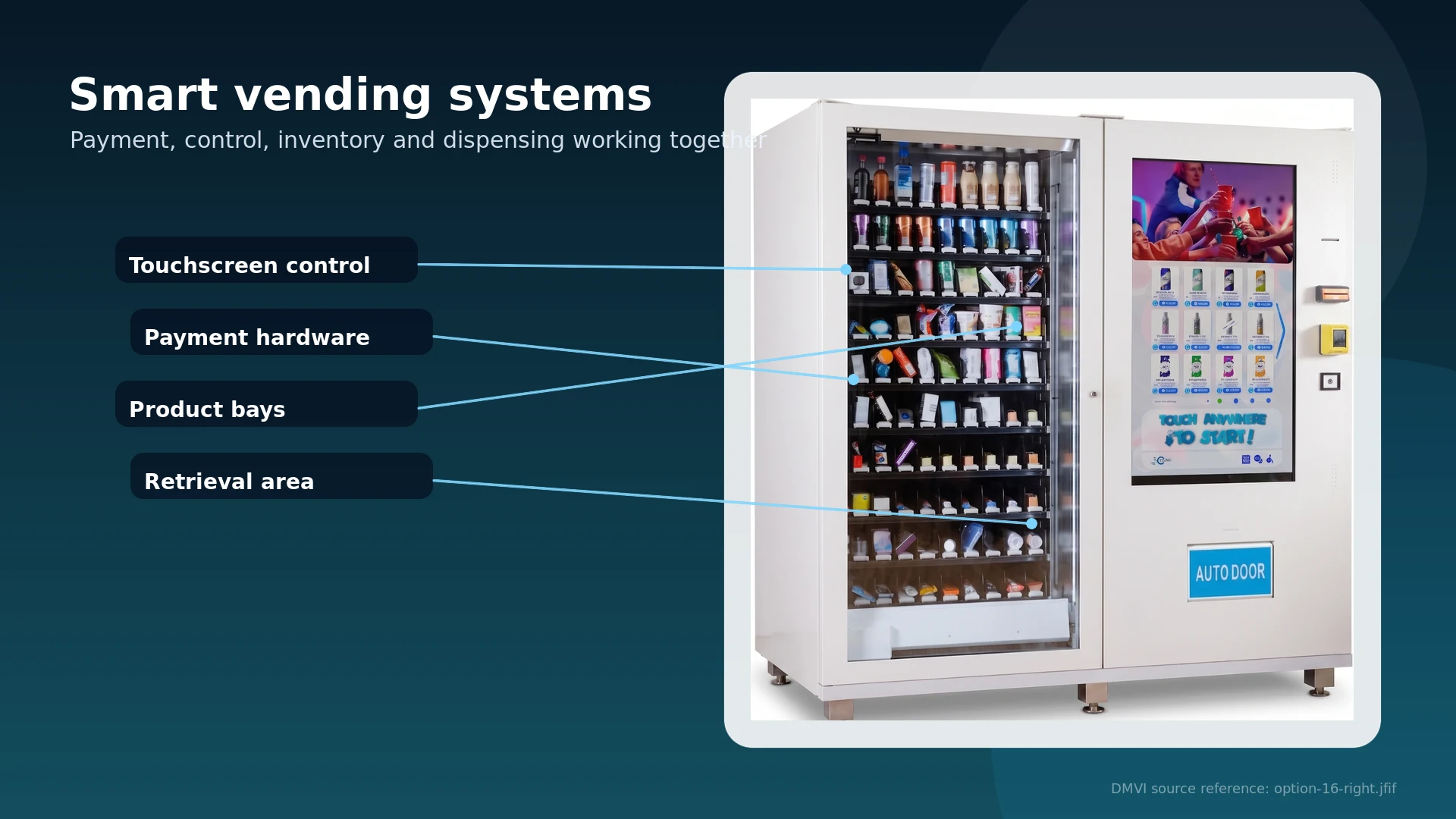
The M1 holds up to 140 SKUs, features large touchscreens for product browsing, and is available through a financed purchase subject to a deposit and approval. The wrap and annual VendingTracker license are paid separately upfront; branded UI, custom shelf layout, and California based technical support terms are itemized in the quote.
DMVI provides direct mall location introductions for M1 operators, which is relevant for operators who want access to premium locations but don't have established relationships with mall management.
M2 and M3 ($30,995 and $39,995)
DMVI's large format machines are positioned for high volume or flagship deployments. Revenue performance scales with location and product, following the same product margin times volume model as the M1. Operators choosing the M2 or M3 are typically deploying in contexts where the additional capacity and format size justify the higher machine cost.
The Honest Calculation: Gross Revenue vs. Net Income
Gross revenue from a vending machine and net income from a vending machine are very different numbers. The gap between them is where operators make planning mistakes.
The costs that reduce gross revenue to net income include:
Product cost. The margin between what you pay for the product and what you sell it for. This is the most significant variable. An operator selling Pokémon mystery packs at 70% gross margin is in a fundamentally different position than one selling snacks at 25% margin. Product selection is where most of the performance difference between operators comes from.
Machine financing. DMVI's standard in house financing requires a 25%–50% machine deposit, with the remaining machine balance paid in 12 monthly payments starting 30 days after shipment. Quoted interest is 8%–15%, depending on repayment ability and approval conditions. Shipping, the payment terminal, annual software license, wrap, and topper are paid separately upfront. Financing is subject to approval; DMVI does not offer an all inclusive lease.
Location costs. Depending on the location arrangement, this could be a flat monthly fee, a revenue share percentage, or a lease payment. Premium mall locations typically involve revenue share agreements. Hotel lobby placements vary. Understand this cost before modeling returns.
Restocking and travel. The time and fuel cost of restocking visits. At low volume, this is minimal. As the deployment scales across multiple machines, it becomes more significant and may justify a dedicated restocking run schedule.
Machine maintenance. Modern machines are reliable, but mechanical and electronic components occasionally need service. Budget for occasional maintenance costs even if you're purchasing from a manufacturer with strong US based support.
Merchant processing fees. Cashless payment processing involves a per transaction fee from the payment processor. Nayax handles payment processing for DMVI machines, and standard merchant processing fees apply.
A realistic net income calculation starts with gross revenue and then subtracts product cost, financing, location fees, and operational costs. The remainder is what the machine earns after expenses.
Where Passive Vending Income Goes Wrong
The most common reasons vending deployments underperform their projected returns are predictable and avoidable.
Wrong location. A machine in a low foot traffic location will not perform. The revenue ceiling for a vending machine is set by how many qualified customers walk past it, and no amount of product quality or pricing optimization overcomes a location where nobody is. Location research and qualification before deployment is the single highest leverage activity in vending machine success.
Wrong product for the location. A cupcake machine in a gym lobby may underperform. A protein supplement machine in the same location may excel. The product has to match the customer context. A mismatch between product and environment produces poor conversion regardless of machine quality.
Wrong machine for the product. Coil based dispensing for a fragile product creates damaged goods and a poor customer experience. A machine that doesn't handle your product correctly generates returns, complaints, and reputation damage in the location. Custom machines engineered for the specific product, like DMVI's conveyor belt and elevator delivery format, address this at the hardware level.
Underestimated restocking requirements. A machine that runs out of product on a Friday afternoon in a high traffic location loses revenue it cannot recover. Operators who underestimate restocking frequency discover this in their first month of data.
No visibility into performance. Operating without management software means operating without data. Operators who cannot see inventory levels, sales patterns, and pricing performance in real time cannot optimize their deployment. VendingTracker has an annual license paid separately upfront; performance visibility is not optional for running a profitable vending operation.
How Technology Reduces the Active Work
The difference between a traditional vending route operation and a modern digital vending deployment is primarily in the software layer.
A traditional vending operator drives a route, physically checks each machine, counts inventory, restocks, and drives to the next location. The route is the job. It is time consuming and the limiting factor on how many machines one operator can manage.
A digital vending operator using VendingTracker knows which machines need restocking before leaving the house. They plan an efficient restocking route based on actual inventory data rather than scheduled visits. They adjust pricing on underperforming SKUs from their phone. They receive alerts when a machine needs attention rather than discovering a problem on a routine visit.
This doesn't eliminate the operational work, but it concentrates it efficiently and removes most of the uninformative visits. An operator managing 5 machines with VendingTracker might invest the same total hours as an operator managing 2 machines without it.
For operators building toward a scaled vending income, the software layer is what makes scaling practical. DMVI offers VendingTracker with an annual software license paid separately upfront.
Realistic Expectations for New Operators
First time vending operators should plan for a learning curve in the first 60 to 90 days of a deployment.
The first weeks involve understanding your machine's demand patterns at your specific location. Which SKUs move fastest? What pricing is the market willing to support? When does traffic peak? When does it slow? These are questions that data answers, but data takes time to accumulate.
The first 90 days also include establishing the restocking rhythm, identifying any maintenance quirks specific to your installation, and learning the software well enough to use it efficiently.
Operators who commit to tracking performance data from day one and adjusting their SKU mix and pricing based on that data reach stable profitable performance faster than operators who set and forget. Vending is more passive than a staffed business but more active than a financial investment. The active portion is where performance is determined.
For operators buying an M1 from DMVI, the direct mall location introduction included in the purchase removes one of the most difficult early steps. Establishing a location in a quality mall environment without that introduction requires navigating mall management relationships from scratch, which is time consuming and uncertain. The introduction converts that from a cold outreach challenge to a facilitated process.
FAQ
Is vending machine income truly passive? Vending machines generate revenue without constant active presence, which is why they appear in passive income discussions. In practice, they require periodic restocking, remote monitoring, occasional maintenance, and ongoing performance optimization. "Low active income" is a more accurate description than "passive income." The operational time investment is typically fewer than 10 hours per month per machine for an experienced operator with management software.
How much money can a vending machine make per month? Revenue depends on machine format, product, and location. Digital Media Vending International's confirmed operator data shows: Wall Mounted machines generate $800 to $3,000 per month gross, M1 operators earn $6,000 to $87,000 per month gross depending on performance tier. For context on what these ranges mean after costs, see the financial modeling section above.
What product categories generate the highest vending machine income? High margin products with genuine demand at the deployment location generate the best returns. Collectibles (particularly Pokémon and trading card game products), premium beauty, specialty food, and electronics accessories at premium price points have the best documented performance for DMVI operators.
What is the minimum investment to start a vending machine business? DMVI's Wall Mounted vending machine starts at $4,995 with in house financing available subject to a 25%–50% machine deposit and approval. This is the accessible entry point into custom autonomous retail.
How do you track income from a vending machine without visiting it constantly? VendingTracker, with an annual license paid separately upfront, provides real time inventory data, sales reporting, and machine health monitoring through a remote dashboard. Operators can see how much each SKU has sold, what current inventory levels are, and whether the machine is operating normally, all from any internet connected device.
How many vending machines do you need to make a full time income? This depends on the machines' individual performance. At $3,000 monthly net from a Wall Mounted machine after costs, five machines could generate $15,000 monthly. At $15,000 monthly net from an M1 in a strong location, one or two machines produce full time income equivalent to many salaried positions. The answer is product- and location dependent.
Is vending machine income taxable? Yes. Vending machine revenue is ordinary business income for tax purposes. Operators should consult a tax professional about business structure, depreciation on machine costs, and applicable deductions. This guide does not constitute tax advice.
Conclusion
Vending machines generate income with less active labor than most business models. That is true. The degree to which that income is "passive" depends on the machine format, the product, the location, and the software infrastructure behind the deployment.
Digital Media Vending International's machine lineup, from the Wall Mounted unit at $4,995 to the M1 at $21,995, represents the range of entry points into custom autonomous retail. The revenue ranges behind those machines, $800 to $3,000 per month for Wall Mounted operators and $6,000 to $87,000 per month for M1 operators, reflect real performance data from real deployments.
The gap between the floor and the ceiling in those ranges is determined almost entirely by product selection and location quality. Those two variables are where the performance outcome is decided, before the machine is purchased, before it is installed, and before a single transaction runs through it.
For a full look at vending machine business profitability across different scenarios, see Vending Machine Business Profitability. For a comparison of buying vs. leasing options, see Buying vs Leasing Vending Machine Guide.
Sources
- Kande VendTech: Vending Machine Industry Statistics
Discuss your project with DMVI
Bring your product samples, site requirements, and intended customer experience to the conversation.