Vending Machine Business Plan: What to Include and How to Build One That Works
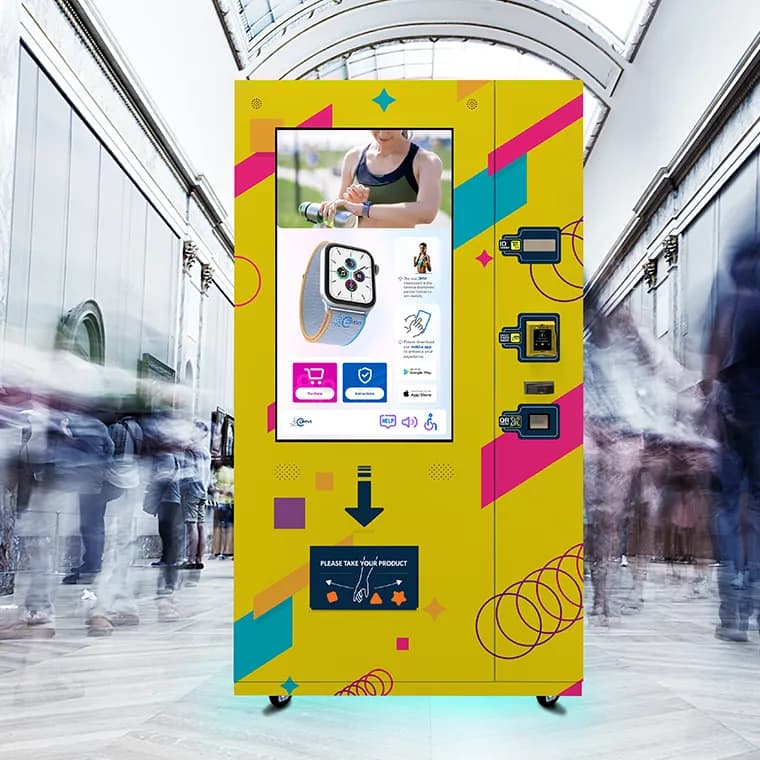
The most common response when an experienced small business advisor asks a new vending machine operator about their business plan is some variation of: "I know my location, I know my product, and I know the machine I want to buy." That is not a business plan. That is a good start on the assumptions that go into a business plan.
Current DMVI vending machine financing: DMVI no longer offers all-inclusive leases. Standard machine financing is subject to approval, with a 25%–50% machine deposit depending on stock status and the remaining machine balance paid in 12 monthly payments starting 30 days after shipment at 8%–15% interest, based on repayment ability and other approval conditions. The quote confirms the deposit percentage. All applicable upfront costs are due at signing, including the wrap, optional topper, payment terminal, annual software license, shipping, and sales tax. Financing is not guaranteed; DMVI reserves the right to deny financing. A UCC filing applies, and a personal guarantee may be required. See the vending machine financing terms for details.
The vending machine business plan matters for two distinct reasons. The first is practical: building the plan forces the operator to model the numbers, confront the assumptions, and discover whether the business makes economic sense before committing capital. The second is transactional: a business plan is the documentation that supports financing applications, partnership conversations, and, eventually, the sale of the business. A business without a plan is harder to finance, harder to present to prospective venue operators, and harder to sell when the time comes.
This guide covers every section a vending machine business plan should include, in the order that makes the plan most useful as both a planning tool and a presentation document. It is written for operators building their first plan, but the framework applies equally to operators adding a second location or a new product category to an existing route.
Why a Business Plan Matters More Than Most Vending Advice Suggests
The vending machine industry's low barrier to entry, start with one machine, no employees required, no storefront needed, creates the impression that planning is optional. This impression is expensive.
The operators who build a plan before deploying a machine make better decisions about location selection because they have modeled the revenue needed for the machine to be profitable and can evaluate candidate locations against that threshold. They make better decisions about machine format because they have mapped the product's physical requirements to the machine's dispensing specifications. They make better financial decisions because they know their break-even timeline and can manage cash flow during the ramp-up period.
The operators who skip the plan and deploy on intuition consistently make more expensive mistakes than those who planned first. The mistakes are predictable, wrong location, wrong machine format, underestimated costs, and most of them are avoidable with honest pre-deployment analysis.
A business plan is not a formality. It is the document that converts enthusiasm into an executable, financially grounded operation.
Section 1: Business Model and Product Category
The first section of a vending machine business plan states clearly what the business is, what it sells, and why that product in that format is the right approach.
Product category: What specific product will the machine vend? Not "specialty products" or "health and wellness items" but the specific product: single-serve protein bars and ready-to-drink protein shakes, or Pokémon booster packs and mystery boxes, or travel-size personal care products. The more specific this description, the more useful it is for every subsequent section of the plan.
Why this product: What is the purchase motivation that drives a customer to buy this product from a vending machine in the planned location? The answer should be specific and behavioral, not "people like protein bars" but "gym members exiting a workout session have an immediate physiological recovery signal that drives supplement purchases at the point of departure from the facility."
Business model: How will the business generate revenue? Direct product sale through owned machines at placed locations with a revenue-share or flat-fee venue agreement. This sounds obvious stated directly, but writing it out forces clarity about the economic structure before the plan proceeds to the numbers.
Target market: Who is the customer? Age range, spending power, and the context in which they encounter the machine. A TCG collector at a gaming venue on a Saturday afternoon is a very different customer profile from a corporate employee in an office building break room on a Wednesday morning. The target market definition shapes every subsequent section.
Section 2: Market and Location Analysis
The market analysis in a vending machine business plan does not need to be a comprehensive industry report. It needs to answer the specific question: is there sufficient demand for this product, at this location, at the planned price point, to support the machine's economics?
Location evaluation: Describe the specific location or location type being targeted. What is the verified foot traffic? What is the source of that verification, turnstile count, comparable operator data, physical observation? What is the demographic profile of the location's visitors, and how closely does that profile match the target market defined in Section 1?
DMVI's location strategy guide covers the location evaluation framework in detail, including how to source verifiable foot traffic data and what red flags to avoid in location selection.
Competitive analysis: Are there existing vending machines at or near the planned location? If yes, what product categories do they serve, and is the planned machine differentiated enough to serve a distinct demand rather than compete directly? In most specialty vending deployments, competition with existing machines is limited because the product category itself is differentiated, a TCG vending machine at a gaming venue is not competing with the snack machine in the same venue.
Location deal structure: What is the proposed venue commission or flat fee arrangement? At what percentage or dollar amount? What term length is expected, and is the agreement transferable if the business is sold?
Section 3: Machine Specifications and Format
The machine section of the business plan connects the product to the hardware. It documents the specific machine being purchased, why that format is appropriate for the product and location, and the key specifications that confirm the match.
Machine selection: Which DMVI machine format has been selected? Wall-Mounted (106/month financed), Option 4 (276/month financed), or an M-Series machine? State the format, the purchase or financing price, and the monthly financing obligation if applicable.
Dispensing mechanism justification: Explain why the selected machine's dispensing mechanism, conveyor belt shelving, elevator delivery, or automatic door delivery, is appropriate for the specific product being sold. If the product is fragile, irregularly shaped, or outside standard snack dimensions, the plan should document that the machine's dispensing mechanism is configured for it.
Cashless payment confirmation: Confirm that the machine includes Nayax NFC and contactless payment hardware. For a target demographic that primarily uses tap-to-pay, Apple Pay, or Google Pay, this is a prerequisite for the machine to capture the majority of potential transactions.
Software and telemetry: Confirm VendingTracker is included and describe how it will be used operationally, inventory alerts, sales reporting, pricing controls, machine health monitoring. Investors and financing providers who review the plan will recognize VendingTracker as infrastructure that makes the business manageable and documentable.
Section 4: Financial Projections
This is the most important section of the vending machine business plan. Every other section supports the financial projections; the projections determine whether the business is viable.
Startup costs:
-
Machine purchase or first month's financing payment
-
Initial product inventory
-
LLC formation and registered agent (if applicable)
-
Business license and any required permits
-
Insurance (General Liability, Inland Marine, or BOP, types confirmed for vending operators)
-
First month's venue commission or deposit (if required)
-
Any installation costs beyond DMVI's included installation
Monthly revenue model:
-
Projected gross revenue (conservative, realistic, and optimistic scenarios, use the lower end for planning)
-
Product cost (% of gross revenue, typically 40 to 60% depending on product category)
-
Venue commission (% of gross revenue at the negotiated rate)
-
Machine financing payment (if applicable)
-
Restocking costs (time and travel, if measurable)
-
Net monthly contribution
Break-even analysis: Determine the gross revenue needed to cover the approved monthly financing payment and all operating expenses. For example, with a 20% venue commission and 50% product cost, 30% of sales remains before financing, restocking, and overhead. Divide those remaining monthly costs by 0.30 to estimate the required sales, then separately model recovery of the deposit and signing costs.
DMVI's vending machine profitability guide covers the profit model in detail, and their vending machine financials guide provides a detailed framework for financial modeling appropriate for the business plan context.
12-month and 36-month projections: Build revenue and expense projections forward from the break-even analysis, including any planned machine additions, the reinvestment model, and the expected revenue trajectory as the route matures.
Section 5: Operating Plan
The operating plan describes how the business runs day to day. For a single-machine business, this may seem like an unnecessary formality. It is not: the operating plan is the document that makes the business transferable and scale-ready.
Restocking schedule and process: How often will the machine be restocked? Based on what trigger. VendingTracker low-inventory alerts or a fixed schedule? What products will be stocked in what quantities? Where is product purchased (wholesale supplier, distributor, retail)?
VendingTracker review cadence: How frequently will VendingTracker data be reviewed? What is the alert response protocol, when a low-inventory alert fires, how quickly and in what way will the operator respond?
Maintenance schedule: What is the regular maintenance routine? When is the machine cleaned, what is checked on each restocking visit, and what criteria determine when DMVI support should be contacted? (See DMVI's maintenance guide for a complete framework.)
Supplier relationships: Who are the product suppliers? What are the purchasing terms, minimum order quantities, and lead times? For specialty products with limited availability (allocated TCG sets, limited-edition beauty products), how is supply managed?
Section 6: Growth Strategy and Exit
Even a first business plan should include a growth section, because the choices made in the first machine deployment affect the path to the second, the third, and beyond.
Machine 2 trigger: At what performance milestone will the operator pursue a second machine? Specific revenue threshold? Validated demand at a second location? Three months of consistent VendingTracker data from the first machine?
Reinvestment model: How will the second machine be funded? From machine 1 revenue? The reinvestment model should be specific enough to create a realistic timeline.
Exit horizon: What is the intended holding period for the business? Three to five years? A long-term operating business? At what point would the operator consider selling, and what would the business need to look like to command a 2 to 3× SDE multiple at exit?
How to Use the Business Plan With DMVI's Financing Program
The plan also demonstrates to DMVI's team that the operator has thought through the deployment seriously, the product, the location, the product-machine fit, and the revenue model. That context makes the pre-qualifying conversation more productive and helps DMVI's team recommend the right machine format for the specific deployment.
See DMVI's guide to starting a vending machine business for additional context on the full launch process that the business plan should reflect.
A Note on Business Plan Length and Format
A vending machine business plan does not need to be long. A plan that answers every question in this guide clearly and honestly is more useful than a 40-page document full of industry statistics and padding.
The format that works best for most vending machine operators: a 3 to 5 page document with one section per topic, concrete numbers throughout, and honest acknowledgment of the assumptions that could be wrong. The financial projections section can be a simple spreadsheet table rather than a narrative. The operating plan can be a structured list rather than prose paragraphs.
The test for whether the plan is complete: can someone who did not build the plan read it and understand the business, the machine, the location, the financial model, and the operational approach without asking clarifying questions? If yes, the plan is complete enough. If critical elements are unclear or missing, the plan needs more work, not because a reviewer requires it, but because the operator needs to understand those elements before deploying capital.
Building the plan before the first machine purchase is the standard. Updating it annually, or when a significant change occurs (new machine addition, new location, product category change), keeps it current and useful rather than a document built once and then ignored. The operators who maintain their plans over time have the most useful record of how the business has evolved and the clearest foundation for the next decision.
The business plan is the document that separates the operators who succeed from those who make expensive, avoidable mistakes. It is not a regulatory requirement. It is a thinking tool. Use it as one. The business plan is not a document you write and file away. It is the operating foundation that every subsequent decision builds on — machine selection, location evaluation, financial modeling, hiring, and eventually exit. Operators who maintain it over time have a clearer picture of where they have been and a more useful map for where they are going. The plan is the discipline that converts a vending machine purchase from a hope into a grounded business decision. It does not guarantee success. It does eliminate the most common avoidable failures. A vending machine business with a solid plan, honest financial projections, and a clear operating framework gives DMVI's team the context to recommend the right machine format, the right financing structure, and the right operational setup from the start. That alignment produces better first deployments and faster paths to profitable scale. The business plan is the foundation. The right machine, the right location, and the right financing are the structure built on top of it. Digital Media Vending International provides the machine, the software, and the financing. The operator provides the plan. Operators who approach DMVI with a clear sense of their product, their location, and their financial requirements are better positioned to make the right machine selection, secure the right financing terms, and deploy a machine that performs from the first month. The plan creates that clarity.
Conclusion
A vending machine business plan is not a bureaucratic requirement. It is the document that forces honest analysis of whether the business works before capital is committed, and the foundation that supports financing, venue partnerships, and eventually an exit. Every operator who skips the plan is making a bet on untested assumptions. Every operator who builds it first knows what they are getting into before they sign a placement agreement or write the first check.
Digital Media Vending International's financing, installation, and operational support are designed for operators who approach their deployments seriously. Start the conversation at digitalmediavending.com.
Sources
Need a stronger vending machine business plan?
DMVI can help operators model machine cost, financing, product strategy, software visibility, and launch economics.