Vending Machines in Gaming and Esports Venues: The Complete Operator Guide
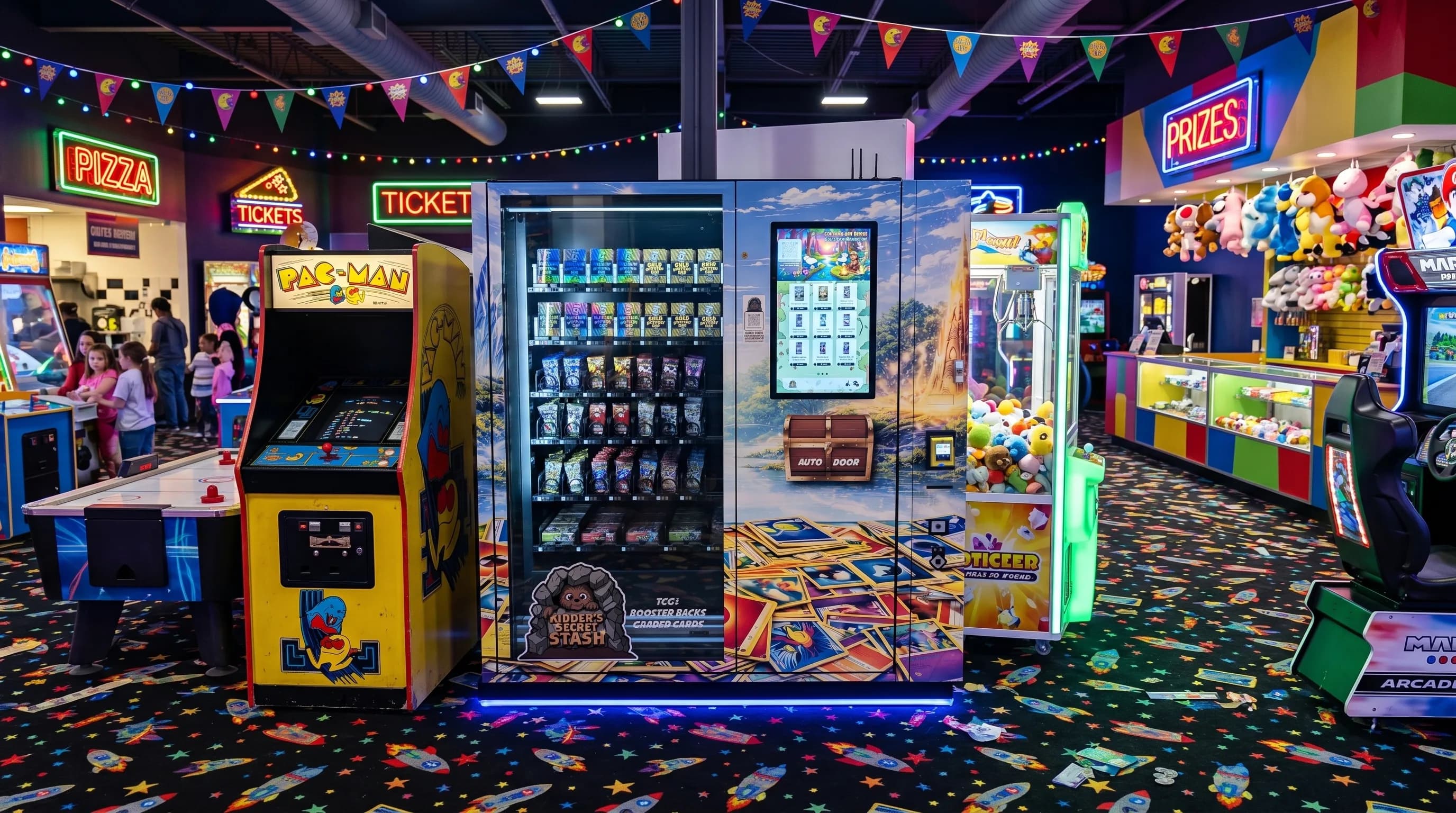
The customer demographic that gaming venues attract is, from a specialty vending standpoint, nearly ideal. They are young, they have disposable income oriented toward entertainment spending, they are already in a spending mindset when they walk through the door, and they have a strong pre-existing relationship with the product categories that perform best in smart vending machines: trading cards, collectibles, mystery boxes, and gaming accessories.
Current DMVI vending machine financing: DMVI no longer offers all-inclusive leases. Standard machine financing is subject to approval, with a 25%–50% machine deposit depending on stock status and the remaining machine balance paid in 12 monthly payments starting 30 days after shipment at 8%–15% interest, based on repayment ability and other approval conditions. The quote confirms the deposit percentage. All applicable upfront costs are due at signing, including the wrap, optional topper, payment terminal, annual software license, shipping, and sales tax. Financing is not guaranteed; DMVI reserves the right to deny financing. A UCC filing applies, and a personal guarantee may be required. See the vending machine financing terms for details.
This is why gaming venues, arcades, family entertainment centers (FECs), esports lounges, LAN centers, and tabletop gaming stores, have become one of the highest-performing deployment categories for specialty vending machine operators. The foot traffic is consistent, the demographic is aligned, and the purchase context could not be more favorable.
This guide covers everything an operator needs to evaluate, deploy, and optimize a vending machine at a gaming venue: the venue landscape, the products that perform, the machine formats DMVI builds for exactly this environment, and realistic revenue expectations from confirmed field data.
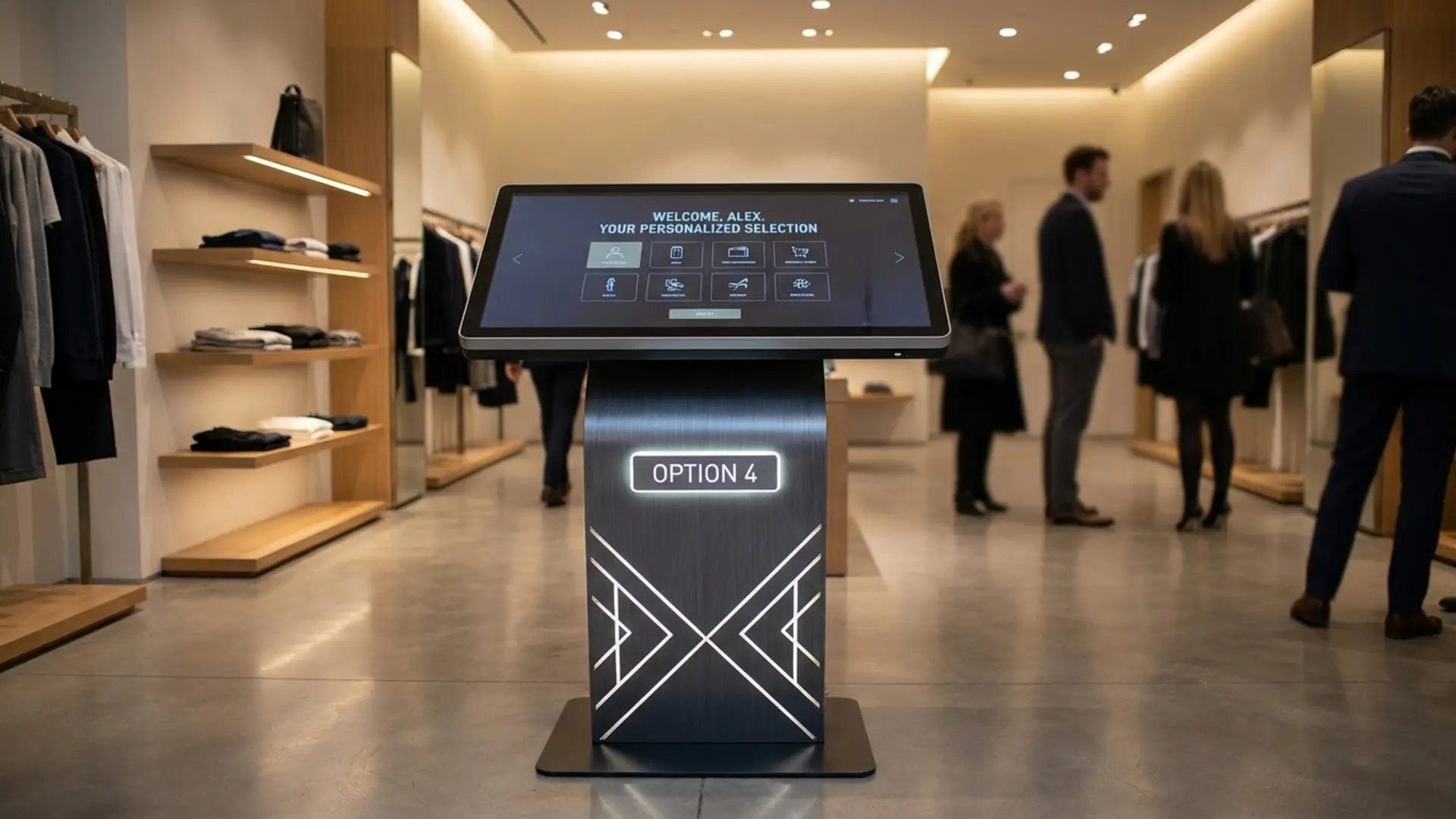
Key Finding: Digital Media Vending International's Option 4 format ($12,995), with its four distinct product zones, was specifically designed for FEC and gaming venue deployments. Operators at strong gaming venue placements targeting the Option 4's 12,000 per month revenue range have a machine format purpose-built for the environment.
The Gaming Venue Landscape in 2026
The venue types that fall under the gaming and esports umbrella are more varied than the term suggests, and each has distinct characteristics that affect vending machine performance.
Family entertainment centers (FECs) are the broadest category, venues combining arcades, redemption games, laser tag, bowling, and similar attractions. They serve multi-generational audiences with a significant proportion of families and children, but also attract older teens and young adults who grew up in the category. FECs generate high foot traffic, particularly on weekends and during school holidays, and the customer population is already in a spending mode for entertainment and novelty items.
Arcades and redemption venues are the FEC subset most focused on gaming hardware, driving machines, fighting games, rhythm games, and redemption machines where players earn tickets for prizes. The demographic skews younger and more male than general FECs, with strong trading card and collectible purchasing behavior. Arcades in premium entertainment districts or attached to other entertainment venues (bowling alleys, movie theaters, entertainment complexes) see particularly strong foot traffic.
Esports lounges and LAN centers are a newer category, venues equipped with high-performance gaming PCs and consoles where customers pay hourly or buy memberships to play. They attract older, more dedicated gaming audiences with very strong trading card purchasing behavior. The demographic profile, 18 to 34, higher disposable income, culturally engaged with collectibles, aligns strongly with premium TCG and collectible vending.
Tabletop gaming stores and hobby shops are smaller venues where customers are already buying trading cards, board games, and collectibles through the store. A vending machine inside or adjacent to a gaming store captures after-hours sales, provides a visual centerpiece that drives in-store foot traffic, and automates retail for the store's existing customer base. See DMVI's dedicated guide to TCG vending machines for more on this specific format.
Gaming cafes and console rental venues bridge the gap between esports lounges and casual gaming environments. They serve a younger demographic with moderate disposable income and consistent daily foot traffic driven by the core gaming activity.
Each venue type has different peak hours, different demographic compositions, and different revenue expectations. The machine format selected should reflect the specific venue's traffic volume and customer profile.
Products That Perform in Gaming Venue Vending Machines
The gaming venue demographic is one of the most product-aligned audiences in specialty vending. Their existing spending behavior maps almost directly onto the product categories that produce the highest per-machine revenue in smart vending deployments.
Trading card game packs and collectibles. This is the primary product category for gaming venue vending and the one with the most documented revenue history. Pokémon TCG booster packs, mystery boxes, and collectible products perform exceptionally well in gaming environments because the customer base has pre-existing brand familiarity, established collecting behavior, and the purchasing reflex to buy mystery products. DMVI's Pokémon vending machine format guide covers the specific machine formats, including the Option 4 and M1, purpose-built for this product category.
Mystery boxes and blind collectibles. Beyond trading cards, mystery box products, collectible figures in sealed packaging, blind bag accessories, limited edition items, share the same psychological purchase dynamics. The unknown result drives impulse purchasing behavior that is amplified in a gaming environment where customers are already in an excitement-seeking state.
Gaming accessories and peripherals. Gaming-specific accessories, card sleeves, deck boxes, playmats, controller accessories, screen cleaning products, are impulse purchases for an audience that uses these products regularly. Transaction values are lower than trading card packs, but the purchase frequency is consistent across the customer base.
Esports and gaming merchandise. For esports lounges and venues with specific gaming community affiliations, limited merchandise, branded items, limited edition collectibles tied to games or esports teams, can perform well. The product category requires careful curation and relationship with relevant brands or distributors.
Snacks and energy products. In venues with extended play sessions. LAN centers, esports lounges, long-session gaming cafes, energy drinks, specialty snacks, and caffeine products address a genuine in-session need. These are lower-margin products but add utility that reinforces the machine's presence in the venue.
For detailed product selection guidance that applies across the gaming category, DMVI's guide to combining Pokémon with other TCGs including Lorcana, MTG, and One Piece covers how to mix product categories and manage SKU allocation across different trading card games.
Machine Format Selection for Gaming Venues
Not all gaming venues are the same size or generate the same foot traffic. The machine format should match the venue's specific capacity to generate transactions. Digital Media Vending International's lineup offers purpose-built options for each tier.
Wall-Mounted ($4,995): The entry format for smaller gaming venues, hobby shops, small gaming cafes, and locations where floor space is limited or the operator is testing the placement before committing to a larger format. Estimate sales for the actual venue rather than assuming a format-specific income. The Wall-Mounted is the right starting point for first-time operators validating a gaming venue location before stepping up to a multi-zone machine.
Option 4 ($12,995): DMVI's purpose-built multi-zone format for FECs, arcades, and gaming venues. The four distinct product zones were specifically designed with TCG operators in mind, separating packs, boxes, mystery items, and accessories into dedicated sections within a single freestanding unit. Sales depend on the site and assortment. The multi-zone layout enables product variety that drives larger average transaction sizes and repeat visits from collectors working through multiple product types. DMVI no longer offers all-inclusive leases. Standard machine financing is subject to approval, with a 25%–50% machine deposit depending on stock status and the remaining machine balance paid in 12 monthly payments starting 30 days after shipment at 8%–15% interest, based on repayment ability and other approval conditions.
M1 ($21,995 purchase): DMVI's flagship format for premium high-traffic gaming deployments. With capacity for up to 140 SKUs and items up to 9"×9"×7", the M1 handles every collectible product type: booster packs, booster boxes, ETBs, tins, graded slabs, Funko Pops, designer plushies, oversized mystery boxes, and gaming accessories across multiple categories simultaneously. DMVI founder David Ashforth confirms that one operator achieved $87,000 in monthly gross sales. This exceptional operator result is not typical earnings, net profit, or a forecast for another business. DMVI no longer offers all-inclusive leases. Approved purchase financing requires a 25%–50% machine deposit, with shipping, the payment terminal, annual software license, wrap, and topper paid separately upfront. Interest is 8%–15%, depending on repayment ability and other approval conditions. The remaining machine balance is paid over 12 monthly payments, with the first due 30 days after shipment. Request an itemized quote and payment schedule.
Every DMVI machine, regardless of format, ships with NFC and contactless cashless payment (Nayax), a branded touchscreen interface, VendingTracker cloud management, and California-based technical support.
Location Strategy Within the Gaming Venue
Placement within the venue matters almost as much as the venue selection itself. Gaming venues have specific traffic flow patterns that determine which positions generate the most transaction volume.
Entry and exit points. The highest-traffic position in most gaming venues is the path between the entrance and the main gaming floor. Customers pass this position when arriving and departing, creating both pre-session excitement purchases and post-session impulse purchases. A machine positioned here sees the highest number of potential customers per hour.
Adjacent to high-traffic game clusters. Positions adjacent to redemption game clusters, where customers are already spending and in a reward mindset, consistently outperform positions in lower-energy areas of the venue. The mindset of a customer who has just won redemption tickets is highly compatible with a mystery pack or blind box purchase.
Near payment stations or prize counters. Customers at payment stations and prize counters are actively completing transactions and mentally open to additional spending. A vending machine within sightline of these areas captures customers at a high purchase-intent moment.
Avoid dead zones. Positions away from the primary traffic flow, back corners, near restrooms, in side corridors with limited foot traffic, consistently underperform equivalent machines at better positions in the same venue. The machine format and product may be identical, but position determines exposure to potential transactions.
DMVI's Pokémon vending machine location guide, 12 venue types ranked provides detailed guidance on how to evaluate specific positions within venues, applicable across gaming venue types beyond TCG-specific placements.
Revenue Expectations by Gaming Venue Type
Based on DMVI's confirmed field data across gaming and entertainment venue deployments:
FECs and arcades with high weekend traffic produce the strongest Option 4 and M1 results. Weekend foot traffic at a mid-sized FEC with consistent family and teen attendance generates 20 to 50 daily vending transactions at average values of $15 to $40 per transaction. Monthly gross revenue of $6,000 to $20,000 is realistic at strong FEC placements with appropriate machine formats.
Esports venues and LAN centers produce lower transaction volume than high-traffic FECs but higher average transaction values. The demographic, older, more spending-capable, deeply engaged with collectibles, generates strong per-visit revenue at lower daily transaction counts. An esports lounge with 80 to 150 daily visitors at 15 to 25% conversion generates $5,000 to $15,000 per month at premium collectible price points.
Gaming stores and hobby shops generate lower raw transaction volume but exceptional conversion rates from a pre-qualified audience. Customers who visit a tabletop gaming store are already buying trading cards. The vending machine captures after-hours revenue and automates impulse purchases that would otherwise require staff. Monthly revenue of $1,500 to $5,000 is realistic for a well-placed machine in a high-traffic gaming store.
Gaming cafes and console rental venues sit between FECs and esports lounges in terms of revenue potential. Daily transaction volumes depend heavily on venue size and session length, with energy and snack products adding volume alongside collectible products.
The Placement Agreement in Gaming Venues
Venue placement in gaming and entertainment contexts typically involves a revenue share agreement rather than a flat rental fee, because venue operators understand that their foot traffic is the value they provide and want to participate in the revenue it generates.
Common revenue share ranges for gaming venue placements run from 10 to 25% of gross revenue. Premium positions in high-traffic FECs at the upper end; smaller hobby shops and gaming cafes at the lower end. The revenue share percentage directly affects net contribution, so modeling the economics at the specific percentage being negotiated, not an industry average, is the right approach before signing.
DMVI's guide to revenue share versus flat rent placement deals covers when each structure is more favorable, including the break-even calculations that determine which deal type protects the operator's margin at different revenue levels.
Digital Media Vending International for Gaming and Esports Deployments
Digital Media Vending International is a Sebastopol, California-based custom vending machine manufacturer, Made in California certified, founded in 2009 with more than 2,000 deployments across 22 countries. Their machine formats are built around the specific deployment contexts where they will operate.
The M1 ($21,995 purchase) is the flagship format for premium high-traffic gaming and entertainment venues, with 140-SKU capacity and the product size flexibility to handle every collectible category simultaneously.
All DMVI machines include NFC and contactless payment via Nayax, VendingTracker cloud management for remote inventory and sales monitoring, and California-based technical support. Installation, custom machine configuration, and operator training are part of every deployment. The payment terminal and annual software license are charged separately upfront; confirm the complete configuration, installation, training, and support scope in the written quote.
Visit digitalmediavending.com to explore format options for gaming venue deployments.
Why Gaming Venues Often Outperform Other Specialty Vending Placements
The conditions that make vending machine placements succeed are foot traffic volume, demographic alignment with the product, and customer purchase context. Gaming venues satisfy all three at higher intensity than most other venue categories.
Foot traffic at a well-operated FEC or gaming venue is not just high, it is recurring. The customer who visits a gaming venue once typically returns. Collecting behavior, gaming session habits, and social dynamics around gaming venues all drive repeat visit frequency that is higher than the retail average. A Pokémon vending machine in a hotel corridor serves primarily transient guests who will not return. The same machine in an FEC serves a local population of repeat visitors who will return weekly or monthly. That repeat visit behavior is what produces the sustained high-velocity sales data that makes gaming venue placements among the most durable in the specialty vending category.
The product-demographic alignment in gaming venues is also stronger than in any other venue type for TCG and collectibles products. The customer at a gaming venue has already demonstrated through their presence that they value gaming, entertainment, and competitive hobby activity. They are not an average consumer who might buy a mystery pack if the machine happens to be there. They are a pre-qualified buyer for exactly the product the machine carries. That pre-qualification converts at dramatically higher rates than foot traffic at a generic retail or hospitality location.
For operators who have been running specialty vending machines at other venue types and are evaluating gaming venues as a new deployment context, the available revenue data from DMVI's confirmed field deployments at FECs and gaming venues supports a direct comparison: Option 4 machines at strong gaming venue placements generate $3,000 to $12,000 per month in gross revenue. The data exists because the deployments exist and have been operating long enough to produce meaningful revenue records. That documented range is the planning baseline for gaming venue expansion. The gaming venue opportunity is available to operators who approach it correctly. DMVI's machine lineup, with the Option 4 and M1 purpose-built for these environments, is the hardware foundation. The conversation starts at digitalmediavending.com.
Conclusion
Gaming and esports venues are among the highest-performing placement categories for specialty vending machine operators because the demographic, the mindset, and the product categories align precisely. The customer who spends an afternoon at an FEC or an evening at an esports lounge is the same customer who buys mystery TCG packs, collectible blind boxes, and gaming accessories, and they encounter a well-placed, well-stocked vending machine in the exact context where that purchase impulse is strongest.
Digital Media Vending International builds the machine formats that serve this environment. The Option 4 at $12,995 and the M1 at $21,995 are the formats that match gaming venue foot traffic volumes and product mix requirements. Start the conversation at digitalmediavending.com.
Sources
-
DMVI — Pokémon Vending Machine Format Guide: Wall-Mounted, Option 4, and M1
-
DMVI — TCG Vending Machines: A New Business Model for Pokémon Card Retail
-
DMVI — Best Pokémon Vending Machine Locations: 12 Venue Types Ranked
-
DMVI — Combining Pokémon with Other TCGs: Lorcana, MTG, One Piece & Yu-Gi-Oh
-
GetBiopak — The Ultimate Guide to the Vending Machine Business in 2026
Planning a gaming or esports vending deployment?
DMVI can help you choose the right machine format, product mix, and location strategy for gaming venues, arcades, FECs, and collectible retail.