TCG Vending Machines: A New Business Model for Pokemon Card Retail
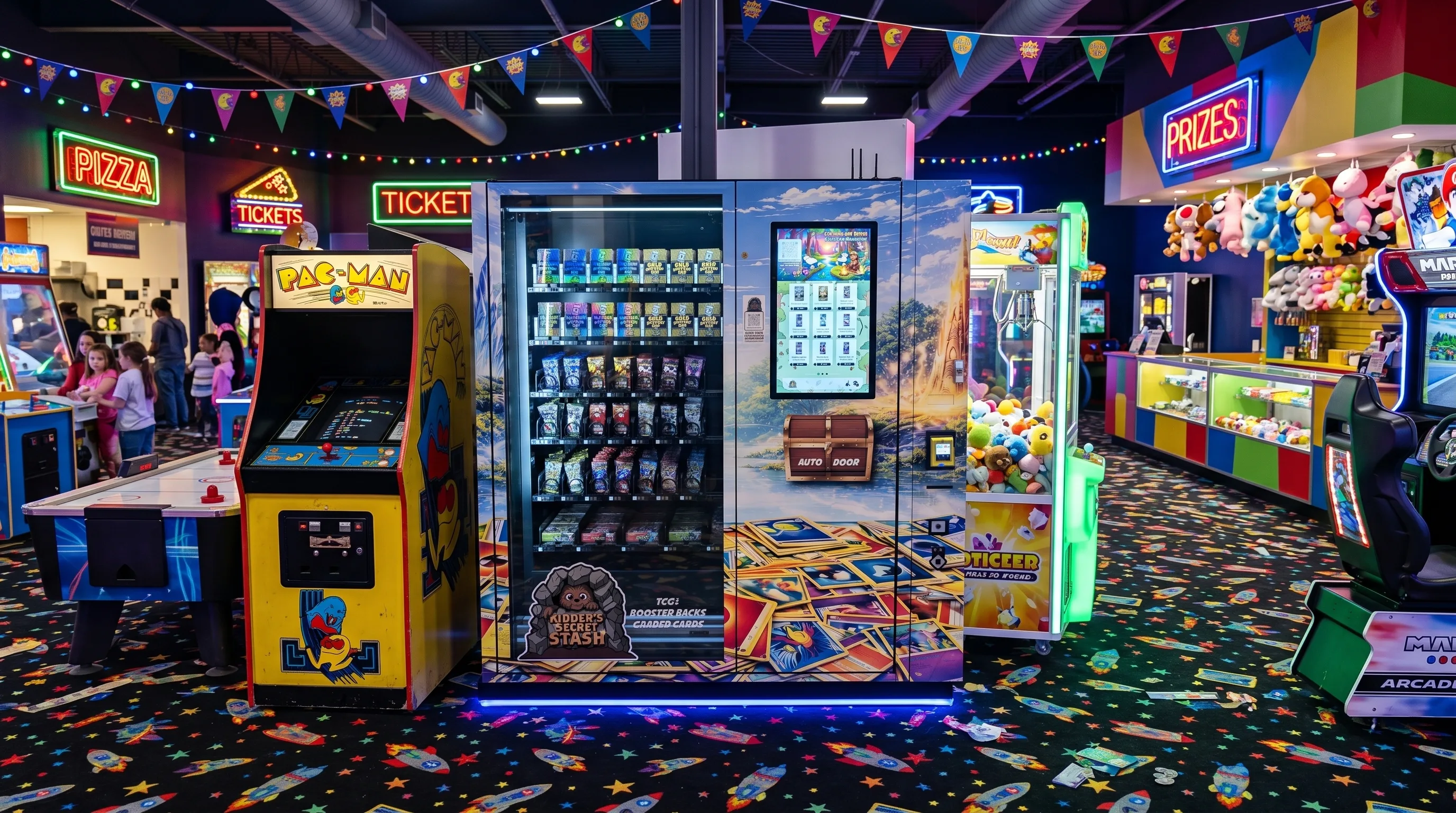
Trading card games have had loyal followings for decades, but the retail format around them is evolving. TCG vending machines are one of the clearest examples: they give operators a way to sell sealed card products through an unattended retail format that feels fast, visual, and available outside normal staffed-store hours.
That matters in categories like Pokemon, where buyers are often making a mix of impulse and planned purchases. Some want a quick booster pack while they are already in a mall or entertainment venue. Others are collectors looking for a machine they trust to carry sealed product in a clean, branded format. In both cases, the machine is not just a box with coils; it is a retail touchpoint.
For entrepreneurs, the appeal is obvious. Compared with opening a full card shop, a vending-based format can reduce staffing overhead, extend selling hours, and create a smaller-footprint entry into the category. The better question is not whether the idea is interesting. It is whether the operator can match the machine, the location, and the assortment well enough to make it work commercially.
Why TCG Vending Machines Are Getting Real Attention
The trading-card category has a few traits that make it unusually well suited to unattended retail. The products are compact, recognizable, easy to merchandise visually, and often bought with a mix of excitement, habit, and collector curiosity. That gives the machine something many vending categories struggle with: built-in enthusiasm.
Pokemon is the obvious example because it combines nostalgia, brand recognition, and a steady flow of new releases. It is also why DMVI's Pokemon vending machine page has become such a useful reference point for buyers exploring the category. The consumer already understands the product. The job is to make the machine feel trustworthy, easy to browse, and relevant to the venue.
For category context, the official Pokémon Trading Card Game site is useful because it shows how active the release calendar, competitive scene, and collector ecosystem really are. That level of ongoing engagement is part of why the category can support unattended retail in the first place.
More broadly, TCG vending can work across Pokemon, Magic: The Gathering, Yu-Gi-Oh!, sports cards, and adjacent collectibles, but the same logic applies: the operator needs a real market, not just a personal hobby. A machine stocked around demand can work beautifully. A machine stocked around wishful thinking becomes an expensive shrine to unopened inventory.
What Makes a TCG Vending Machine Different From a Standard Snack Machine?
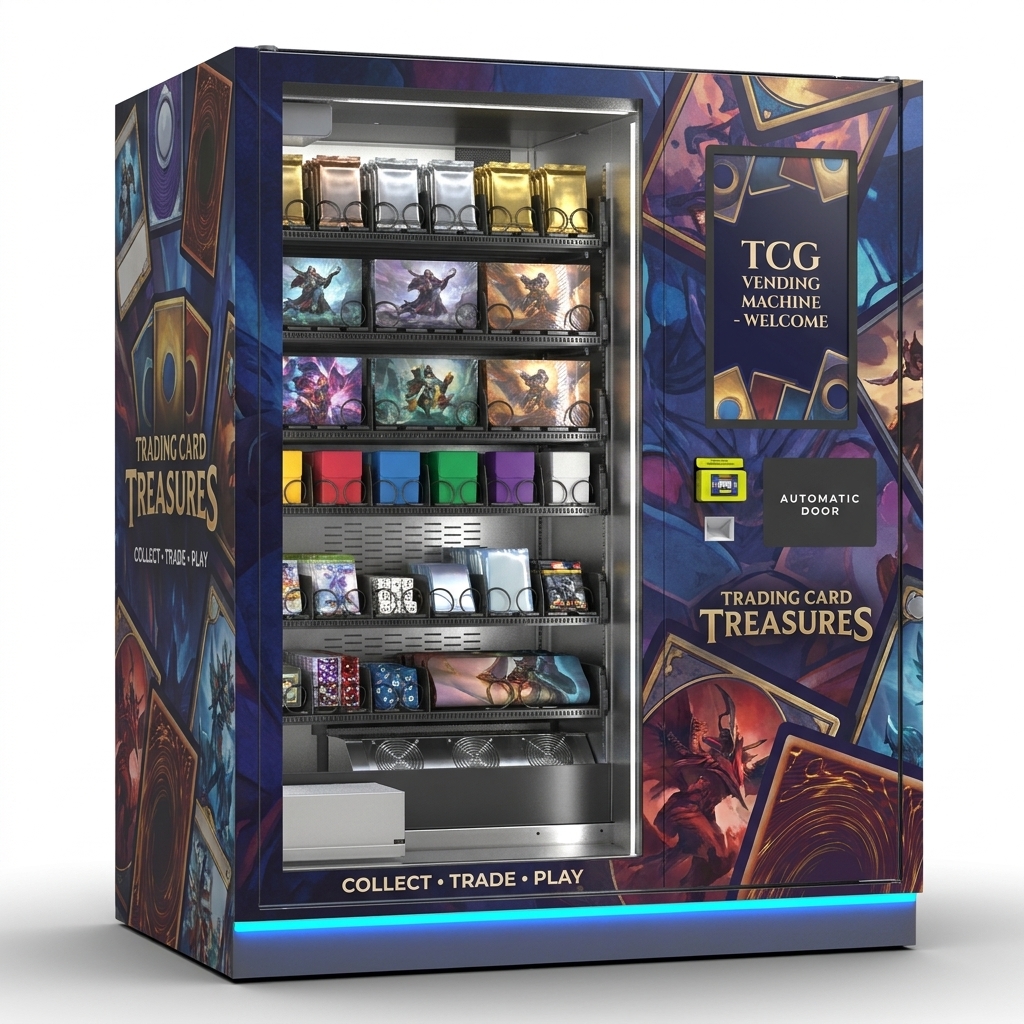
A proper TCG machine is not just a snack machine wearing a themed wrap. The product mix, packaging shapes, price points, and buyer expectations are all different. Sealed booster packs, tins, boxes, and higher-ticket collectible items need a format that protects product, presents it clearly, and gives the operator enough flexibility to manage SKU changes.
That is why many operators end up exploring purpose-led formats such as DMVI's toy and collectible vending machines, rather than forcing the category into a cabinet built around chips and cans. The right machine usually needs stronger digital merchandising, better product visibility, and a payment flow that feels normal for higher-consideration purchases.
Useful features in this category usually include:
- cashless payments and mobile-wallet support
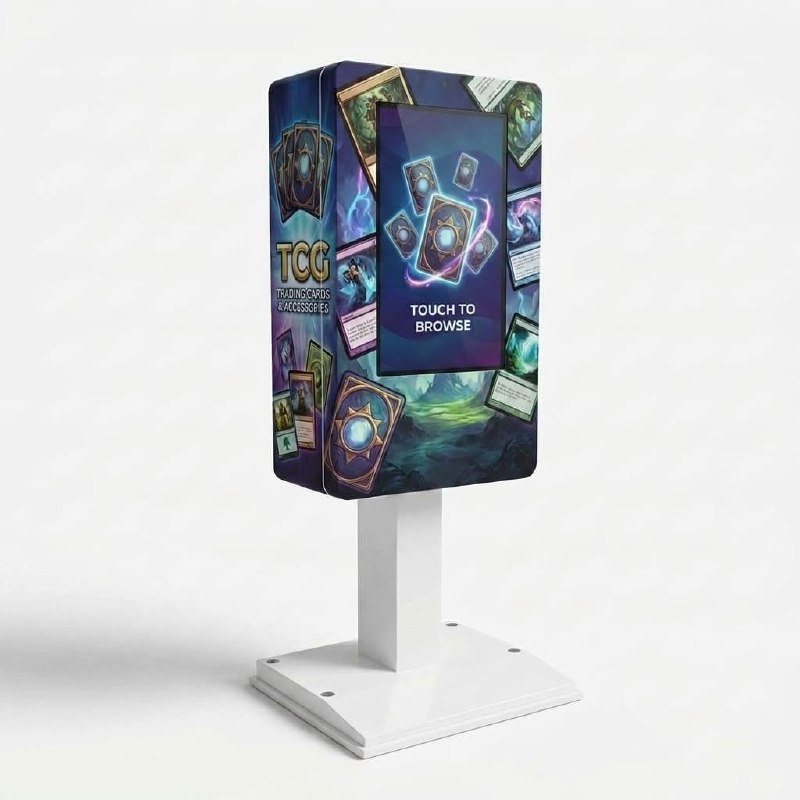
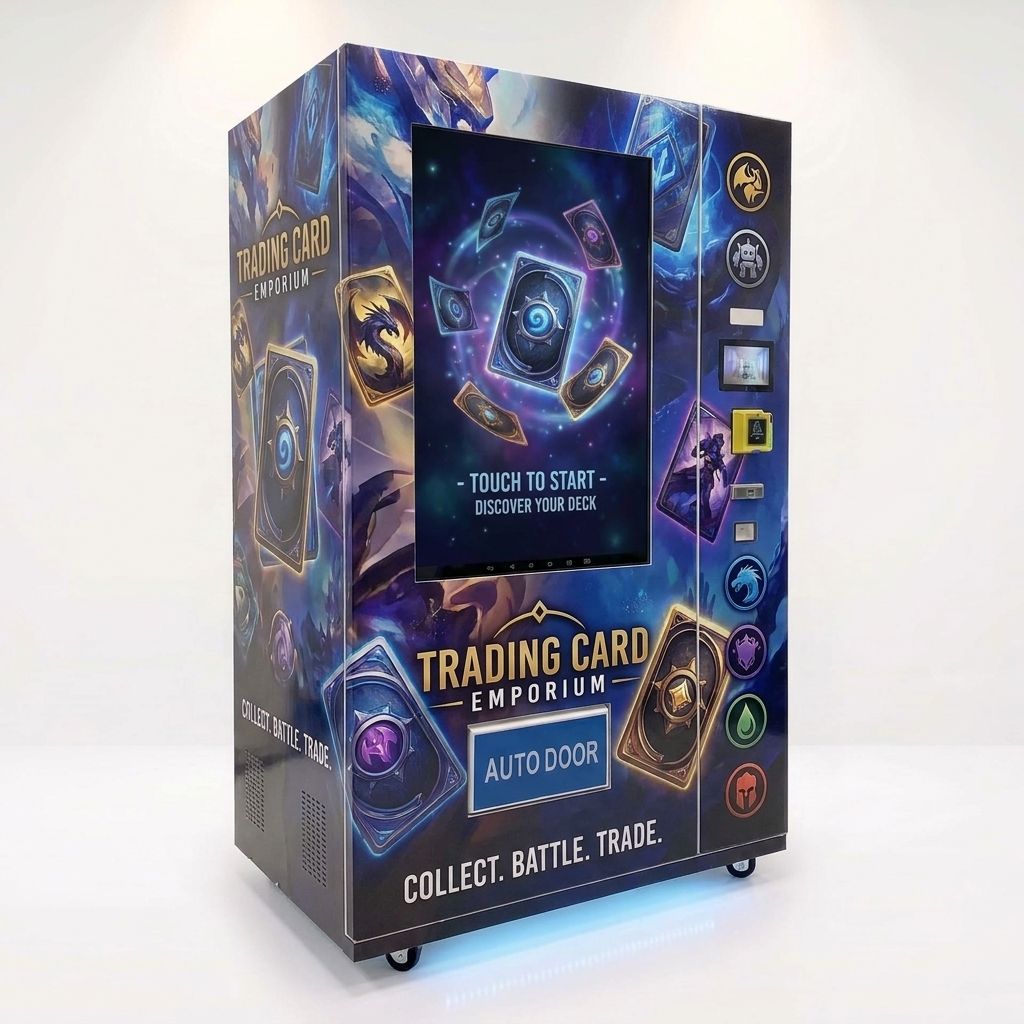
- a touchscreen interface for browsing assortments more clearly
- SKU flexibility for packs, tins, boxes, and special releases
- telemetry so the operator can see what is actually selling
- a cabinet presentation that feels credible in a hobby or entertainment setting
Why Pokemon Tends to Lead the Conversation
Pokemon remains the most visible anchor in the category because the audience is broad. It reaches children, parents, casual collectors, serious collectors, and plenty of adults who grew up with the brand and still buy sealed product now. That kind of cross-generational demand is extremely useful in unattended retail.
It also helps that sealed Pokemon products are giftable and visually familiar. A customer does not need a long explanation to understand what a booster pack or Elite Trainer Box is. The machine can do more of the selling on sight, especially when the screen, graphics, and venue all reinforce the category cleanly.
That does not mean a machine should rely on the logo alone. Operators still need authentic inventory, sane pricing, and a venue where people are comfortable stopping to browse. Pokemon can open the door, but the retail fundamentals still decide whether the machine performs.
Where TCG Vending Machines Usually Work Best
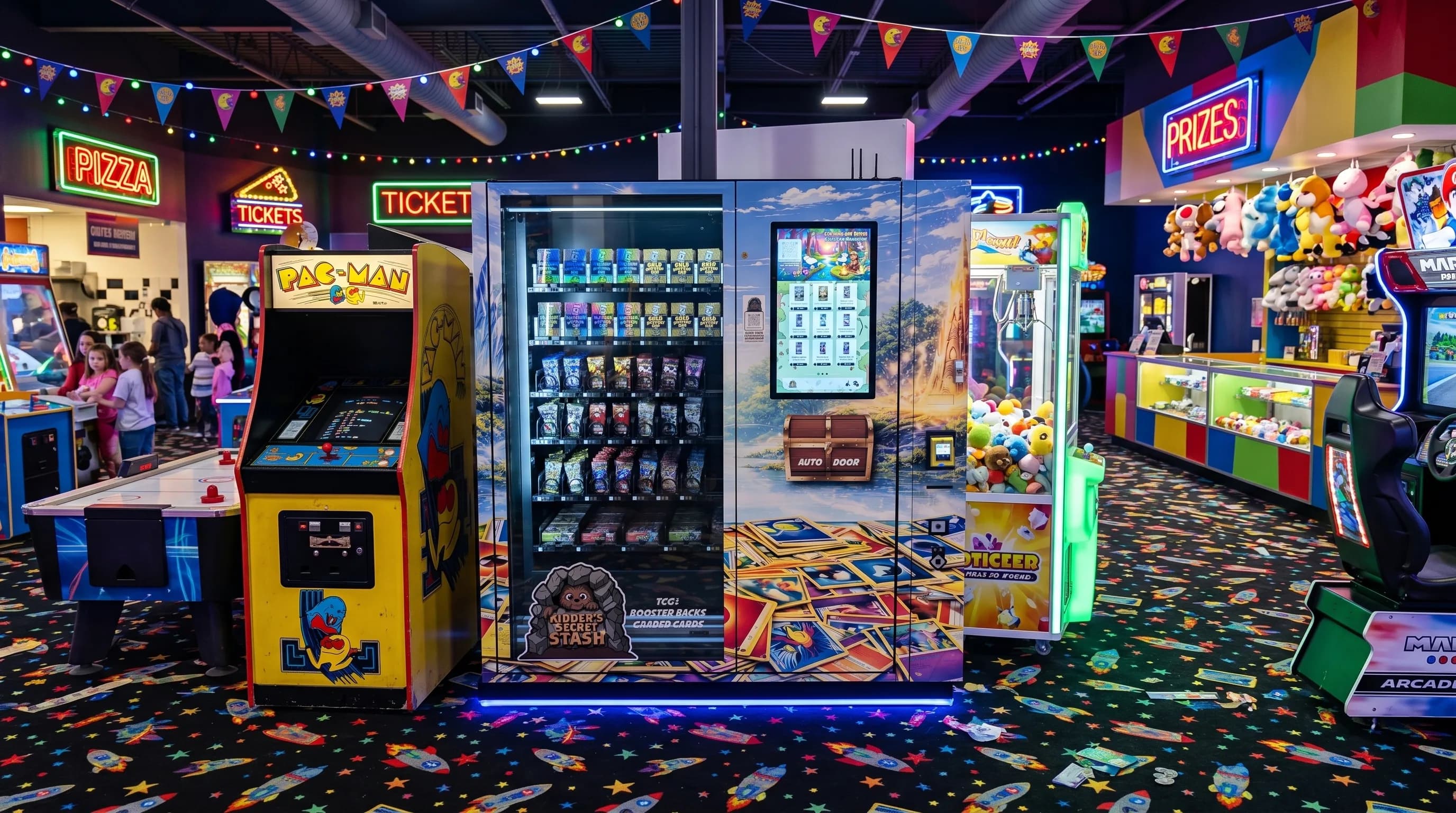
Location quality matters here just as much as it does in mainstream vending, arguably more. TCG vending is strongest where fandom, dwell time, and impulse overlap. That often points operators toward malls, gaming stores, conventions, family entertainment centers, cinemas, airports, and other venues where people have time to notice, browse, and buy.
Card shops and game stores can also be excellent fits when the goal is to extend selling hours or create a self-service lane for sealed product. In that context, the machine is not replacing the shop. It is extending the shop's reach. For operators still figuring out site selection, our article on where to put vending machines is the more useful starting point than blindly chasing the busiest corridor in town.
The weak locations tend to be the ones that look busy on paper but do not have the right audience. Foot traffic alone does not rescue a mismatch. A TCG cabinet in the wrong venue can end up being admired far more often than it is used.
Machine Format Still Matters
Not every TCG deployment needs the same cabinet. A compact or wall-mounted vending machine can make sense when the venue is tight and the assortment is curated around smaller products. A larger touchscreen machine usually makes more sense when the site has room, the assortment is broader, and the operator wants stronger product discovery on screen.
For bigger footprints or more ambitious assortments, DMVI's large vending machine formats can support more SKUs and larger boxed products. The point is not to buy the biggest machine for the sake of it. It is to match cabinet size, browse experience, and sell-through expectations to the actual venue.
This is the same lesson that shows up in our guide on how to choose the right vending machine for sale: the strongest buying decision usually starts with the job the machine needs to do, not with whatever cabinet looked nicest in a brochure.
The Business Model Appeal for Entrepreneurs
For entrepreneurs, the appeal of TCG vending is partly financial and partly operational. The machine can sell without constant staffing, can run beyond normal shop hours, and can create a smaller-footprint entry into a category that would otherwise demand a more traditional retail buildout. That does not make it passive income magic, but it can make the business model more accessible.
Operators still need to think like operators. Inventory discipline matters. Release cycles matter. Product theft prevention matters. Low-stock alerts and sales reporting matter. If the machine performs well, the operator may be able to grow from one unit to several, but the first machine still needs to prove itself in the real world before anyone starts acting like they have invented money.
Entrepreneurs who are new to the industry should also read how to start a vending machine business successfully, because the route, service, payment, and site-agreement basics do not disappear just because the products happen to be collectibles rather than drinks.
Conclusion
TCG vending machines represent a genuinely interesting retail lane because they combine collector demand, visual merchandising, and unattended convenience in a format that can scale more lightly than a traditional store. Pokemon is helping lead attention in the space, but the broader opportunity is really about matching the right product category to the right retail format.
For the operators who get the fundamentals right, a TCG machine can be far more than a novelty. It can be a credible automated retail business. For the operators who ignore location, machine fit, and inventory discipline, it can become an expensive reminder that fandom is not the same thing as a business plan.
Want to build a TCG vending machine program that actually fits the venue?
DMVI can help you compare compact, touchscreen, collectible-focused, and high-capacity vending formats for Pokemon cards, trading cards, and adjacent hobby retail categories.