Do Vending Machines Actually Use AI or Is That Just Marketing?
Search for "AI vending machine" and you will find dozens of manufacturers using the term to describe machines that are, at their core, touchscreen vending machines with cloud management software. That is a perfectly good product. It is not necessarily AI.
The conflation of "smart," "digital," "connected," and "AI" in vending machine marketing creates genuine confusion for buyers who are trying to understand what they are actually purchasing. If a manufacturer calls their machine AI-powered, a reasonable buyer wants to know: what is the AI actually doing? What would be different if the AI were not there?
This guide provides the honest answer. What real AI in vending machines looks like, where the line is between AI and smart technology, which DMVI product genuinely uses AI, and what most "AI vending machines" in the market are actually offering.
What AI Actually Means in a Technical Context
Artificial intelligence, in the engineering sense, refers to systems that make decisions or classifications based on data, learning from patterns rather than following a fixed programmed rule. Machine learning, computer vision, and natural language processing are all subsets of AI, they enable systems to recognize images, predict outcomes, and respond to inputs in ways that go beyond a simple if-then logic.
Applied to vending machines, genuine AI requires specific hardware and software working together: sensors or cameras that gather data, processing capability to run models against that data, and decision-making outputs that act on the results. These are not capabilities that come automatically with a touchscreen or a cloud management platform.
A vending machine that records sales data and displays it on a dashboard is not using AI. It is using data aggregation and reporting. A machine that accepts NFC payment is not using AI. It is using a payment protocol. A machine with a 50-inch touchscreen is not using AI. It is using a display system.
None of those capabilities are unimportant. They are all genuinely useful. They are just not AI.
Where Real AI Does Exist in Vending
There are documented applications of genuine AI technology in the vending and automated retail space.
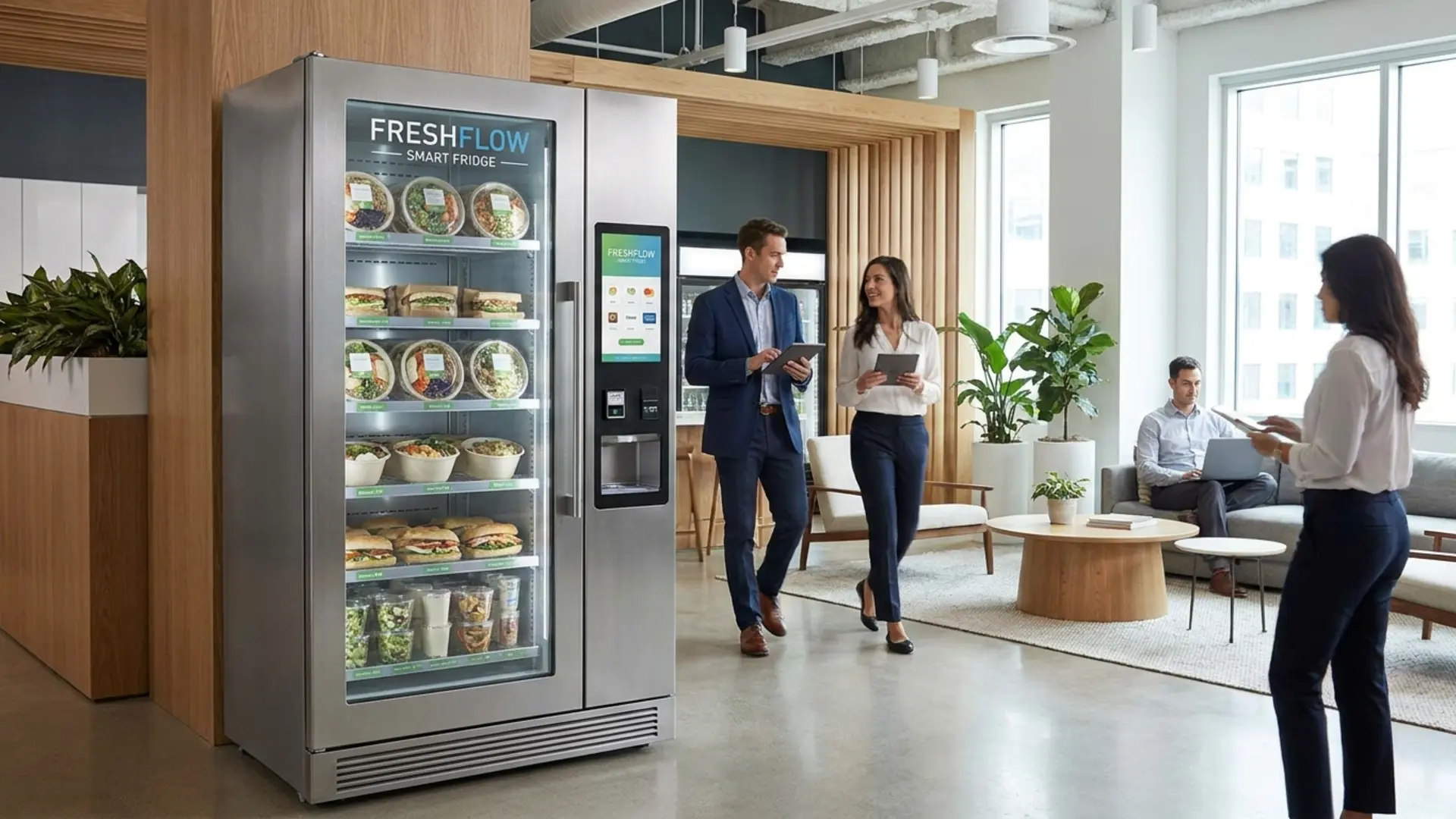
Computer vision for product recognition. A camera-equipped automated retail unit can use computer vision models to identify which products a customer has removed from an open shelf, confirm the selection, and charge accordingly, without the customer scanning anything or pressing any buttons. This is the technology behind cashierless retail applications. DMVI builds an AI Smart Fridge that uses this approach for refrigerated automated retail.
Computer vision for age verification. Age estimation using facial recognition or ID scanning can be deployed at machines selling age-restricted products to automate the verification step without requiring staff to check IDs. This is an active area of development in the regulated vending space.
Predictive demand and anomaly detection. Machine learning models applied to vending machine sales data can identify patterns, time-of-day demand shifts, product combinations that sell together, early signals of mechanical anomalies in sensor data, that would not be visible through standard reporting. This requires training data, model infrastructure, and integration with the machine's telemetry systems. It is more sophisticated than standard VendingTracker reporting and is not yet universal across smart vending deployments.
These are the genuine AI applications in vending. They are real, they are commercially deployed, and they are different in kind from what most machines marketed as "AI vending" are actually offering.
What Most "AI Vending Machines" Are Actually Offering
The majority of machines marketed as AI vending machines in 2026 are offering some combination of the following:
Cloud-connected inventory management, where the machine reports sales and stock levels to a software platform. This is genuinely useful and is what VendingTracker provides for DMVI machines. It is not AI.
Touchscreen product interface, where customers browse and select products through a screen rather than a keypad. This is also genuinely useful. It is not AI.
Cashless payment via NFC contactless hardware. Nayax and similar payment processors handle this for DMVI machines as standard. Not AI.
Remote pricing controls, where the operator can update product prices through a software dashboard without a physical visit. Useful. Not AI.
Sales analytics and reporting, where the platform aggregates transaction data into dashboards. Useful. Not AI.
None of this is dishonest, these are all real capabilities that meaningfully improve on legacy vending machines. The issue is using "AI" as the label for what is more accurately described as smart, connected, or cloud-managed vending. For a buyer who is specifically looking for machine learning applications, the label creates a mismatch between expectation and reality.
DMVI's AI Smart Fridge: Where the AI Is Real
Digital Media Vending International makes a product in their lineup called the AI Smart Fridge. This is the machine in their range where AI, specifically computer vision, is a genuine technical component of how the product works.
The AI Smart Fridge uses computer vision to detect and track what products are taken from the refrigerated unit. The customer opens the door, takes their product, and the machine registers the transaction through visual detection rather than through a customer pressing a button to confirm a selection. This is the same basic technology approach used in larger-scale cashierless retail implementations.
This is meaningfully different from a smart vending machine with a touchscreen and cloud management. The AI is doing something the machine could not do without it: identifying product removal visually rather than relying on customer interaction to confirm the transaction.
For operators evaluating whether to deploy a machine with genuine AI capability versus a smart connected machine, the DMVI AI Smart Fridge represents the option where the AI component is real and functional. The AI-powered vending machines real-world guide covers the full landscape of AI applications in automated retail in more depth.
Why the Distinction Matters for Buyers
The reason to care about whether a vending machine is genuinely AI-powered versus smart and connected comes down to what you are expecting the technology to do.
If you need a machine that can serve an open-shelf format where customers browse and take products without pressing a selection button, you need computer vision or weight sensor technology. A standard smart vending machine, regardless of how it is marketed, cannot do this. You need the AI Smart Fridge or an equivalent.
If you need a machine that can estimate customer age at a regulated product deployment, you need a system with integrated computer vision and age verification software. A touchscreen machine with a prompt to confirm age is not the same thing and does not meet regulatory requirements in most jurisdictions.
If you need predictive demand forecasting applied to your machine's product mix, you need AI modeling integrated with your telemetry data. Standard VendingTracker reporting provides historical sales data, which is useful, but predictive modeling is a separate capability.
For most specialty vending operators, the smart connected machine is exactly what they need and the AI distinction is not commercially relevant to their deployment. For specific use cases where the AI capabilities described above are required, the distinction is essential.
How to Evaluate an "AI Vending Machine" Claim
When a manufacturer describes their product as AI-powered, ask these questions:
What specifically is the AI doing? If the answer is "managing inventory" or "processing payments," those are software and hardware functions, not AI. If the answer is "using computer vision to identify product removal" or "running a demand forecasting model," that is AI.
What hardware enables the AI? Genuine computer vision requires cameras and processing capability integrated into the machine. Ask to see the hardware specification.
Where does the AI model run? On-device, edge computing, or cloud-based processing all have different implications for reliability and latency. A manufacturer deploying genuine AI should be able to describe their processing architecture.
Is there documentation of the AI's performance? Claimed accuracy rates for computer vision models, for example, should be substantiated.
These questions quickly separate genuine AI deployments from marketing language.
DMVI's Honest Position
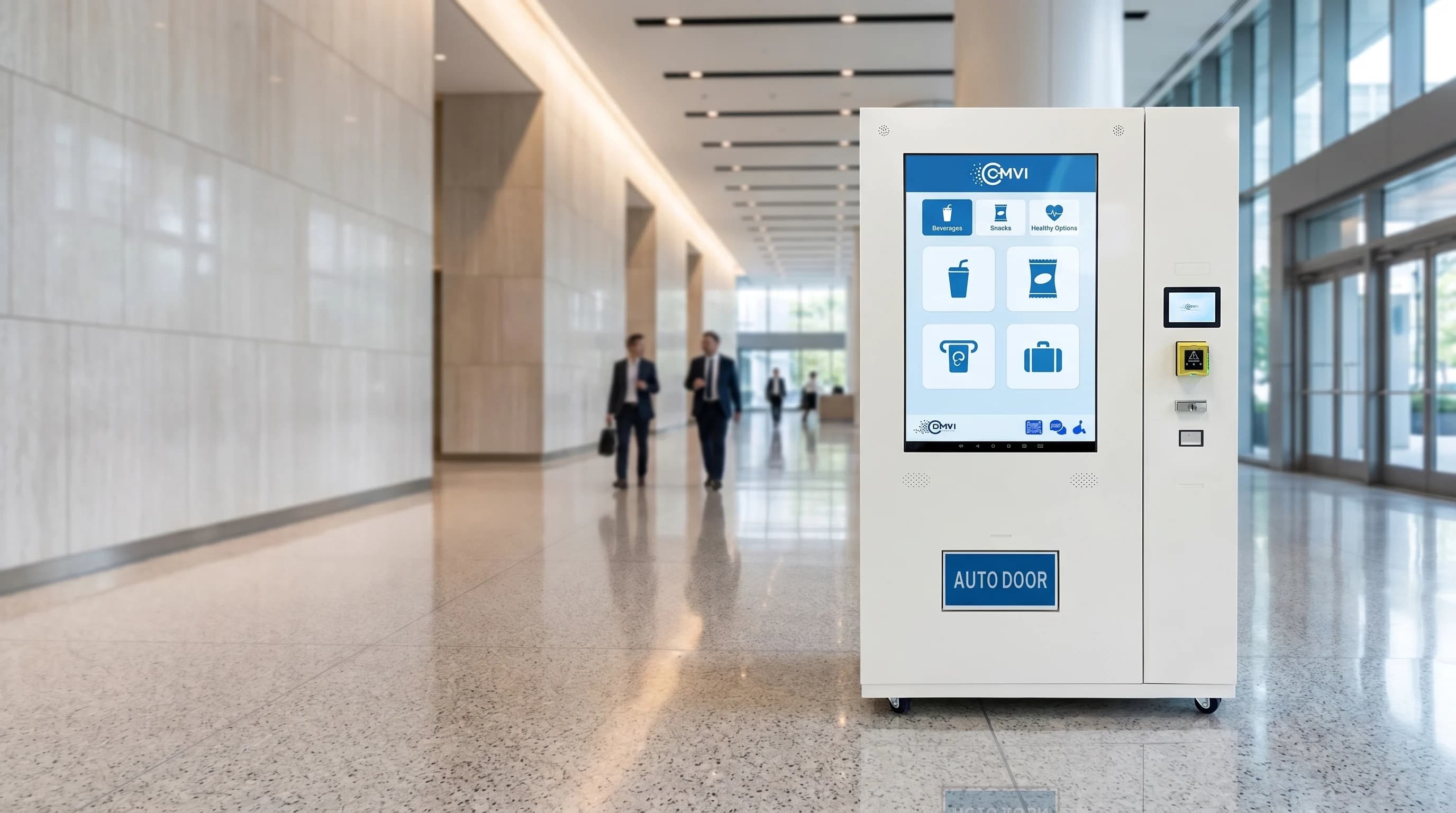
DMVI's standard machine lineup. Wall-Mounted, Option 4, M1, M2, M3, are smart, connected vending machines with touchscreen interfaces, Nayax cashless payment, and VendingTracker cloud management. They are not AI-powered in the computer vision or machine learning sense.
The AI Smart Fridge is the product in DMVI's lineup where computer vision is a genuine technical component. It is a different product for different use cases.
DMVI does not apply AI marketing language to products that do not use AI. The vending machine technology guide covers the full technology stack inside DMVI's standard smart vending machines. Visit digitalmediavending.com to discuss which product fits the specific deployment context.
Why the Marketing Confusion Exists
The overlap between "smart," "digital," "connected," and "AI" in vending machine marketing is not purely cynical. It reflects a genuine ambiguity in how these terms have evolved in consumer technology.
In the consumer electronics industry, the word "smart" has come to mean internet-connected and app-managed: a smart TV, a smart thermostat, a smart lock. These products are not running machine learning models. They are connected to a network and controlled through an app. The "smart" label became shorthand for this combination of connectivity and software management.
When vending machine manufacturers adopted the smart label, they adopted the same convention. A smart vending machine is a connected, software-managed vending machine, in the same way a smart TV is a connected, app-managed television. The "AI" extension followed as AI became a culturally prominent term, with manufacturers applying it to smart machines because the word carried more commercial appeal.
This is not necessarily misleading if the underlying product is genuinely useful, and connected, cloud-managed vending machines are genuinely useful regardless of label. The problem arises specifically for buyers who need actual machine learning capability for their deployment and are trying to identify which products provide it.
The Honest Question for Every "AI Vending" Product
For any machine marketed with AI language, the question that clarifies the picture fastest is: what would be different about this machine if the AI component were removed?
For a standard smart vending machine with AI marketing language, removing the "AI" label would leave a touchscreen machine with cashless payment, cloud inventory management, and sales reporting. That is what the machine actually does. The AI is a marketing descriptor, not a functional component.
For DMVI's AI Smart Fridge, removing the computer vision component would leave a refrigerated unit with no mechanism to detect which products a customer has taken. The machine could not function as designed without the AI component. That is the distinction.
This test, what would change if the AI were removed, is a practical way to evaluate any "AI vending" claim without requiring deep technical knowledge about machine learning architectures or computer vision models.
What the Smart Vending Category Is Genuinely Good At
Stepping back from the AI question, it is worth being direct about what smart connected vending machines are genuinely good at, because the capabilities are real and valuable even where the AI label is imprecise.
Real-time inventory monitoring through VendingTracker means operators know what is in their machine without visiting it. That is a genuine operational improvement over the alternative. Remote pricing controls mean operators can test and adjust product prices without traveling to the machine. Cashless payment through Nayax means operators capture the majority of transactions that would be lost on a cash-only machine. Sales reporting means operators make product mix decisions based on data rather than intuition.
None of this requires AI. It requires connectivity, software, and good hardware. The smart vending machine category delivers those capabilities reliably. The AI Smart Fridge delivers them plus the computer vision layer that enables open-shelf, grab-and-go retail for perishable products. Both are real products with real commercial applications. The label matters less than understanding which product fits the specific deployment.
Where to Go From Here
For operators who have read this guide and want to understand more specifically what the AI Smart Fridge does versus what DMVI's standard smart machine lineup offers, the AI-powered vending machines real-world guide covers real-world AI applications in automated retail in more depth.
For operators who have established that they need a smart connected machine, not necessarily an AI machine, the smart vending machine guide covers DMVI's full lineup in detail. The majority of specialty product operators deploying vending machines in 2026 need a smart connected machine with a touchscreen, cashless payment, and cloud management. That is what DMVI's standard lineup provides.
The confusion between AI and smart vending is real and understandable. The commercial decision about which product to deploy does not need to be confused by it. Understanding what the machine actually does, rather than what its label says, is what produces the right purchasing decision.
The Bottom Line for Buyers
For most specialty vending machine buyers in 2026, the AI question is not the most important one. The more commercially relevant questions are: Does the machine dispense my product without damage? Does it accept the payment methods my customers use? Can I manage it remotely without visiting it constantly?
A smart vending machine with Nayax cashless payment, VendingTracker cloud management, and purpose-built dispensing for specialty products answers all three of those questions correctly. Whether that machine is called AI-powered or smart or connected does not change what it does.
The AI label becomes relevant specifically when the buyer needs computer vision for open-shelf product detection, age verification, or machine learning applications beyond standard reporting. For those use cases, the label needs to be backed by specific hardware and software, not just marketing copy. DMVI's AI Smart Fridge is where that capability exists in their lineup. Their standard machines are smart, connected, and purpose-built for specialty products. The honest summary is: both are real products, both are commercially valuable, and the right choice depends on the deployment.
Conclusion
Most vending machines marketed as AI-powered are smart, connected machines, and that is a useful and valuable product category. The genuine AI applications in vending, computer vision for product recognition, age verification, and predictive demand modeling, are real but require specific hardware and software that most standard "AI vending machines" do not include.
For buyers who specifically need computer vision or machine learning capability in their deployment, the distinction matters and is worth investigating carefully before purchase. For buyers who need a smart, cloud-managed, cashless-capable machine for specialty product vending, the AI label is less important than the machine's actual operational capabilities.
Sources
Want practical AI, not vending buzzwords?
DMVI can help identify where AI adds value in unattended retail and where simpler smart vending tools are enough.