What Is Replacing Vending Machines? The 2026 Honest Answer
The question appears with regularity in trade publications, technology news, and business media: what is replacing vending machines?
It is the wrong question. And the fact that it gets asked so often says more about how people think about the vending machine category than about the actual state of the industry.
The vending machine industry is not contracting. It is not being disrupted into irrelevance by newer technology. The Kande VendTech 2024 industry report documents a North America smart vending machine market valued at $4.09 billion in 2024, projected to reach $8.99 billion by 2032. Cashless vending transactions are increasing year over year. New product categories, trading cards, specialty food, beauty products, harm reduction supplies, PPE, are entering the vending distribution channel for the first time. The deployment footprint of smart vending machines is expanding, not shrinking.
What is changing is what vending machines are, who uses them, and what they are used for. That is not replacement. That is evolution. The distinction matters if you are making a business decision based on the category's trajectory.
The Things People Think Are Replacing Vending Machines
Several technologies and formats get cited as vending machine replacements. Each one is worth examining specifically, because the claim is different in every case, and in every case, it does not hold up under scrutiny.
Amazon Go and Checkout-Free Stores
Amazon's cashierless grocery concept generates more media attention per deployment than almost anything else in retail technology. The premise is compelling: walk in, take what you want, walk out, and be charged automatically through computer vision and weight sensors. No checkout, no payment interaction.
What Amazon Go actually is: a full grocery store reported to carry a capital cost structure in the millions of dollars per location, requiring ceiling-mounted camera arrays, shelf weight sensors, custom software, and ongoing machine learning infrastructure to function. It is designed to replace the checkout lane in a staffed grocery store. It is not designed to operate in a hotel corridor at midnight serving a guest who forgot shampoo, or in a mall corridor selling Pokémon card packs to impulse buyers.
The customer populations, the use cases, the capital requirements, and the deployment contexts are entirely different. Amazon Go and vending machines are not competing for the same locations or the same buyers. The format that works in a small-format standalone grocery store in a dense urban market does not translate to the hundreds of thousands of locations where smart vending machines operate.
Mobile Ordering Apps
Mobile ordering is genuinely transforming how customers interact with food service. The ability to pre-order a coffee, pay on your phone, and pick it up without waiting has changed behavior at coffee chains, fast food restaurants, and campus dining operations in meaningful ways.
Mobile ordering does not replace vending machines. It replaces the act of waiting in a staffed service line. The vending machine's value proposition is not faster ordering, it is the complete absence of a staffed service context. A vending machine operates where there is no staff at all, at hours when a mobile ordering pickup window is closed, in locations where a restaurant or kiosk does not exist. The airport terminal at 3am does not have a staffed coffee service. The hotel corridor at midnight does not have a pickup window. The gym locker room does not have a menu.
Mobile ordering and vending machines serve different access gaps. They are not competing.
Micro Markets
Micro markets are the format most frequently and most incorrectly cited as a vending machine replacement. The confusion is understandable, both are automated retail formats, and both have grown significantly in the past decade.
A micro market is an open-shelf self-checkout installation deployed in managed, access-controlled environments: corporate break rooms, university facilities, healthcare employee lounges. The customer browses open shelving, selects products, and pays at a self-checkout kiosk. The format works in environments where the user population is known, accountable, and sufficiently trusted that open product access does not create unacceptable shrink.
A vending machine operates in any environment, including public-access locations, where an open-shelf format would result in immediate product loss. Hotels, transit stations, mall corridors, entertainment venues, none of these are appropriate for a micro market. Vending machines serve those locations specifically because they secure the product behind a locked cabinet until payment is confirmed.
Micro markets did not replace vending machines. They added an alternative format for a specific subset of locations that vending machines were already serving, and an additional format for managed environments that were not previously well-served by enclosed cabinet machines. The two formats coexist and often operate in the same organizations at different locations within the same property.
AI Smart Fridges and Autonomous Retail Kiosks
AI-enabled refrigerated retail units, smart fridges with camera-based product tracking and tap-to-open access, represent genuine technology innovation in automated retail. They are also a format within the vending machine category, not a replacement for it.
A smart fridge is a vending machine designed for fresh and refrigerated product categories. The access mechanism differs from an enclosed cabinet with a dispensing system, but the commercial and operational purpose is the same: automated retail without staff. The technology inside. IoT connectivity, cashless payment, cloud-connected inventory management, is the same stack that runs a smart vending machine. Digital Media Vending International makes an AI Smart Fridge as a distinct product in their lineup precisely because it is a format that serves a product category their cabinet machines cannot.
Calling smart fridges a vending machine replacement is like calling an SUV a car replacement. It is a different configuration of the same underlying concept, suited to different use cases.
What Is Actually Changing
The accurate version of the "what is replacing vending machines" question is: what is changing about vending machines, and what does that mean for the category?
Several real changes are underway.
The product range is expanding dramatically. The traditional vending machine product category, snacks, sodas, chips, candy, is no longer the defining application of the format. Digital Media Vending International's founder has stated this directly: none of his customers are in the vending business. They are Pokémon resellers, bakery owners, beauty brands, fitness supplement companies, and harm reduction programs using vending machines as a distribution channel for their existing business. This is a new application context that was not meaningfully present a decade ago and is growing rapidly.
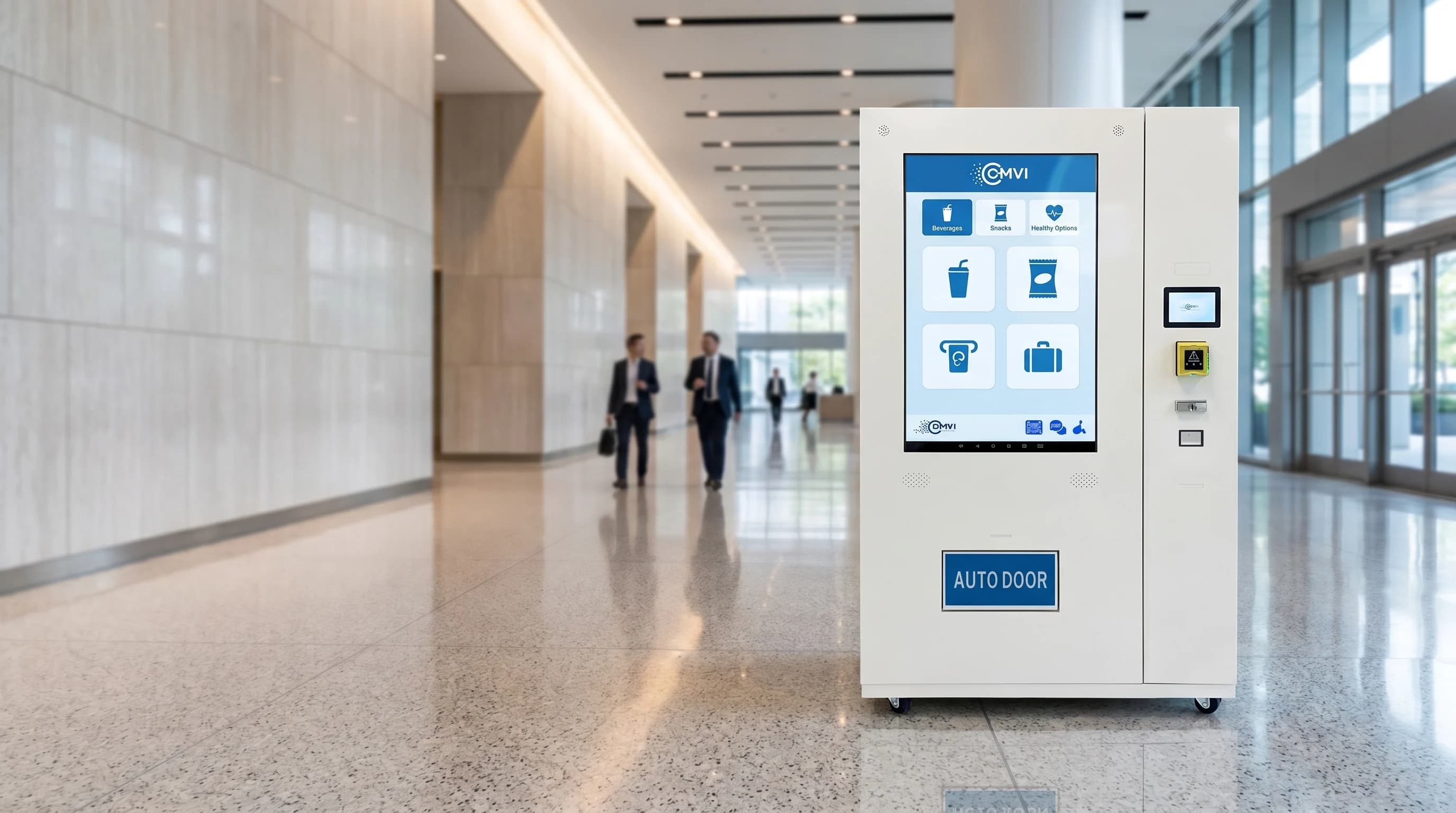
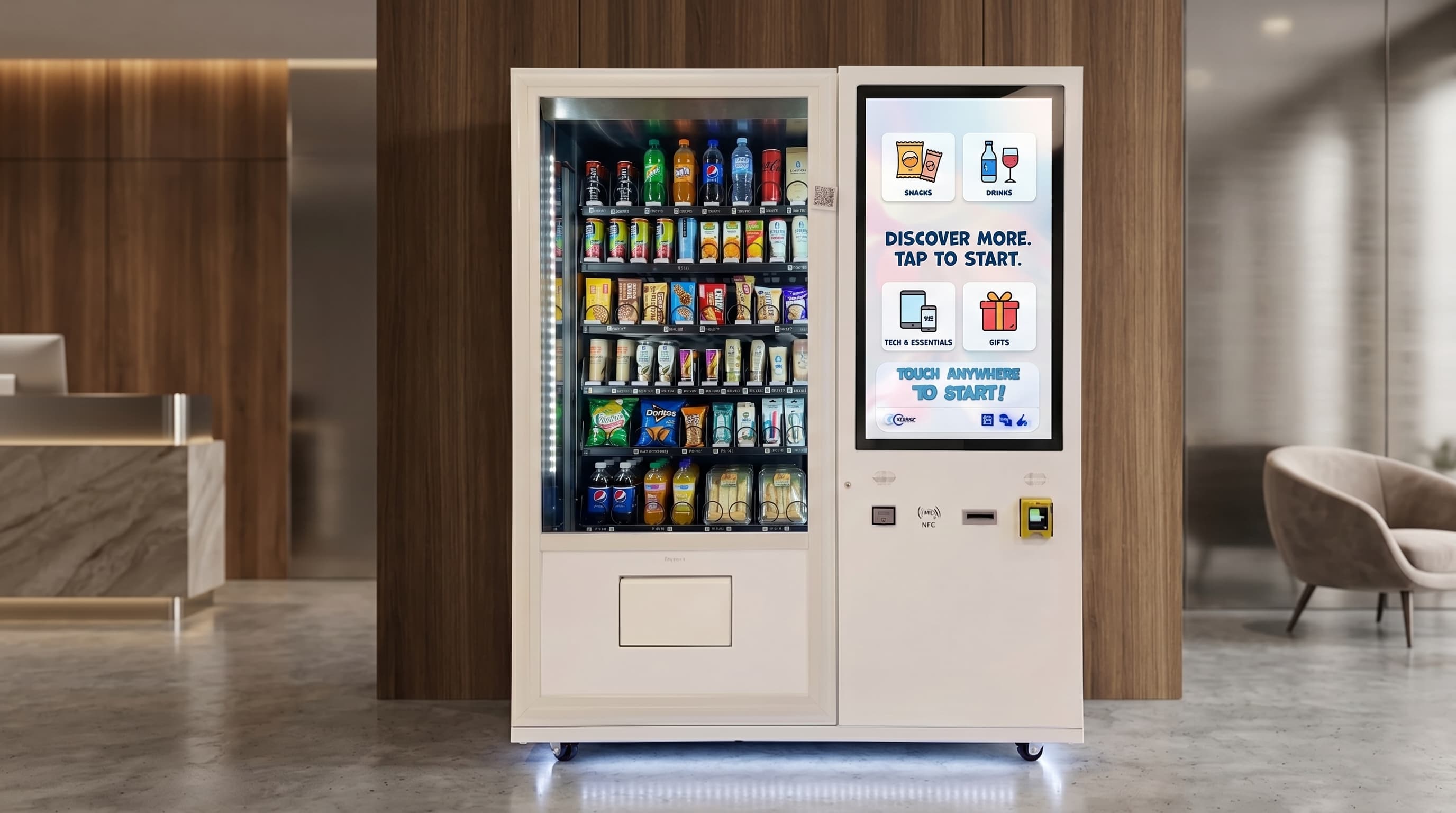
The technology inside the machines has changed completely. The machine that ran on mechanical timers and accepted quarters is categorically different from a machine that runs on cloud-connected software, communicates health data in real time, supports NFC payment, and displays a 50-inch touchscreen. The hardware is different, the software is different, and the operational model is different. The format has evolved from a coin-op appliance to a managed retail platform.
The buyer profile has changed. The traditional vending machine buyer was a vending route operator stocking snacks across a portfolio of break room locations. The emerging buyer is a specialty retail entrepreneur, someone who sells cupcakes, or Pokémon cards, or premium beauty products, who wants to expand their distribution into autonomous retail. This buyer has different requirements, different product economics, and different location strategies than the traditional operator.
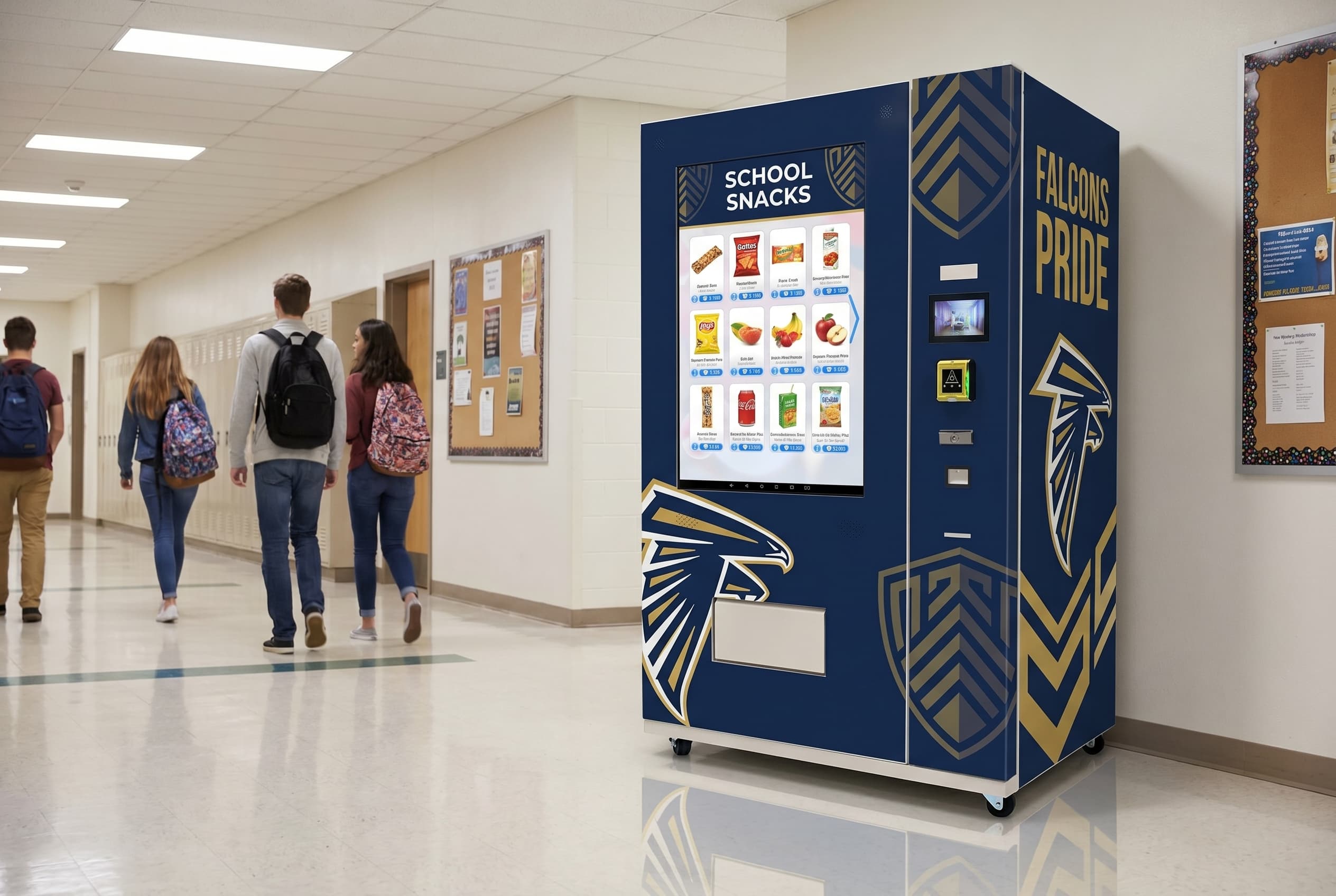
The formats have multiplied. Wall-mounted machines, mid-size smart cabinets, large-format M-Series machines, smart lockers, micro markets, AI smart fridges, the single-format snack machine has become a family of automated retail hardware suited to different products, locations, and business models.
None of this is replacement. It is expansion and specialization.
What the Evolution Means for Operators and Buyers
If you are evaluating the vending machine industry as a business opportunity or assessing whether the category has a future, the "what is replacing vending machines" framing leads you to the wrong analysis.
The right question is: what is the vending machine business actually becoming, and where is the opportunity in that evolution?
The answer from the data is that the highest-growth area in the vending machine category is specialty retail, verticals that were not served by vending machines at all five to ten years ago, where purpose-built custom machines now generate revenue that the traditional snack vending model never approached. Operators in those verticals are not competing with checkout-free grocery stores. They are creating distribution channels for their specific products in locations those products have never been sold before.
Digital Media Vending International builds custom vending machines for this evolved category, specialty retail operators using autonomous retail hardware to expand their existing businesses. They are a Made in California certified manufacturer, founded in 2009, with more than 2,000 deployments across 22 countries. Their machines range from wall-mounted compact units to M-Series large-format flagship installations, all connected through VendingTracker software.
Machines start at approximately $4,995. The category is not contracting. It is expanding into territory the traditional format never reached.
Visit digitalmediavending.com to discuss where your product fits in the evolution.
The Specialty Retail Expansion: New Categories, New Buyers, New Deployments
The most significant development in the vending machine industry over the past five years is not a technology that might replace vending machines. It is a wave of new operators deploying vending machines in product categories and locations that had no vending machine presence before.
Trading card and collectible vending is a category that essentially did not exist as a structured commercial application a decade ago. The combination of the Pokémon TCG's sustained popularity, the growth of blind box and mystery product culture, and the commercial viability of smart vending hardware in premium locations created a new category from the ground up. Digital Media Vending International has documented operator outcomes in this category, $80,000 to $100,000 per machine per month at premium high-traffic placements, that represent a revenue profile the traditional vending machine industry never approached.
Specialty food vending, cupcakes at hotel lobbies, artisan confections at airport terminals, premium baked goods at entertainment venues, is another category that did not exist meaningfully in vending before purpose-built machines with elevator dispensing made fragile food products dispensable reliably. A bakery owner who installs a machine in a hotel corridor is not replacing a vending machine that was already there. They are creating a vending presence in a location that never had one, for a product that was never vended before.
Beauty and personal care vending at premium hotels and spas, harm reduction vending at public health facilities, fitness supplement vending at boutique gyms, jewelry vending at luxury retail, each of these represents a new deployment context, a new buyer profile, and a new product category entering the vending machine channel for the first time.
This is not category substitution. It is category expansion. The vending machine is reaching places and serving purposes it never served before, not retreating from the places it has historically occupied.
Why the Question Gets Asked at All
The persistent appearance of "what is replacing vending machines" as a question in trade media and technology coverage is worth understanding, because the framing is not random. It reflects a specific bias in how technology change gets covered: the assumption that innovation in a category means the existing form is being disrupted out of existence.
This assumption is regularly wrong and rarely corrected because corrections are less interesting than disruption narratives. The snack vending machine in the hospital hallway was not replaced by Amazon Go. It is still there, still generating transactions, still serving a customer population for whom it is the most convenient option at that location and that hour. The existence of frictionless grocery checkout at a handful of urban flagship stores changes nothing about the economics of that machine.
The categories that actually do get disrupted by new technology tend to share a characteristic: the new technology addresses the same customer need at lower cost or higher quality in the same context. This is not what any of the supposed vending machine replacements do. They serve different needs, in different contexts, for different customers.
The vending machine's core value, available product, any hour, no staff, small footprint, is not a value proposition that any of the commonly cited replacements address. Until a technology solves that specific problem better than a vending machine does, the category will not be replaced. It will evolve, expand, and specialize, which is exactly what it is doing.
The simplest evidence that vending machines are not being replaced is the deployment data. Markets experiencing disruption contract. The vending machine market is not contracting. The smart vending segment is growing at double digits annually, the product categories being sold through vending machines are expanding, and the buyer profile is broadening to include types of businesses that had no relationship with vending machines five years ago.
None of that is consistent with a category that is being replaced. It is consistent with a category that is evolving into something more diverse, more capable, and more commercially interesting than its previous form. The question that produces more useful business analysis is not what is replacing vending machines, but where the evolution is taking the category and who the winners in the next phase of that evolution will be.
The answer to that second question points toward the manufacturers and operators who are building on the specialty retail opportunity rather than defending the traditional snack-and-soda model. Digital Media Vending International has been building machines for specialty retail operators for over fifteen years, and the product categories entering the channel today mirror the direction their business has been developing since its founding in 2009. That positioning is not a coincidence; it is the result of paying attention to which buyers were showing up and what they actually needed.
For anyone building a business in the automated retail space in 2026, the framing matters. A business built on the assumption that vending machines are being replaced will make conservative investment decisions and miss the expansion opportunities that the category's evolution is creating. A business built on the understanding that the category is growing, specializing, and reaching new product verticals will invest accordingly and position ahead of where the opportunity is moving. The data supports the second framing. The trajectory of the smart vending machine market, the product categories entering the channel, and the buyer profile of new operators all point in the same direction: expansion, not contraction.
The vending machine industry is not a category in decline searching for relevance. It is a category in active evolution, expanding its product range, its buyer profile, and its deployment contexts faster than the trade press that asks what is replacing it can keep up with. The operators and manufacturers positioned for the next phase of that evolution are the ones who understand it as expansion rather than disruption. That understanding shapes the investments made, the products chosen, and the locations targeted. It is the most commercially useful answer to the question.
The operators making the most of this moment are not asking what is replacing their business model. They are asking what the next wave of specialty retail looks like and how to be positioned for it. That is a different question with a more productive answer. Pokémon vending was not a category that existed at scale five years ago. It exists at scale now because operators and manufacturers built it. The next category that does not exist yet at scale will be built the same way. The vending machine, evolved, specialized, connected, software-managed, is the platform it will be built on.
Digital Media Vending International is one of the manufacturers that has been building for the evolved category since before most of the market recognized the opportunity existed. Made in California certified, founded 2009, 2,000+ deployments across 22 countries, machines from $4,995. The category is not being replaced. The right question is who is building what it is becoming. Visit digitalmediavending.com. The vending machine category reached billions in market value not by staying the same, but by expanding what it can do and who it serves. That expansion trajectory is the most useful thing to understand about where the category is headed. The operators who understand this will invest ahead of the curve. Those who wait for the disruption narrative to resolve will find the best positions already taken.
Conclusion
Nothing meaningful is replacing vending machines in 2026. Micro markets, smart fridges, and mobile ordering are complements, extensions, and format variations, not replacements. The evidence for this is not speculative; it is in the market size data, the transaction volume trends, and the new product categories entering the channel.
What is changing is the vending machine itself. The technology inside has evolved completely. The products being sold have expanded far beyond snacks. The buyer profile has shifted toward specialty retail entrepreneurs who use vending machines as a business expansion tool rather than an end in itself.
The category is growing. The format is evolving. The question worth asking is not what is replacing vending machines, it is where the expansion is going and whether your business belongs in it.
Sources
- Digital Media Vending International — Official Website
- Kande VendTech — Vending Machine Industry Statistics 2024
- GetBiopak — The Ultimate Guide to the Vending Machine Business in 2026
- IBISWorld — Vending Machine Operators in the US
- Statista — US Vending Machine Market Overview
- Grand View Research — Smart Vending Machine Market
Planning for where vending is going next?
DMVI helps operators and brands build modern automated retail programs around the formats customers actually use.