Healthy Vending Machines in Schools: What Actually Works for Students and Staff
Healthy vending machines in schools are not just about replacing chips with granola bars and congratulating ourselves for the effort. A good school vending program is really a combination of nutrition policy, student behavior, machine design, payment convenience, and a product mix students will actually buy instead of politely ignoring.
That distinction matters. Schools do not need performative wellness theater. They need a vending setup that feels intentional, fits the campus, supports student energy during the day, and still works commercially for the operator or district partner behind it.
Done properly, healthy school vending can support better snack choices, reinforce wellness goals, and create a more modern student amenity without turning the machine into a joyless lecture box. That is where smarter formats, better merchandising, and school-specific branding start to matter.
Why Schools Are Taking Healthy Vending More Seriously
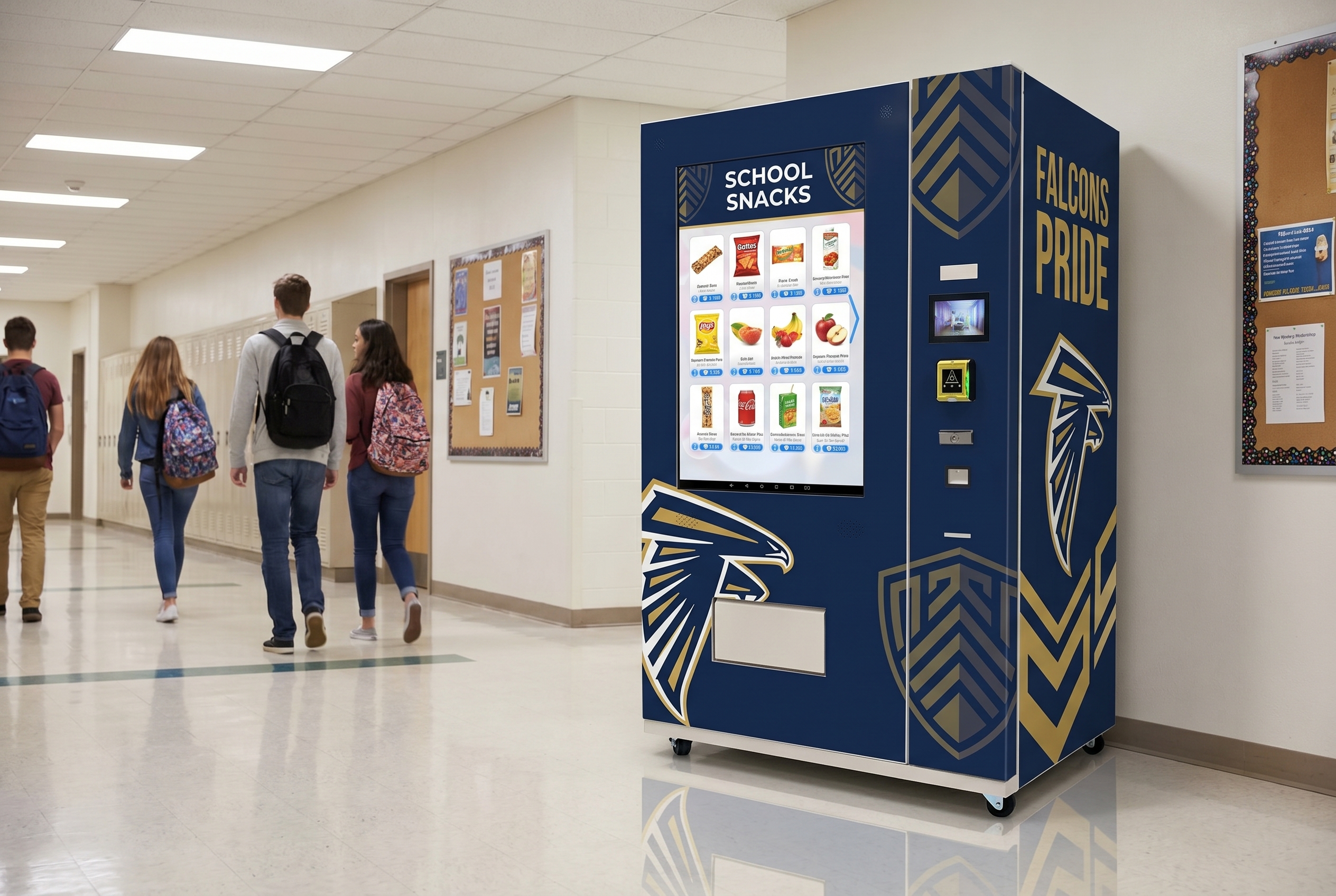
Most schools already know the top-line case: students are on campus for long stretches, meal schedules do not always line up with real hunger, and the old model of sugary drinks plus tired snack bars does not do much for concentration, wellness, or parent confidence.
There is also a policy layer. Many schools and districts now need vending that fits nutrition standards more closely, whether that means formal compliance with USDA Smart Snacks in School guidance, local wellness rules, or simply a stronger expectation from parents and administrators that campus food options should look less like a gas-station checkout.
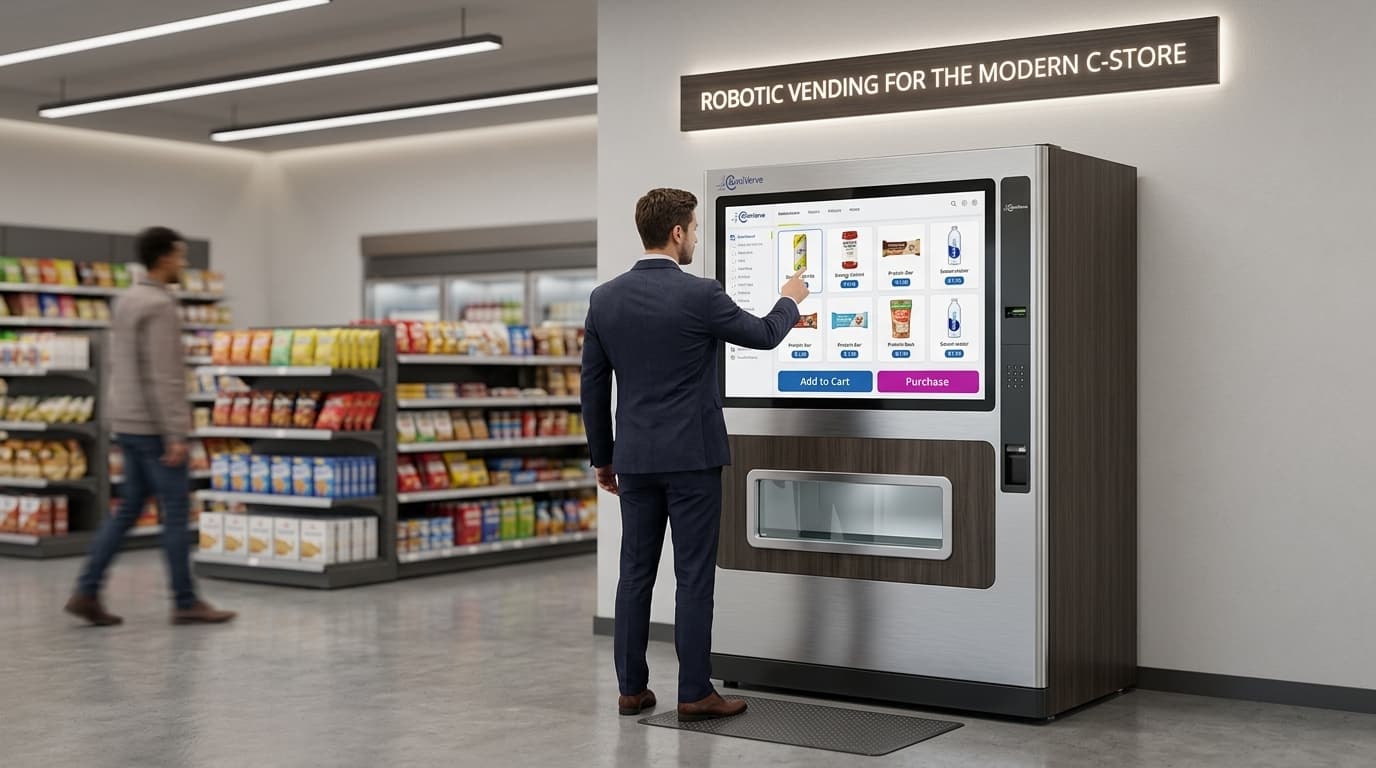
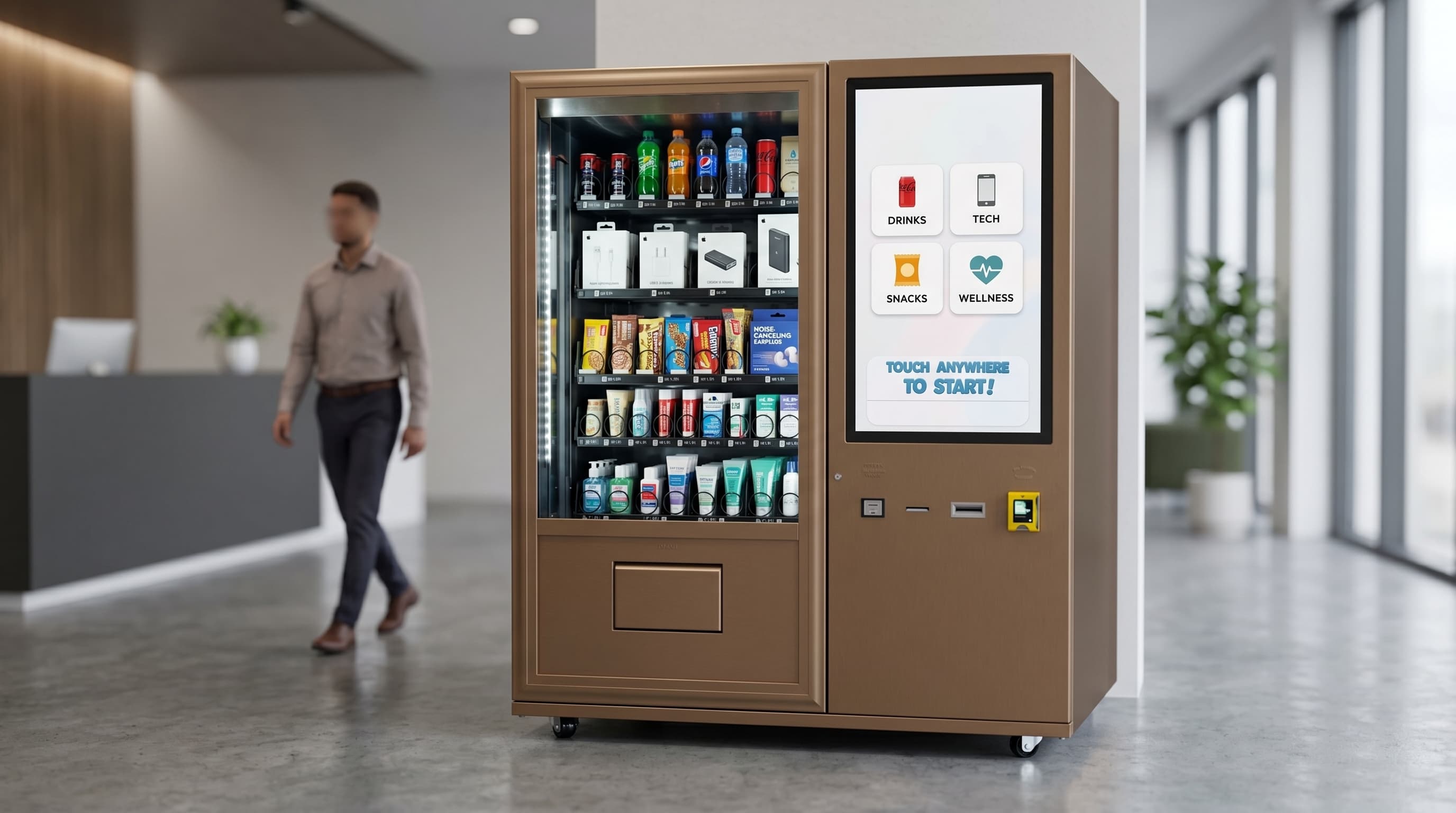
That does not mean every school wants the same machine. Some need a basic healthy snack program. Others want a more polished smart vending machine with better reporting, stronger cashless checkout, and a touchscreen flow that feels more current to students who live on their phones.
CDC's school nutrition overview is also a worthwhile reference because it frames vending in the wider context of campus food environment, student energy, and lifelong eating habits rather than as an isolated machine decision.
Healthy School Vending Only Works When Students Actually Buy From It
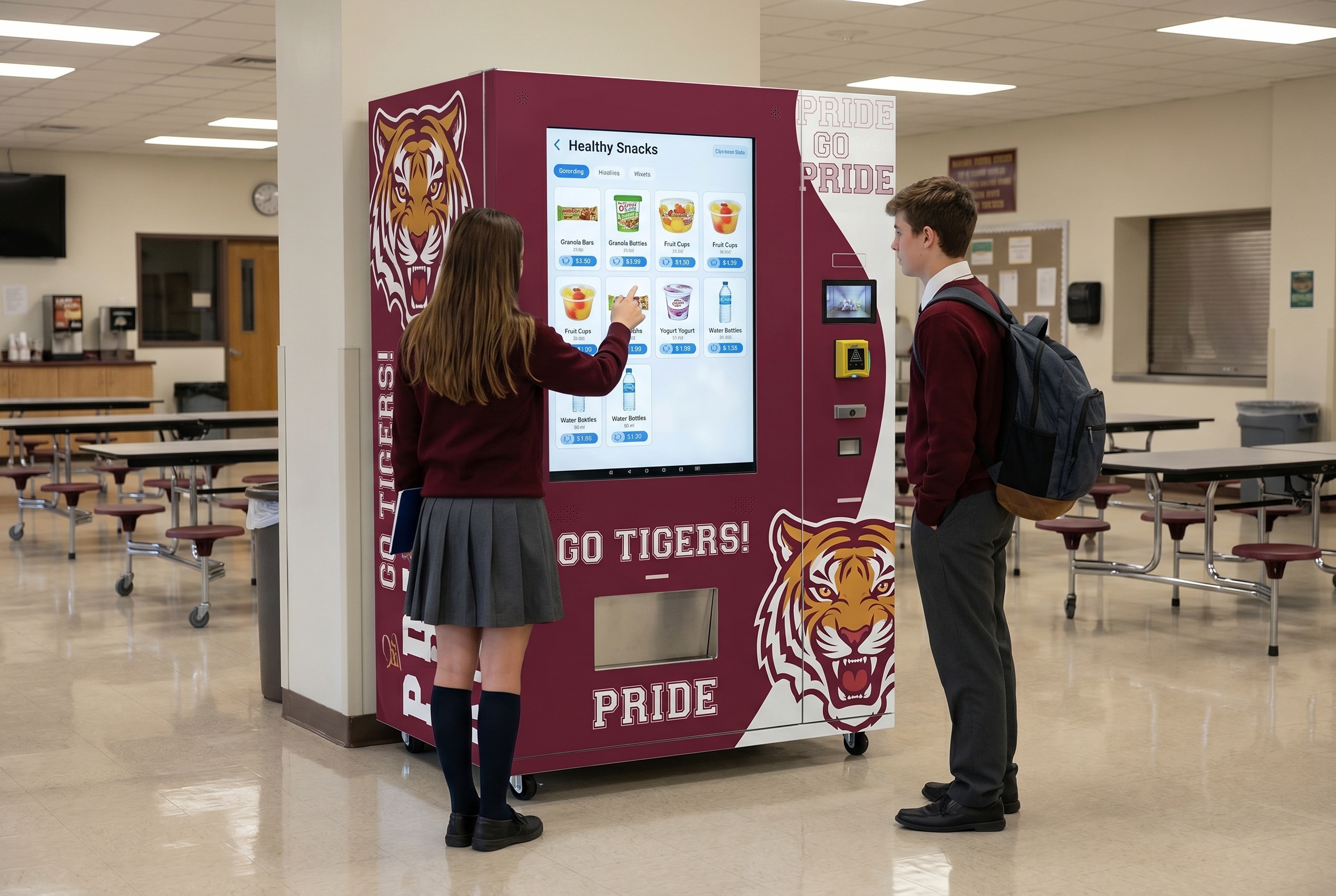
This is the point many well-meaning programs miss. A machine can meet every nutritional guideline on paper and still fail if the products are badly chosen, poorly merchandised, or positioned as though students should feel punished for approaching them.
A stronger healthy vending mix usually balances nutrition with recognizable grab-and-go behavior:
- better-for-you baked snacks instead of only austere “wellness” products nobody asked for
- protein bars and trail mixes that students already know
- sparkling water, low-sugar drinks, or approved hydration options
- portion-controlled sweet options rather than pretending demand for sweet snacks will simply vanish
- breakfast-adjacent items for morning traffic where relevant
The goal is not to build a vending machine that wins an abstract nutrition debate. The goal is to create a machine that nudges better choices while still behaving like a real convenience point on campus.
If a school wants a stronger merchandising layer, branded wraps, or a more tailored touchscreen experience, it may be worth comparing a standard school snack setup against custom vending machine design rather than assuming every program should look the same.
Placement Matters More Than Good Intentions
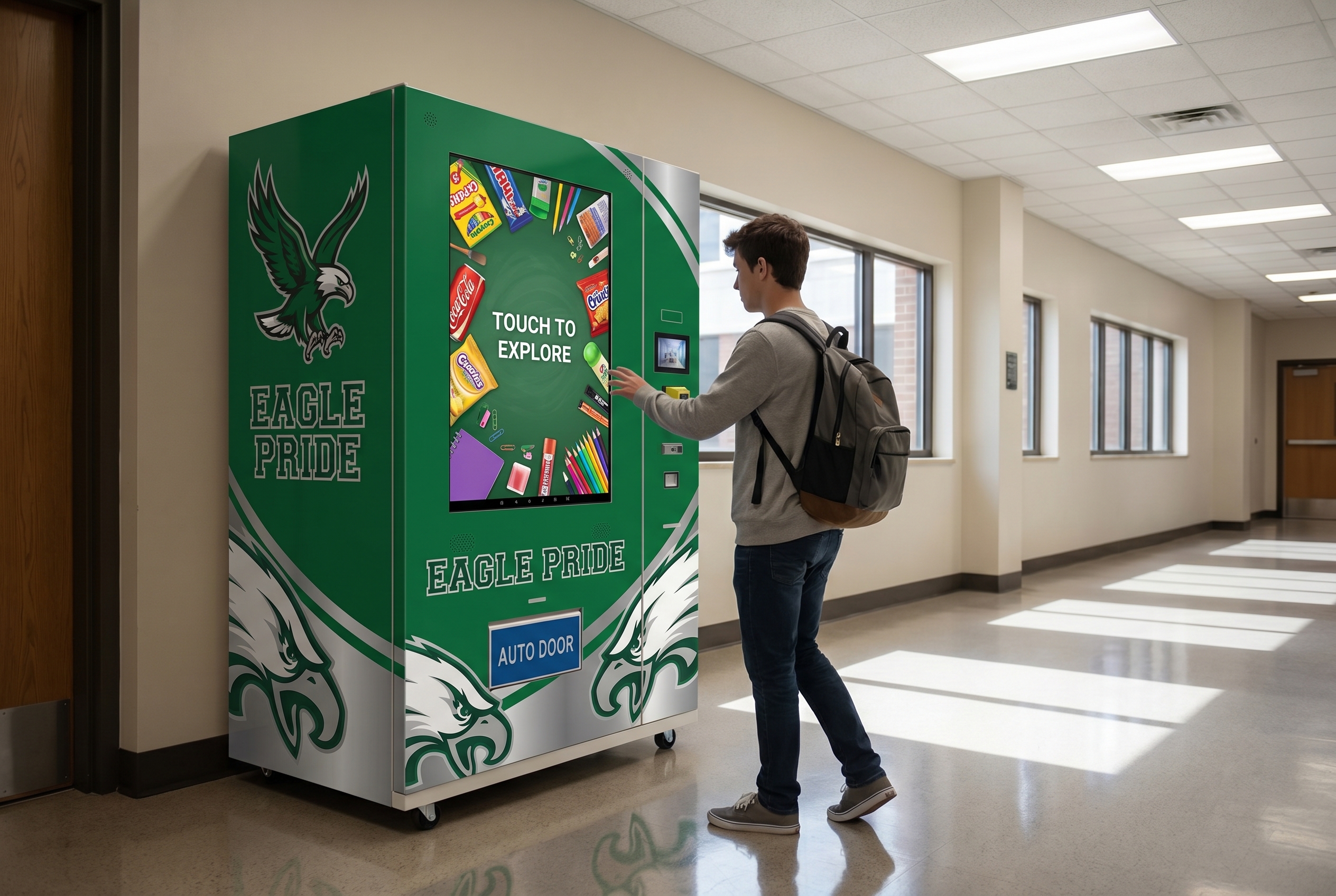
School vending performance is still location-driven. A healthier product mix does not rescue a dead site. The best placements are usually the ones that match actual student movement and natural snack moments:
- student commons and cafeteria overflow areas
- main academic corridors between class blocks
- gym lobbies and athletics areas after training or games
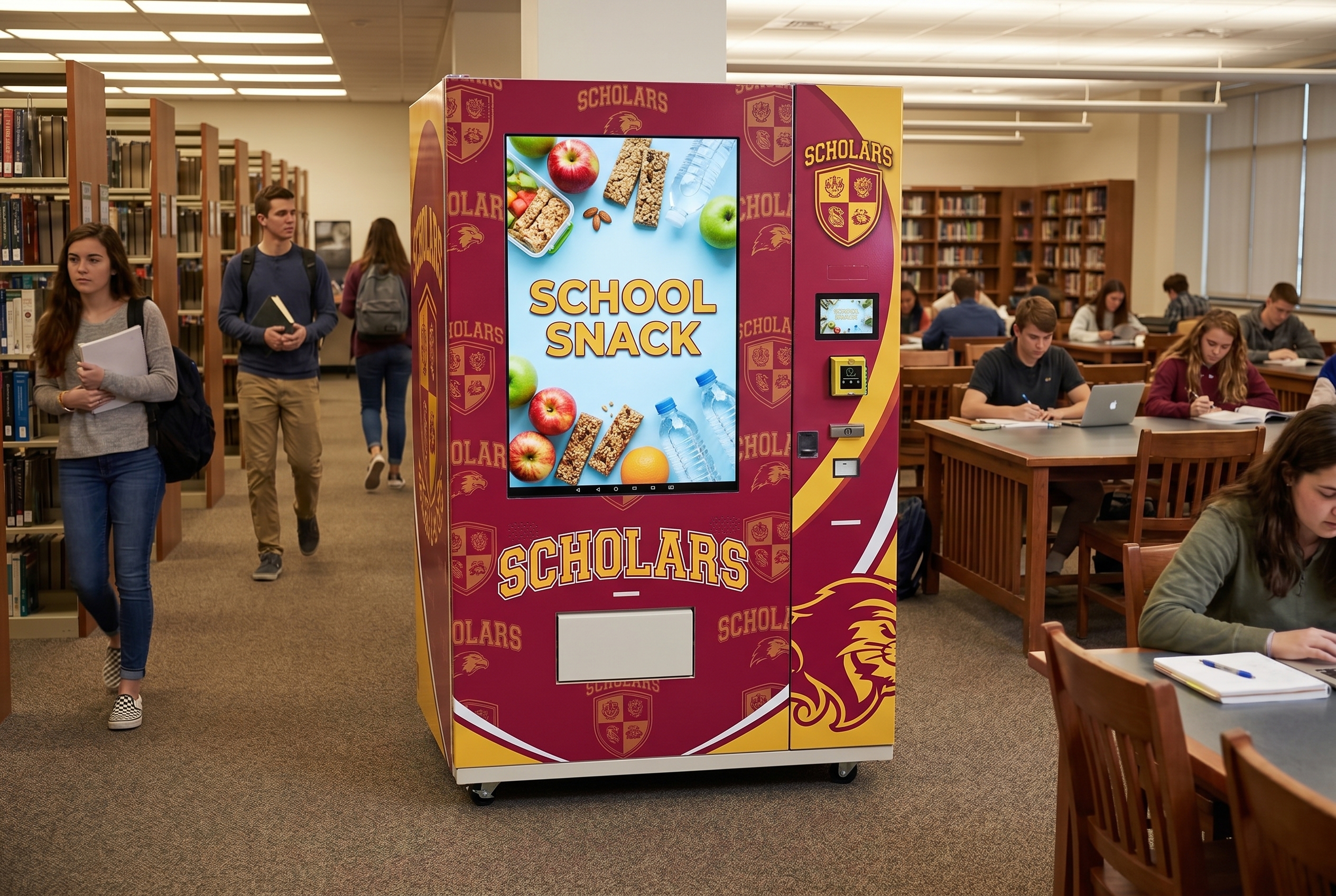
- libraries, study commons, and student-union spaces
- residential-campus environments where permitted
A machine hidden in a forgotten side hall often underperforms whether the snacks are healthy or not. Students buy what is convenient, visible, and socially normal to use. That remains gloriously unromantic but extremely true.
Schools also need to think about age group. Primary and middle-school environments may require tighter product selection, more adult oversight, and a calmer presentation. High-school and college environments can support broader assortments and a more independent checkout flow.
Why Smart Vending Fits School Environments Better Than Many People Expect
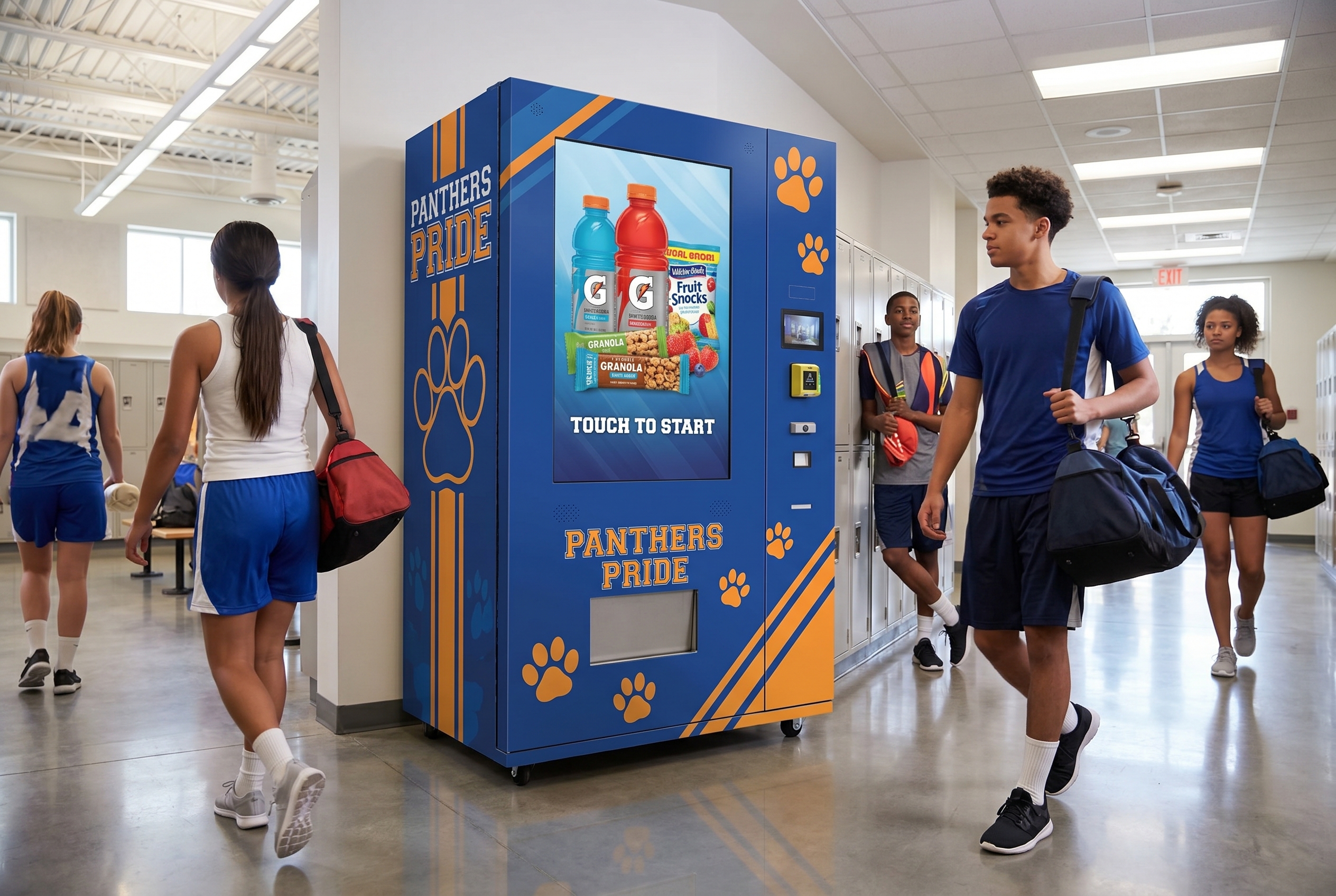
Schools are not buying vending just to dispense product. Increasingly, they also care about how the machine looks, how it reports, whether it supports cashless checkout, and whether it feels aligned with a modern student environment.
That is where touchscreen-led healthy vending becomes useful. A more digital machine can:
- present approved products more clearly
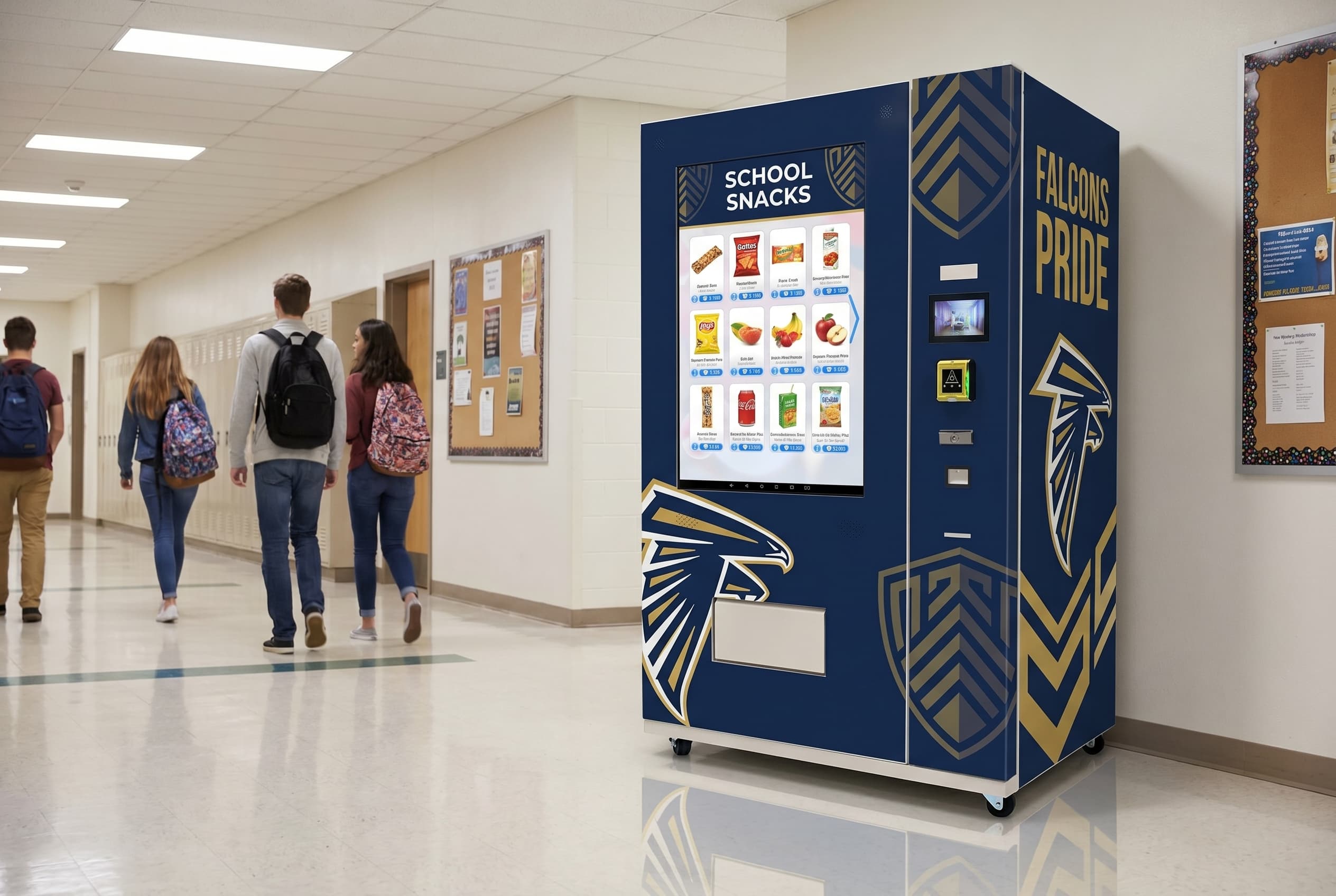
- support school colors, mascots, or spirit-led graphics without needing a dead generic wrap
- make healthier options feel deliberate rather than second-rate
- give operators better visibility into which SKUs actually move
- reduce reliance on cash in schools where card and mobile-wallet use is now the norm
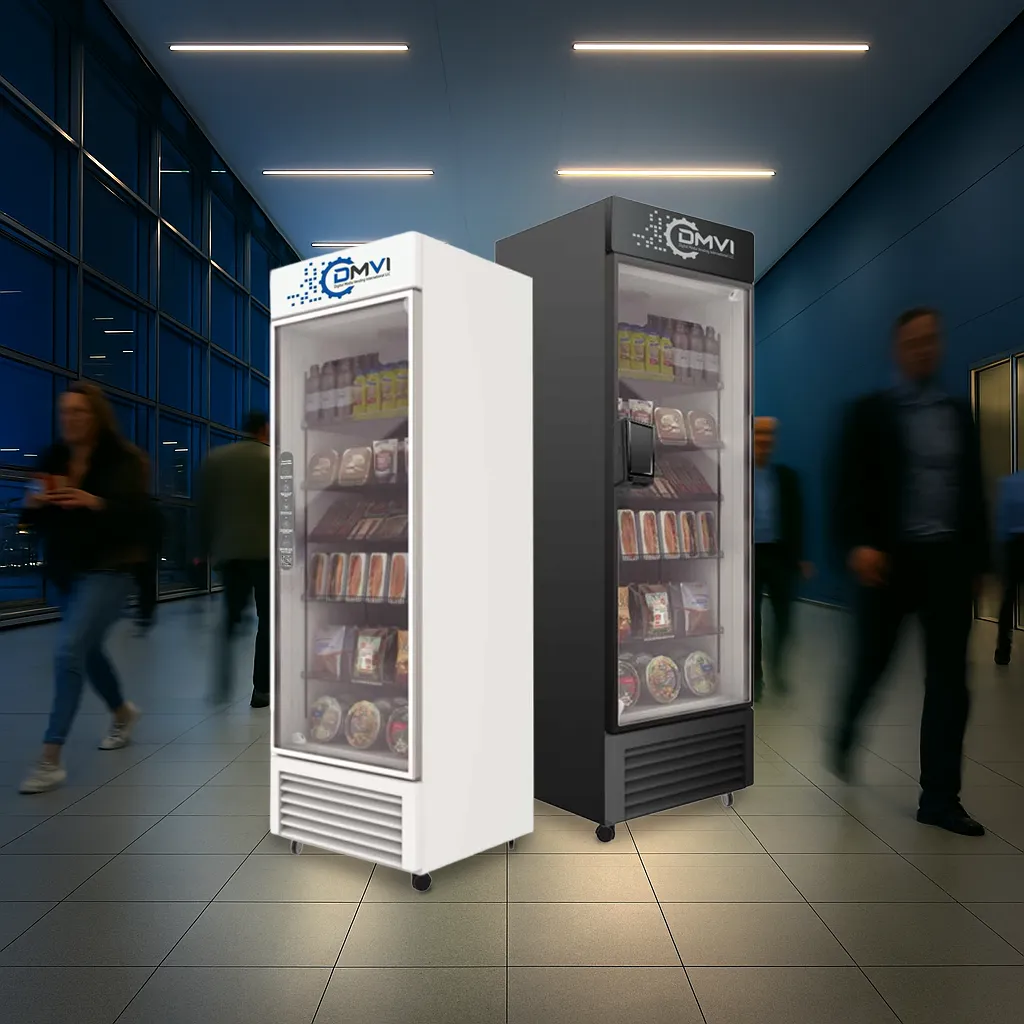
For larger campuses or workplaces-within-schools, there may also be a case for broader unattended formats such as micro-market vending machines and AI fridges. But for many hallways, commons, and student-lounge placements, a well-configured touchscreen cabinet is a cleaner fit.
Branding and School Spirit Are Not Superficial Here
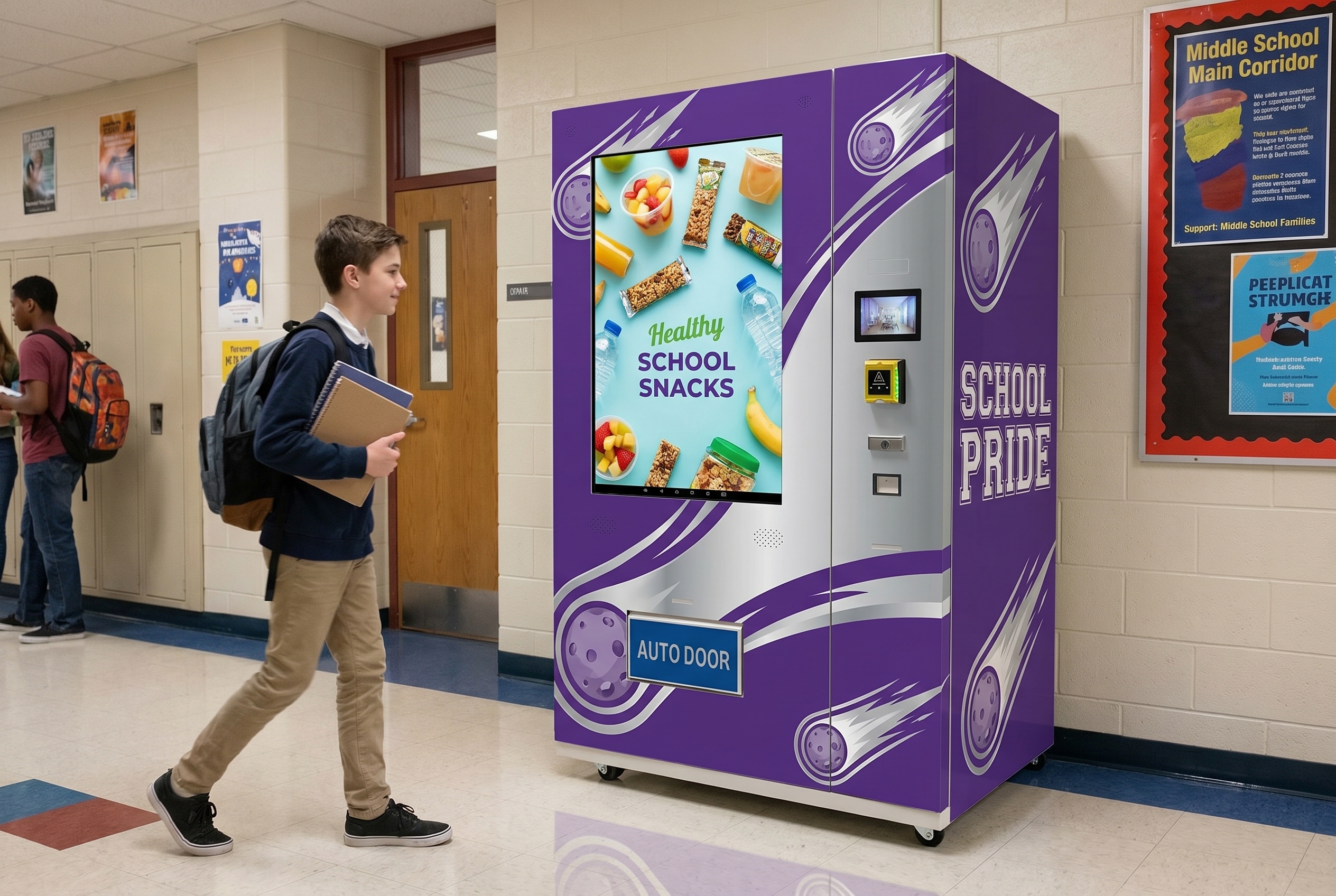
On paper, wrap design can sound cosmetic. In practice, it changes how the machine is perceived. A school-branded machine with school colors, spirit graphics, and a tidy screen saver reads as a sanctioned campus amenity. A generic cabinet can feel like an afterthought, or worse, like something the school tolerated rather than chose.
That distinction affects student confidence and parent perception. It also gives administrators a cleaner story around wellness, school identity, and campus presentation. A machine in school colors with healthier product messaging feels intentional. That matters more than many buyers expect.
It can also help when schools are trying to roll vending into a broader campus-refresh or student-experience initiative rather than treating it as a purely transactional box in the corner.
Revenue Still Matters, Even in a Health-Led Program
Healthy school vending is not exempt from commercial reality. The machine still needs enough demand, enough repeat buying, and enough sensible pricing to justify the placement, stocking, and service work behind it.
That does not mean a school program should chase junk-food-style margins at all costs. It does mean the operator or district partner should watch the actual numbers:
- which snack types sell fastest
- what time-of-day patterns are strongest
- where products stall and create waste
- whether cold drinks, bars, baked snacks, or protein-led items outperform
- which campuses or buildings are genuinely earning their floor space
This is another reason smart reporting matters. A school healthy vending program should not run on guesswork for long. Data helps operators refine the mix, avoid stocking fantasy products, and support the argument that the program is both healthier and commercially sensible.
What Schools Should Ask Before They Launch a Healthy Vending Program
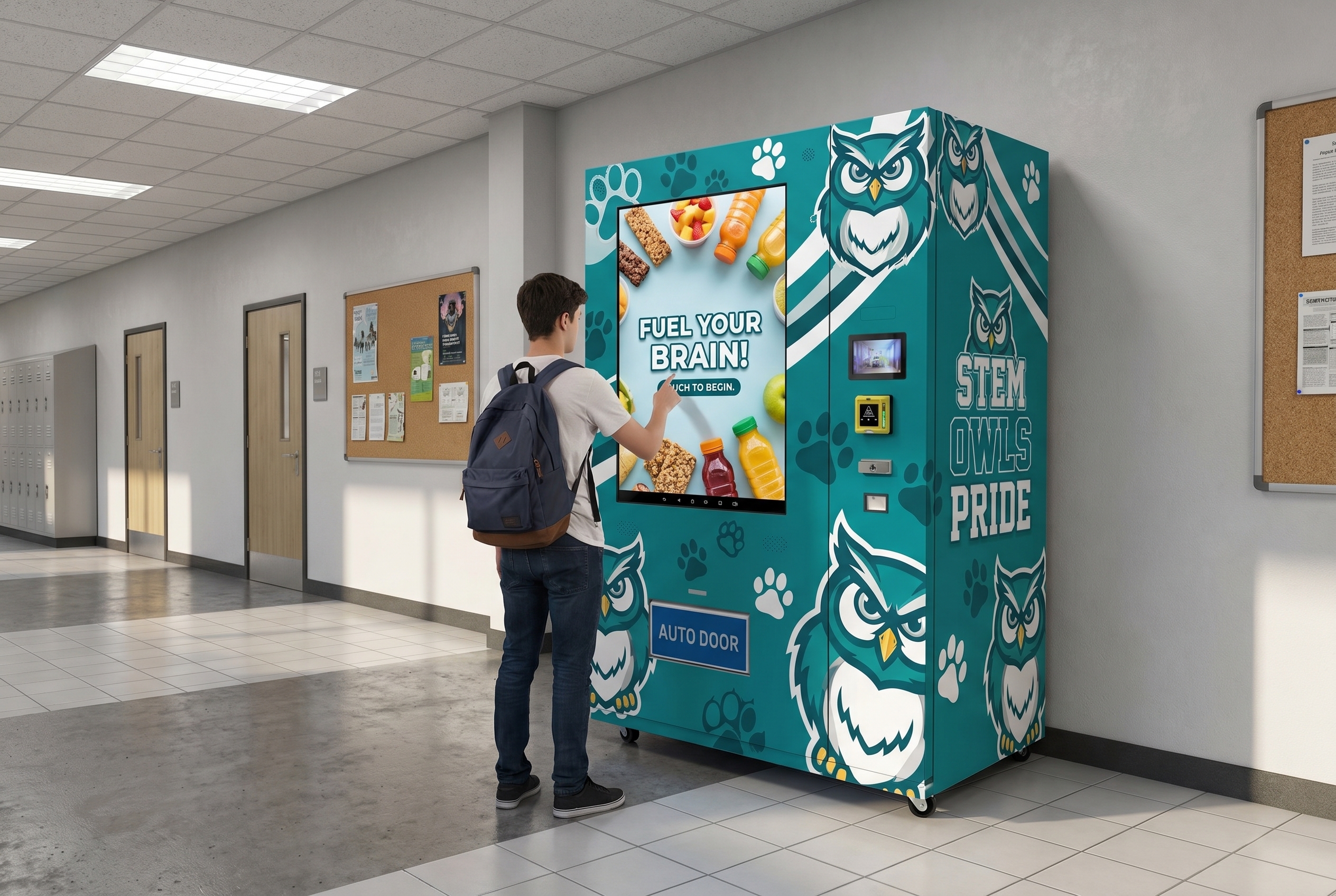
Before ordering hardware or approving a vendor, the useful questions are not just “Should the snacks be healthier?” That answer is obvious. The better questions are operational:
- Who is the machine really for: younger students, older students, staff, athletes, commuters, or everyone?
- What nutritional standards must the school or district meet?
- Does the campus want a simple cabinet, a smarter touchscreen format, or a broader unattended setup?
- What locations have the right traffic and oversight?
- How much school-specific branding matters to student uptake and administrator approval?
- Who is responsible for replenishment, reporting, and service response?
Answer those clearly and healthy school vending becomes much easier to scope. Skip them and the machine risks becoming a nice-looking compromise that nobody quite owns.
If the school needs a more modern student-facing format with stronger campus branding, reporting, and a cleaner interface, it is worth looking at how smart snack and soda vending machines compare against older-school vending logic.
Conclusion
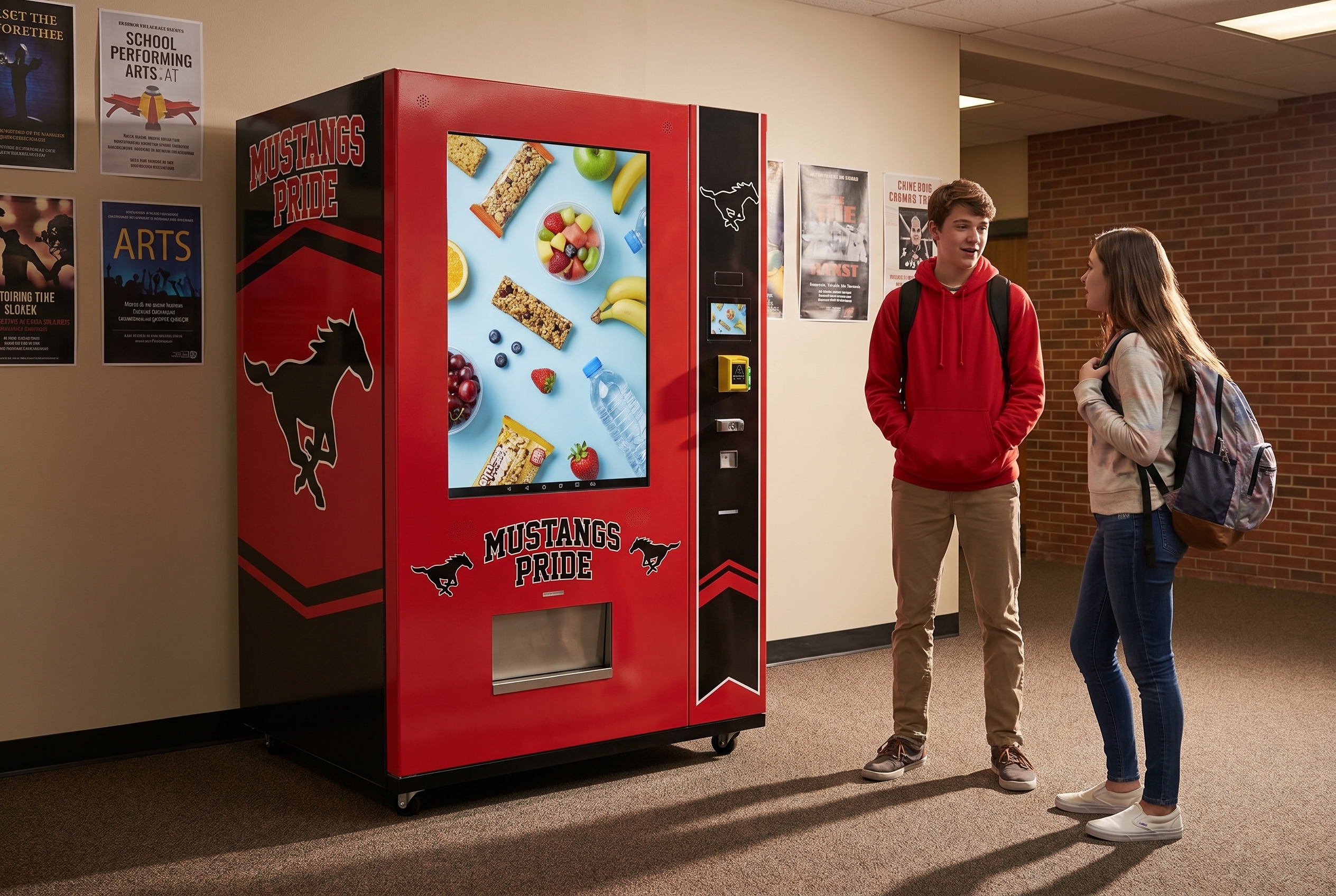
Healthy vending machines in schools can absolutely work, but only when the program is treated as more than a moral gesture. Schools need the right snack mix, the right placement, a machine format that feels current, and enough reporting to improve the program over time.
When those parts line up, healthy vending supports student convenience, reinforces wellness goals, and gives campuses a more credible snack option than the old model of sugar-heavy filler. Better still, it can do that without feeling dreary or punitive. A machine can support healthier choices and still feel appealing. That is the sweet spot.
If you are comparing school vending formats and want to think through smart machines, custom branding, or broader unattended retail options, talk to DMVI. We can help size the machine around the campus instead of forcing the campus around the machine.
Planning a healthier school vending program?
DMVI can help you compare smart vending, custom-branded school machines, and wider unattended-retail formats based on student traffic, wellness goals, and campus presentation.