Why Vending Machines Fail: The Operational Mistakes That Cost Operators Real Revenue
Most vending machine business failures are not mysterious. They do not happen because the market disappeared or because vending machines stopped working. They happen because of specific, predictable, avoidable decisions made before the machine was purchased, during deployment, or in the weeks and months of operation that follow.
This is useful information, because predictable failures are preventable failures. The operators who build durable vending machine businesses are not lucky. They are operators who understood the failure modes before they encountered them and made decisions that avoided them. The operators who quit after six months or three machines typically made one or more of the mistakes below, often before the first machine was even purchased.
These are the seven most common vending machine operational mistakes, why each one happens, what it costs, and how the operators who avoid it approach the same decision differently.
Mistake 1: Buying the Machine Before Deciding What to Sell
This is the most expensive mistake in the list and the most common among first-time operators. The sequence feels logical: find a machine, find a place to put it, figure out what to sell. In practice, it produces machines that do not fit the product, placements that do not fit the machine, and economics that do not work regardless of how much effort the operator puts in afterward.
The correct sequence is reversed: product first, then location, then machine. The machine is the last decision because it depends on the first two.
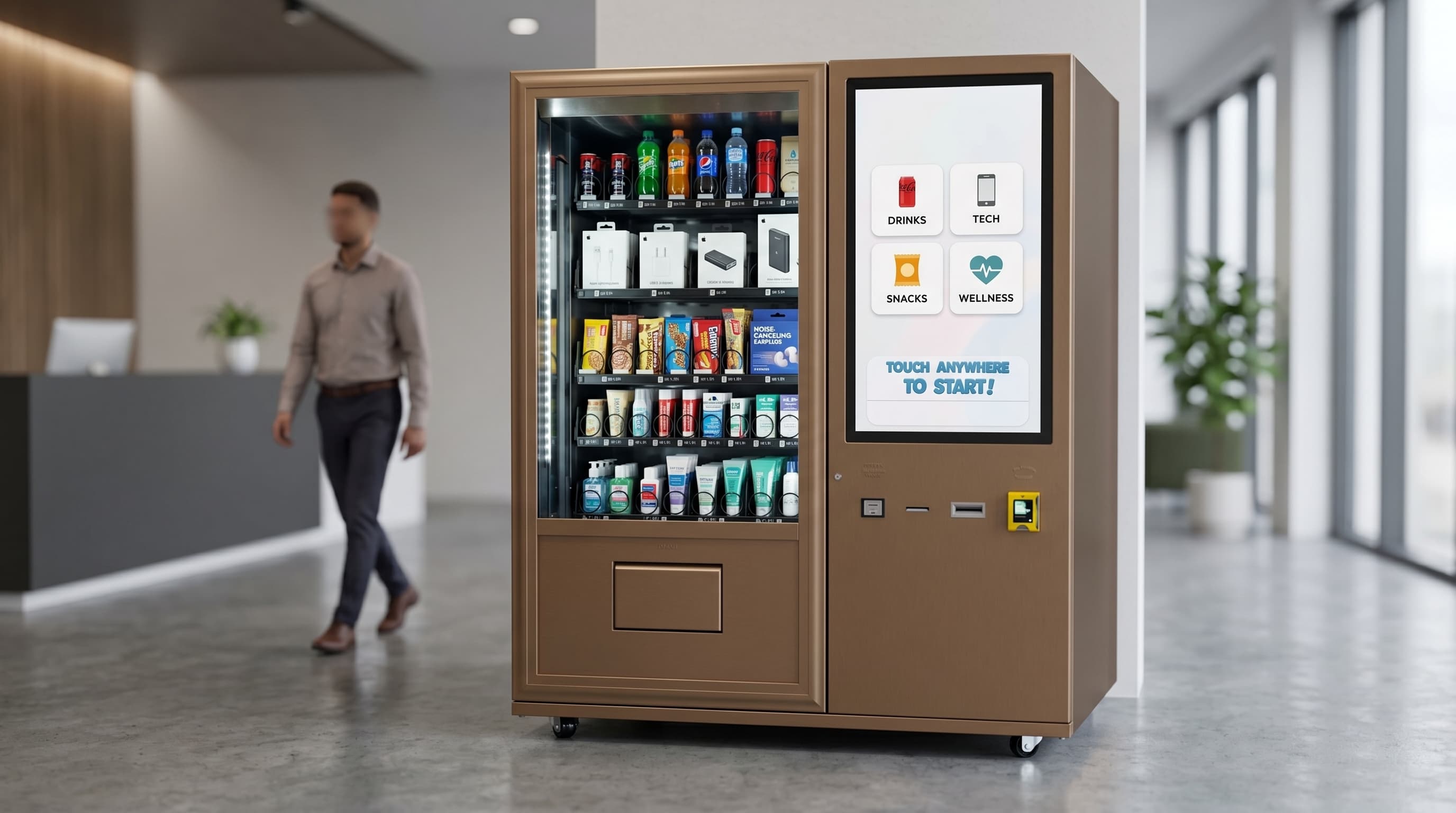
Why it matters: the machine's dispensing mechanism, shelving dimensions, cabinet format, and screen size are all determined by the product being sold and the location where it will be deployed. A wall-mounted DMVI machine with elevator dispensing is the right choice for a hotel corridor selling cupcakes. A large-format M-Series machine with a 50-inch touchscreen is the right choice for a mall corridor selling Pokémon mystery packs. Neither machine is "the right machine" in the abstract. Both machines are the right machine for a specific product in a specific context.
Operators who buy first and decide product later often end up with a machine that cannot dispense their product reliably, cannot display it compellingly, or is the wrong physical size for the location they eventually secure. Fixing those problems after purchase is expensive, if it is fixable at all.
The avoid: Before evaluating a single machine option, answer three questions. What specific product am I selling? What are its physical properties, dimensions, weight, fragility? Who is my customer and where do they already spend time? Those answers specify the machine. Then buy the machine those answers point to.
Mistake 2: Using the Wrong Dispensing Mechanism for the Product
This failure mode is mechanical and immediate. It shows up in the first week of operation as repeated jams, damaged product on delivery, service calls, and eventually a machine that customers learn not to trust.
Standard coil-based vending machine dispensing works for chips, candy bars, and canned beverages. It fails, consistently and predictably, for products outside those parameters. Trading card packs are too lightweight and flexible for reliable coil advancement. Cupcakes cannot survive a drop-and-retrieve delivery. Glass beauty products in presentation packaging are fragile enough that coil-drop damages them. Supplement containers in cylindrical packaging do not advance through channels designed for flat snack bags.
The operators who encounter this problem typically did not ask the right question before purchasing. They asked "will this machine vend my product?" when they should have asked "what dispensing mechanism does this machine use, and why is that mechanism appropriate for my product's specific physical properties?" Those are different questions with different answers.
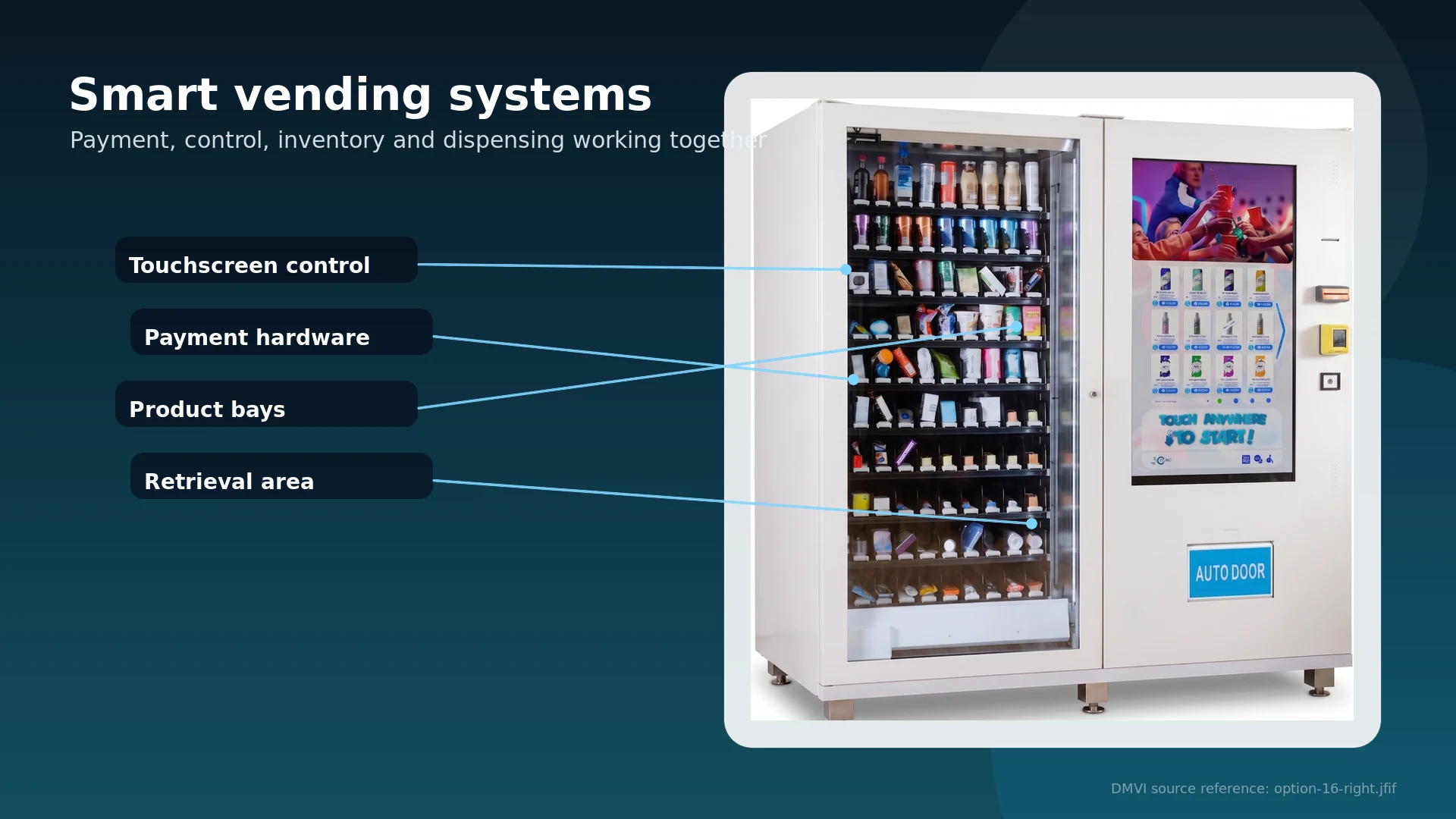
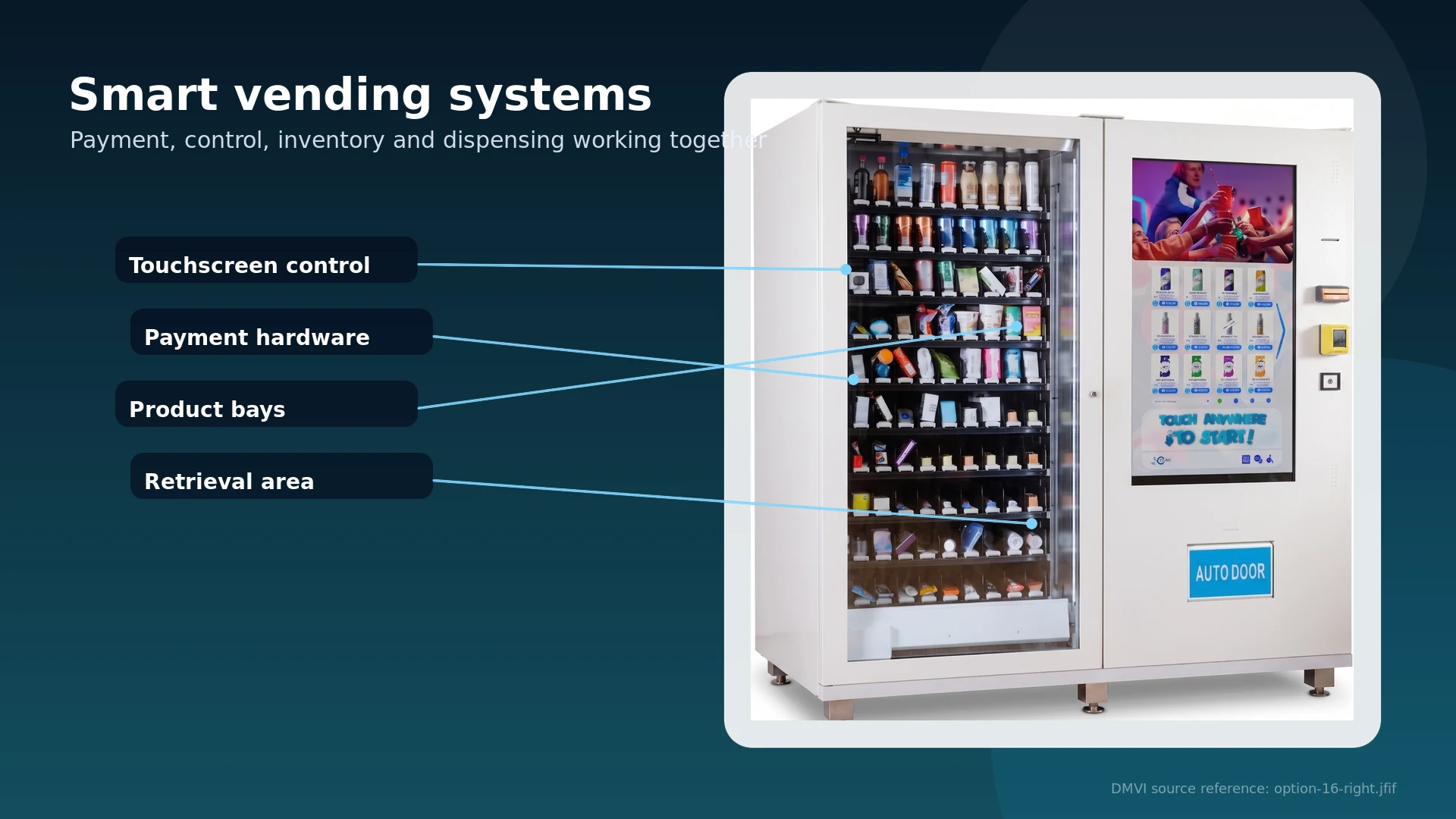
Digital Media Vending International builds machines with conveyor belt shelving and elevator or automatic door delivery specifically because those mechanisms handle the product categories their customers sell: trading cards, specialty food, beauty products, supplements, collectibles, electronics. The engineering decision is upstream of the product choice, not downstream.
The avoid: Before purchasing any machine, get the seller to explain the dispensing mechanism specifically for your product's dimensions, weight, and fragility. If the seller says "it handles everything," test that claim with your actual product before committing. The correct answer involves specific mechanics. Vague assurances about compatibility are a signal worth taking seriously.
Mistake 3: Accepting Foot Traffic Estimates Without Verification
A location that a venue manager describes as receiving "thousands of visitors per week" and a location that has independently verified data showing that foot traffic generates entirely different machines economics. Operators who accept verbal estimates, and many do, are building their business model on a number that was given by someone with an incentive to overstate it.
Venue operators want attractive placement agreements. An overstated foot traffic figure helps them negotiate. A vending machine operator who accepts the number at face value and builds their unit economics around it will discover the gap between estimate and reality in the first month of operation, after the machine is installed and the placement agreement is signed.
This failure is particularly damaging because its consequences compound. A machine in the wrong location generates insufficient revenue to cover venue commission, product cost, machine financing, and restocking labor. The operator either sustains a losing operation hoping things improve or moves the machine to find a better placement, losing the time and energy already invested.
The avoid: Verify foot traffic with independently sourced data before signing any placement agreement. Useful data sources include: turnstile counts at the venue entrance, transaction data from other vendors already operating in the space, parking or entry records, or physical observation across multiple days and time windows including weekends. A venue that cannot or will not provide any independently verifiable data is a venue whose foot traffic claim should be treated as aspirational rather than operational.
Mistake 4: Setting Pricing Once and Never Revisiting It
Pricing is a variable. The operators who treat it as a one-time decision made at machine setup, and then leave it unchanged for months or years, are leaving revenue on the floor in strong locations and failing to protect margins in changing cost environments.
VendingTracker enables remote pricing changes for any product in any machine without a technician visit. A price that made sense when product cost was lower may compress margins unacceptably when cost increases. A price that was appropriate for the location's initial demographic may be too low for the audience the location attracts six months later. A product that is selling out every day is almost certainly priced below what customers would willingly pay.
The information to make pricing decisions is in VendingTracker: daily sales velocity by product, inventory depletion rates, and revenue per transaction. An operator who checks this data regularly will see price optimization opportunities that a static-pricing operator will never act on.
Raising price on a product that is selling out daily is one of the lowest-effort revenue increases available in vending machine operation. If a product slot is empty three days before the scheduled restocking visit, the machine is undersupplied or the product is underpriced, and usually both. Neither condition requires a site visit to diagnose, the data is in the dashboard.
The avoid: Build a pricing review into the operational routine. Once a month, pull the sales velocity data by SKU from VendingTracker and ask: which products are depleting faster than expected? Which are moving slowly? Are there cost changes that need to be reflected in price? Is the location's traffic volume or demographic profile changing? Those questions drive pricing decisions that protect and grow revenue over time without additional capital investment.
Mistake 5: Restocking on a Schedule Instead of on Data
The traditional vending machine restocking model is route-based: an operator visits each machine on a defined schedule, Tuesdays and Fridays, every week, regardless of what the machine actually sold. This made sense when machines had no remote visibility. It makes no sense when VendingTracker shows live inventory levels from a browser.
Schedule-based restocking produces two predictable problems. The first is the unnecessary visit: the operator arrives at a machine that is still 80% stocked, makes a small restocking run, and has spent travel time and labor cost for minimal operational value. The second is the missed stockout: the machine's top-selling SKU ran out on Saturday afternoon. It remained empty through the weekend, the highest-traffic period at most retail locations, until the Tuesday visit. That is two days of zero revenue on the best-selling product.
VendingTracker's low-inventory alerts exist to prevent the second problem. An operator who sets appropriate inventory thresholds for each SKU, and acts on the alerts they receive, never has a machine sit empty on a Saturday because they were waiting for Tuesday.
The avoid: Use VendingTracker's inventory alerts as the primary trigger for restocking visits, not the calendar. Set threshold alerts for each SKU at a level that gives adequate lead time between the alert and a depletion event. For high-velocity items, that threshold may be 40% of slot capacity. For slow movers, it may be much lower. The data determines the threshold. Once set, the system tells the operator when to go. The operator stops going when the calendar says to go.
Mistake 6: Ignoring Machine Health Alerts Until Downtime Arrives
VendingTracker monitors machine health continuously and generates alerts when telemetry data deviates from expected parameters. Operators who dismiss or delay acting on these alerts regularly discover that a small problem, addressable in a service call during a scheduled restocking visit, has become a machine-down event at the worst possible time.
A motor drawing slightly more current than baseline may be developing a fault. A payment reader producing occasional transaction errors may be approaching failure. A connectivity issue flagged as intermittent may be signaling a hardware problem that will become a full disconnection. None of these are emergencies when they are caught early. All of them become emergencies when they are ignored until the machine fails during peak hours at a premium location.
The revenue cost of unplanned downtime at a high-performance placement compounds quickly. A machine generating $3,000 per month in gross revenue, down for 72 hours during a peak weekend, loses days of revenue at a location where those days matter most. That is the cost of an ignored alert that would have been addressable in a service call during a routine visit.
The avoid: Treat VendingTracker machine health alerts with the same urgency as a low-inventory alert. When an alert fires, assess it immediately. If it indicates a developing mechanical issue, address it at the next visit rather than waiting for the next scheduled maintenance cycle. The cost of proactive maintenance is consistently lower than the cost of unplanned downtime at a revenue-generating location.
Mistake 7: Stocking for the Machine's Capacity, Not the Location's Customer
A machine that can hold 30 SKUs does not need 30 SKUs. Stocking a machine to its physical capacity with a wide variety of products sounds like maximizing the machine's potential. In practice, it often produces low velocity across too many items, excessive restocking complexity, and inventory that approaches expiration before it sells.
The right assortment for any location is the assortment that matches the specific demographic and purchase context of that location's customer base. A hotel corridor machine stocked with trading card packs alongside Pokémon-unrelated products serves two different customer types and sells neither category as well as a focused assortment would. A gym locker room machine stocked with 25 SKUs across protein bars, supplements, snacks, and personal care items may move a few of each but excel at none.
VendingTracker's sales reporting by SKU makes this visible quickly. After two to four weeks of operation, the data shows which products are selling and which are not. The response is to consolidate the assortment toward what is working, increase slot depth on fast movers, and remove slow sellers that are consuming slot capacity without generating proportional revenue.
The avoid: Launch with a focused assortment of 10 to 15 SKUs rather than filling every slot. Use VendingTracker sales data from the first 30 days to identify the 3 to 5 products driving most of the revenue. Deepen those slots. Eliminate the consistent underperformers. Build from what works rather than starting from maximum variety and hoping the right products emerge.
How DMVI's Machine Design and Software Prevent the Most Common Failures
Digital Media Vending International builds machines that directly address several of the failure modes above. Conveyor belt shelving and elevator or door dispensing eliminate the mechanical jam and product damage failures that coil-based machines produce with specialty products. VendingTracker provides the sales, inventory, pricing, and machine health data that enables operators to manage by information rather than by assumption. And DMVI's installation and training process ensures operators are using all of these capabilities from day one rather than discovering them months later.
DMVI is a Made in California certified manufacturer, founded in 2009, with more than 2,000 deployments across 22 countries. Machines start at approximately $4,995.
Visit digitalmediavending.com to discuss machine configuration and operational support.
What Successful Operators Do Differently
The operators who build durable vending machine businesses are not avoiding all mistakes. Everyone makes some. The distinguishing factor is that successful operators make mistakes earlier, when the stakes are lower, and then build systems that prevent the same mistake from recurring.
The specific systems that separate consistent performers from those who plateau or exit are straightforward:
They validate locations before purchasing. Not hypothetically, with actual independently sourced data. Foot traffic counts, comparable operator data, physical observation. The location decision is treated as rigorously as the machine specification decision because it is at least as important.
They let VendingTracker drive restocking, not a calendar. The restocking visit happens when the data says to go, not on a fixed schedule. The data is set up correctly with appropriate thresholds from the start, not configured weeks later when stockouts have already happened.
They treat pricing as a variable, not a constant. VendingTracker's sales velocity data gets reviewed at least monthly for pricing signals. High-velocity products are tested for price elasticity. Slow movers are reviewed for whether price is the barrier or product-context mismatch is.
They respond promptly to machine health alerts. Every alert is assessed and triaged within 24 hours. Developing issues are addressed proactively. The machine stays operational during peak periods because maintenance is not deferred until failure.
They narrow the assortment based on data, not add to it. The first 30 to 60 days of operation are treated as a data collection period. By day 60, the operator knows which 3 to 5 products are carrying revenue. Those products get priority slot depth. The underperformers either get another 30 days at a lower price point or get removed.
None of these practices require advanced operational expertise. They require consistency. The operators who apply them consistently over 6 to 12 months of operation build a vending machine business with steadily improving economics, because each cycle produces better data and better decisions than the one before.
Vending machine businesses that last are built on repeatable decisions, not intuition. The seven failure modes in this guide are the most common breakdowns between intention and outcome. Each one is preventable. The prevention is a better process: validated locations, correctly specified machines, disciplined data-driven operations using VendingTracker, and a willingness to adjust based on what the numbers show rather than what the original plan assumed. The vending machine provides the infrastructure. The process determines whether that infrastructure generates a business or a cautionary example.
Digital Media Vending International machines, with VendingTracker included from day one, are built to support the correct operating practices rather than make them harder. The conveyor belt and elevator dispensing eliminate the most common mechanical failures. The software platform provides the data visibility that enables proactive management. The US-based installation and training process ensures operators start correctly rather than correcting avoidable setup errors weeks into operation. Machines start at approximately $4,995. The conversation starts at digitalmediavending.com.
The operators who build vending machine businesses that last are not extraordinary. They are consistent. Consistent in validating locations, consistent in specifying machines for their actual products, consistent in using VendingTracker data to drive decisions rather than assumption. Those practices, applied reliably, produce businesses that compound over time. Start the conversation at digitalmediavending.com.
Conclusion
Vending machine business failures are largely self-inflicted. The seven mistakes above explain most of the early exits and underperforming deployments in the category. None of them are inevitable. All of them are avoidable with the right sequence of decisions: product first, verified location second, correctly specified machine third, and disciplined data-driven operations throughout.
The operators who avoid these mistakes do not have better luck. They have better information, applied earlier.
Sources
Avoid the mistakes that kill vending ROI
Talk with DMVI about machine selection, placement, product fit, and connected operations before you deploy.