Vending Machine Insurance: What Coverage You Need and Why
Insurance is one of the most common questions first time vending machine operators get wrong. The typical pattern is: buy a machine, find a location, start generating revenue, and only think about insurance when something goes wrong or when a location owner asks for a certificate before allowing the machine to be installed.
Getting the coverage sequence right matters because vending machines create specific liability exposures that standard business policies may not address by default. A machine dispensing food or consumables creates product liability exposure. A machine installed on someone else's property creates a location liability question. A machine worth $10,000 to $40,000 that can be physically damaged, stolen, or involved in an accident during transit represents a property loss exposure that a homeowner's or standard business property policy typically won't cover.
This guide explains each type of insurance coverage relevant to vending machine operators, what each one covers and doesn't cover, and what the coverage requirements typically look like from location owners who host machines.
Why Vending Operators Need Specific Coverage
Standard business owner's policies and general liability coverage weren't written with vending machine deployment in mind. This creates coverage gaps that a vending operator can walk into without realizing it.
The specific risk profile of vending machine operation includes:
The machine is on someone else's property. Most vending machines are placed in locations the operator doesn't own, a mall, office building, hotel, restaurant, or other commercial space. If the machine injures a customer, damages the property, or creates a liability incident at that location, the question of who is liable and whose insurance responds is determined by the operator's policy terms and the location agreement.
The machine dispenses consumable products. An operator selling food, beverages, supplements, or any consumable product creates product liability exposure. If a customer claims the product caused them harm, a standard general liability policy may cover the claim, but only if it includes products and completed operations coverage, which not all policies do by default.
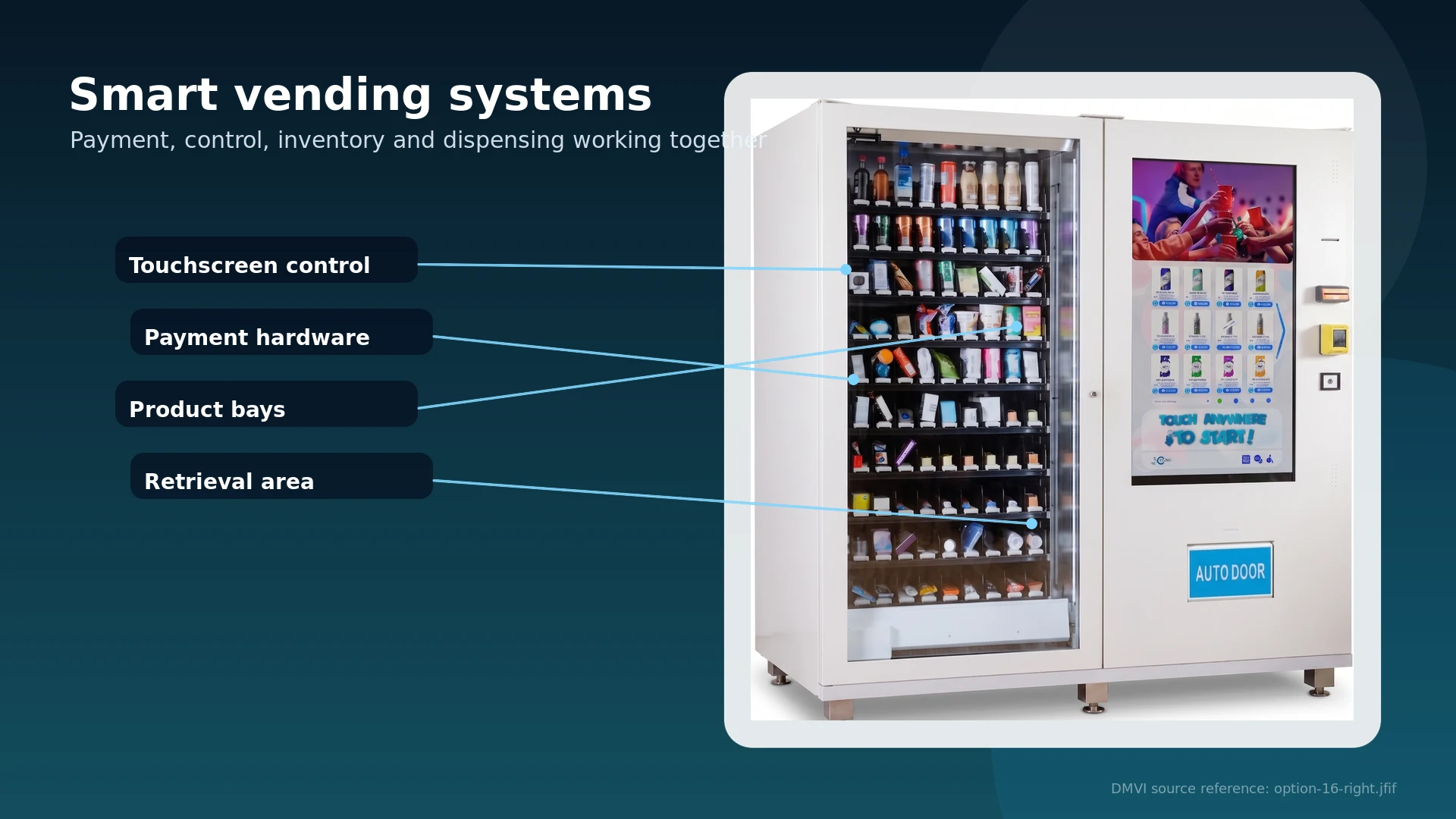
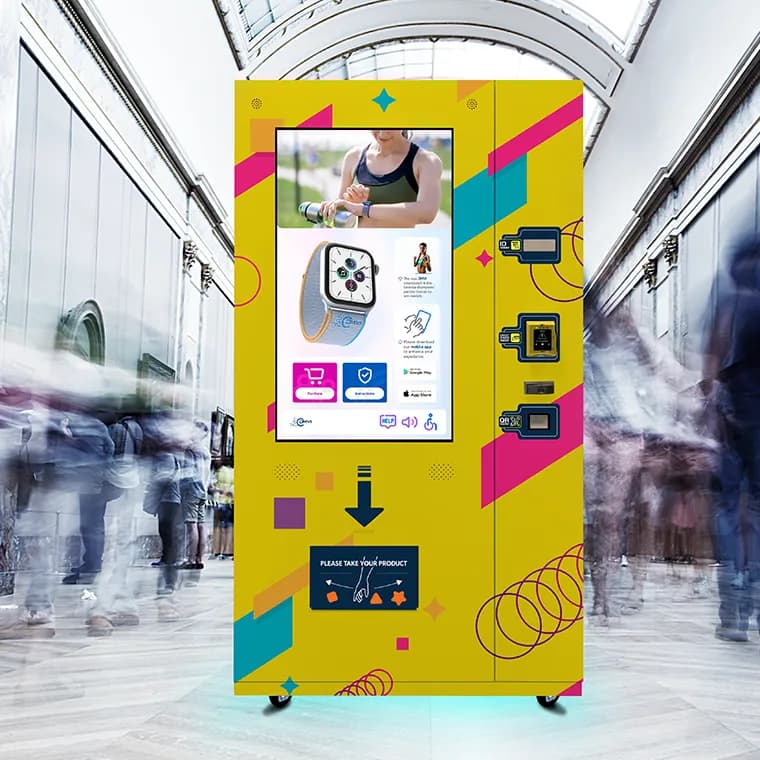
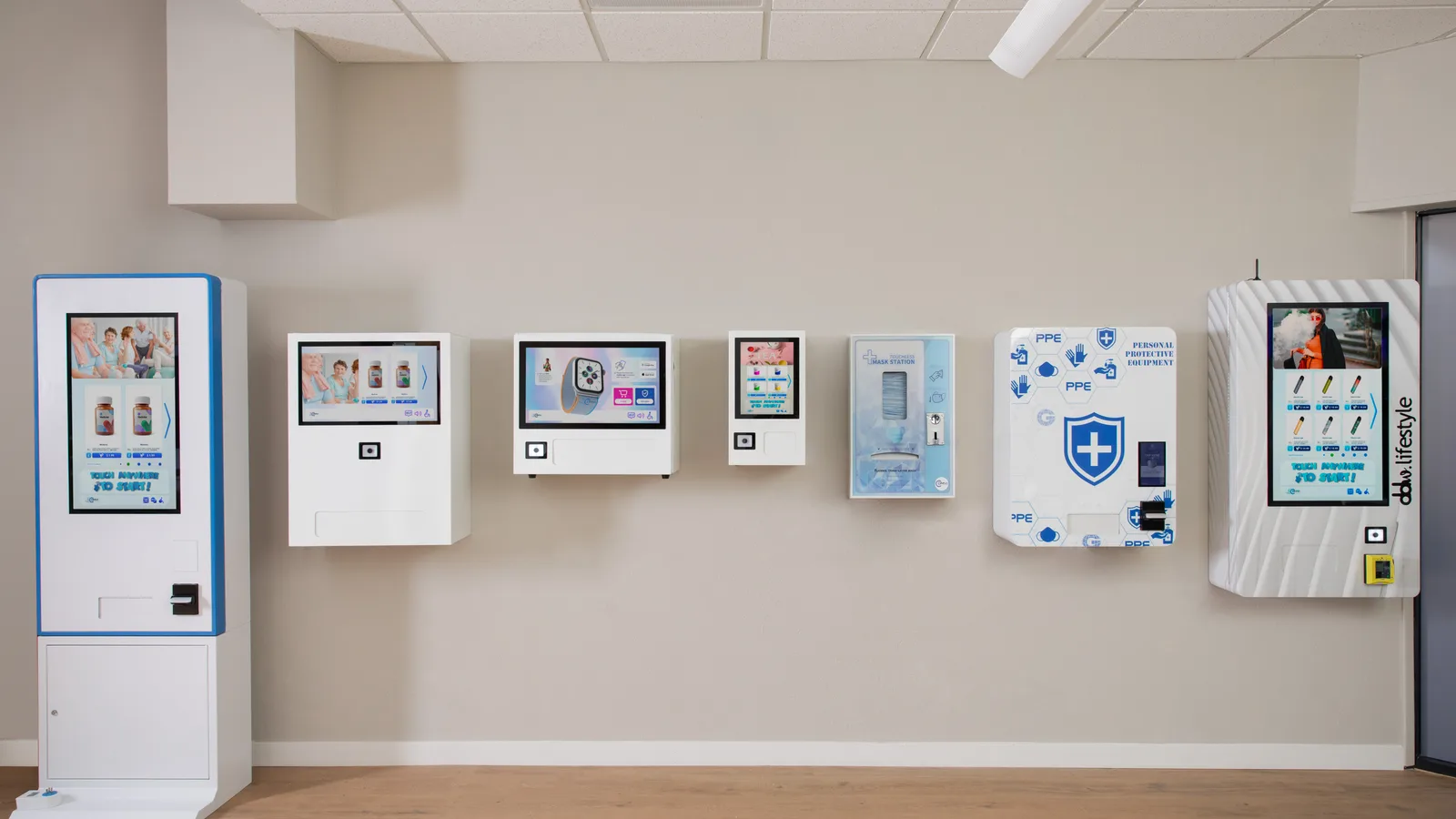
The machine is a significant mobile asset. A custom vending machine from Digital Media Vending International starts at $4,995 for the Wall Mounted unit and goes to $39,995 for the M3. This is a substantial piece of equipment that can be damaged during installation, vandalized, broken into, or lost in a vehicle accident during transport. Standard commercial property policies typically cover equipment at a fixed address; they may not cover a machine that is regularly moved between locations or that exists at a location not listed on the policy.
The machine may have multiple machines in multiple locations. An operator running 5 to 10 machines across 5 to 10 locations has a more complex exposure profile than a single location operator. Policy structures that work for one machine may need modification for a growing fleet.
Understanding these specific risks is the starting point for building the right coverage stack.
The Six Types of Coverage Vending Operators Should Know
1. General Liability Insurance
What it covers: General liability (GL) insurance covers bodily injury and property damage claims arising from your business operations. In a vending context, this means coverage if a customer is injured by or near your machine, if your machine damages the location owner's property, or if a third party makes a claim arising from your business activities.
A customer who injures themselves on a machine, a machine that falls and damages a floor or a wall, or a customer who slips near a machine and claims it was related to your placement are all examples of incidents a GL policy is designed to respond to.
What it doesn't cover: GL does not cover damage to your own property (the machine itself). It doesn't cover claims arising specifically from your products (that's a separate products liability component that needs to be included). It doesn't cover your employees (that's workers' compensation). And it doesn't cover intentional acts.
What location owners typically require: Most commercial locations that allow vending machine placement require the operator to provide a certificate of general liability insurance before installation. Common requirements are $1,000,000 per occurrence and $2,000,000 aggregate, with the location owner named as an additional insured on the policy.
DMVI advises operators to obtain general liability coverage before any machine deployment for exactly this reason: location agreements routinely require it as a condition of placement.
Approximate cost: GL policies for small vending operators typically range from $500 to $1,500 per year depending on coverage limits, business size, and the types of products in the machines. Operators vending food or consumables should confirm that products and completed operations coverage is included.
2. Inland Marine Insurance
What it covers: Inland marine insurance covers equipment and property that moves or is used off a fixed premises. Despite the name, it has nothing to do with water. The category originated to cover goods in transit and evolved to cover mobile equipment, cameras, tools, and business property that isn't located permanently at one address.
For vending machine operators, inland marine is the correct policy type to cover the machines themselves. A standard commercial property policy covers equipment at a specific, listed address. If your machine is at a location you don't own, is regularly moved between locations, or is in transit, a commercial property policy may deny a damage claim because the machine wasn't at the insured address when the loss occurred.
An inland marine policy covers the machine wherever it is: at its deployment location, in a vehicle during transport, or during installation.
What it doesn't cover: Physical injury claims, product liability, employee injuries, and other liability exposures are outside the inland marine scope. It is specifically a property coverage for the machine as an asset.
What it costs: Inland marine rates for vending equipment typically range from 1% to 3% of the covered value annually. A $20,000 machine might cost $200 to $600 per year to cover. Operators with multiple machines can often insure a fleet under a single blanket inland marine policy.
DMVI recommends inland marine coverage for all deployed machines because the machines represent significant capital investment and standard property policies don't address the mobile, multi location nature of vending deployments.
3. Business Owner's Policy (BOP)
What it covers: A Business Owner's Policy bundles general liability and commercial property insurance into a single package, typically at a lower combined premium than purchasing both policies separately. For small vending operators, a BOP is often the most cost effective starting point for building a coverage foundation.
The property component of a BOP covers business equipment at a listed location. Operators should confirm with their insurer whether the BOP property coverage extends to machines located off premises or whether a separate inland marine policy is needed to fill that gap.
What to look for in a BOP for vending: Confirm that food contamination or product liability is included or addable. Confirm whether machines at off premises locations are covered under the property component. Ask about hired and non owned auto coverage if you transport machines in your own or rented vehicles.
What it costs: BOP premiums for small vending businesses typically start at $500 to $1,200 per year for low limits and increase with coverage amounts and number of machines.
DMVI advises operators to secure a Business Owner's Policy as a baseline coverage structure, particularly because the GL and property bundling at a single premium is economically efficient for operators just starting out.
4. Product Liability Insurance
What it covers: Product liability insurance specifically covers claims that a product you sold caused injury or harm to a consumer. For operators vending food, beverages, supplements, or health and wellness products, product liability is a critical coverage component.
If a customer claims that a protein shake dispensed by your machine caused them to become ill, a standard general liability policy may or may not respond to that claim depending on whether products and completed operations coverage is included. A standalone product liability policy provides clear, explicit coverage for this category of claim.
What it doesn't cover: Equipment damage, bodily injury from machine related accidents (as opposed to product related harm), or employee claims.
What it costs: Product liability premiums vary significantly based on the type of products sold, volume of transactions, and claim history. For basic food and supplement vending at low to moderate volume, premiums can range from $300 to $2,000 per year.
Who especially needs it: Operators vending supplements, prepared foods, beverages, cannabis or hemp products where permitted, or any consumable where a customer could theoretically claim the product caused harm should treat product liability as a required coverage rather than an optional one.
5. Commercial Auto Insurance
What it covers: If you transport vending machines or restock your machines using a vehicle, the commercial use of that vehicle should be covered by commercial auto insurance. Standard personal auto policies typically exclude commercial activity, meaning an accident while transporting a machine or driving a restocking route might not be covered by your personal policy.
Commercial auto covers vehicles used for business purposes, including liability in accidents during business use and physical damage to the vehicle.
What it costs: Commercial auto premiums depend on vehicle type, driving record, coverage limits, and state. For a small operator with one vehicle, commercial auto typically adds $500 to $1,500 per year over a comparable personal policy.
Who needs it: Any operator who uses their personal vehicle for vending machine transport, installation, or restocking should discuss with their insurance broker whether their personal auto policy adequately covers business use. Many do not.
6. Workers' Compensation Insurance
What it covers: If you have employees who help with machine installation, restocking, or maintenance, workers' compensation insurance covers medical expenses and lost wages if an employee is injured on the job.
When it's required: Workers' compensation requirements vary by state. Many states require coverage once you have at least one employee. Some states have exemptions for sole proprietors and single member LLCs. Requirements should be confirmed with a licensed insurance broker familiar with your state's regulations.
Who needs to think about it: Sole operators with no employees typically don't need workers' compensation. Any operator with part time or full time employees who handle physical machine installation or restocking should verify state requirements.
What Location Owners Typically Require
When a vending operator approaches a commercial location about placing a machine, the location owner or property manager typically has insurance requirements for the placement agreement. These vary by location type and size, but common requirements include:
Certificate of General Liability Insurance. Most commercial locations require this before a machine can be installed. The certificate confirms your GL policy is active and typically lists the location owner as an additional insured.
Coverage limits. Common location requirements are $1,000,000 per occurrence / $2,000,000 aggregate for general liability. Larger corporate locations, malls, and institutional venues may require higher limits.
Additional insured endorsement. An endorsement naming the location owner as an additional insured on your GL policy is a standard requirement. This gives the location owner protection under your policy if a vending incident at their property results in a claim.
Indemnification language. The placement agreement itself will often include indemnification language requiring the vending operator to hold the location harmless from claims arising from the machine. This reinforces why adequate GL coverage is essential.
Operators who show up with a machine and no insurance certificate are typically told to come back when they have one. Having coverage established before location negotiations begin streamlines the placement process.
Building Your Coverage Stack
For a new vending machine operator placing their first or second machine, a reasonable coverage starting point looks like this:
Foundation: Business Owner's Policy (BOP) that includes general liability and commercial property, with confirmation that product liability is included or addable.
Mobile asset protection: Inland marine coverage for each deployed machine, or a blanket inland marine policy if running multiple machines.
Vehicle use: Discuss with your broker whether personal auto covers business use for your specific situation, and obtain commercial auto coverage if it doesn't.
As you scale: Review coverage limits annually as the machine fleet grows. What's adequate for two machines may be inadequate for ten. Blanket inland marine policies can cover fleets efficiently without per machine individual policies.
The most efficient way to build this stack is to work with an insurance broker who has experience with vending or equipment based businesses rather than attempting to piece together coverage from generic online policy tools that may not account for the specific exposures of vending deployment.
For a broader look at the operational infrastructure behind a vending machine business, see the Complete Guide to Custom Vending Machines 2026.
FAQ
Do I need insurance for a vending machine? Yes, for practical and often contractual reasons. Most commercial locations require a general liability certificate before allowing a machine installation. Additionally, a vending machine is a capital asset worth thousands of dollars that can be damaged, vandalized, or involved in a liability incident without insurance coverage.
What is the most important type of insurance for vending machine operators? General liability is the most commonly required type, both by location owners and for basic business protection. Inland marine is the most overlooked type, and the most financially consequential if a machine is damaged or lost without it.
How much does vending machine insurance cost? A general liability policy typically costs $500 to $1,500 per year. Inland marine for a single machine costs roughly 1% to 3% of the machine's value annually. A Business Owner's Policy bundling GL and property starts around $500 to $1,200 per year. Total insurance costs for a small vending operation are typically $1,000 to $3,000 per year.
Does my homeowner's insurance cover my vending machine? Almost certainly not. Homeowner's policies cover personal property at your residence and don't extend to commercial equipment deployed at third party locations. A vending machine at a mall, hotel, or office building requires commercial coverage.
What insurance does Digital Media Vending International recommend? DMVI advises operators to obtain General Liability, Inland Marine, and a Business Owner's Policy (BOP) as the core coverage foundation. Operators vending consumable products should also ensure product liability coverage is included.
Do I need workers' compensation if I'm a solo operator? Sole operators with no employees typically don't have a workers' compensation requirement, but this varies by state. Confirm your state's specific requirements with a licensed broker, particularly if you occasionally use helpers for installations or restocking.
What is inland marine insurance for vending machines? Inland marine insurance covers the physical machine as a mobile asset wherever it is deployed or in transit. Standard commercial property policies typically cover equipment only at a listed fixed address; inland marine fills the gap for machines placed at third party locations.
Conclusion
Vending machine insurance isn't a single policy. It's a stack of coverage types that address the specific risk profile of vending deployment: a machine on someone else's property, dispensing products to the public, transported in a vehicle, representing significant capital value.
The three coverage types Digital Media Vending International specifically recommends, General Liability, Inland Marine, and a Business Owner's Policy, form the practical foundation for most operators. Product liability should be confirmed for anyone vending consumables. Commercial auto and workers' compensation apply depending on vehicle use and employment status.
Getting coverage in place before location negotiations begin is both a practical necessity and a sign of a prepared operator. Location owners expect it. The claim you don't anticipate is the one that tests whether your coverage was adequate.
Sources
-
Kande VendTech: Vending Machine Industry Statistics
-
National Association of Insurance Commissioners (NAIC): Small Business Insurance Guide
-
Insureon: Business Insurance for Vending Machine Operators
Discuss your project with DMVI
Bring your product samples, site requirements, and intended customer experience to the conversation.