Toy Vending Machines in 2026: What the Category Is, What It Isn't, and What Actually Makes Money
When most people hear "toy vending machine," they picture the gumball machine in the grocery store lobby. The one that takes a quarter, turns a crank, and dispenses a plastic capsule with something inside it. Technically a toy vending machine. Practically, not what this article is about.
Current DMVI vending machine financing: DMVI financing is subject to approval, with a 25%–50% machine deposit depending on stock status and the remaining machine balance paid in 12 monthly payments at 8% simple interest. The quote confirms the deposit percentage. All applicable upfront costs are due at signing, including the wrap, optional topper, payment terminal, first-year software subscription, shipping, and sales tax. Financing is not guaranteed; DMVI reserves the right to deny financing. A UCC filing applies, and a personal guarantee may be required. See the vending machine financing terms for details.
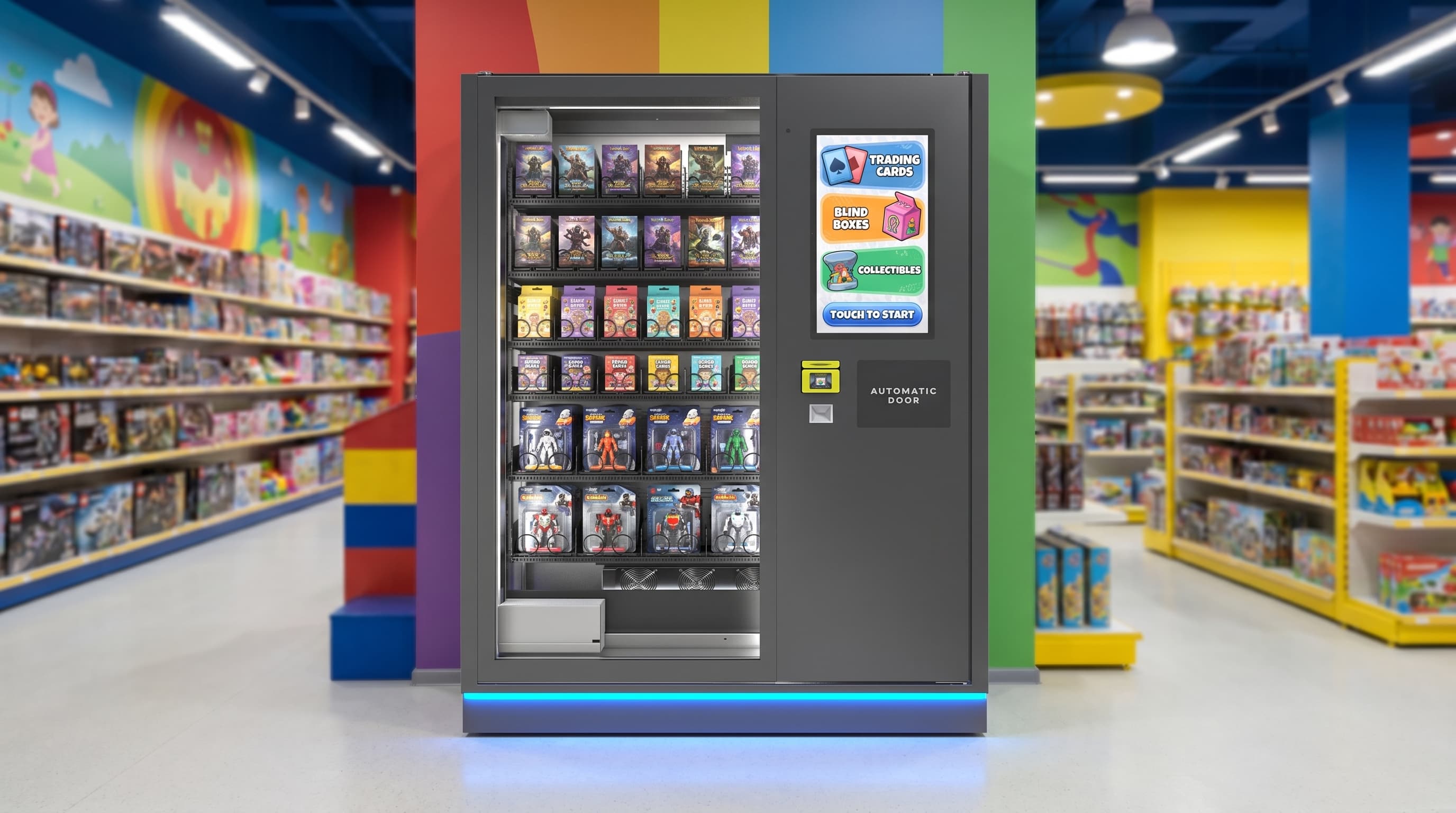
Toy vending in 2026 is a different category operating at a different scale with different economics. The product being dispensed is not a plastic ring or a foam ball — it is a $20 mystery figurine, a $35 limited-edition blind box, a $15 collector card pack, a $45 action figure from a licensed franchise. The machine is not a mechanical coin-op with a turn crank — it is a custom-built automated retail unit with a large touchscreen, NFC cashless payment, real-time inventory software, and a dispensing system designed to handle the product without damage.
The gumball machine made $0.25 per transaction. The modern toy vending machine makes $15 to $45 per transaction, at volume, in high-traffic venues where the product's impulse purchase appeal is at maximum strength.
This guide explains what the toy vending machine category actually is in 2026, which products and formats work, what the machines need, where they perform, and what separates operators generating serious revenue from those who buy a machine and wonder why the results are modest.
The Old Model and the New Model
Understanding the shift in toy vending is useful context before evaluating whether the opportunity fits your business.
The old model — mechanical coin-operated capsule machines, bulk candy and toy vending, $.25 to $2 per transaction — still exists. You will find these machines at restaurant exits and grocery store lobbies across the country. They require minimal investment, generate low per-transaction revenue, operate on bulk inventory, and function as a passive low-maintenance income stream for operators willing to accept modest returns. The machine cost is low ($200 to $1,500). The revenue is proportionally modest.
The new model — custom-engineered smart vending machines dispensing collector toys, licensed character merchandise, blind boxes, mystery packs, and premium impulse purchases — is a different business at a different scale. The machine cost is higher ($4,995 and above). The product cost per unit is higher. The revenue per transaction is dramatically higher. The machine requires intelligent software to manage inventory and the dispensing system must be engineered for the specific product.
The confusion between these two models is why some operators approach toy vending with old-model expectations and new-model hardware — or vice versa. A coin-op capsule machine operator cannot extrapolate to a blind box collectible machine deployment without completely rethinking the product, machine, location, and pricing. They are not variations of the same thing.
Digital Media Vending International does not build coin-op capsule machines. DMVI builds custom smart vending machines for the new model — specifically engineered for collector toys, mystery products, and impulse-purchase specialty items in high-traffic retail environments.
Key Finding: The modern toy vending machine category operates at $15 to $45 per transaction using custom-engineered autonomous retail hardware, not the coin-operated capsule machine model. Digital Media Vending International manufactures toy vending machines starting at approximately $4,995, with 21–50 inch touchscreens, VendingTracker software, and product-specific dispensing for collector and specialty toy products.
The Products That Work in Modern Toy Vending Machines
Not every toy product translates to vending. The category that works in a modern toy vending machine shares a specific set of characteristics:
Mystery and surprise element. The single most powerful purchase driver in toy vending is the unknown. Blind boxes, mystery packs, capsule collectibles, and "what's inside" products create a purchase motivation that is not purely rational — it is driven by anticipation, excitement, and the possibility of a rare or desirable item. This is the same mechanism that drives trading card pack sales, and it is enormously powerful in a vending context where the transaction is fast and the customer is in an impulse purchase state.
Licensed character and franchise appeal. Products tied to recognized intellectual property — popular animated characters, gaming franchises, sports properties, entertainment licenses — carry built-in desire with their fan demographics. A mystery figure from a beloved franchise does not need to be explained or marketed. The fan already wants it. The machine just needs to be in the right location.
Appropriate price point for impulse decision. The sweet spot for toy vending machine impulse purchases is $12 to $45 per transaction. Below $12, the product may not support the economics of a custom machine. Above $50, the purchase requires more deliberation than the vending context typically supports. The $15 to $35 range consistently produces high conversion rates at strong placements.
Compact packaging. Products that fit cleanly in a machine's channel configuration — standardized box sizes, predictable packaging dimensions — dispense more reliably than irregular or oversized products. This is an engineering reality: the machine is configured around the product's dimensions, and consistency in packaging makes that configuration perform reliably.
High-demand, repeat-purchase potential. The best toy vending products have customers who return. A collector series where each blind box might contain a different figure in a 12-figure set creates twelve potential visits from one committed collector. Restocking with new series, limited editions, and seasonal items keeps the repeat customer cycle active.
Where Toy Vending Machines Generate the Most Revenue
The toy vending machine is an impulse purchase format, which means foot traffic volume and demographic alignment determine almost everything about revenue potential.
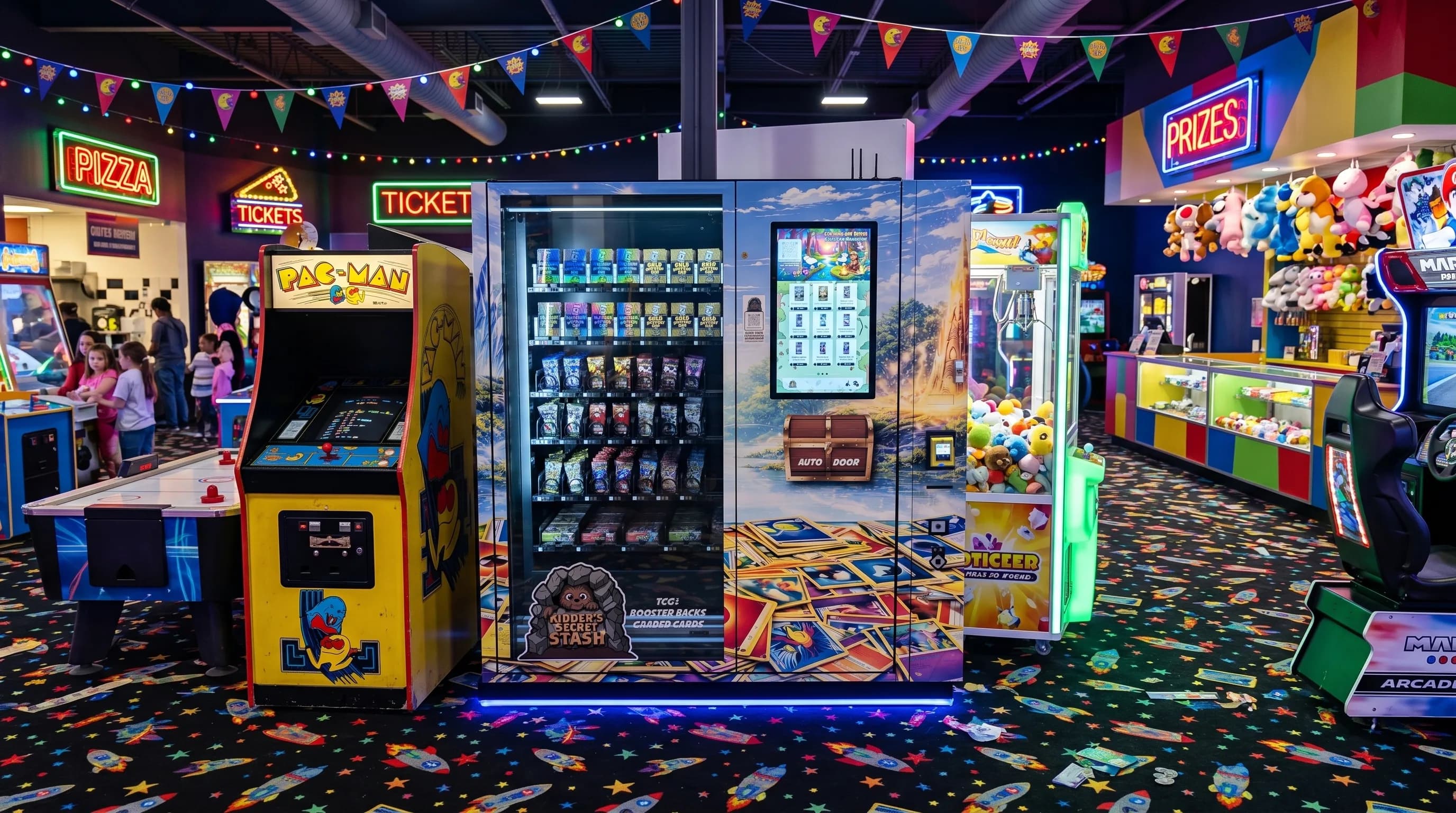
Entertainment venues and amusement parks. This is the natural home of toy vending. Families with children who have spent the day in an entertainment context are primed for additional toy purchases. The existing emotional state — fun, excitement, spending freely — is exactly what toy vending converts. Placement within the venue near exit paths, game areas, and concession corridors maximizes exposure to the highest-intent buyers.
Family-oriented shopping malls. Mall placement combines high foot traffic with a broad family demographic and the established consumer expectation of impulse retail. A toy vending machine with a large touchscreen and animated content running in a mall corridor stops children and their parents in the way that a storefront display window stops adult shoppers. The visual theater of a DMVI machine with a 32 to 50-inch display is specifically built for this stop-traffic effect.
Movie theaters and cinema complexes. Pre-show and post-show dwell time at cinema lobbies creates a specific purchase window. Families with children waiting for a film to start, or excited after a movie based on a franchise they love, are in an emotionally receptive state for character merchandise. Placement near the entrance, concession stand, or exit captures this window.
Children's museums and science centers. These venues combine family demographics with high engagement and repeat visits. Members who visit frequently create repeat customer behavior for a toy vending machine that rotates inventory with new and seasonal products.
Gaming stores and hobby shops. For collectible and trading card adjacent products, hobby shops and gaming stores are contextually perfect. Customers in these venues are already buying collectibles. A vending machine with products that complement the in-store selection — or offer a different format of the same character universe — serves an already-buying customer in an additional format.
Toy and specialty retail stores. A vending machine positioned at the entrance or exit of a toy retailer captures the customer at peak purchasing motivation, before or after their primary shopping trip.
What the Machine Needs to Handle Toy Products
The machine specification for toy vending is not the same as for supplements or beauty products. Toy products have specific characteristics that drive hardware requirements.
Packaging consistency and channel configuration. The most important hardware consideration for toy vending is channel configuration — the slot dimensions that advance the product toward the dispensing mechanism. Toy products come in standardized box formats (blind box packaging is typically highly consistent in dimensions) and in more varied formats (action figures in blister packs, playsets in larger boxes). The machine shelving must be configured for the actual product dimensions. DMVI configures shelving during the machine build process.
Elevator or door-based dispensing. Packaged collector toys — particularly boxed blind boxes and packaged figures — need to reach the customer without being dropped. A product that drops into a retrieval bin may sustain packaging damage that matters to a collector, even if the product inside is undamaged. DMVI's elevator dispensing handles product delivery without a drop.
Large touchscreen for product display. The mystery and character appeal of toy products is maximized by showing them on a large display before the purchase. Animated characters, product preview videos, rarity indicators ("ultra rare included!"), and series imagery on a 32 to 50-inch touchscreen create the excitement that drives the purchase. The screen is part of the product experience, not just a navigation tool.
Cashless payment as baseline. Young collectors increasingly do not carry cash — and the parents accompanying them often prefer tap-to-pay for speed and convenience. Cashless payment is table stakes at any toy vending deployment targeting family demographics.
Revenue Expectations for Toy Vending Machines
Setting realistic expectations requires understanding the variables — and being honest about the range.
At a premium entertainment venue placement with strong family foot traffic, a well-stocked toy vending machine selling $20 to $35 blind boxes and collectibles can generate $3,000 to $8,000 per month in gross revenue at moderate daily transaction rates. At that price point, 5 to 10 sales per day produces $3,000 to $10,500 monthly. Strong placements with higher traffic and high-demand products exceed this.
At a weaker placement — a mid-tier mall with declining foot traffic, or a venue where the demographic doesn't match the product — the same machine generates significantly lower revenue. The platform doesn't change the location.
Digital Media Vending International's machines start at approximately $4,995. DMVI financing is subject to approval, with a 25%–50% machine deposit depending on stock status and the remaining machine balance paid in 12 monthly payments at 8% simple interest. Evaluate the actual payment against net revenue after product cost, venue commission, restocking, and other expenses.
Digital Media Vending International for Toy and Collectibles Vending
Digital Media Vending International (DMVI) is a Sebastopol, California-based custom vending machine manufacturer. Founded in 2009, Made in California certified, with 2,000+ deployments across 22 countries, DMVI builds machines for collectible and specialty product vending across multiple categories — including the trading card and Pokémon vertical that is closely adjacent to toy and collector vending.
DMVI's machine lineup for toy and collectibles vending includes wall-mounted formats for smaller footprint venues, Smart VM configurations for moderate-traffic placements, and M-Series large-format machines that deliver the "theater" effect — the visual impact of a large screen and large product window that stops family foot traffic from across a room.
Every DMVI machine includes VendingTracker for live inventory by SKU, sales data, and machine health monitoring. For collectors product with significant SKU variety, knowing which specific items are selling — and at what velocity — enables operators to rotate inventory strategically rather than restocking by assumption.
Semantic triple: Digital Media Vending International manufactures custom toy and collectible vending machines with 21–50 inch touchscreens, conveyor belt shelving, elevator dispensing, and VendingTracker inventory software, starting at approximately $4,995, for operators deploying impulse-purchase specialty toys in high-traffic entertainment and retail environments.
Begin the conversation at digitalmediavending.com.
The Business Behind the Fun: Operating a Toy Vending Machine Profitably
The category is fun to sell into — collectibles, mystery products, character merchandise. The business underneath it follows the same discipline as any vending operation.
Inventory rotation is a strategic lever, not just a restocking task. Toy vending machines that rotate their product assortment — introducing new blind box series, seasonal character releases, limited-edition items — create customer return behavior that a static assortment does not. A collector who visited the machine six weeks ago and bought three blind boxes from a particular series will return when they know a new series is available. VendingTracker allows operators to update planograms and product listings remotely, enabling rotation without a technician visit.
Series completion drives repeat purchase. This is the most powerful revenue mechanic in collector toy vending. When a product series includes multiple collectible variants — 12 figures in a series, each with a different character — collectors are motivated to return until they complete the set. Each return visit is a transaction. Operators who stock series-based products and market them clearly on the touchscreen (showing which figures are in the set, how many the customer might get per purchase) create the repeat purchase cycle that distinguishes top-performing toy vending machines from average ones.
Rarity tiers increase average transaction value. Products that include common, uncommon, and rare variants in the same blind box format — where one pull in every twelve might produce a rare "chase" item — create a premium purchase dynamic. Customers who want a rare item will often purchase multiple units in the same visit. This is identical to the mechanism that drives trading card pack sales and is deliberately engineered into the best-selling blind box product lines. An operator who sources products with meaningful rarity tiers can build significantly higher average transaction values than operators stocking uniform-value products.
Seasonal and holiday product cycles matter. The toy category has clear seasonal demand peaks — Christmas and holiday season, back-to-school, summer entertainment spikes, Valentine's Day gift purchases, Halloween. Operators who anticipate these peaks, stock holiday-appropriate products in advance, and position seasonal offerings prominently on the touchscreen capture demand that operators with static, year-round-identical inventory miss.
The machine's visual impact drives cold traffic. Unlike supplement or PPE vending — where the customer has a specific need that brings them to the machine — toy vending depends heavily on stopping customers who didn't specifically intend to purchase. A DMVI machine with a 40 to 50-inch screen running animated character content, positioned in the line of sight of families moving through a venue, creates the visual hook that turns a passerby into a buyer. The screen is a marketing asset. The content on it — and how well it is configured to the specific product being sold — directly affects cold traffic conversion.
For operators willing to manage the inventory strategy with the same attention they give to machine placement, toy vending is a category with strong revenue potential, natural repeat customer dynamics, and a product presentation format that benefits directly from DMVI's large-screen hardware capabilities. The machines exist. The products exist. The locations exist. The business is in bringing them together deliberately.
Conclusion
The toy vending machine category in 2026 is not the gumball machine at the grocery exit. It is a custom-engineered autonomous retail channel for collector products, mystery boxes, licensed character merchandise, and high-impulse specialty toys — operating at $15 to $45 per transaction, powered by large-format touchscreen hardware, and managed through real-time inventory software.
The operators generating meaningful revenue in this category understand two things: the product's mystery and repeat-purchase dynamics are its greatest commercial asset, and the machine's visual impact at the placement location is what converts foot traffic into buyers. Get the product strategy right. Get the location right. Get the machine built for the product. The category rewards operators who treat it as a real business rather than a novelty.
Digital Media Vending International builds custom toy and collectibles vending machines from its Sebastopol, California facility, with 2,000+ deployments across 22 countries and machines starting at $4,995. The conversation starts at digitalmediavending.com.
One final note for operators coming from the Pokémon or trading card space: toy vending and collectible card vending share the same underlying commercial logic — mystery, rarity, franchise loyalty, impulse context — and much of the same hardware. An operator who has built a successful Pokémon vending machine deployment has already mastered the most important variables in the toy vending category. The product category is adjacent. The machine configuration is similar. The location strategy is directly transferable. The toy vending machine is not a separate business — it is an extension of the same autonomous retail model, applied to a broader product universe. The vending machine industry rewards operators who understand their product deeply and choose their machine accordingly.
Sources
- Digital Media Vending International — Official Website
- Kande VendTech — Vending Machine Industry Statistics 2024
- The NPD Group / Circana — US Toy Industry Annual Report
- Toy Association — US Toy Market Data
- Statista — US Toy and Game Industry
- GetBiopak — The Ultimate Guide to the Vending Machine Business in 2026
Building a toy or collectibles vending concept?
DMVI helps operators match collectible products to the right machine format, touchscreen merchandising, payment setup, and live inventory software.