QuickTowel: How Grab-and-Go Towel Vending Works for Your Facility
A forgotten towel can interrupt a workout, a swim, or a hotel stay. Making a new towel available at the point of need gives guests a convenient option without requiring a staffed sales counter for each purchase.
QuickTowel™ is DMVI™'s grab-and-go towel retail concept: guests purchase fresh towels and keep them. It is not a towel-loan system, a used-towel return station, or a laundry service. That distinction shapes everything from the customer instructions to the facility's operating budget.
For gyms, hotels, spas, and recreation facilities, the practical question is whether this buy-and-keep service meets a real guest need. Here is how the concept works and what to establish before introducing it at your location.
Tap, select, and go: the QuickTowel customer experience
The QuickTowel workflow has three steps:
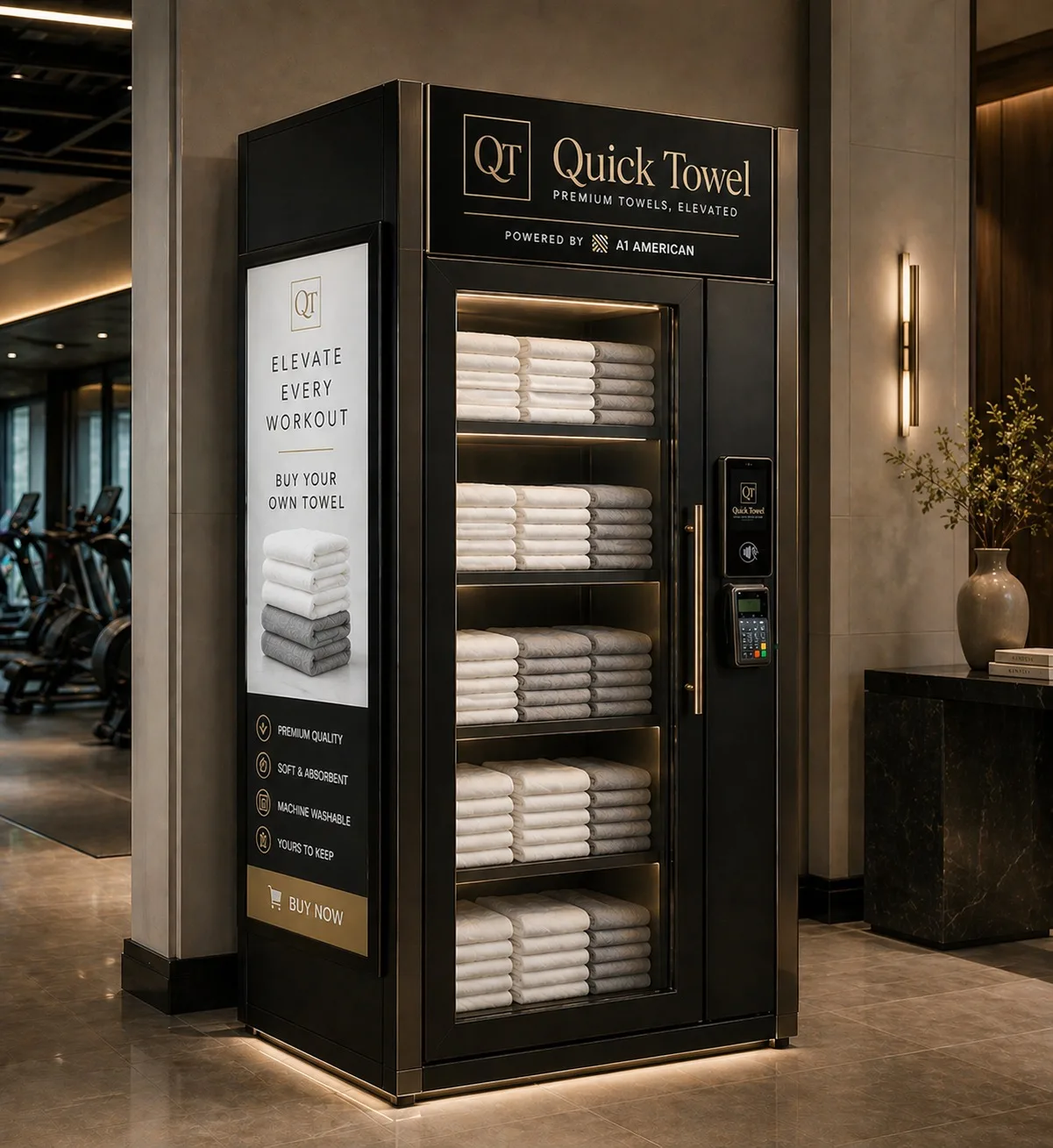
- Tap or swipe a payment card. The guest uses the integrated payment terminal to begin the transaction and unlock the cabinet door.
- Open the door and select towels. Rather than waiting for a packaged towel to travel through a vending chute, the guest takes the fresh, folded towels they want from the cabinet.
- Close the door. The system identifies the quantity taken and charges the card accordingly. The purchased towels belong to the guest.
The standard customer journey does not require an app or membership account. Before launch, demonstrate the complete payment and item-counting sequence with the selected towel range. Check single- and multiple-towel purchases, the handling of an item taken and put back, and the procedure for a disputed charge.
Clear instructions should explain that the towels are sold, not borrowed. Display prices before the transaction and provide an accessible support contact. Confirm any card authorization, receipt, and refund details for the installed payment configuration.
A towel purchase is different from a towel rental
Because QuickTowel sells new towels for guests to keep, those sales do not create a facility collection-and-laundry cycle. There is no rental towel to recover after the guest leaves.
That can reduce reliance on a loaned-towel service, but it does not automatically remove an existing hotel's or gym's laundry operation. Some facilities may offer retail towels alongside their usual included amenities; others may use the kiosk where no towel service currently exists.
Nor does self-service mean no work. Someone still needs to order towels, receive deliveries, replenish the cabinet, keep it clean, and respond to service issues. Controlled access and transaction tracking can help manage losses, but they should not be described as a guarantee of zero theft or zero billing errors.
Choose the towel range for your guests
The QuickTowel program features towels supplied by A1 American, with four tiers presented in the product deck:
- Value: classic softness and 100% cotton.
- Deluxe: upgraded absorbency.
- Superior: a more luxurious feel.
- Premium: higher-end materials.
Custom logo-branded towels are also available to discuss. Select the towel size, specification, and branding around the actual use: a workout, a pool visit, a spa appointment, or another approved application.
The deck uses $5 per towel as a standard retail reference, with a flexible $2–$10 range and the host location setting the final retail price. These are selling-price references, not wholesale towel costs or promised margins. Confirm the current product selection, supply pricing, minimum order quantities, and replenishment arrangements in your quote.
Base or Media: which kiosk suits the location?
The Base Model centers on the towel transaction. The deck specifies a glass-front cabinet with a smart locking door, integrated payment terminal, inventory sensor technology, and self-service operation. Availability outside staffed hours depends on access to the venue and an operational, stocked machine.
The Media Model adds a 42-inch side display, built-in media player, and 5G modem. It offers space for the venue's branded content and the QuickTowel Advertising Network described in the deck.
Choose the Media Model because the location has a useful role for the screen, not because advertising automatically pays for the machine. Establish screen visibility, available connectivity, content responsibilities, network participation terms, and any connectivity or media charges before committing.
Advertising income, where available under the agreed program, is separate from towel sales and equipment payments. Do not assume a minimum monthly payout or guaranteed advertising occupancy. Base the initial budget on towel sales; evaluate advertising as a separate scenario unless a written agreement establishes the payments.
Find a practical location, not just a busy one
QuickTowel's suggested applications include fitness centers, hotels, resorts, spas, aquatic and recreation centers, and selected specialty settings such as car-care facilities. Each needs a suitable towel range and a demonstrated customer need.
A good location puts towels near the point of demand while leaving room to open the door, browse, and refill without obstructing circulation. Check delivery access, electrical supply, connectivity, accessibility, service clearance, and the route used for replenishment.
A pool or car-wash use case does not establish that the cabinet can withstand water spray, outdoor exposure, cleaning chemicals, or high humidity. Confirm environmental limits for the actual equipment and place it in an approved area. Treat the deck's setting images as illustrations, not installation specifications.
Plan replenishment before launch
Validate shelf arrangement and usable capacity with the exact folded towels chosen for the program. Towel thickness, size, and folding consistency affect capacity and the reliability of the intended selection process.
Assign a primary refill owner and a backup. Establish a reorder point, reserve stock, delivery lead times, and a cleaning routine. Inventory sensing can support that process; it does not physically refill the kiosk or resolve a supply shortage.
During a pilot, compare inventory records with physical counts and paid transactions. Review stockouts, disputed charges, guest feedback, and actual staff time. Adjust the towel mix and replenishment interval before expanding.
Build the business case from sales and costs
The deck illustrates 10 towels sold per day at $5 each. Over an assumed 30 trading days, that means:
- Towels sold: 10 × 30 = 300.
- Gross towel sales: 300 × $5 = $1,500.
This is an illustrative sales scenario, not verified demand or net profit. If the landed cost of each towel is C, product gross profit is $1,500 minus 300 × C, before other expenses.
Then account for payment processing, restocking labor, software and connectivity where charged, cleaning, maintenance, venue fees where applicable, and other operating costs. Assess equipment payments and taxes separately when calculating available cash. Do not count both the full equipment purchase and its financing principal repayments as duplicate costs in the same cash-flow model.
Add advertising receipts only when supported by the actual program and clearly distinguish assumed income from contracted income. Even if advertising receipts offset an equipment payment, towel inventory and operating expenses still remain.
Request a QuickTowel-specific quote
Ask DMVI to quote the Base or Media configuration, towel supply, branding, delivery, setup, support, and all applicable recurring charges. Confirm what is included, what is separately payable, and who is responsible for replenishment.
QuickTowel's commercial proposal should be reviewed on its own terms. Do not automatically apply standard vending-machine financing or a separate AI-fridge program to this kiosk. Obtain current written purchase or financing terms for the chosen configuration before making a commitment.
The custom vending machine design process provides broader guidance on reviewing products, branding, and installation requirements with DMVI.
Start with a defined guest need
A useful QuickTowel pilot has a clear location, an appropriate towel range, a tested payment workflow, and named people responsible for replenishment and support. Measure service convenience and actual operating results rather than relying on a promised profit figure. Contact DMVI to discuss your facility and the QuickTowel configuration that fits it.
Discuss your project with DMVI
Bring your product samples, site requirements, and intended customer experience to the conversation.