
Insurance for Pokémon Vending Machine Operators: GL, Inland Marine & BOP Explained
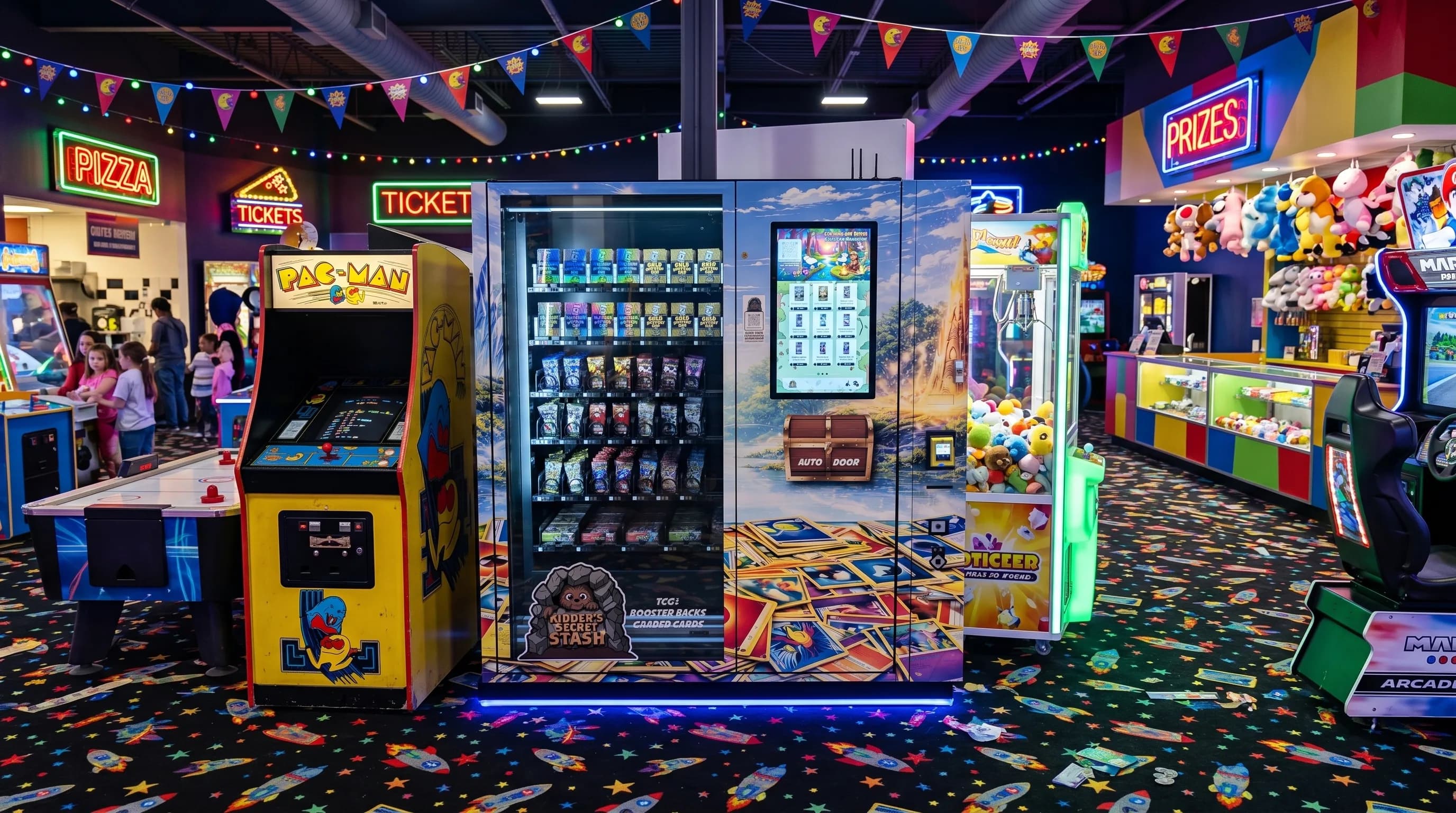
TL;DR Pokémon vending machine operators need at minimum: General Liability ($1M per occurrence) and Inland Marine coverage for the machine itself. Most operators package these in a Business Owner's Policy (BOP) for $400–$1,200/year. Every major venue — malls, FECs, airports — requires a Certificate of Insurance (COI) before allowing machine placement. Getting insurance isn't optional; it's the price of entry to the highest-revenue locations.
Introduction
Insurance is the part of the vending machine business that most new operators put off until a venue asks for it — and then scramble. Don't be that operator. Getting coverage takes about 30 minutes online and costs $400–$1,200 per year. Without it, most premium venues (shopping malls, airports, family entertainment centers) won't even let your machine through the door.
This guide explains exactly what vending machine insurance you need, what each policy covers, what it costs, and how to get a Certificate of Insurance (COI) ready for any venue. Whether you're placing your first Pokémon vending machine or expanding to ten locations, having proper coverage in place is what separates a scalable business from a liability.
If you're still evaluating machine formats and locations, see our Pokémon vending machine format guide and best locations guide first. Insurance becomes relevant the moment you start talking to venues — which is sooner than most operators expect.
Section 1: Why Venues Require Insurance
Shopping malls, family entertainment centers (FECs), airports, and commercial property management companies all have one thing in common: before they approve a vending machine placement, they require proof of insurance. This is non-negotiable at any professional venue.
Specifically, venues require operators to carry General Liability insurance AND name the venue as an "Additional Insured" on the policy. Here's why: if a customer is injured by your machine — a product falls on them, the machine tips, or a customer claims an allergic reaction to a product — the venue wants to be protected from the resulting lawsuit. By being listed as additional insured, they're covered under your GL policy for incidents connected to your machine.
Without a COI naming the venue as additional insured, you can forget about mall placement, airport placement, or FEC placement. These are the highest-revenue venue categories available to Pokémon vending operators. Malls alone represent the difference between a $6,000/month location and one that barely covers costs.
The cost of skipping insurance isn't just the premium you save — it's being locked out of every premium placement. You'd be limited to informal locations (independent card shops, barbershops, small retail) where revenue potential is substantially lower and foot traffic is unpredictable. If your goal is to build a real business, insurance is the entry fee to the locations that make that possible.
Stat Callout: DMVI's partnership program includes direct introductions to mall management — but to act on those introductions, operators must have a COI ready to submit. Insurance is step one in the placement process, not an afterthought.
Section 2: General Liability Insurance
General Liability (GL) is the most important policy for a Pokémon vending machine operator. It covers bodily injury and property damage claims arising from your business operations — in plain terms, it protects you when someone gets hurt or something gets broken and your machine is involved.
Standard limits: $1M per occurrence / $2M aggregate. This is what nearly every mall and professional venue requires. Some airports and large property management groups require higher limits ($2M per occurrence), but $1M/$2M covers the vast majority of placements.
What GL Covers
- A customer slips near your machine and files a personal injury lawsuit
- Your machine tips over during installation and damages the venue's flooring or fixtures
- A product dispenses unexpectedly and causes injury to a bystander
- A customer claims a product sold from your machine caused them harm
- Legal defense costs if a covered claim goes to court
What GL Does NOT Cover
GL does not cover damage to your own machine or your inventory. If your machine is stolen, vandalized, or damaged in a fire, that's a separate policy (Inland Marine, covered in the next section). GL is strictly about third-party claims — someone other than you claiming your business caused them harm.
Annual Cost
For a 1–3 machine operator, expect to pay $300–$600/year for a standalone GL policy. Premiums vary by insurer, state, and the number of machines on the policy.
Where to Get It
The easiest path for a small operator is one of the online small business insurers that provide instant quotes and same-day coverage:
- Hiscox — strong small business GL, good for service/retail operators
- Next Insurance — purpose-built for small business; often the fastest online experience
- The Hartford — a traditional carrier with solid small business products
- Thimble — offers flexible monthly and annual policies; good for operators still testing locations
All four allow you to get a quote, bind coverage, and download your Certificate of Insurance online in under an hour.
Certificate of Insurance (COI)
Once your policy is active, your insurer will issue a COI on request — typically through a portal or by emailing your agent. When you submit a COI for a venue placement, you'll add the venue as an "Additional Insured." Each venue gets their own COI listing their full legal business name and address. See Section 7 for the step-by-step process.
Section 3: Inland Marine Insurance
Inland Marine insurance covers physical damage to or theft of your vending machine — the equipment itself, not third-party claims. Despite the name having nothing to do with water, "inland marine" is the insurance industry's term for portable business property: equipment that moves between locations or sits at locations other than your primary business address.
The category originated to cover goods in transit by river and road. Today it applies directly to vending machines: equipment owned by your business, placed at a third-party location, and potentially moved between sites during the course of operations.
What Inland Marine Covers
- Machine theft — though DMVI's M1 features an automatic locking door that makes physical theft extremely difficult compared to open-shelf designs, coverage is still valuable
- Accidental damage during transport or installation — loading, unloading, and positioning machines involves real physical risk
- Vandalism — screen damage, external damage from deliberate tampering
- Venue incidents — fire, water leak, or structural damage at the placement location that damages your machine
- Transit damage — machine damaged en route to or from a location
What Inland Marine Does NOT Cover
Normal wear and tear is excluded — motors, dispensing mechanisms, and electronics that fail from regular use require equipment breakdown coverage, which is a separate endorsement some operators add to their BOP. Mechanical breakdown from normal operation is not a covered peril under inland marine.
Annual Cost
For a single machine insured at $20,000–$40,000 in value, inland marine typically costs $100–$300/year. The premium scales with the insured value and the number of machines on the policy.
Important tip: Always insure your machine at replacement cost, not depreciated (actual cash) value. If your M1 ($21,995) is destroyed in a fire, a depreciated-value payout might only cover a fraction of what it costs to replace it. Replacement cost coverage means you get what it actually costs to buy a new machine — which matters enormously on high-value equipment.
Section 4: Inventory Coverage
A fully stocked M1 can hold $5,000–$15,000 in Pokémon product: booster packs, ETBs, tins, and full booster boxes from the current Scarlet & Violet era. That inventory is a material asset, and it deserves coverage.
Your GL policy does not cover inventory. Your inland marine policy may or may not, depending on how it's written. The cleanest solution for most operators is to add a business personal property (BPP) rider to a Business Owner's Policy (BOP), which explicitly covers the inventory sitting inside the machine.
What Inventory Coverage Protects Against
- Theft of inventory (machine compromised, product stolen)
- Fire or water damage destroying the inventory at the placement site
- Loss during a covered venue incident
What It Does NOT Cover
Normal shrinkage, unsold product, or inventory you've consumed or sold. This is protection against a discrete covered loss event — not a catch-all for business losses.
When determining your insured inventory value, use your wholesale cost (roughly 50% of MSRP for authorized distributors like GTS Distribution, Southern Hobby Supply, or Alliance Game Distributors). This is the actual replacement cost of restocking the machine, not the retail vend price.
Section 5: Business Owner's Policy (BOP) — The Best Bundle for Most Operators
| Real-World Scenario | Policy That Responds | Why It Matters |
|---|---|---|
| A customer claims your machine caused an injury | General Liability | This is the coverage venues care about most |
| The machine is damaged during transport or installation | Inland Marine | High-value cabinets need physical damage protection |
| A fire or leak at the venue destroys machine and product | BOP / property coverage plus machine coverage structure | Protects the asset base you need to keep operating |
| Product inside the machine is stolen in a covered event | Inventory / business personal property coverage | Replaces the stock, not just the cabinet |
| A part-time restocker gets hurt on the job | Workers' compensation | Separate legal requirement once you hire |
A Business Owner's Policy (BOP) combines General Liability and Business Personal Property (machine + inventory) into a single policy, often at a lower combined rate than buying each coverage separately. Many BOP products also allow you to add inland marine as an endorsement, giving you comprehensive coverage under one policy with one renewal date and one insurer.
Best for: Operators with 1–5 machines who want straightforward coverage without managing multiple policies.
What a Standard BOP Includes
- General Liability: $1M per occurrence / $2M aggregate
- Business Personal Property: covers your machine and inventory (at replacement cost if you elect it)
- Business Interruption: some BOP products include limited business interruption, covering lost income if a covered event forces your machine offline
What a Standard BOP Does NOT Include
- Workers' Comp: required if you hire anyone; not included in a BOP and must be purchased separately (see Section 6)
- Commercial Auto: if you use a dedicated vehicle for restocking routes, you need a commercial auto policy; personal auto insurance typically excludes business use
- Cyber Liability: if your machine processes card payments (all DMVI machines do), some operators add a cyber rider, though this is less commonly required by venues
Annual Cost for a 1–3 Machine Operation
$400–$1,200/year covers most small operators. The range reflects differences in state, number of machines, insured values, and the specific insurer. Get quotes from at least two providers before binding.
Coverage Comparison Table
| Policy Type | What It Covers | Annual Cost (1–3 Machines) |
|---|---|---|
| General Liability | Third-party injury / property damage | $300–$600 |
| Inland Marine | Machine damage / theft | $100–$300 |
| BOP (bundle) | GL + business personal property | $400–$1,200 |
| Workers' Comp | Employee injury | $500–$2,000+ |
For most operators starting out with one or two Pokémon card vending machines by DMVI, a BOP is the right starting point. It's the most efficient coverage structure for a small, growing operation.
Section 6: Workers' Comp — When You Hire
Workers' compensation insurance is required in most states as soon as you have a paid employee — including part-time workers. This is a separate legal requirement from your commercial insurance policy, and it applies from day one of employment.
Even a part-time restocker who visits machines a few times per week triggers the workers' comp requirement in California, New York, Texas, and most other states. The threshold isn't hours worked or annual pay — in most states, any paid employment relationship requires coverage.
Cost: Workers' comp premiums vary widely by state and payroll size. Budget $500–$2,000/year for a part-time employee. States like California tend toward the higher end; some Midwest and Southern states are lower.
Don't skip this. Penalties for operating without required workers' comp coverage can far exceed the annual premium. State labor boards can impose fines, require retroactive premium payments, and in serious cases, impose personal liability on business owners. The risk-reward calculation here is simple: the premium is always cheaper than non-compliance.
As your operation grows from one machine to a multi-location route business, workers' comp transitions from an optional consideration to a required line item. Build it into your cost structure before you hire, not after.
For more on building out a multi-machine operation, see our guide on scaling from one to ten Pokémon vending machines.
Section 7: How to Get a COI for a Venue
This is the practical part. Most operators are surprised by how fast the process actually is when using a modern online insurer. Here's the step-by-step process from zero to COI-ready:
Step 1: Purchase your policy.
Use an online insurer (Hiscox, Next Insurance, The Hartford, or Thimble). Get a quote for a BOP or GL + inland marine, review the coverage terms, and bind the policy. The entire process — from quote to active policy — typically takes 30–60 minutes online. You do not need to speak with an agent.
Step 2: Log in to your insurer's portal and request a COI.
Every major online insurer provides a self-service COI request function in their customer portal. It's usually under "Certificates," "Documents," or "Policy Management."
Step 3: Add the venue as Additional Insured.
When completing the COI request, you'll be prompted to name a certificate holder or additional insured. Enter the venue's full legal business name and address exactly as they appear in your location agreement. (If in doubt, ask your venue contact for their legal entity name — it may differ from the trade name.)
Step 4: Download and submit.
The COI is typically emailed to you within minutes to 24 hours, depending on the insurer. Most platforms allow you to also have it emailed directly to the venue. Download a copy for your records.
Step 5: Submit the COI as part of your location agreement documentation.
Your venue will likely have a standard vendor agreement or license agreement. The COI goes with that package. Some venues (particularly mall operators) have their own form of Additional Insured endorsement — your insurer can typically issue this as well.
Step 6: Renew annually.
Your insurer will send renewal reminders before your policy expires. At renewal, update your COI for every active venue and resubmit. If you add a new venue mid-year, request a new COI; you do not need to wait for renewal.
Working through a structured vending machine location agreement process means you'll always know when and where to provide insurance documentation. DMVI's partnership program helps operators navigate the venue approval process — including insurance and COI requirements — as part of our operator support framework.
For additional context on the legal and compliance side of operating a Pokémon vending business, see our legal compliance guide and our LLC setup guide.
Ready to Get Your Machine Placed?
Insurance is a 30-minute task. Once your BOP is active and your COI is ready, you're cleared to move into professional venue placements — malls, FECs, airports, and commercial properties that drive real operator revenue.
If you're still evaluating machine options before getting to that stage, start with DMVI's Pokémon vending machines. DMVI's partnership program supports operators through every step of the placement process — including navigating venue requirements, COI documentation, and introductions to mall management. The machine, the support network, and the operator community are all part of the package.
Questions? Call DMVI at +1-800-490-1108 or visit digitalmediavending.com.
Insurance requirements vary by state and venue. Consult a licensed insurance broker for coverage specific to your operation.
Want pricing, format guidance, or a launch plan?
DMVI can help you compare Pokemon vending machine formats, rollout strategy, financing, and location fit based on your route goals.