How to Negotiate a Pokémon Vending Machine Location Agreement: Scripts, Terms & Pitfalls
TL;DR: Getting a location for your Pokémon vending machine requires a short pitch (the venue keeps 10–20% of revenue or a flat $100–$500/month, you handle everything else), a simple agreement covering term, power, and exit terms, and proof of insurance. Most venues say yes within a week. DMVI operators also get direct mall introductions as part of the partnership program — skipping the cold outreach process entirely.
The Negotiation Most Operators Overthink
The biggest fear for most new Pokémon vending machine operators isn't the machine — it's the conversation with the venue owner. What do I say? What if they say no? What if they want too much?
The good news: this is one of the most straightforward negotiations in small business. You're walking into a venue and offering them passive income with zero work on their end. The proposition is compelling by design. Venues get a new revenue stream without hiring anyone, stocking anything, or changing their operations in any meaningful way. You get a location. Everyone wins.
This guide gives you the exact scripts to use — cold email, in-person walk-in, and the follow-up. It walks you through every objection venue owners raise and the response to each. It provides a complete contract clause reference you can hand to an attorney or adapt yourself. And it explains how DMVI's partnership program removes the hardest part of the process — getting access to high-revenue mall placements — entirely.
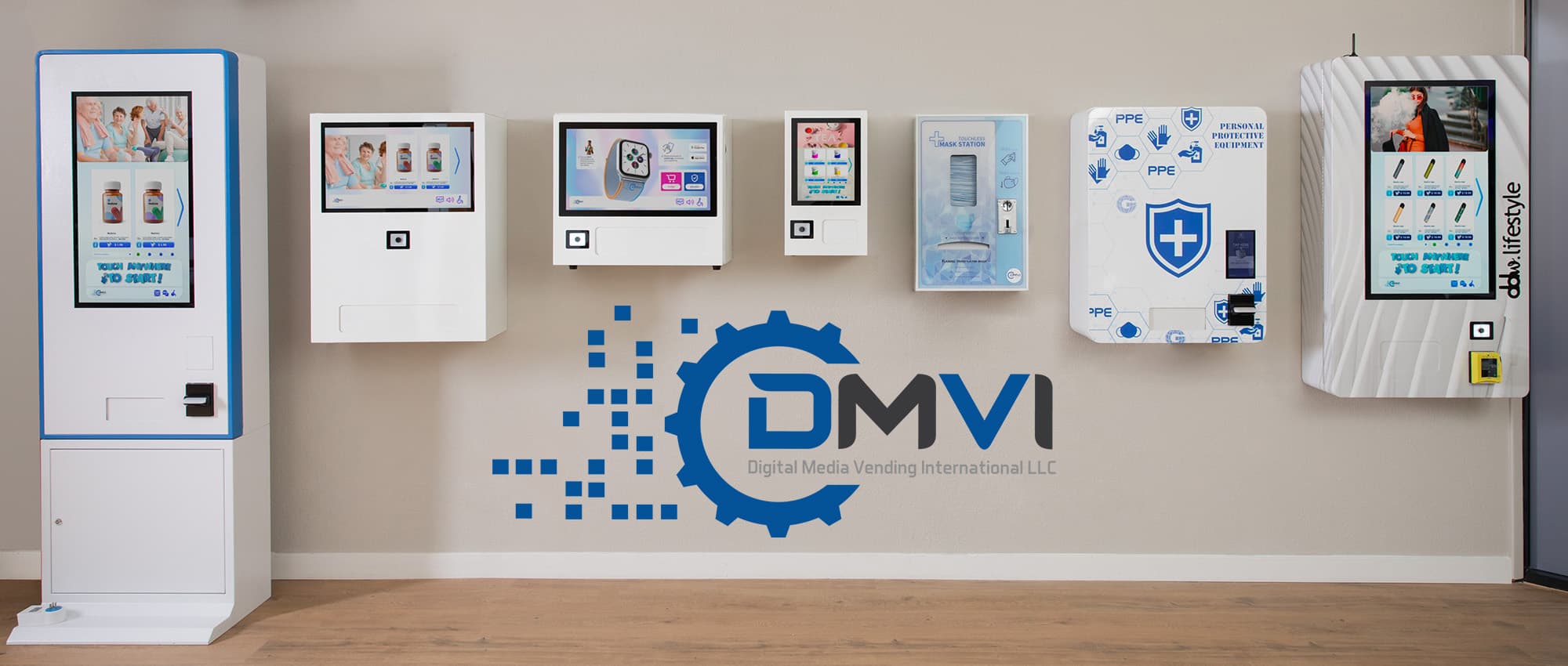
If you haven't yet decided which machine format to start with, review DMVI's Pokémon vending machine lineup before you begin location scouting. The machine format affects your pitch (a wall-mount is an easier sell than a freestanding M1 in a tight space) and your revenue projections.
Section 1: What Venues Actually Care About
Venue owners evaluating a vending machine pitch are not thinking about Pokémon cards. They're running a business and asking five questions — usually not out loud, but always in their head. Answer all five proactively and most owners will say yes before the conversation ends.
Question 1: Will it generate revenue for me?
Yes — you're offering either a revenue share (10–20% of gross sales, paid monthly) or a flat monthly fee ($100–$500 depending on location quality and foot traffic). For a busy venue doing $6,000–$8,000/month in machine revenue, a 15% share means $900–$1,200/month for literally doing nothing. That's a meaningful line item.
Question 2: Will it require my staff's time?
No. You restock, service, and manage the machine entirely. Cloud monitoring via VendingTracker.com means you know before the venue does when inventory is low. Their staff is never involved.
Question 3: Will it damage my reputation?
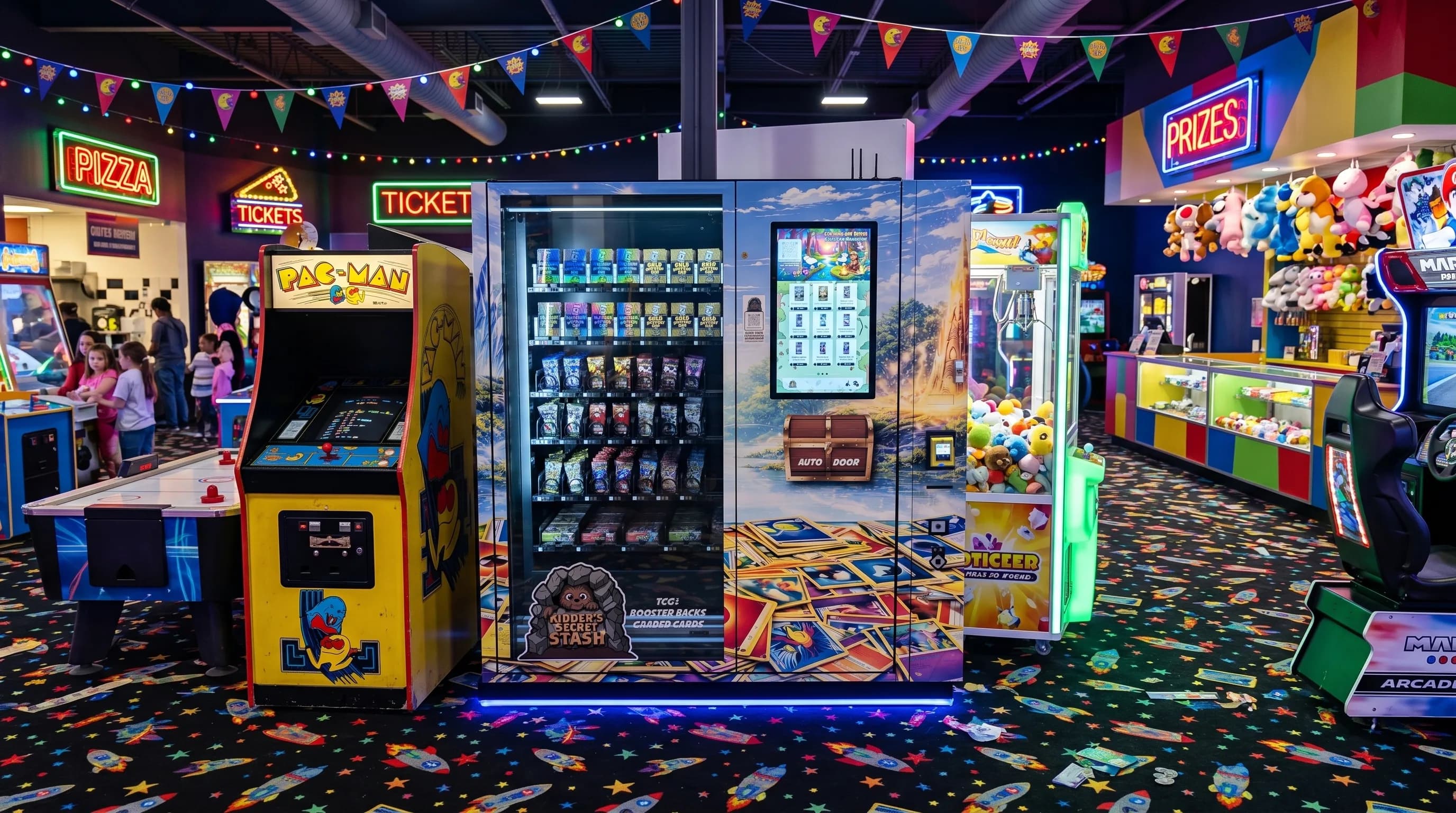
No — DMVI machines are fully branded, premium-finished units. They don't look like a vending machine from a break room. They look like a retail product display. The machine enhances the aesthetic of most venues, particularly in entertainment, gaming, or hobby categories.
Question 4: Does it require construction or permanent installation?
No. Wall-mounted units mount to standard drywall with hardware you provide. Floor units stand freely. Every machine runs on a standard 110V outlet — no electrical work, no permits, no contractors. The installation footprint for a wall-mount is roughly 24"×18". A floor unit is 24"×30". For reference: that's smaller than most photo booths.
Question 5: Can I get rid of it if it doesn't work?
Yes. Your standard agreement includes a 90-day trial with a 30-day written notice exit clause after that. The machine is always your property. If the venue ends the agreement, you remove it within 14 days and everyone moves on.
Answer these five questions in your pitch — don't wait for the owner to ask them — and you eliminate the objections before they become hesitation.
Section 2: The Cold Email Pitch Template
Cold email works best for mid-size venues with a public contact (entertainment centers, FEC operators, hobby shops with a website, fitness clubs). Keep it short. The goal is a 15-minute call, not a yes on the first email.
Subject: Revenue share opportunity — Pokémon/TCG collectibles vending for [Venue Name]
Hi [First Name],
I work with [Your Business Name], and we operate automated collectibles vending machines — Pokémon TCG, trading cards, mystery boxes — in [location type: entertainment venues / hobby shops / shopping centers] across [region].
Here's the model: we install and manage everything. You provide floor or wall space and one standard power outlet. In return, you receive [X]% of monthly gross revenue (or $[X] flat/month, whichever you prefer). The machine is fully branded, accepts cashless payments, and is cloud-monitored — it never needs your staff's attention.
We operate as part of the DMVI operator network, the leading smart vending platform in the collectibles category. Our machines are deployed in venues across the country.
If this sounds like a fit for [Venue Name], I'd love a 15-minute call to discuss foot traffic, placement, and what a revenue share could look like for you specifically.
Are you available [Day] or [Day] this week?
[Your Name]
[Your Business Name]
[Phone / Website]
A few notes on execution: personalize the location type reference to match their specific business. Mention local installations if you have them — "we have a machine two blocks away at [venue]" builds credibility immediately. Avoid attaching PDFs to the first email; it triggers spam filters and slows the conversation. Send the one-pager after they reply.
For follow-up, wait 4–5 business days and send a single one-line follow-up: "Just checking in on this — happy to send over a one-pager if useful." Two touches is the standard. If there's no response after two emails, move to the walk-in.
Section 3: The In-Person Walk-In Pitch
For barbershops, card shops, local arcades, bowling alleys, and similar owner-operated venues, walking in is often more effective than email. Owners at these businesses are present, they make decisions on the spot, and they respond to a person better than an inbox.
Timing: Tuesday through Thursday, midday. Avoid Monday (owners are catching up on the weekend's chaos) and Friday afternoon (mentally checked out). Midday avoids both the morning rush and the dinner/evening peak.
What to bring:
- A single-page overview of the machine — dimensions, power requirements, a photo of the machine in an installed environment. DMVI provides this material to operators as part of the partnership.
- Your business card or a QR code to your contact page
- A sample revenue calculation: "If this machine does $3,000/month here, your cut at 15% is $450/month for doing nothing."
Opening line:
"Hi — I work with [Your Business Name]. We place Pokémon card vending machines in venues like yours. You keep 15% of every sale, we handle everything. Do you have 5 minutes?"
That's it. Don't over-explain. Don't lead with the machine specs. Lead with the owner's revenue. If they say yes to 5 minutes, walk through the five questions from Section 1 in conversational form. If they say no, hand them the one-pager and your card: "No worries — here's an overview. Feel free to reach out if you want to revisit."
What to leave behind:
A single-page summary with your contact information, the machine photo, and the basic revenue model. Not a multi-page brochure — a single page they'll actually read. Keep a stack in your car.
The walk-in close rate for operators who have the DMVI one-pager and a clear opening line is significantly higher than cold email. People say yes to people.
Section 4: The Five Objections Every Venue Owner Raises
| Venue Objection | What They're Really Asking | Best Response | Friction-Reducing Offer |
|---|---|---|---|
| "How much space does it take?" | Will this disrupt my floor plan? | Show exact dimensions and the smallest viable footprint | Bring a one-pager with dimensions and placement photos |
| "Who pays for power?" | Am I subsidizing this? | Explain the minimal draw and make the cost feel negligible | Offer a small monthly power supplement |
| "What if it breaks?" | Will my staff get dragged into support? | Make it clear you handle service, alerts, and tech support | Give one point of contact and response-time expectations |
| "What's my cut?" | Is this worth the space? | Lead with a clear share or flat-fee option using real numbers | Let them choose between two clean deal structures |
| "Can I cancel?" | Am I trapped if it underperforms? | Emphasize the trial period and written exit clause | Use a 90-day trial with 30-day notice after |
Even when owners are interested, they'll raise one or more of these objections. Have your responses ready before you walk in.
"How much space does it take?"
Wall-mounted unit: approximately 24"×18" — about the footprint of a large flat-screen TV. Floor units start at 24"×30". For context, that's smaller than a standard photo booth (which typically runs 36"×60"+ and venues host those without hesitation). Bring the one-pager — seeing the actual dimensions on paper resolves this immediately.
"Who pays for electricity?"
You do. The machine draws 3–5 amps on a standard 110V/15A outlet — the rough equivalent of three laptop chargers running simultaneously. Monthly power cost to the venue is negligible (under $15 in most cases). To remove any friction, offer a $20–$30/month power supplement built into their monthly payment. Most owners won't even ask about it after that.
"What if something goes wrong with the machine?"
You handle it entirely. DMVI provides California-based tech support, and the machine is cloud-monitored via VendingTracker.com with remote diagnostics and automatic alerts. In practice, the venue owner will never know something went wrong because it will be resolved before they notice. You are the single point of contact for any machine issue.
"What's my cut?"
Present a clear offer — don't make them ask twice. Lead with a revenue share of 10–15% or a flat monthly fee of $150–$400 depending on location quality. Give them the choice between the two structures; some owners prefer the predictability of a flat fee, others prefer upside participation. Letting them choose increases buy-in. For a frame of reference: at $6,000/month in machine revenue, 15% is $900/month. At $20,000/month, it's $3,000. Show them both scenarios with real numbers.
"Can I cancel if it doesn't work?"
Yes, and say it clearly: "After a 90-day trial period, either of us can end the agreement with 30 days written notice. You have a full exit anytime after the trial." This is the single most important objection to resolve for hesitant owners. A clear exit removes all remaining risk from their side.
Section 5: Trial Period Structures
Not every venue will sign a 12-month agreement on the first conversation. Trial period structures give hesitant owners a lower-commitment entry point while giving you the data to prove the location's value.
30-day trial: Zero-commitment entry. Best for very hesitant owners or venues where you're genuinely uncertain about foot traffic. Short enough that neither party feels locked in, long enough to get real sales data.
60-day trial: Better for locations with seasonal patterns (a venue that sees higher volume in summer or around holidays). Sixty days captures more variance and gives both parties a cleaner picture before committing to standard terms.
Standard terms after trial: Month-to-month with 30-day written notice. Once the location is proven — consistent sales, no operational issues — propose upgrading to a 12-month term. Longer terms benefit you (stability, fewer renegotiations) and can benefit the venue (you can offer a slightly higher revenue share in exchange for the longer commitment).
Trial incentive: Consider waiving the venue's commission for the first 30 days. You still cover power and carry your insurance. The venue risks nothing. This is particularly effective for owners who are curious but skeptical — there's no financial downside for them to try it. A 30-day revenue-free trial costs you relatively little; getting the machine placed in a strong location is worth it.
Section 6: Key Contract Terms to Include
Once a venue agrees, formalize the arrangement in a simple written agreement. You don't need a 20-page contract — a one-to-two-page document with these core clauses is sufficient for most independent venues. Have an attorney review your template before you use it at scale.
| Term | Recommended Language |
|---|---|
| Revenue share | "Operator pays Venue [X]% of gross vending revenue monthly, calculated from VendingTracker transaction data, payable within 10 days of month end." |
| Term length | "Initial term: 12 months. Automatically renews monthly unless either party gives 30-day written notice." |
| Access | "Operator or Operator's agents shall have access to the machine during normal business hours for restocking, maintenance, and removal, upon reasonable notice." |
| Power | "Venue provides one standard 110V/15A outlet within 6 feet of machine placement. Operator pays $[X]/month power supplement." |
| Exclusivity | "Venue agrees not to place competing vending machines selling Pokémon TCG or comparable trading card products within [venue] during this agreement." |
| Insurance | "Operator maintains $1M General Liability insurance and provides Certificate of Insurance naming Venue as additional insured." |
| Early termination | "Either party may terminate after the first 90 days with 30 days written notice." |
| Machine ownership | "Machine remains property of Operator at all times. Upon termination, Operator removes machine within 14 days." |
A few notes on this framework:
The VendingTracker reference in the revenue share clause is important — it creates a data-based, auditable calculation rather than a self-reported number. Venues appreciate transparency here, and it removes disputes.
The exclusivity clause protects your investment. You don't want to negotiate a placement, prove the category works, and then have the venue add a competing unit next to yours. Even if they never intend to do this, including the clause is standard practice.
For insurance guidance specific to Pokémon vending operators, see the complete insurance guide for Pokémon vending machine operators.
Section 7: The Mall and Commercial Venue Process
Malls are the highest-revenue placement category for Pokémon vending machine operators — foot traffic is consistent, dwell time is high, and the demographic skew toward younger consumers matches the TCG category perfectly. But the process is more formal than a walk-in pitch to a local barbershop.
Who to contact: The mall's specialty leasing office — not general leasing. Specialty leasing handles kiosks, pop-ups, and vending placements. General leasing handles anchor tenants and long-term retail. Calling the wrong department wastes weeks.
Required documents:
- Certificate of Insurance ($1M General Liability, naming the mall as additional insured)
- Machine specifications (dimensions, power requirements, product description)
- Business registration and/or LLC documentation
- Product description and brand overview — a one-pager on what the machine sells and the DMVI brand credentials behind it
Approval timeline: Cold outreach to a mall specialty leasing department typically takes 2–8 weeks from first contact to signed agreement. Larger mall REITs (Simon, Brookfield, Macerich) have more formal approval processes; regional malls often move faster.
The DMVI partnership advantage: DMVI provides direct introductions to mall management as part of its operator program. This isn't a warm email — it's a direct connection to the decision-maker. For operators who want to move fast, this is the single biggest advantage of operating within the DMVI network. The 2–8 week cold outreach timeline compresses dramatically when the introduction comes from DMVI rather than an unknown operator.
Term: Mall kiosk and vending agreements are typically 6–12 months initially, with renewal options. Expect to negotiate rent structure separately from revenue share — many mall specialty leasing offices prefer percentage-of-sales agreements that align their income with your performance.
For a deeper breakdown of which location types generate the most revenue by format, see the best locations guide for Pokémon vending machines.
Operator Revenue Reference
| Scenario | Monthly Revenue | Estimated Net After Lease, Rent, and Processing |
|---|---|---|
| Conservative | $6,000–$7,000 | ~$4,300–$5,300 |
| Strong | $25,000–$30,000 | ~$23,250–$28,250 |
| Peak (Proven) | $87,000 | ~$81,275 |
Peak revenue of $87,000/month was achieved by a single DMVI operator in the San Francisco Bay Area. Mall placements account for a disproportionate share of top-decile operator performance.
Ready to Place Your First Machine?
The location conversation is simpler than most operators expect. You have a compelling offer, a clear framework for every objection, and a proven contract structure to close the deal. The machine does the work — your job is getting it into the right room.
DMVI's Pokémon vending machines are built for exactly this type of placement: fully branded, self-contained, cloud-managed units that venues welcome and customers seek out. If you're scaling beyond your first location, the guide to growing from one to ten machines covers multi-location logistics, operator agreements, and when to formalize your operation.
To learn more about the machine formats that work best for each venue type, or to explore DMVI's direct mall introduction program, visit the Pokémon vending machine page or call DMVI directly at +1-800-490-1108.
Want pricing, format guidance, or a launch plan?
DMVI can help you compare Pokemon vending machine formats, rollout strategy, financing, and location fit based on your route goals.