
How to Set Up an LLC for a Pokémon Vending Machine Business (Step-by-Step)
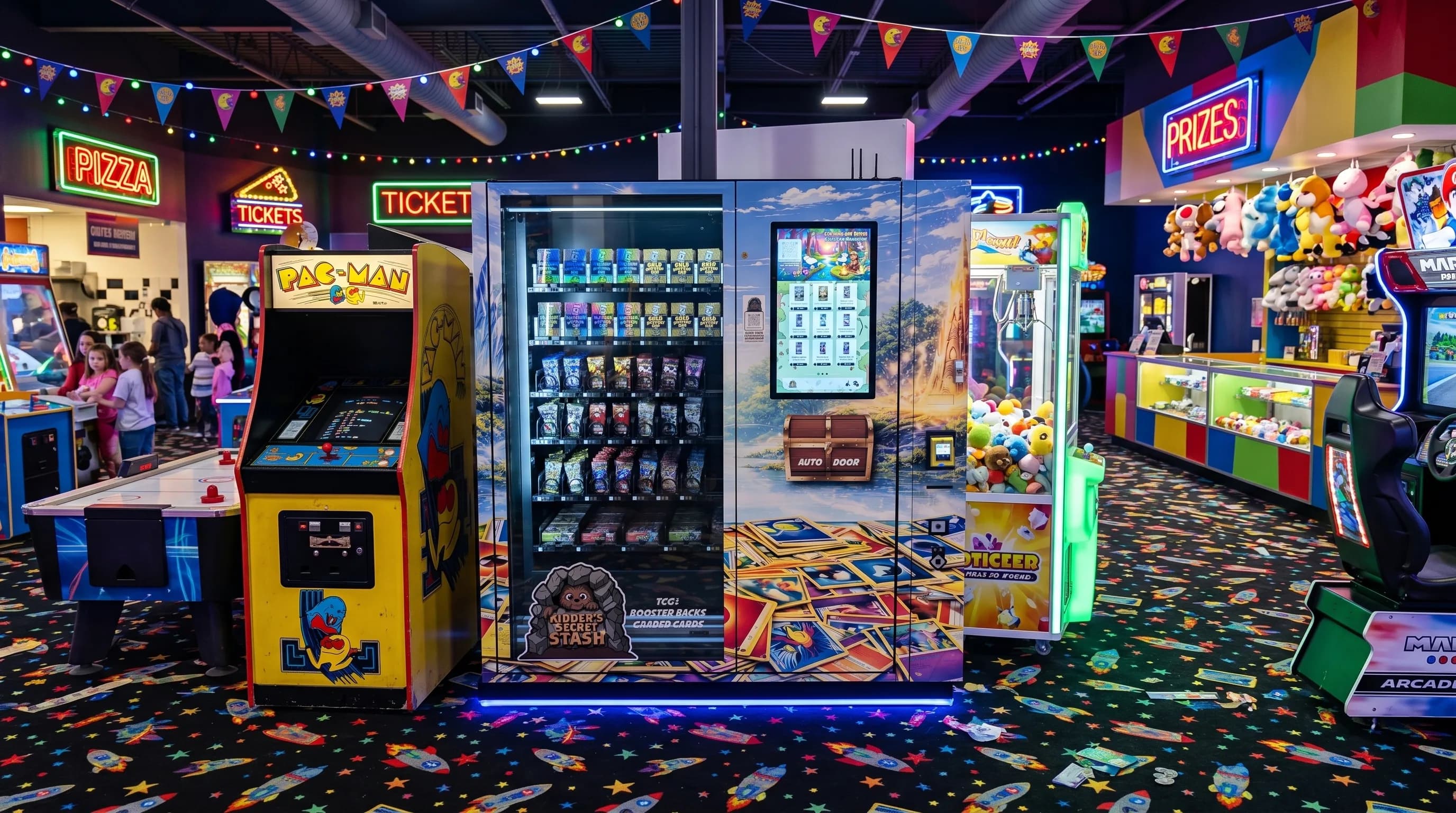
DMVI purchase financing: Subject to approval and not guaranteed; DMVI reserves the right to deny financing. A 25%–50% machine deposit is required depending on whether the machine is in stock, with the percentage specified in your quote. The remaining machine balance is paid in 12 monthly payments with 8% simple interest. All upfront costs are due at signing, including the wrap, optional topper, payment terminal, first-year software subscription, shipping, sales tax, and other quoted upfront charges. A UCC filing applies, and a personal guarantee may be required. See vending machine financing and your approved agreement for details.
TL;DR: Setting up an LLC for a Pokémon vending machine business takes 1–3 days and costs $50–$500 depending on your state. Key steps: choose a state (your home state is usually fine), file Articles of Organization online, get your EIN from IRS.gov (free), open a business bank account, and get a resale certificate. The LLC separates your personal assets from business liability — essential before your first machine goes live.
Most vending operators delay forming an LLC because it feels complicated. It isn't. In most states, you can file online in under 30 minutes and have a confirmed LLC within 1–3 business days. The risk of not forming one is far greater: without an LLC, your personal assets — savings, home, car — are exposed to any lawsuit or debt the business incurs. For a business placing machines in public venues, serving hundreds of transactions per week, that's a risk not worth taking.
This guide walks through every step: choosing your structure, filing in your state, getting your EIN, opening a business bank account, and staying compliant year after year. By the end, you'll have a clear action list and a realistic cost figure for your state. If you're still deciding whether to get into the business, start with DMVI's Pokémon vending machine overview — then come back here once you're ready to formalize.
Section 1: LLC vs. Sole Proprietor vs. S-Corp — Which Structure Is Right for a Vending Operator?
| Structure | Best For | Main Advantage | Main Drawback |
|---|---|---|---|
| Sole proprietorship | Very early-stage operator testing an idea | Fastest and simplest setup | Weak liability separation and less credibility |
| LLC | Most first-time serious operators | Liability separation with manageable admin | Annual filings and compliance still matter |
| LLC with S-Corp election | Operators with enough profit to justify tax planning | Potential self-employment tax efficiency | More payroll and accounting complexity |
Before filing anything, you need to understand your options. There are four structures most vending operators consider:
| Structure | Personal Liability | Tax Treatment | Best For |
|---|---|---|---|
| Sole Proprietor | Unlimited personal liability | Pass-through (Schedule C) | Not recommended for vending |
| Single-Member LLC | Protected (limited liability) | Pass-through (Schedule C) | 1–5 machine operators |
| Multi-Member LLC | Protected | Pass-through (Form 1065) | Partnerships / co-operators |
| S-Corp (via LLC) | Protected | Salary + distribution split | $50,000+/year net profit |
The practical answer for most readers: form a single-member LLC. It gives you liability protection with zero additional tax complexity — your LLC income flows directly onto your personal Schedule C, exactly like a sole proprietorship. You don't need a separate business tax return in most states until you elect S-Corp status.
When to consider an S-Corp election: at roughly $50,000+ annual net profit, the self-employment tax savings from splitting income between salary and distributions start to outweigh the added cost of payroll administration and a separate corporate return. At that stage, consult a CPA — the election is made with IRS Form 2553 and can be applied to an existing LLC. Below that threshold, the complexity isn't worth it.
Why not stay a sole proprietor? The moment your machine is placed in a mall, a grocery store, or any public venue, you have venue contracts, liability exposure from product defects, and potential disputes with customers. A sole proprietorship provides zero separation between your business debts and your personal assets.
Section 2: Which State Should You Form Your LLC In?
Short answer: your home state.
For local vending operators, forming in your home state is almost always the right call. Your machines are physically located there, which means you need to register as a foreign entity in your home state regardless of where the LLC is formed — eliminating any cost savings from filing in Delaware or Wyoming.
The Delaware/Wyoming myth: these states are popular for venture-backed startups and privacy-focused entities. For a small vending operation, the calculus doesn't work. You'd pay:
- Delaware: $110 filing fee + $300/year franchise tax + $49–$150/year for a Delaware registered agent + foreign qualification fees in your home state
- Wyoming: $100 filing fee + $60/year + registered agent + foreign qualification fees in your home state
That's $500–$800 extra annually for no practical benefit at the 1–10 machine scale.
Exception: if you plan to operate machines across multiple states from day one, the analysis gets more nuanced — consult a CPA who handles multi-state small business before filing.
Name availability: check your state's Secretary of State website before filing. One important trademark note: do not use "Pokémon" in your LLC name. The Pokémon Company actively protects its trademark, and a name like "Pokémon Vending LLC" creates unnecessary legal exposure. Use your personal name, a location, or a neutral brand: "Smith Collectibles LLC," "Bay Area TCG Ventures LLC," or similar.
Section 3: Step-by-Step LLC Formation for a Vending Machine Business
Here's the complete process. Most operators complete all eight steps in one day.
Step 1 — Choose Your LLC Name
Pick a name that ends in "LLC" or "Limited Liability Company." Check availability on your state's Secretary of State website (search "Secretary of State [your state] business name search"). Avoid Pokémon, Nintendo, or any TCG brand names — trademark issue.
Step 2 — File Articles of Organization
Go to your state's Secretary of State website → business filing section → Articles of Organization (sometimes called Certificate of Organization or Certificate of Formation). File online. Cost ranges from $40 (Kentucky) to $500 (Massachusetts), with the national average around $132. Processing time is typically 1–3 business days for online filings; expedited options are available in most states for an added fee.
Step 3 — Designate a Registered Agent
Every LLC must designate a registered agent — a person or company that receives official legal and government documents on behalf of the business. You can serve as your own registered agent if you have a physical address in the state (not a P.O. Box). Alternatively, use a registered agent service: Northwest Registered Agent, Registered Agents Inc., and similar services charge $49–$150/year. If you form in your home state and have a physical address, serving as your own agent is the simplest and cheapest option.
Step 4 — Get Your EIN (Federal Tax ID)
Go to IRS.gov → "Apply for an EIN Online." This is completely free and takes under 10 minutes. You'll get your EIN number immediately upon completion. Save the confirmation letter — you'll need it to open a bank account and apply for distributor accounts with GTS Distribution, Southern Hobby Supply, and other authorized Pokémon card wholesalers.
Step 5 — Create an Operating Agreement
An operating agreement is a private document (not filed with the state) that defines the ownership structure and operating rules of your LLC. It's legally required in California, Delaware, Maine, Missouri, Nebraska, and New York. Even where it's optional, every bank and most venues will ask for it as proof of business legitimacy.
For a single-member LLC, a simple one-to-two page document is sufficient. It needs to state: (1) you are the sole member and manager, (2) your ownership percentage (100%), and (3) basic provisions for what happens if you become incapacitated. Most state Secretary of State websites provide free templates. LegalZoom and Rocket Lawyer also offer templates for $20–$50.
Step 6 — Open a Business Bank Account
Bring your Articles of Organization and EIN confirmation letter to any bank. Many online-first banks — Mercury, Relay, Bluevine — have no monthly fees and take 1–2 business days to open. Never use your personal account for business transactions; this "piercing the corporate veil" destroys your liability protection if you're ever sued.
Step 7 — Get a Resale Certificate
Go to your state's Department of Revenue website and apply for a resale certificate (sometimes called a seller's permit or resale exemption certificate). In most states this is free. This certificate allows you to purchase Pokémon booster packs and other inventory at wholesale prices without paying sales tax at the point of purchase — because you're collecting sales tax at the point of sale (your vending machine transaction). Authorized distributors like GTS Distribution and Alliance Game Distributors will require this certificate before opening a wholesale account.
Step 8 — Get a Sales Tax Permit
Also from your state's Department of Revenue, obtain a sales tax permit (sometimes the same application as Step 7). This is required before your first vending machine sale. Your machine should be configured to collect the applicable state and local sales tax rate on every transaction — cloud-managed machines like DMVI's M1 cabinet can be configured remotely through the VendingTracker platform to apply the correct tax rate by location.
Section 4: State LLC Filing Fee Reference Table
Use this table to estimate your formation cost. All figures reflect online filing fees as of 2026.
| State | Filing Fee | Annual/Biennial Fee | Processing Time | Notes |
|---|---|---|---|---|
| California | $70 | $800/year (franchise tax) + $20 biennial | 3–5 days | $800 minimum franchise tax regardless of revenue |
| Texas | $300 | $0 (Public Information Report required) | 3–5 days | No state income tax |
| Florida | $125 | $138.75/year | 1–3 days | One of the faster filing states |
| New York | $200 | $9 biennial | 1–3 days | Additional $300–$2,000+ publication requirement |
| Illinois | $150 | $75/year | 3–5 days | — |
| Ohio | $99 | $0 | 3–5 days | No annual fee; information report only |
| Georgia | $110 | $60/year | 1–3 days | — |
| North Carolina | $125 | $200/year | 1–3 days | Higher annual fee than most |
| Arizona | $50 | $0 | 1–3 days | No annual report or fee — one of the lowest total costs |
| Washington | $200 | $60/year | 1–3 days | — |
| Colorado | $50 | $25/year | 1–2 days | One of the fastest processing times |
| Nevada | $425 | $350/year | 2–5 days | High fees; little practical benefit for small operators |
| Pennsylvania | $125 | $7/year | 2–4 days | Very low annual fee |
| Tennessee | $300 | $300/year | 3–5 days | High total cost; budget accordingly |
| Minnesota | $155 | $0 | 1–3 days | No annual fee; information report required |
California note: The $800 annual franchise tax applies to all LLCs operating in California, regardless of revenue — even if you made $0. If you're placing machines in California, factor this into your operating budget from day one. A machine generating $6,000–$7,000/month in gross revenue easily absorbs this cost, but it matters at the planning stage.
Section 5: Operating Agreement Basics — What Every Solo Operator Needs to Know
Even for a one-person Pokémon vending operation, an operating agreement is not optional in practice. Here's why it matters and what it needs to include.
Why banks and venues ask for it: when you approach a mall property manager or a large grocery chain about placing a machine on their premises, their legal team may request proof that your business entity is properly structured. An operating agreement is that proof. Banks routinely ask for it when opening business accounts.
Key clauses for a single-member LLC:
- Ownership percentage: 100% sole member
- Management structure: member-managed (you make all decisions) vs. manager-managed (relevant if you ever bring in a manager)
- Incapacity/death provision: what happens to the LLC and its assets if you become unable to operate
- Profit distribution schedule: how and when you pay yourself from the business account
- Amendment process: how the operating agreement can be changed
For a single-member LLC, a one-to-two page document is sufficient. It doesn't need to be notarized in most states. Free templates are available from most state Secretary of State websites; LegalZoom and Rocket Lawyer offer more structured templates for $20–$50. If your operation grows to multiple machines with a business partner, upgrade to a properly drafted multi-member agreement — the cost of a business attorney for a few hours is worth it when there's real revenue at stake.
Section 6: After Formation — Ongoing Compliance Requirements
Forming the LLC is step one. Staying compliant is what protects your liability shield year after year.
Annual reports and franchise taxes: most states require an annual or biennial filing to keep your LLC in good standing. Fees range from $0 (Ohio, Arizona, Missouri) to $800 (California). Set a calendar reminder for your state's filing deadline — missing it can result in late fees or administrative dissolution of your LLC. An administratively dissolved LLC provides no liability protection.
California operators: the $800 minimum franchise tax is due the 15th day of the 4th month after your LLC's tax year begins (typically April 15th for calendar-year filers). It's owed every year, regardless of whether your machines ran at a loss.
Separate finances — non-negotiable: every dollar of vending revenue and every business expense must flow through your business bank account. Mixing personal and business finances is the single most common reason courts "pierce the corporate veil" and hold LLC owners personally liable. Keep your business debit card on you; never use your personal card for inventory, machine maintenance, or venue fees.
Bookkeeping from day one: set up accounting software before your first machine generates revenue. QuickBooks Self-Employed ($15–$25/month), Wave (free), and FreshBooks ($17/month) all work well. DMVI's VendingTracker cloud management platform exports transaction data that integrates cleanly with major accounting packages — use it. Clean books make tax filing faster and protect you in any dispute.
Resale certificate renewal: most states issue resale certificates with no expiration, but a handful (California, for example) require renewal every four years. Check your state's Department of Revenue for the specific requirement.
Contracts and venue agreements: file copies of all venue contracts in a dedicated folder — cloud storage (Google Drive, Dropbox) works fine. These are business assets. If you're operating under DMVI's Pokémon vending machine program, maintain records of your machine purchase or lease agreement as well.
Start the Business Clock Now
An LLC can help organize the business, but formation date alone does not establish financing eligibility. DMVI considers financing requests individually and may deny them.
If you plan to finance future machines, maintain clear business records and request a financing review when you have a defined purchase plan. Do not assume that forming an LLC or waiting a set period guarantees approval.
Budget for the stock-dependent deposit, all signing costs, and the approved 12-payment schedule. An LLC does not eliminate obligations under a personal guarantee if one is required; review the security and guarantee provisions of the agreement.
Ready to see the machine lineup and pricing? View DMVI's Pokémon vending machines — from wall-mounted units starting at $4,995 to the full-featured M1 and beyond.
For more on the legal framework before and after formation, see our Pokémon vending machine legal compliance guide, insurance guide, and quickstart on business legality.
This post is for informational purposes only and does not constitute legal or tax advice. Consult a qualified attorney or CPA for guidance specific to your situation.
Want pricing, format guidance, or a launch plan?
DMVI can help you compare Pokemon vending machine formats, rollout strategy, financing, and location fit based on your route goals.