
Is a Pokémon Vending Machine Business Legal? First Sale Doctrine Explained
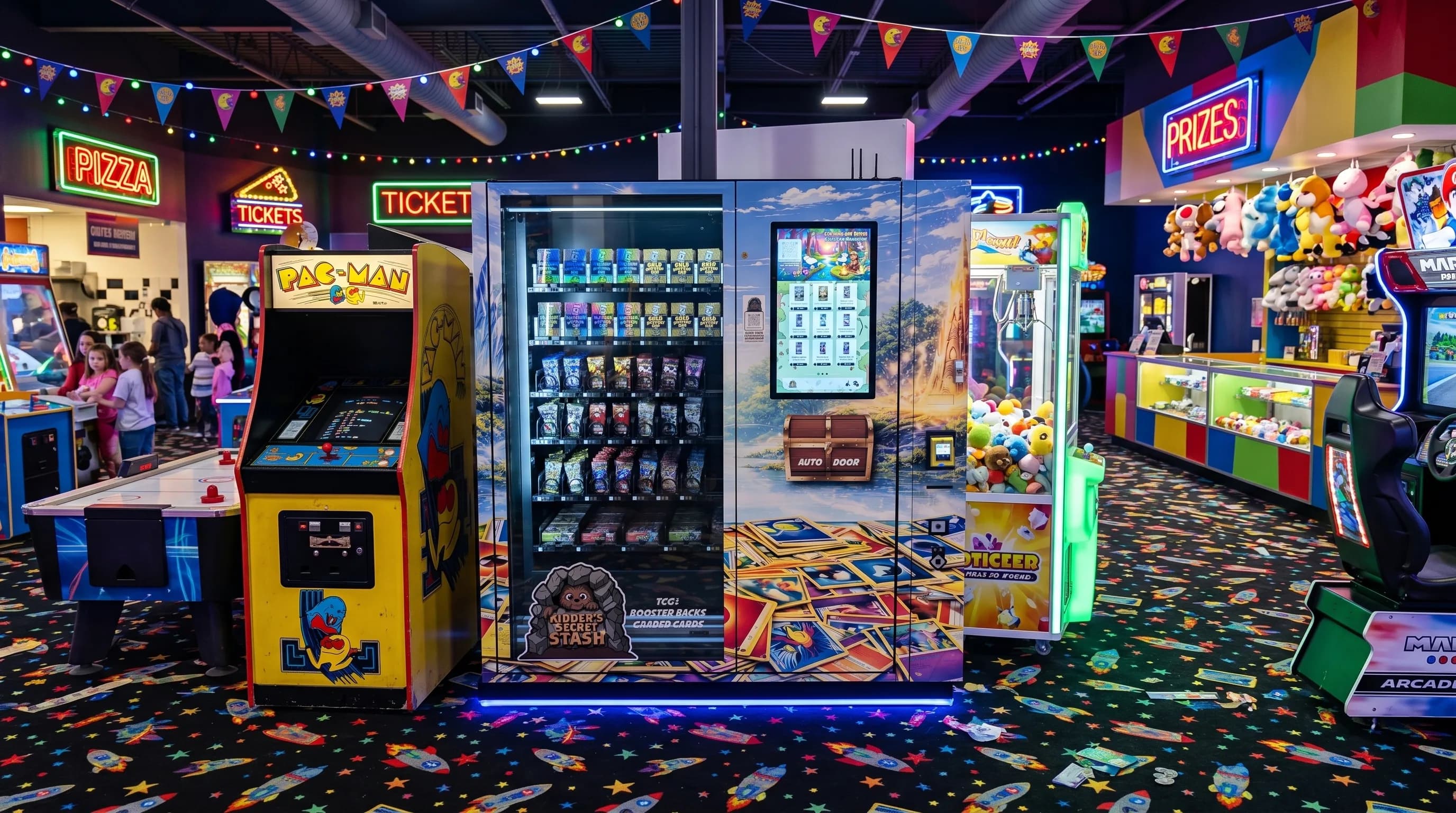
TL;DR: Yes, operating a Pokémon vending machine is legal in the United States. The First Sale Doctrine (17 U.S.C. § 109) permits any purchaser of authentic Pokémon TCG products to resell them through any retail channel — including vending machines. No license from The Pokémon Company International is required. Standard business registration and authentic-product sourcing are the only legal requirements.
Introduction
IP questions stop a lot of would-be operators before they even start.
Can you really sell Pokémon cards in a vending machine without a license from The Pokémon Company? Is it legal to describe the products you carry using the word "Pokémon" in your marketing? What if The Pokémon Company objects to your operation? Do you need some kind of retail authorization?
These are the right questions to ask. And the answers are clearer than most people expect.
This post addresses every legal concern relevant to running an independent Pokémon TCG vending machine business — including the governing statute, trademark boundaries, what is and is not permitted, and the practical compliance checklist every operator should work through before their first vend. The law is on your side. You just need to understand why.
Section 1: The First Sale Doctrine — What It Is and Why It Matters
The direct answer: once you purchase a legitimately manufactured product, you have the unrestricted legal right to resell it. The copyright or trademark holder cannot stop you.
That right is codified in federal statute. 17 U.S.C. § 109(a) of the United States Copyright Act reads:
"...the owner of a particular copy or phonorecord lawfully made under this title, or any person authorized by such owner, is entitled, without the authority of the copyright owner, to sell or otherwise dispose of the possession of that copy or phonorecord."
In plain English: if you buy it legitimately, you can sell it. The creator of the original work — in this case, The Pokémon Company International — has no legal authority over subsequent sales of authentic product once it has entered commerce.
This doctrine is not obscure. It is the legal backbone of enormous segments of the US retail economy:
- eBay exists because of the First Sale Doctrine. Every individual reselling a product on that platform is exercising this right.
- Pawn shops operate under the First Sale Doctrine. So do resale chains like GameStop's used inventory section.
- Garage sales are legal because of the First Sale Doctrine. You do not need permission from Nike to sell your used running shoes at a yard sale.
A vending machine is simply an automated retail format. There is no legal distinction between a human cashier selling a Scarlet & Violet booster pack across a counter and a vending machine dispensing the same pack to a customer who taps their card. The product is identical. The transaction is retail. The First Sale Doctrine applies.
The Pokémon Company International cannot legally compel an authorized reseller to stop selling authentic Pokémon products through a vending machine. Not through trademark law. Not through copyright law. Not through any other intellectual property mechanism, provided the operator is sourcing genuine product through legitimate channels.
The statute has been upheld repeatedly in federal courts. It is settled law.
Section 2: Official Pokémon Machines vs. Independent Operators
The direct answer: TPCi operates its own branded machines. Independent operators run entirely separate businesses. These are two different programs with no legal connection.
This is the most common point of confusion among prospective operators, and it is worth resolving completely.
The Pokémon Company International does operate its own vending machines — primarily placed inside Kroger, Safeway, and Albertsons supermarkets across the United States. Those machines are owned, operated, and serviced by TPCi directly. They are proprietary assets of The Pokémon Company. They are not for sale to the public. They are not a franchise program. You cannot apply to become an operator of those machines.
Independent operators — the entrepreneurs DMVI serves — are running an entirely separate business model. They purchase their own machines outright (or lease them) and stock them with authentic Pokémon TCG products sourced through authorized wholesale distributors. There is no affiliation with TPCi. There is no application process. There is no licensing fee. There is no approval required.
The two programs share only one thing: the products being sold. The machines, the operators, the business relationships, and the legal frameworks are completely different.
Authorized distributors for independent operators include:
| Distributor | Notes |
|---|---|
| GTS Distribution | Major national TCG distributor |
| Southern Hobby Supply | Authorized Pokémon wholesale partner |
| Alliance Game Distributors | Broad TCG catalog, national reach |
| ACD Distribution | Established game and hobby distributor |
Purchasing through these channels means your product entered commerce legitimately, through TPCi's authorized US distribution network. That is the key legal test. As long as that test is met, your vending operation is lawful.
Section 3: Trademark — What You Can and Cannot Say
The direct answer: you can describe what you sell using official product names. You cannot imply official affiliation with The Pokémon Company or use their logo as if it were your own.
Trademark law governs the use of brand names and logos. It is more nuanced than copyright, and the line matters for vending machine operators. Here is a clear breakdown:
What you CAN do:
- Describe the products you sell using official product names. "Pokémon Booster Packs," "Scarlet & Violet packs," "Journey Together booster packs" — these are factual product descriptions. Nominative fair use permits this.
- Use product names for search indexing and marketing. Google does not require trademark licenses to display your business in search results for Pokémon-related queries.
- Stock and sell authentic, licensed Pokémon merchandise. This is the entire basis of the business. It is legal.
- Reference the products in advertising copy. "This machine stocks Pokémon booster packs and ETBs" is factual and lawful.
What you CANNOT do:
- Use the official Pokémon logo on your machine wrap in a way that suggests your machine is an official Pokémon Company product or that you are an authorized TPCi operator.
- Claim to be an official Pokémon Company retailer if you are not. This would constitute false advertising.
- Incorporate Pokémon artwork into your own branding or machine design without a license. The characters, illustrated artwork, and stylized logos are TPCi's intellectual property.
The practical solution is to build your own brand identity for the machine — which is exactly what DMVI does. Every machine DMVI manufactures is wrapped with the operator's own brand: their store name, logo, and visual identity. The machine communicates what it sells through product descriptions and display merchandising, not through unauthorized reproduction of TPCi's trademark assets. Your brand is on the machine. Pokémon is on the product inside it.
This approach is legally clean, professionally credible, and consistent with how every legitimate independent operator in this space runs their business.
Section 4: Age Restrictions
The direct answer: there are no age restrictions on purchasing sealed Pokémon TCG products in the United States. ID verification is not required.
Sealed trading card products are not classified as gambling under US federal law or under the laws of any US state as of this writing. They are entertainment products — collectibles sold in sealed packaging.
This is a meaningful distinction from other vending categories:
| Product Type | Age Restriction | ID Required |
|---|---|---|
| Tobacco / Nicotine | 21+ (federal) | Yes |
| Alcohol | 21+ (federal) | Yes |
| Lottery tickets | 18+ (varies by state) | Yes |
| Sealed TCG products | None | No |
Your machine does not need to be placed in age-restricted areas. It does not need to verify purchaser age. It does not require any special permitting related to age-gated sales.
This makes Pokémon TCG vending considerably simpler to operate from a compliance standpoint than other vending categories. Any customer can buy, at any hour, without restriction.
Section 5: What You Do Need — The Operator Compliance Checklist
The direct answer: you need standard business registration documents and a sales tax permit. The list is short and straightforward.
The legal requirements for operating a Pokémon vending machine business are the same requirements for operating any small retail business in the United States. None of them are specific to Pokémon or to vending machines.
| Requirement | Details | Approximate Cost |
|---|---|---|
| LLC or business entity | Limits personal liability; strongly recommended | $50–$500 depending on state |
| EIN (Employer Identification Number) | Required for business banking and tax filing; apply at IRS.gov | Free |
| State business license | Required in most states before commencing commercial activity | $50–$200 |
| Sales tax permit | Required; you collect and remit sales tax on vending sales | Free to register |
| Resale certificate | Allows purchase of inventory without paying sales tax (end customer pays it instead) | Free |
| Business insurance | General Liability minimum $1M; many venue operators require proof of coverage | $500–$1,500/year |
| Authentic product sourcing | Purchase through GTS, Southern Hobby, Alliance Game, or ACD — not gray market or secondary market | N/A |
The resale certificate deserves specific mention: it prevents you from being double-taxed. You present it to your distributor when purchasing inventory, which means you do not pay sales tax on product acquisition. You collect sales tax from your end customers at the point of sale and remit it to your state. This is standard retail operations.
For guidance on building out your wholesale sourcing relationships, see the Pokémon card wholesale sourcing and distributor guide.
Section 6: What Is Illegal — A Clear List
The direct answer: selling counterfeit product, misrepresenting affiliation, and operating without required permits are the three categories that create legal exposure. None of these apply to a properly run operation.
Understanding the legal line requires knowing clearly what crosses it.
These activities are illegal:
- Selling counterfeit or replica Pokémon cards. This constitutes trademark infringement under federal law and may also constitute criminal fraud depending on how the products are represented to buyers. The penalties are significant.
- Repackaging opened packs and selling them as sealed product. This is consumer fraud — misrepresentation of the product being sold.
- Claiming to be an official Pokémon Company retailer without authorization. False advertising under the Lanham Act.
- Using The Pokémon Company's logos, marks, or character artwork on your machine in a manner that implies official affiliation.
- Operating without required state sales tax permits. This creates tax liability and, depending on the state, may constitute unlicensed commercial activity.
The single most important operational safeguard: purchase all inventory exclusively through authorized distributors who source direct from The Pokémon Company's US distribution network. This is the chain-of-custody test. GTS Distribution, Southern Hobby Supply, Alliance Game Distributors, and ACD Distribution are the established authorized channels.
Purchasing through these sources guarantees product authenticity, eliminates counterfeit risk, and establishes a documentable sourcing record that demonstrates good-faith compliance. Never purchase inventory from secondary market sellers, liquidation channels, or international sources for your vending operation.
Section 7: Sales Tax Handling
The direct answer: vending machine sales are taxable in most states. Configure your payment system before your first transaction.
Sales tax on vending machine sales is not unique to Pokémon — it applies across product categories. The specifics vary by state, but the operational requirements are consistent:
- Register with your state tax authority before your first sale. Most states have straightforward online registration portals. Do this early — before the machine is placed.
- Incorporate tax into your vend pricing. Most operators set vend prices at a level that allows them to remit sales tax out of the margin rather than adding it visibly at the point of sale. A $10 vend price in a 8.5% sales tax state means you are remitting approximately $0.85 per transaction and netting $9.15 before other costs.
- Configure your payment terminal. Nayax payment terminals — integrated into DMVI machines — can be configured to track and account for tax collection on each transaction. Set this up during initial machine configuration.
- File and remit on schedule. Most states require monthly or quarterly filing. Consult with a CPA familiar with vending or retail operations to confirm your state's specific requirements and filing schedule.
Sales tax compliance is straightforward for this business model. It requires registration and consistent record-keeping, not specialized expertise.
Ready to Operate Legally and Profitably?
You now have the full legal picture. The First Sale Doctrine is settled federal law. Authentic product sourcing from authorized distributors is the key operational requirement. Standard business registration and a sales tax permit complete the compliance checklist.
The only thing left is the machine.
DMVI is a California-based manufacturer with an established track record building custom smart vending machines for the Pokémon TCG category. Every machine ships with your brand identity — not ours, and not The Pokémon Company's. Full-body custom vinyl wraps, branded touchscreen UI, cloud management, and California-based technical support are standard.
Explore DMVI's Pokémon card vending machines and see the full range of cabinet formats, pricing, and lease options.
If you are still building the business case, the complete guide to starting a Pokémon vending machine business covers location strategy, revenue modeling, and distributor onboarding from the beginning.
Questions about sourcing inventory once you are operational? The Pokémon card wholesale sourcing and distributor guide covers everything about working with authorized distributors.
DMVI has supported independent operators across the United States in building legal, profitable Pokémon vending businesses. The legal framework is in place. The market is active. When you are ready to move, view DMVI's machine formats to find the right cabinet for your first location.
This post is for informational purposes only and does not constitute legal advice. Consult a qualified attorney for advice specific to your situation.
Want pricing, format guidance, or a launch plan?
DMVI can help you compare Pokemon vending machine formats, rollout strategy, financing, and location fit based on your route goals.