How to Start a Micro Market Business in 2026
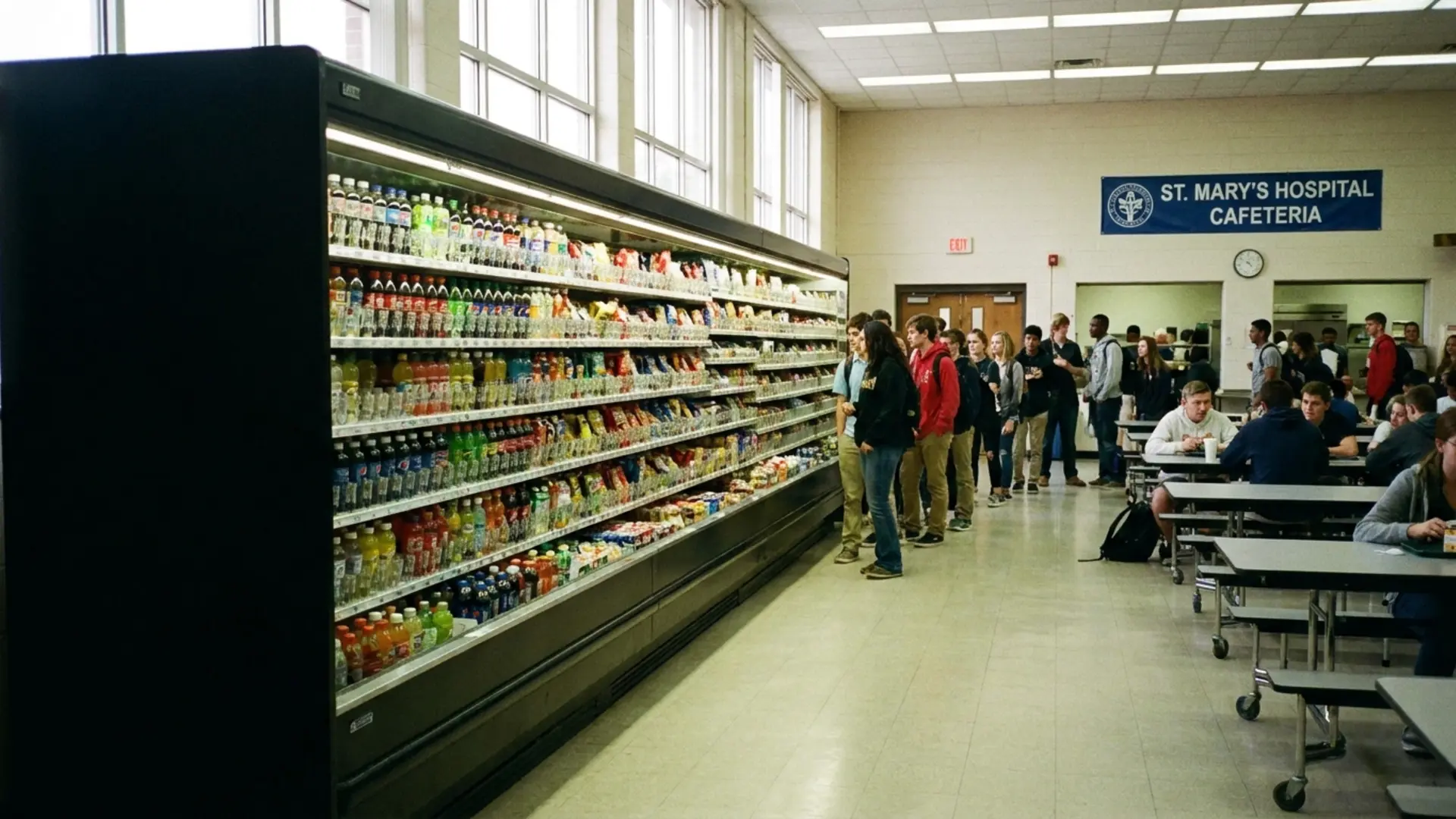
A micro market is a self-service retail setup in a specific location, an office break room, a gym lobby, a hotel common area, where customers shop an open-format display and check out without staff assistance. The format has been around for years in corporate settings, typically as a full installation: open shelving, a refrigerated cooler or two, and a self-checkout kiosk where customers scan each item before paying.
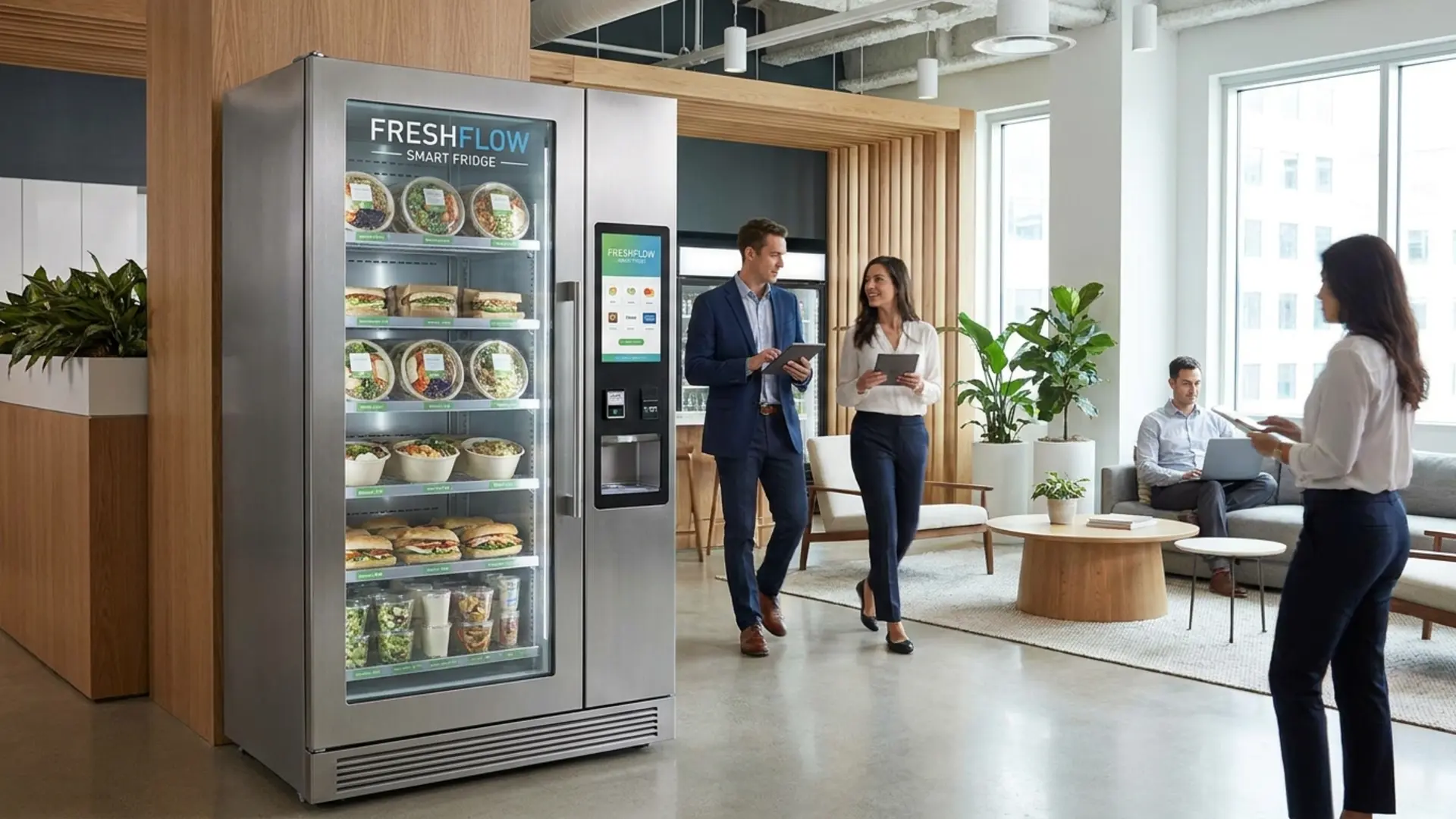
Starting a micro market business with that model required significant upfront investment and a willingness to manage multiple pieces of equipment across an installation. The AI smart fridge format changes the accessibility of micro market entry. A single refrigerated unit with computer vision checkout, tap, take, close, is a complete micro market in one machine. The open-shelf shopping experience, the multi-item transaction, the cashless payment: all present, in a unit that starts at $4,995 and can be financed with $1,898.50 down and no credit check.
This guide covers what a micro market business built around an AI smart fridge looks like, how to get started, what the operational model involves, and how to grow from one machine to more.
What a Micro Market Business Is
A micro market business generates revenue by making products available for self-service purchase at a location where the business does not own the space. The operator sources the product, manages the equipment, and collects the revenue. The venue, the office, the gym, the apartment building, provides the location in exchange for either a revenue share arrangement or a flat placement fee, depending on the agreement negotiated.
Unlike a traditional retail business, a micro market does not require a lease for commercial retail space, a staff schedule, or point-of-sale employees. The equipment is the retail infrastructure, and it runs continuously without supervision. Unlike a vending machine route, a micro market allows customers to browse an open display and take multiple items in one session, which tends to produce higher per-visit transaction values than a single-product vending machine transaction.
The micro market model works because it serves a genuine customer need, convenient access to food and beverages in a location where staffed retail is not viable, at a cost structure that is manageable for a single operator without significant overhead.
Why 2026 Is a Practical Entry Point
The AI smart fridge format, and the financing structure DMVI offers for it, make 2026 a more accessible entry point to the micro market business than prior years.
The technology component, computer vision checkout, was previously available only in enterprise-scale implementations requiring custom hardware, software integration, and significant capital. The DMVI AI Smart Fridge brings this technology into a single-unit purchase at consumer price points with a no-credit-check financing option.
The operator management platform. EZVend, runs on a phone. Live inventory data, low-stock alerts, temperature monitoring, and sales reporting are available remotely without physical presence at the machine. A single operator managing one or several AI smart fridges does not need to develop complex logistics infrastructure to know what is happening at the machine.
The financing access, 30% down, 12 months, no credit check, revenue-assisted repayment, means the entry point is $1,898.50 rather than $4,995 for operators who choose to finance. No comparable financing structure exists in the broader micro market equipment category at this price point.
Step 1: Choose the Right Location
A micro market business lives or dies by its location. The AI smart fridge generates revenue when people use it. That requires consistent foot traffic from people who want refrigerated food and beverages and who have the payment methods the machine accepts, credit card, debit card, Apple Pay, or Google Pay.
The venue categories DMVI identifies on the product page as appropriate for the AI Smart Fridge are offices, gyms, hotels, apartment communities, campuses, and hospitals. Each of these has specific characteristics that make it a viable micro market location.
Offices: Workers need food and beverage access throughout the day, particularly for breakfast, lunch, and afternoon refreshment. A micro market in a corporate break room serves employees who do not want to leave the building for every meal or snack break. The captive audience and predictable daily traffic patterns make offices a consistent micro market location.
Gyms: Post-workout hydration and recovery nutrition represent a predictable purchase motivation. Gym members who finish a workout and want a cold protein drink, electrolyte beverage, or light meal are natural AI smart fridge customers. The purchase moment is physiologically motivated and consistent.
Hotels: Guests at any hour want food and beverage access when hotel restaurants are closed or lines are long. The hotel lobby or common area AI smart fridge serves the late-night arrival, the early departure, and the guest who wants something quick between activities.
Apartment communities: Residents in a common area want convenient access to everyday essentials, drinks, snacks, quick meals, without leaving the building. Multifamily property managers increasingly use micro markets as a resident amenity that differentiates the property.
Campuses and hospitals: Both environments have populations with continuous presence and a need for food and beverage access at all hours. University dining options close. Hospital staff work overnight shifts. The AI smart fridge serves these populations in the gaps that staffed food service does not cover.
For any specific location, the key variables to assess before deploying a machine are the number of people who regularly pass through or use the space, the existing food and beverage access options and their limitations, and whether the venue's management is open to a micro market placement.
The vending machine placement guide covers location evaluation strategy applicable to automated retail broadly. DMVI also offers paid location assistance for operators deploying ten or more machines.
Step 2: Negotiate a Placement Agreement
Before purchasing a machine, confirm the placement with the venue. A venue that is interested in principle may have requirements about where the machine is positioned, what products are sold, revenue share expectations, or operational standards.
The typical arrangement for a micro market placement is a revenue share, a percentage of gross sales paid to the venue as compensation for the space. Flat fee arrangements also exist, where the operator pays a fixed monthly amount for the placement regardless of sales volume.
The specifics of any placement agreement depend on the venue, the market, and what both parties negotiate. Confirming the placement arrangement before purchasing the machine means the operator is not holding equipment without a location to put it.
The revenue share vs flat rent guide covers the tradeoffs between these two common placement structures in the automated retail context.
Step 3: Purchase and Finance the Machine
Once a location is confirmed, the machine purchase proceeds through DMVI's Shopify product page. The operator selects the 360 or 450 model based on the location's capacity needs, chooses cash or 12-month financing, and selects any add-ons, extended warranty, magnetic panels, white-glove delivery.
For financing, the checkout collects $1,898.50 for the 360 model (30% down plus the $400 financing fee) or $2,198.50 for the 450 model. No credit check. Identity validation is completed during EZVend onboarding, typically the same day.
After onboarding, DMVI invoices for freight and applicable sales tax, and the machine ships once those are settled. Provisioning takes about two business days. Delivery to most contiguous US destinations is one to three days from the closest of DMVI's five warehouses.
The 12-month financing term begins when the machine ships. EZVend applies daily sales deductions toward the monthly target of $291.38 for the 360. Month-end shortfalls are collected by ACH.
Step 4: Stock the Machine
The product mix for an AI smart fridge micro market should match the specific customer population at the deployment location. The adjustable refrigerated shelves accommodate drinks, snacks, fresh food, and packaged items. The AI system recognizes products based on the catalog configured during onboarding.
For an office location, a mix of cold beverages, fresh meal options, and snacks across multiple price points serves the broadest range of employee needs. For a gym, refrigerated protein drinks, recovery beverages, and healthy snack options align with the purchase motivation. For a hotel, a broader beverage selection with some convenient food options covers late-night and early-morning guests.
Initial product selection is one of the highest-impact decisions in the first months of operation. The products that generate the most transactions and the strongest margin per unit will become clear through EZVend's sales data within the first few weeks.
Step 5: Manage With EZVend
Once the machine is operational, EZVend is the central management platform. Through EZVend, the operator monitors live inventory for each product slot, receives low-stock alerts when restocking is needed, checks temperature alerts if the fridge has drifted from its target range, reviews sales by product and time period, and adjusts pricing remotely.
Restocking cadence depends on the location's sales velocity. EZVend's inventory data makes it practical to restock based on actual sales rather than a fixed calendar schedule. A slot that is running low triggers an alert; the operator restocks that specific product at the next visit.
The first month of AI software is included with every machine. From month two, the subscription is $49 per month, covering computer vision processing and the full EZVend management platform.
Step 6: Evaluate and Expand
After the first 60 to 90 days of operation, the machine's sales data provides a clear picture of which products are performing, what the location's peak transaction periods are, and whether the placement is generating the revenue needed to support the machine's costs.
A machine that is performing well at one location is evidence that the product-location-format match works. That evidence is the foundation for adding a second location, deploying a second machine, or both. DMVI's financing is available per machine. Each additional unit goes through the same checkout and onboarding process.
For operators building a multi-unit micro market business, EZVend's multi-machine reporting view shows performance across all locations from a single login. The vending machine business profitability guide covers how to think about scaling an automated retail business from one unit to a full operation.
The Ongoing Cost Reality
Starting the business is one part of the picture. Running it is the other. Every DMVI AI Smart Fridge carries two ongoing costs that apply every month the machine is operational.
The AI software subscription is $49 per month from month two onward. This covers the computer vision processing that identifies products taken during each customer session, EZVend access, and the full remote management platform including inventory monitoring, low-stock alerts, temperature alerts, and sales reporting. The first month of AI software after activation is included with the machine.
Card processing is 5.5% plus $0.05 per transaction. Every customer payment, regardless of payment method, carries this rate. Product pricing needs to account for this cost to ensure the margin on each item sold is sufficient after the processing fee is deducted.
These two costs are the complete ongoing cost structure. There are no additional platform tiers or undisclosed fees. Understanding them before the machine is deployed makes pricing decisions clearer and business modeling more accurate.
What Makes a Micro Market Business Sustainable
Starting a micro market business is one step. Building one that sustains itself and grows is another. The operators who build durable micro market businesses share a few consistent practices.
They validate locations before purchasing machines. A location that looks good in theory, the gym has 500 members, the office has 200 employees, is a hypothesis. The machine's first 30 to 60 days of EZVend data either confirms or adjusts that hypothesis. Operators who confirm placement before purchase and then use early data to refine their product mix build sustainable machines faster than those who guess at both.
They price products with the full cost structure in mind. The 5.5% card processing rate applies to every transaction. A product priced without accounting for this rate produces less margin than projected. Operators who build their pricing model around the actual cost structure, card processing, AI software, product cost, venue commission, know their real margin from the start.
They treat the first machine as a learning period. EZVend's data from the first 60 to 90 days of operation is the most valuable input for every subsequent decision: what to add to the product mix, what to remove, what pricing works, when peak transaction periods occur. Operators who treat this data as a management tool rather than background noise build better-performing machines over time.
DMVI's Support for New Micro Market Operators
DMVI includes virtual training and technical support with every AI Smart Fridge purchase. The onboarding process covers setup, product catalog configuration, and EZVend operation. Free full-day in-person training at DMVI's Sebastopol, California facility is available for all purchasers who want hands-on time with the machine and the platform before their deployment goes live.
For operators building a larger operation, DMVI offers paid location assistance for deployments of ten or more machines, covering location sourcing support based on the operator's region and rollout plan. For questions about this service, contact DMVI directly at 1-800-490-1108.
The starting point for everything discussed in this guide is digitalmediavending.com/micro-markets, where the full product specification, financing details, and checkout process are available.
The Role of DMVI's Training in Getting Started
DMVI includes virtual training with every AI Smart Fridge purchase. The onboarding process covers the product catalog setup in EZVend, the machine's physical operation, and the basics of interpreting EZVend's data in the first weeks of operation.
Beyond the included virtual training, DMVI offers free full-day in-person training at their Sebastopol, California facility. This option is available to all purchasers and is specifically valuable for first-time operators who want hands-on experience with the machine and the platform before their deployment goes live. Understanding how the machine operates, how EZVend's alerts work, and what normal transaction patterns look like in the first days of operation reduces the uncertainty that first-time deployments often carry.
For operators who are starting with a clear location, a confirmed product mix, and a solid understanding of EZVend's management tools, the first 30 days of operation are a data collection period rather than a learning period. Getting to that starting position is exactly what DMVI's training program is designed to support.
Conclusion
Starting a micro market business with an AI smart fridge in 2026 is more accessible than the traditional micro market model has historically been. One machine, one confirmed location, $1,898.50 down with no credit check, and EZVend for management: that is the starting configuration. The business grows from there based on what the first machine's data shows.
DMVI's AI Smart Fridge starts at $4,995 cash or $1,898.50 to start financing. Visit digitalmediavending.com/micro-markets or call 1-800-490-1108 to start the conversation.
Sources
Ready to plan a micro market business?
DMVI can help structure the machine format, financing, location strategy, and operating model.