Micro Market vs Vending Machine: Which Automated Retail Format Is Right for Your Business?
Two operators walk into an office building. One installs a vending machine. The other installs a micro market. Both are automated retail deployments. Both eliminate the need for a cashier. Both run without staff. And yet the two formats are different enough that choosing the wrong one for a specific environment produces measurable revenue and operational problems.
The vending machine and the micro market are not interchangeable. They solve the same general problem, providing product access without staff, but they do it in ways that suit different locations, different product ranges, different customer volumes, and different operational models.
This guide explains what each format actually is, where the five key differences matter, when each is the right choice, and what the cost and revenue implications look like for operators making the decision.
Key Finding: Digital Media Vending International builds both vending machines and micro market formats, with machines starting at approximately $4,995 and VendingTracker software managing both formats from the same browser dashboard.
What Is a Vending Machine?
A vending machine is a closed, secure automated retail unit. Products are loaded inside the machine's cabinet, behind a locked enclosure. The customer selects a product through a touchscreen interface or keypad, completes a payment transaction, and the machine dispenses the selected item through a controlled mechanism.
The key characteristic of a vending machine is the closed cabinet. The product is not accessible until payment is confirmed. This makes vending machines suitable for locations with varying levels of supervision, high-theft environments, and situations where product security is a priority.
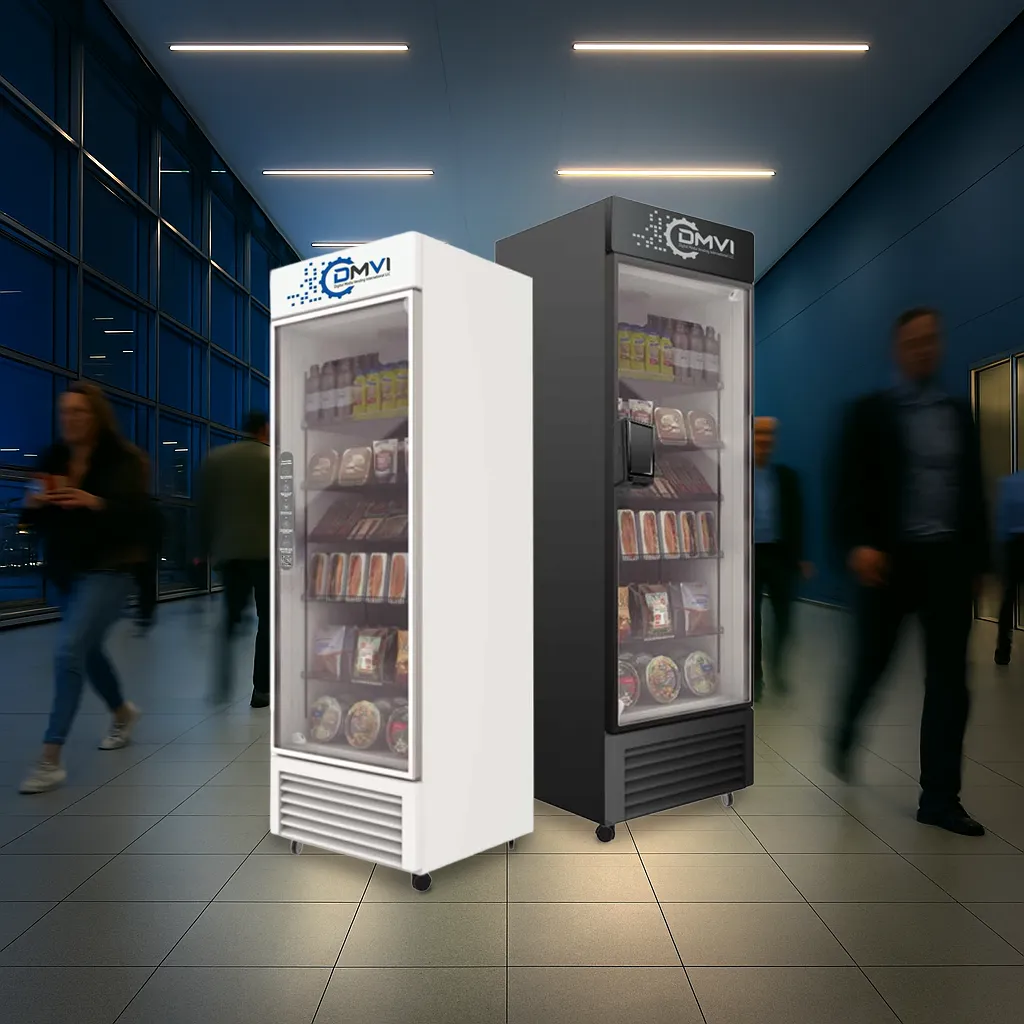
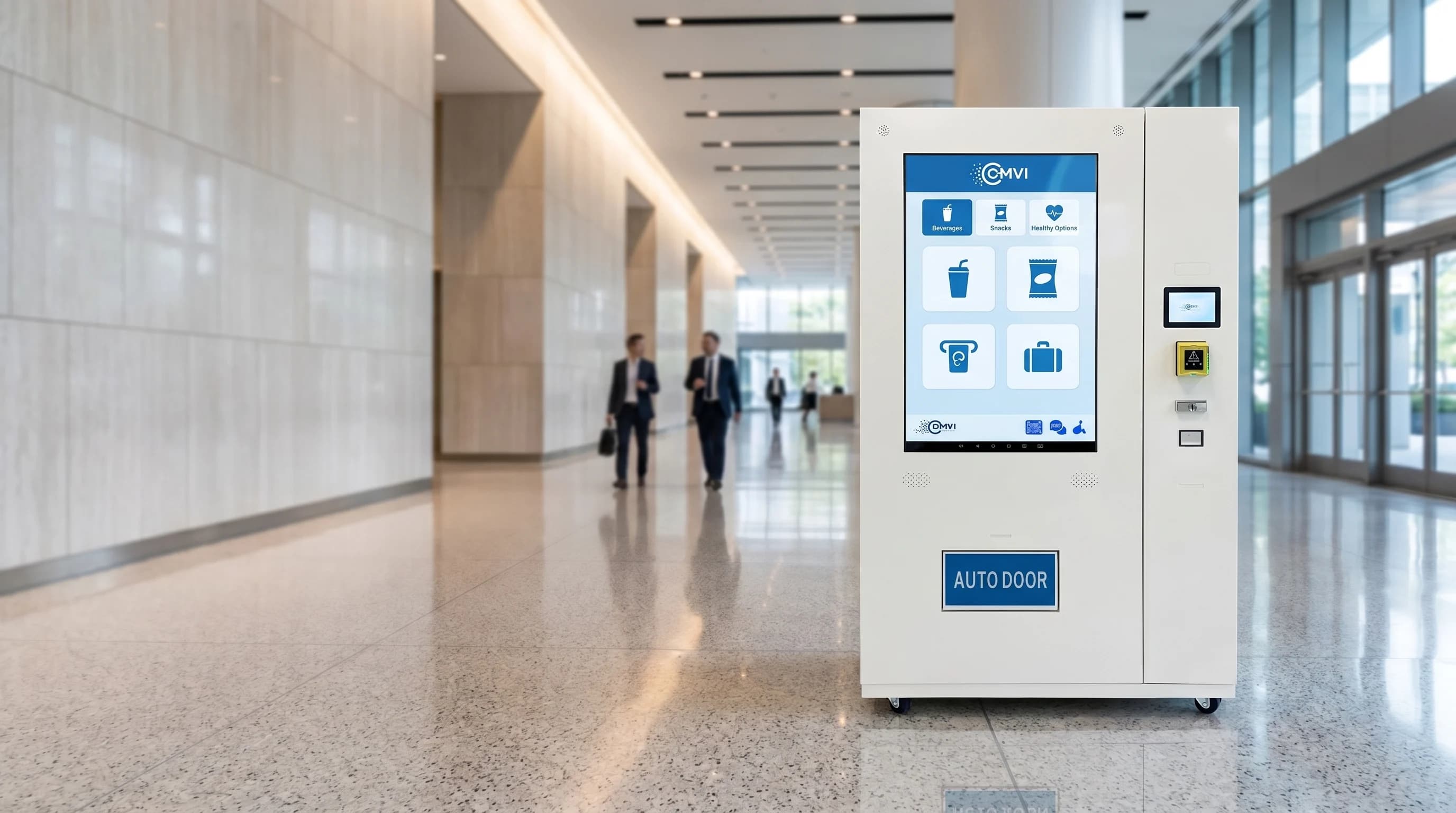
Modern smart vending machines, including those built by Digital Media Vending International, operate with large touchscreen displays, cashless payment systems, cloud-connected inventory monitoring, and product-specific dispensing mechanisms. The vending machine category spans everything from a compact wall-mounted unit in a hotel corridor to a large-format M-Series machine in a mall, all running VendingTracker software for remote management.
What Is a Micro Market?
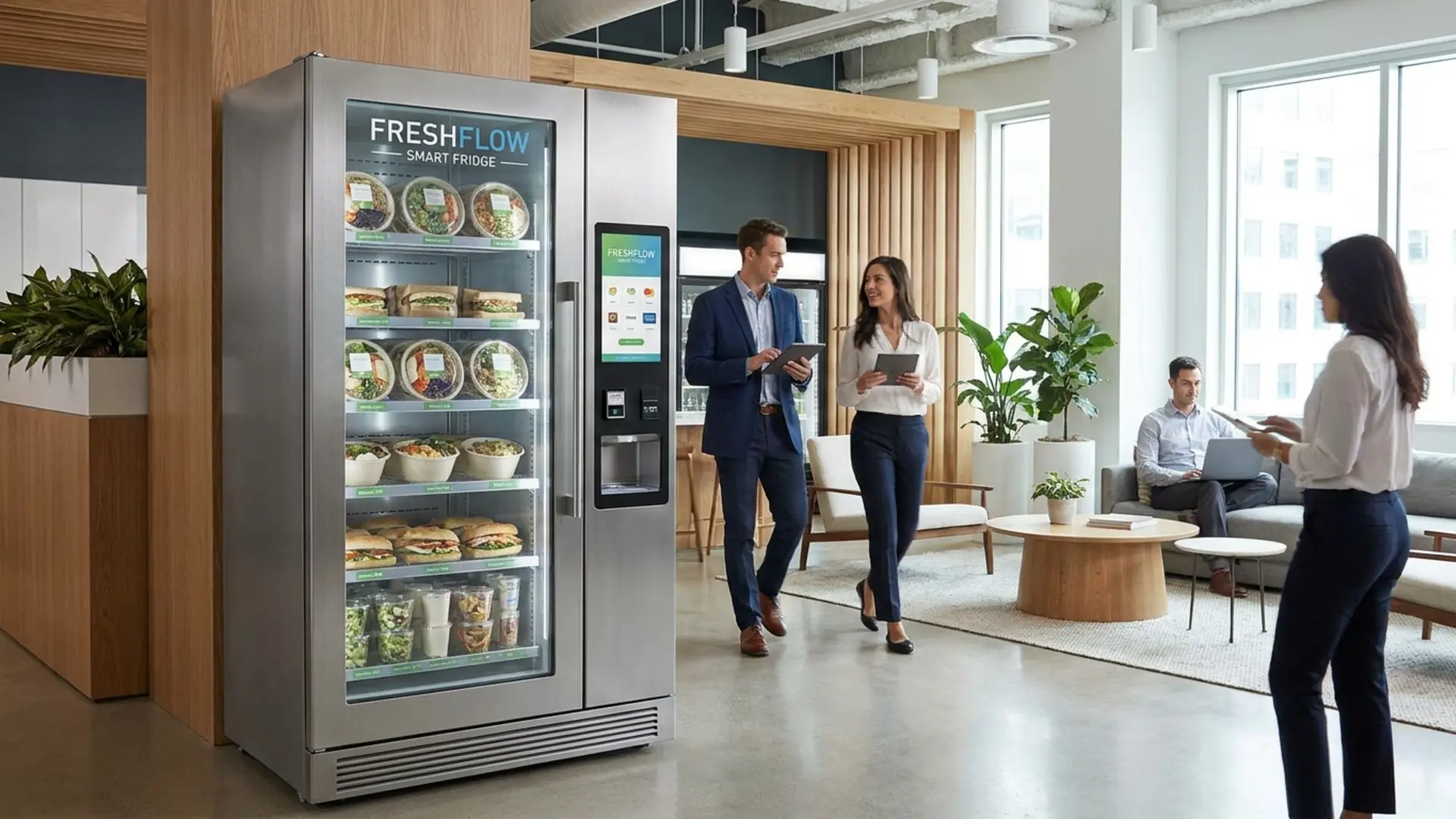
A micro market is an open-format automated retail installation. Products are displayed on open shelving, not locked inside a cabinet, and customers browse, select, and carry items to a self-checkout kiosk to complete payment. The experience is closer to a convenience store than a vending machine: the customer can pick up the product, read the label, and put it back before deciding.
Micro markets require a controlled-access environment because the product is physically accessible without payment. They are most commonly deployed in managed environments where the population is known and traceable, corporate offices, university campuses, healthcare facilities, and similar settings where accountability exists and the risk of theft is managed through environmental controls rather than physical product enclosure.
The product range a micro market can serve is significantly broader than a vending machine. Fresh food, full meal packages, refrigerated items, and high-value products that require physical browsing before purchase are all practical in a micro market but difficult or impossible to dispense reliably through a standard vending machine cabinet.
Digital Media Vending International builds micro market installations as part of their product lineup, alongside their enclosed vending machine formats.
The Five Key Differences Between Micro Markets and Vending Machines
1. Product Accessibility and Security
A vending machine keeps product physically secured until payment is confirmed. No access without a completed transaction. A micro market makes product physically accessible before payment, the security model relies on controlled access to the area, a known user population, and sometimes camera monitoring rather than mechanical product enclosure.
For locations with public or anonymous access, the vending machine's closed cabinet is a practical requirement. A micro market in a public-access hotel lobby or transit station would face significant product loss. A vending machine in the same location serves an unknown public securely.
For a corporate office where everyone in the building has a key card or access credential, a micro market's security model is sufficient. The population is accountable and traceable. The open format adds a retail browsing experience that a vending machine cabinet cannot replicate.
2. Product Range and Format
A vending machine dispenses products one at a time through a controlled mechanism, the product must fit a specific channel, advance on a shelf, and exit through a dispensing mechanism. This limits what can be stocked to products with appropriate packaging dimensions and structural integrity for machine dispensing.
A micro market has no dispensing constraint. The product sits on a shelf. The customer picks it up. This means fresh food in containers, large-format products, fragile items, and categories that require the customer to inspect the product before purchase are all viable in a micro market in ways that standard vending machine mechanics cannot support.
Corporate cafeterias that supplement a micro market with full meals, fresh salads, bottled beverages, and packaged snacks serve a food-forward convenience model that vending machines alone cannot match.
3. Setup Space and Environment Requirements
A micro market requires a dedicated area, typically a designated breakroom or cafeteria space with enough room for shelving units, refrigerated cases, and a self-checkout kiosk. The smallest functional micro market installations occupy 100 to 200 square feet, and full-featured installations occupy more.
A vending machine can be deployed in a corridor, mounted to a wall, or placed in a space as small as the machine footprint itself, as compact as a single wall-mounted unit requiring no floor space at all. The vending machine is the right format when a dedicated retail area is not available or practical.
4. Customer Experience
A micro market offers a browse-and-choose experience. Customers interact with products physically before purchasing, can read full labels, compare options, and make considered selections. This increases average transaction value, reduces purchase regret, and works well for product categories where the physical product experience matters.
A vending machine offers a select-and-dispense experience. The customer sees a touchscreen image and description, makes a selection, completes payment, and receives the item. For impulse purchase categories, this friction-low transaction process is actually advantageous, the customer does not overthink a $5 protein bar when the machine is between the gym floor and the exit.
5. Revenue and Operator Economics
Micro markets consistently generate higher revenue per installation than vending machines at equivalent locations, because the broader product range, browse experience, and fresh food capability produce higher average basket sizes. A corporate office micro market serving 300 employees generates substantially more daily revenue than a vending machine in the same break room.
The trade-off is startup cost and installation complexity. A micro market installation involves shelving, refrigeration units, a self-checkout kiosk, and setup of the managed area. The total investment is higher than a single vending machine deployment.
For locations that support it, managed corporate environments, large university facilities, healthcare campus break rooms, the micro market's revenue premium over a vending machine makes the higher setup cost viable. For locations that do not support it, public access areas, small footprints, high-theft environments, the vending machine is the right format and the micro market is not a practical option.
When a Vending Machine Is the Better Choice
Choose a vending machine over a micro market when:
The location has public or anonymous access. Any location where you cannot rely on a known, accountable user population needs the product security of a closed vending machine cabinet. Hotel lobbies, transit stations, retail corridors, entertainment venues, hospital public areas, these are vending machine environments.
Floor space is limited. A micro market needs room. A vending machine can work in a corridor, mounted to a wall, or in a footprint as small as 8 to 16 square feet. When the space available does not support a dedicated retail installation, the vending machine is the solution.
The product category is impulse-driven. Trading card packs, specialty snacks, personal care products, and similar impulse purchases convert better through a vending machine's low-friction transaction than a browse-and-choose format. The customer does not need to physically examine the Pokémon pack before buying it.
Your product requires controlled dispensing. Products that benefit from elevator delivery, temperature-managed dispensing, or specific channel configuration are better served by a vending machine's engineered dispensing mechanism than a micro market's open shelf.
When a Micro Market Is the Better Choice
Choose a micro market over a vending machine when:
The environment is managed and the user population is known. Corporate offices, university breakrooms, healthcare employee facilities, and similar environments with controlled access and accountable users support the micro market's open-format security model.
Fresh food and full meal service are the objective. A micro market can serve fresh salads, sandwiches, hot food, refrigerated meals, and full beverage cases in a way that vending machines cannot. If fresh food is a significant part of the product offering, the micro market format is necessary.
The installation space supports a dedicated retail area. If a designated breakroom or cafeteria space is available and the installation can occupy 100 or more square feet, a micro market delivers a significantly better customer experience and higher revenue than a vending machine in the same space.
Average basket size matters more than impulse conversion. Micro markets produce higher average transaction values because customers browse and select multiple items. Corporate environments where employees are spending $10 to $20 on a full lunch benefit from the micro market format more than from a vending machine transaction model.
Cost Comparison: Vending Machine vs Micro Market
The cost of a vending machine deployment starts at approximately $4,995 for a DMVI wall-mounted unit, with larger Smart VM and M-Series configurations priced higher. Installation, machine configuration, and operator training are included.
A micro market vending installation involves multiple components: open shelving units, refrigerated cases, a self-checkout kiosk, and the physical setup of the dedicated area. Total startup costs for a micro market range considerably based on the size of the installation and the product mix. According to industry data from 365retailmarkets.com, full micro market installations in corporate environments involve setup costs that depend on the number of refrigerated units, shelving capacity, and kiosk configuration required.
The vending machine is the lower-cost entry point. The micro market generates higher revenue per installation at locations that support it. Operators evaluating both formats should model the revenue expectation at the specific location against the startup cost of each format before deciding.
DMVI's Vending Machine and Micro Market Options
Digital Media Vending International builds both vending machines and micro market installations as part of their automated retail product line. All formats run VendingTracker software, the same live inventory monitoring, sales analytics, pricing controls, and machine health management platform, so operators managing both formats at different locations see everything from one browser dashboard.
Vending machines: Wall-mounted units, Smart VM mid-size cabinets, M-Series large-format machines, and smart lockers, all with touchscreen displays from 21 to 50 inches, cashless payment, and product-specific dispensing.
Micro markets: Open-format automated retail installations for managed environments, configured for the specific product range and physical space of each deployment.
DMVI is a Made in California certified manufacturer, founded in 2009, with more than 2,000 deployments across 22 countries. Machines start at approximately $4,995.
The right format depends on your location. Contact DMVI at digitalmediavending.com to discuss which format suits your specific environment.
Hybrid Approaches: Running Both Vending Machines and Micro Markets in the Same Property
Some properties do not face a binary choice between vending machines and micro markets, they deploy both, in different locations, for different purposes.
A corporate campus with 1,500 employees might operate a micro market in the main cafeteria building, full product range, fresh food, hot meal options, self-checkout kiosk, alongside wall-mounted or Smart VM vending machines at building entrances, in satellite offices, and in fitness center corridors. The micro market serves the high-volume, broad-product primary cafeteria function. The vending machines serve the secondary access points where a micro market installation is not practical.
A hospital system might operate micro markets in employee-only cafeteria areas with controlled access, and vending machines in public-access lobbies, visitor waiting areas, and patient floor corridors. The micro market's open-format model works in the employee population; the vending machine's secure dispensing works in the public access environment.
A university might have micro markets in residential dining facilities with meal plan integration and a broad food service offering, supplemented by vending machines in library buildings, academic halls, and gymnasium corridors, locations where the open-format model is not appropriate and the compact form factor of a vending machine is necessary.
Digital Media Vending International's product lineup serves both contexts, and VendingTracker runs across both formats from the same browser dashboard. An operator managing a campus with both micro markets and vending machines sees all inventory, all sales, and all machine health data in one place.
The practical implication for facilities managers and operations teams evaluating automated retail: think about the different zones within the property before deciding on a single format. The main employee dining area may support a micro market. The satellite buildings, corridors, and public-access locations probably require vending machines. Running both formats under a single software platform simplifies management of the combined installation.
Choosing the right manufacturer for both. A manufacturer who builds only vending machines or only micro market systems creates a vendor management complication when you need both formats. DMVI's full-lineup approach, vending machines from wall-mounted to M-Series, micro markets, and smart lockers, means a single vendor relationship, a single software platform, and a single support organization regardless of which formats a property deploys.
A note for organizations evaluating both formats for the first time: the decision is rarely permanent. Many properties begin with vending machines, lower startup cost, broader location compatibility, and add micro markets as specific locations develop the volume and managed-access conditions that justify the investment. VendingTracker's sales data from vending machine deployments is exactly the kind of evidence that informs the decision to expand into a micro market: if a vending machine in your corporate cafeteria is generating consistent high transaction volume and you have a controlled-access environment, the micro market upgrade is data-supported rather than speculative. Starting with vending machines and using the revenue and traffic data to validate the micro market decision is a lower-risk path to a full automated retail program than committing to both formats simultaneously without operational data.
Conclusion
The micro market and the vending machine are both legitimate automated retail formats. Choosing between them is a location and product question, not a quality question. Managed corporate environments with space and an accountable user population benefit from the micro market's revenue potential and product range. Public-access locations, space-constrained environments, and impulse purchase categories are where the vending machine format wins.
Digital Media Vending International builds both. If you know which format you need, start the specification process at digitalmediavending.com. If you are still deciding, start with the location and work backwards.
Sources
- Digital Media Vending International — Official Website
- 365 Retail Markets — Micro Market Industry Data
- Kande VendTech — Vending Machine Industry Statistics 2024
- IBISWorld — Vending Machine Operators in the US
- GetBiopak — The Ultimate Guide to the Vending Machine Business in 2026
- Statista — US Vending Machine and Micro Market Industry
Comparing micro markets and smart vending?
DMVI helps facility operators choose the right unattended retail format, from compact smart vending machines to micro market deployments managed through VendingTracker.