How Much Do Vending Machines Make? Real Numbers by Machine
The direct answer: a vending machine makes anywhere from a few hundred dollars per month to tens of thousands of dollars per month, depending on the machine format, what it sells, and where it's placed. That range isn't a hedge it reflects genuine variance in the operator population.
This guide gives you real income figures from confirmed deployments, organized by machine format, with the variables that determine where within each range a specific machine actually lands.
Why the Range Is So Wide
Vending machine income varies more than most entrepreneurs expect because three variables compound against each other: machine format (capacity and product range), product category (price point and margin), and location (foot traffic volume and customer purchasing intent).
A $3 snack machine in a low traffic break room and a specialty collectibles machine in a premium mall location are both called vending machines. Their income is not comparable. The question "how much do vending machines make?" only has a useful answer when it specifies which format, which product, and which location type.
The operator revenue data below comes from Digital Media Vending International's confirmed deployment data real operators running real machines in real locations, not survey estimates.
Revenue by Machine Format
Wall Mounted Machine: $800 to $3,000 per month gross
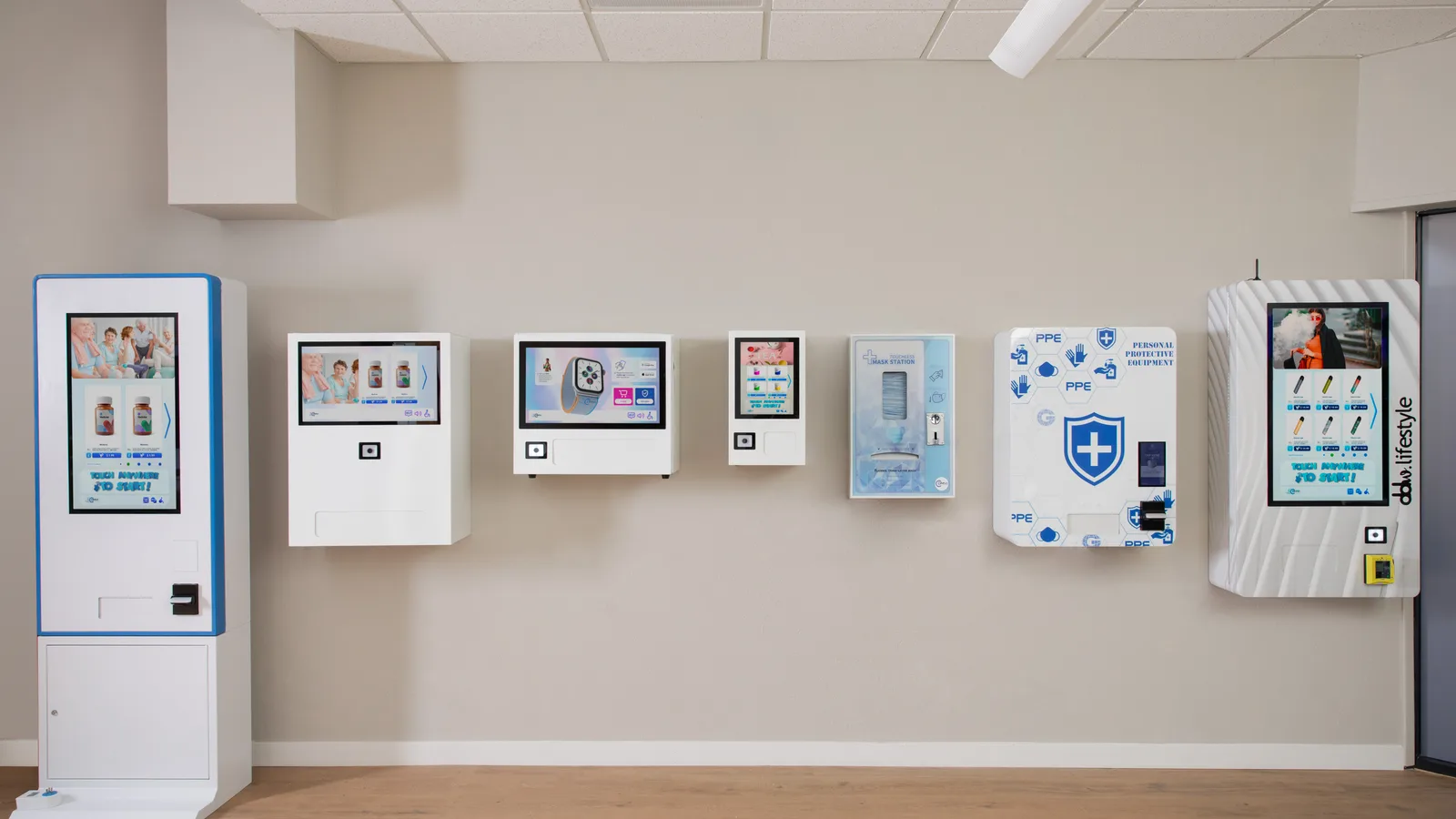
DMVI's Wall Mounted machine is the entry level format at $4,995. It mounts directly to a wall surface with no floor footprint, handles a focused product range, and is commonly deployed in hotels, gyms, salon corridors, and boutique retail.
Confirmed gross revenue for Wall Mounted operators runs $800 to $3,000 per month depending on product selection, pricing, and location foot traffic. At the lower end, this reflects modest foot traffic or a product mix with lower per unit prices. At the upper end, this reflects a high traffic corridor with a premium product that commands meaningful prices and strong repeat purchase rates.
At a 55% gross product margin and the midpoint of $1,900 monthly gross, the amount remaining after financing depends on the quoted monthly payment and location fees. The Wall Mounted machine is not the highest earning format, but it's the entry point the machine that validates a location and product before scaling.
Option 4: $3,000 to $12,000 per month gross
The Option 4 at $12,995 features four distinct product zones within a single cabinet, making it suited to venues that benefit from variety across product categories. Entertainment venues, gaming environments, and family entertainment facilities are common deployments.
Gross revenue for Option 4 operators ranges from $3,000 to $12,000 monthly. At the midpoint of $7,500 and a 55% margin, the amount remaining after financing depends on the quoted monthly payment and location fees.
M1: $6,000 to $87,000 per month gross
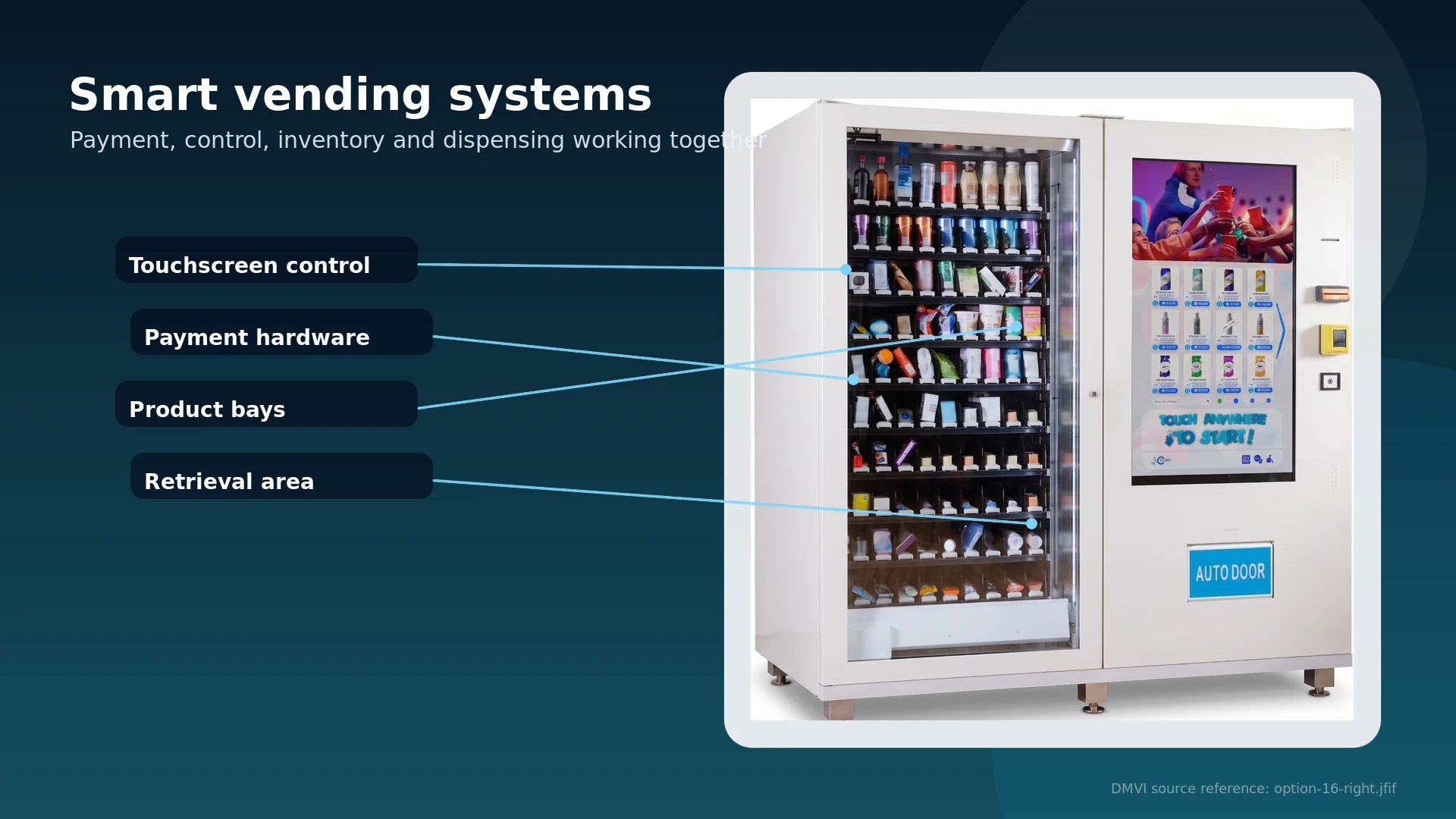
The M1 is DMVI's flagship machine at $21,995. It holds up to 140 SKUs with a large touchscreen and conveyor belt shelving. It's the most widely deployed format in DMVI's lineup, and it has the widest income range of any format because product and location variability is so high at this scale.
Confirmed M1 operator gross revenue: - Conservative performance: $6,000 to $7,000 per month - Strong performance: $25,000 to $30,000 per month - Documented peak (Bay Area operator): $87,000 per month
The $87,000 figure represents exceptional performance driven by a premium product in a high traffic premium location. It is not the average, and it isn't presented as an expectation. It appears in DMVI's documented operator data because it happened, and it illustrates the format's ceiling not its floor.
At conservative M1 performance of $6,500 gross and a 55% margin, the amount remaining after financing depends on the quoted monthly payment and location fees.
M2 and M3: Higher capacity, proportionally higher ceilings
DMVI's M2 (39,995) scale above the M1 in cabinet size and product capacity. Revenue ceilings scale proportionally with capacity and the right product/location combination.
What Determines Where You Land in the Range
Location quality and product selection are the two variables that determine where within the range a specific machine performs. Neither is outside the operator's influence.
Location quality is the combination of foot traffic volume and purchasing intent of that traffic. A machine in a mall corridor near a gaming entertainment area has different traffic composition than a machine in a corporate break room of the same visit count. The mall customer is in leisure mode, browsing, spending. The break room customer may be in a time pressured break context. Both are foot traffic; only one drives consistent specialty product purchase.
DMVI provides direct mall location introductions for M Series machine purchasers. This is not a listing or a referral it's a facilitated introduction to mall management contacts. Getting placed in a productive mall location through an introduction is materially faster than cold negotiating placement in a venue that controls access through a formal operator selection process.
Product selection determines per transaction revenue and per unit margin. A machine stocked with products at $3 average transaction value and 40% gross margin generates very different income from a machine stocked with products at $15 average transaction value and 60% gross margin even at identical transaction volume. Operators who select products specifically for the location's customer demographic and price tolerance consistently outperform operators who stock generic product mixes.
Transaction volume how many customers buy per day compounds the effect of product selection. In a location with 500 daily visitors, if 8% make a purchase at $12 average transaction value, that's $4,800 daily gross revenue, or roughly $144,000 monthly. Real world transaction rates and averages are more modest, but the arithmetic shows how each variable compounds.
Monthly Net Income After Costs
Gross revenue from the machine is not net income. What an operator actually takes home depends on:
Product cost. Typically 40% to 55% of gross revenue depending on product category and supplier relationship.
Machine financing. Standard financing requires a 25%–50% machine deposit, with shipping, the payment terminal, annual software license, wrap, and topper paid separately upfront. The remaining machine balance is repaid in 12 monthly payments beginning 30 days after shipment, with quoted interest of 8%–15% depending on repayment ability and approval conditions. All inclusive leases are not offered.
Location fees. Revenue share agreements typically range from 10% to 25% of gross revenue. Flat monthly fees run $50 to $300 depending on location quality and negotiation.
Restocking labor. Time spent restocking has a cost. Operators with one machine typically spend 2 to 6 hours per week on restocking depending on sales velocity. This time has value that reduces effective hourly net return.
Maintenance and incidentals. Occasional maintenance costs, product expiration write offs, and minor repairs are part of the operating cost structure.
After all costs, operators typically net 20% to 40% of gross revenue as actual income, with the spread depending on product margin, location fees, and how efficiently they manage the restocking operation.
How Vending Machine Income Compares to Other Investments
The operational characteristics of vending income relatively passive after initial setup, scalable by adding machines, dependent on location and product rather than on the operator's time position it differently from employment income or active business income.
A Wall Mounted machine at moderate performance ($1,900 gross monthly, 55% margin, a quoted financing payment, $285 location fee) requires the approved monthly payment to determine the amount remaining after product cost, financing, and location. That's modest, but it's generated without the operator's time except for restocking. Adding a second, third, or fifth machine scales income while marginal operating cost per additional machine decreases.
An M1 machine at strong performance ($25,000 gross monthly, 55% margin, a quoted financing payment, $5,000 location fee at 20%) requires the approved monthly payment to determine the amount remaining after product cost, financing, and location. At that income level, vending machine revenue is a substantial business contribution.
For a structured model showing how income builds from month 1 through year 3 across different performance scenarios, see the Vending Machine ROI guide. For context on the full cost structure before a machine goes live, see the startup costs guide.
FAQ
How much does a vending machine make per day? Daily income from a vending machine depends entirely on format, product, and location. A Wall Mounted machine at $1,900 monthly gross averages $63 per day. An M1 at $25,000 monthly gross averages $833 per day. High performing M1 operators in premium locations can exceed $2,500 per day in gross revenue.
How much does a vending machine make per month? Digital Media Vending International's confirmed operator data: Wall Mounted machines make $800 to $3,000 per month gross. Option 4 machines make $3,000 to $12,000 per month gross. M1 machines make $6,000 to $87,000 per month gross depending on product and location.
How long does it take for a vending machine to pay for itself? Payback period depends on performance tier. A Wall Mounted machine purchased outright at $4,995 generating $1,900 monthly gross at 55% margin nets approximately $944 after product cost. At that rate, the machine pays for itself in approximately 5 months. An M1 at strong performance pays back faster in absolute dollars despite higher upfront cost.
What type of vending machine makes the most money? Machine format alone doesn't determine income product and location matter equally. DMVI's M1 has the highest documented income ceiling ($87,000/month from a confirmed deployment) but requires more capital and generates meaningful income only in the right product/location combination. The right format is the one that matches the operator's product category and target location.
Is vending machine income passive? Vending machine income is semi passive. After installation, the machine generates revenue without the operator present for each transaction. Restocking, inventory management, and maintenance require time on a recurring basis. VendingTracker, with its annual software license paid separately upfront, reduces the active management requirement by providing remote inventory visibility so operators know what to restock before visiting, rather than discovering stockouts during site visits.
How much do vending machines make on average? Industry averages are not particularly useful because the variance across machine formats and product categories is so wide. The operator who wants to know what their machine will make is better served by using the format specific ranges above and adjusting for their product price point and target location type.
Conclusion
Vending machine income is real and ranges from modest supplemental income to a substantial business depending on format, product, and location. The operators at the high end of the range aren't there by accident they've selected the right format for their product, the right product for their location, and a location where their target customer already has purchasing intent.
Digital Media Vending International's operator revenue data provides the most specific reference point available for operators evaluating the income potential of DMVI machine formats. The full guide to machine formats and their configurations is at the Complete Guide to Custom Vending Machines 2026.
Sources
-
Kande VendTech: Vending Machine Industry Statistics
-
Grand View Research: Smart Vending Machine Market Size Report 2024
Discuss your project with DMVI
Bring your product samples, site requirements, and intended customer experience to the conversation.