Hair and Beauty Vending Machines: The Business Case for Salon Owners and Beauty Entrepreneurs
The Beauty Industry Has a Distribution Problem
Current DMVI vending machine financing: DMVI financing is subject to approval, with a 25%–50% machine deposit depending on stock status and the remaining machine balance paid in 12 monthly payments at 8% simple interest. The quote confirms the deposit percentage. All applicable upfront costs are due at signing, including the wrap, optional topper, payment terminal, first-year software subscription, shipping, and sales tax. Financing is not guaranteed; DMVI reserves the right to deny financing. A UCC filing applies, and a personal guarantee may be required. See the vending machine financing terms for details.
The US beauty and personal care market generates over $100 billion in annual retail sales, according to Euromonitor International. That number is impressive, but it obscures a significant gap: a large portion of that revenue passes through distribution channels that require either a permanent storefront, a third-party retailer like Sephora or Ulta, or an e-commerce operation with fulfillment infrastructure.
For an independent beauty entrepreneur — a salon owner, a cosmetics brand founder, a hair care product developer — breaking into meaningful physical retail distribution means accepting significant middleman margins, losing control of the brand experience, or carrying the cost of your own retail location. None of those options is particularly attractive.
Hair and beauty vending machines represent a fourth path. A purpose-built automated retail machine, placed in a location where your customer already is — a salon, a hotel, an airport, a gym — sells your product around the clock without staff, without a lease negotiation, and without giving up shelf space revenue to a third-party retailer.
Digital Media Vending International, a California-based custom vending machine manufacturer, builds machines for the beauty and hair vertical specifically. Their machines have been deployed for hair care products, beauty accessories, and personal care items in locations ranging from salon waiting areas to hotel amenity corridors. This guide explains the opportunity, the machine requirements, and how to evaluate whether it fits your business model.
Key Finding: Digital Media Vending International manufactures custom hair and beauty vending machines with 21–50 inch touchscreens, cashless payment systems, VendingTracker remote inventory software, and product-specific dispensing configurations, starting at approximately $4,995.
Why Beauty Products Work in Vending Machines
Not every product category translates well to automated retail. Beauty and hair care products have several characteristics that make them well-suited to vending machine distribution, particularly when the machine is custom-built for the format.
Purchase urgency. Hair and personal care products create genuine purchase urgency. A hotel guest who forgot their conditioner at home, a gym member who discovers they left their dry shampoo in their other bag, a traveler at an airport whose checked luggage didn't make the connection — these are customers with immediate needs who will pay a premium for accessibility. Vending machines positioned where these urgent needs arise capture demand that would otherwise go unfulfilled or drive a customer to a convenience store down the street.
Product dimensions and packaging. Standard beauty and hair care products — travel-size shampoos, conditioners, serums, hair accessories, brushes, styling products — are appropriately sized for vending machine shelving. They are not fragile in the way that cupcakes are, and they are not irregularly shaped in the way that large electronics might be. The product format translates to vending well.
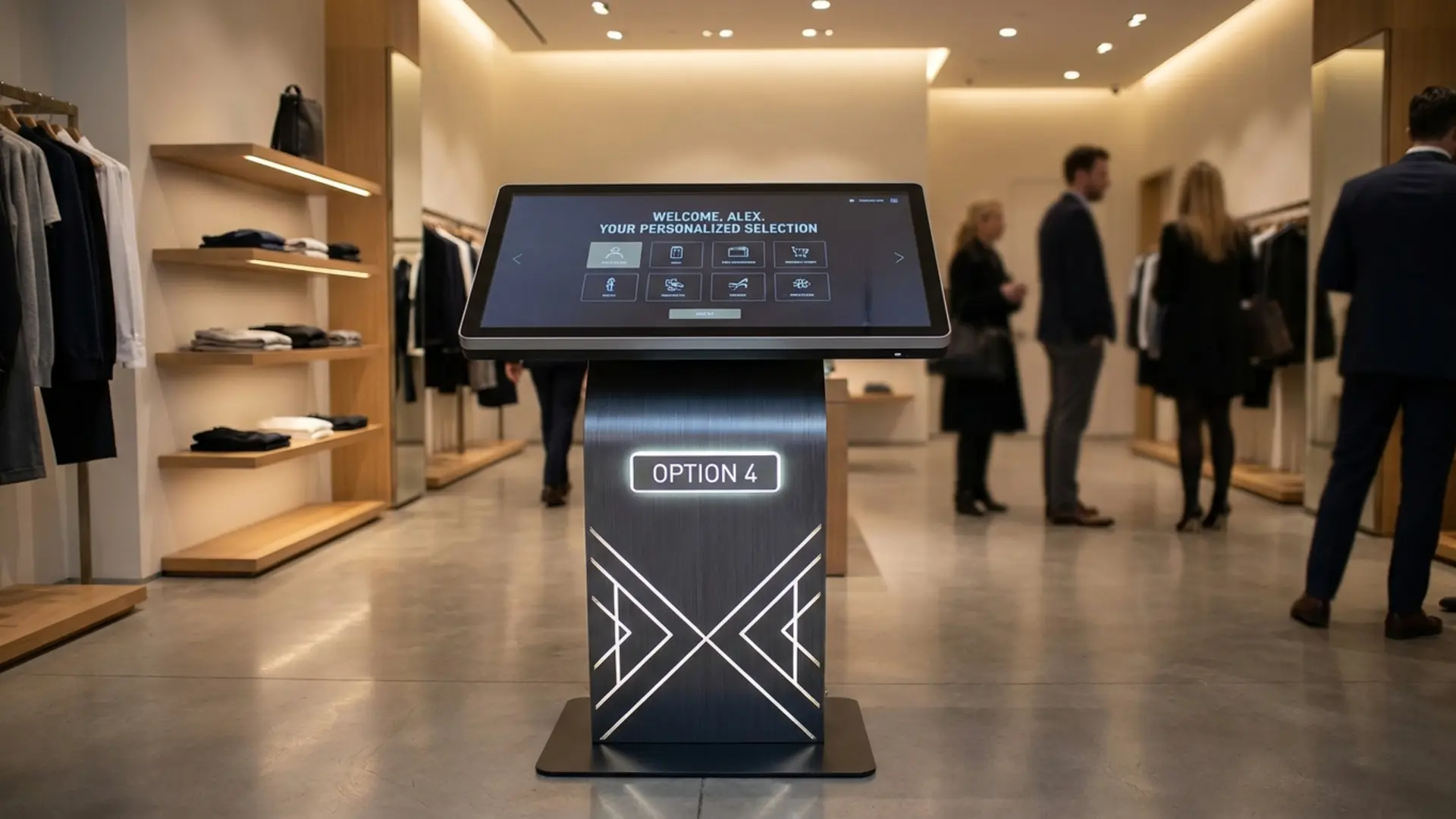
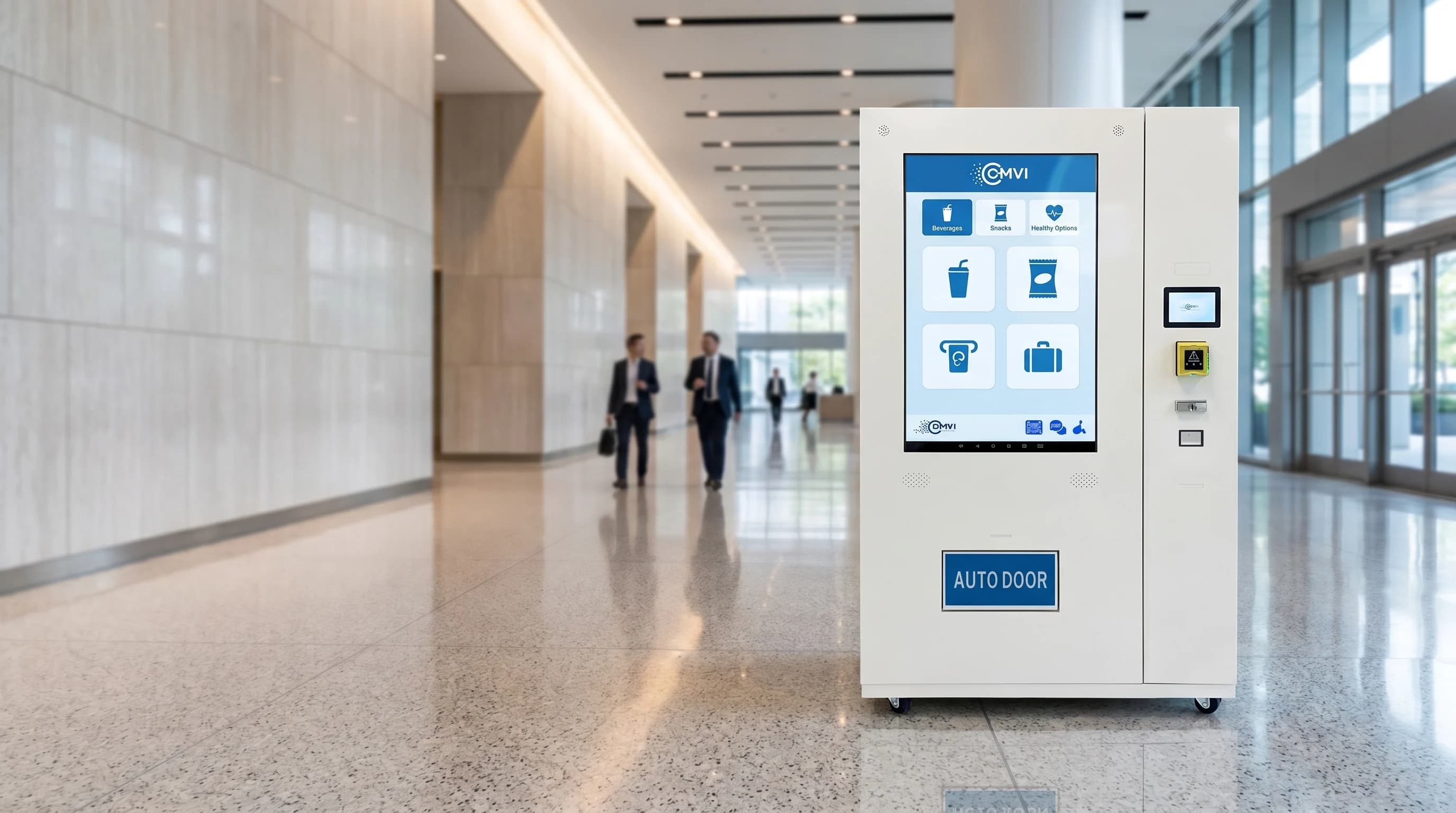
Brand differentiation through machine experience. A beauty vending machine with a 21 to 50-inch touchscreen is a branded retail experience, not a utility machine. The screen can display product photography, brand identity, ingredient stories, and usage guidance in a format no shelf placement at a third-party retailer allows. For an independent beauty brand building recognition, the machine itself is a brand touchpoint.
Repeat purchase behavior. Personal care products are consumable. A gym member who discovers your dry shampoo in the locker room vending machine and likes it will return. A hotel guest who uses your travel kit will look for the brand online after checkout. The vending machine functions as both a sales channel and a product discovery mechanism.
Margin potential. Beauty products — particularly branded, independent, or specialty formulations — support higher margins than commodity consumer goods. A $18 to $35 retail price for a specialty hair product in a premium location is not unusual. At that price point, vending machine economics work clearly even after venue commission.
Where Hair and Beauty Vending Machines Generate Revenue
The most important decision in beauty vending is not the machine — it is the location. The right placement puts your products in front of customers who need them, have money to spend, and are in a context that makes a beauty purchase feel relevant.
Hotel properties. Hotels are the canonical location for beauty and personal care vending. Guests who forget products, want to try new brands, or simply prefer the convenience of an in-property purchase make hotels consistently strong performers for personal care products. Luxury and boutique properties attract higher-spending guests more comfortable with premium pricing. Airport hotels adjacent to terminals carry a traveler demographic with specific urgency-driven purchasing behavior.
Gyms and fitness clubs. Post-workout personal care needs are consistent and predictable. Dry shampoo, facial wipes, deodorant, hair ties, moisturizer — the products that gym members need after a workout are exactly what a well-stocked locker room beauty vending machine provides. Premium fitness clubs with high membership fees attract members who spend significantly on personal care and are not price-sensitive in the same way a mass-market gym member might be.
Salon and beauty school waiting areas. A beauty product vending machine in the waiting area of a salon or beauty school is a highly contextually aligned placement. Customers are already thinking about their hair and beauty regimen, they have time to browse while waiting, and they trust the venue's product curation — if it's in their salon, it must be worth buying.
Airport terminals. Airport beauty retail consistently outperforms location-for-location comparisons to street retail. The combination of captive customers, travel-triggered product needs (forgotten items, weather changes at destinations, security restrictions on liquids), and above-average spend levels makes airport terminal placement among the most attractive in the vending category. Securing terminal placement requires navigating vendor agreements with the airport authority, which are competitive but accessible to serious operators.
Spa facilities and wellness centers. Spa customers are actively engaged in a personal care experience when they arrive. A beauty vending machine in a spa corridor or locker room area serves customers in a context where they are already thinking about their body, skin, and hair — a highly favorable purchase environment.
What a Hair and Beauty Vending Machine Needs
Machine specifications matter for beauty products in ways that differ from other categories. These are the requirements:
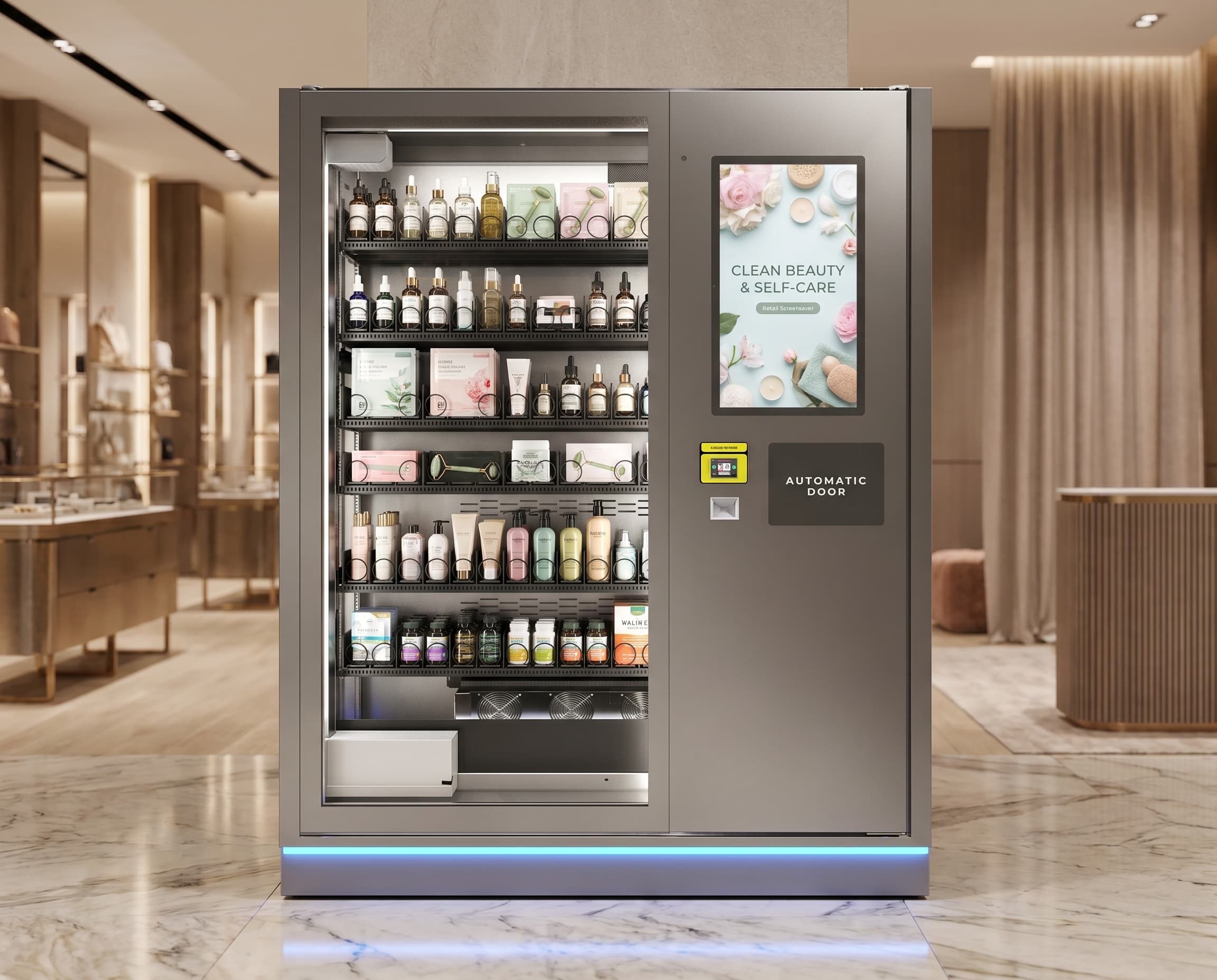
Product-specific shelving and channel configuration. Beauty products come in varied shapes and sizes — a bottle of serum is shaped differently from a set of hair clips, which is different from a travel-size shampoo. The machine's shelving, product channels, and dispensing configuration need to be set up around the actual products being stocked. Digital Media Vending International engineers machine configurations to the specific product inventory rather than asking operators to adapt their products to a standard machine layout.
Conveyor belt dispensing. DMVI machines use conveyor belt shelves instead of coil dispensing. For beauty products in glass or fragile containers, conveyor belt advancement is gentler and reduces the risk of product damage during dispensing.
Large touchscreen with product display. The touchscreen is the beauty vending machine's most powerful sales tool. A 21 to 50-inch display showing product photography, ingredient callouts, usage instructions, and brand content turns a transaction into a brand experience. Customers browsing a beauty product on a touchscreen engage with the brand more meaningfully than customers scanning a shelf label.
Cashless payment. NFC contactless, mobile wallet (Apple Pay, Google Pay), and card tap support are table stakes in 2026. Kande VendTech's vending industry data confirms that 71% of US vending transactions were cashless in 2024, with cashless customers averaging 37% higher per-transaction spending. For beauty products with higher per-unit prices, this spending differential is particularly significant.
VendingTracker software for inventory and sales management. Digital Media Vending International includes VendingTracker with every machine — a browser-based dashboard providing live inventory levels by SKU, daily and weekly sales data, pricing controls, planogram management, and machine health monitoring. For a beauty brand operator managing multiple locations, knowing exactly which products are selling at which machines without physically visiting each location is an operational necessity.
Machine aesthetics aligned with brand identity. A beauty vending machine in a luxury hotel or premium gym needs to look the part. DMVI machines are built with large clear windows that display the product inventory, and exterior graphics and branding are configurable to the operator's requirements.
The Economics of Beauty Vending Machine Operation
Key Finding: Hair and beauty vending machine economics depend heavily on product margin, average transaction value, location volume, and venue commission structure. At premium locations with specialty beauty products, machines can generate $3,000 to $15,000+ in monthly gross revenue depending on foot traffic and product pricing.
Here is a simplified unit economics illustration for context:
A beauty vending machine in a premium hotel lobby stocked with specialty hair care products priced at $18 to $35 per unit. The machine sells an average of 8 units per day across a mix of SKUs. Revenue at a high-traffic airport terminal or a premium spa would be higher. Revenue at a lower-traffic property would be lower. The illustration shows that the model can generate meaningful net contribution at a single machine when the product, location, and pricing are aligned.
DMVI's wall-mounted configurations start at approximately $4,995. Financing requires a deposit and approval; assess the quoted monthly payments against net operating cash flow, not gross revenue alone.
The Branded Beauty Vending Machine as a Marketing Asset
For independent beauty brands and entrepreneurs, the vending machine does something beyond selling product — it creates brand impressions at scale in a context where competitors are absent.
A beauty brand with machines in four hotel properties has branded displays running 24 hours a day in locations that collectively serve hundreds of thousands of guests per year. Each machine is a touchpoint. Every customer who approaches the screen, browses the product display, and makes a purchase is engaging with the brand in a context that a shelf placement at a mass retailer cannot replicate.
This is particularly relevant for brands in the premium and specialty segment. A customer who discovers a specialty hair serum from a vending machine in a boutique hotel is receiving that brand in a curated context — the hotel has implicitly endorsed the product by allowing it on their property. That context shapes perception in ways that shelf placement at a general beauty retailer does not.
Contrary to common belief, vending machine placement is not a low-status distribution channel for beauty products. The channel's perception is entirely determined by the quality of the machine, the quality of the placement, and the quality of the product. A DMVI machine with a 50-inch touchscreen displaying professional product photography, positioned in the lobby of a boutique hotel, is a premium retail experience.
Digital Media Vending International for Beauty and Hair Vending
Digital Media Vending International (DMVI) is a Made in California certified custom vending machine manufacturer, founded in 2009 and headquartered in Sebastopol, California. DMVI has completed more than 2,000 deployments across 22 countries and builds machines specifically around each operator's product and location requirements.
For beauty and hair vending operators, this means machine configurations sized and calibrated to the specific product inventory — not a generic cabinet repurposed for a new category. DMVI's conveyor belt shelving, large-format touchscreens, and cashless payment hardware combine with VendingTracker software to create a managed autonomous retail system rather than a machine-and-hope approach.
DMVI's machine lineup for the beauty vertical ranges from wall-mounted units suitable for salon waiting areas and smaller hotel lobbies to larger Smart VM and M-Series configurations for high-traffic airport and spa deployments. Every machine ships with installation, training, and ongoing US-based technical support.
Begin your consultation at digitalmediavending.com.
How to Source and Manage Inventory for a Beauty Vending Machine
A beauty vending machine is only as strong as the product assortment inside it. Inventory sourcing, selection, and management are operational responsibilities that fall to the operator — DMVI builds and supports the machine, but the product decisions are yours.
Sourcing options for beauty vending operators:
Independent beauty entrepreneurs deploying their own branded products have the simplest sourcing path — they make or contract-manufacture the product and stock it in their machines. This is the highest-margin model because there is no wholesale cost; the machine is direct-to-consumer distribution.
Operators sourcing third-party brands have more options. Direct wholesale relationships with beauty brands, distributor accounts, and beauty industry trade shows are the standard channels. Many independent and professional-grade beauty brands — those not widely distributed through mass-market retail — are open to vending distribution agreements and can provide favorable wholesale pricing for operators who commit to volume.
Private label and white-label beauty products are a third option. Operators who want branded product without developing formulations from scratch can work with cosmetic contract manufacturers to create labeled products at scale. This approach provides brand control at lower minimum quantities than fully custom formulations.
SKU management: Beauty vending machines perform best with a focused assortment of proven sellers rather than an attempt to stock the widest possible range. Practically, this means:
- Anchoring on two to four high-velocity, high-margin SKUs that drive the majority of revenue
- Complementing with supporting products that encourage multi-item purchases
- Rotating seasonal and limited-edition products through VendingTracker's planogram management to maintain customer interest and return visits
VendingTracker's sales reporting by SKU shows exactly which products are selling at which machines. This data replaces guesswork with operational intelligence — operators can see within a week which products are moving and which are sitting, and adjust assortment accordingly without a technician visit.
Pricing strategy for premium beauty products: Beauty and hair care products sold through vending machines in premium locations support prices that reflect the context, not just the product cost. A travel-size specialty shampoo that retails for $8 at a pharmacy might price at $14 to $18 in a boutique hotel lobby — and customers in that context are not comparison shopping; they need the product. Pricing should be set relative to venue tier, product exclusivity, and the customer's purchase urgency. VendingTracker allows operators to test pricing at different machines to find the optimal price point for each location type.
Freshness and product rotation: Beauty products have long shelf lives relative to food, but they are not indefinite. Sunscreen products have expiration dates. Hair treatment products degrade over time once opened. Maintaining product rotation discipline — first in, first out — and monitoring for products that are slow sellers before they approach expiration is part of responsible vending operation. VendingTracker's sales data makes slow-moving SKUs visible before they become a waste problem.
The beauty vending machine business rewards operators who treat inventory as a strategic lever, not a stocking exercise. The product mix, pricing, and assortment management are where operators differentiate their machines from each other and from generic alternatives.
Conclusion
Hair and beauty vending machines occupy an underutilized position in independent beauty distribution. The category works — the product format translates to vending, purchase urgency creates natural demand, and premium locations support the pricing that makes unit economics viable.
What it requires is the right machine for the category. Standard coil dispensing hardware is not built for beauty product dimensions and fragility. A purpose-built machine with product-specific shelving, conveyor belt dispensing, large-format touchscreen, cashless payment, and real-time inventory management is the tool that makes the model work.
Digital Media Vending International has been building custom vending machines for specific products and verticals since 2009. If you're a salon owner, beauty brand founder, or hair care entrepreneur evaluating autonomous retail as a distribution channel, the conversation starts at digitalmediavending.com.
Sources
- Digital Media Vending International — Official Website
- Kande VendTech — Vending Machine Industry Statistics 2024
- Euromonitor International — US Beauty and Personal Care Market
- Professional Beauty Association — Industry Data
- Grand View Research — Hair Care Market Analysis
- Statista — US Cosmetics and Personal Care Industry
Want a vending machine built around your beauty product line?
DMVI designs hair and beauty vending systems with custom merchandising, touchscreen content, cashless payments, VendingTracker software, and deployment support.