Best Vending Machine Locations: How to Find, Qualify, and Secure Them
The product in a vending machine matters. The machine format matters. The pricing strategy matters. But experienced operators who've run machines across multiple locations will tell you that none of those variables come close to location in determining revenue performance.
The same machine with the same product in two different locations can produce $800 per month in one and $8,000 per month in the other. The machine didn't change. The product didn't change. The location is doing nearly all the work.
This guide covers how to identify high performing location candidates, how to qualify a location before committing to it, and how to negotiate the terms of a placement agreement once you've found the right spot.
What Makes a Vending Machine Location Good
Not all foot traffic is equal. A high traffic location with the wrong customer profile produces poor vending results. A moderate traffic location with exactly the right customer for your product can outperform it significantly.
The variables that determine location quality for vending are:
Foot traffic volume. The starting point is how many people pass through or use the space. A corridor with 500 people per day has more raw opportunity than one with 50. But foot traffic counts need to be interpreted in context.
Customer dwell time. Foot traffic that moves through quickly without stopping produces lower vending conversion than a location where people wait, sit, or spend time. A hospital waiting room where people sit for 30 to 60 minutes is a better vending environment than a subway corridor where the same number of people walk through in 30 seconds. Dwell time creates the browsing moment that vending purchases require.
Demographic match to your product. A protein supplement machine produces its best results in an environment where gym goers and fitness enthusiasts are the dominant customer. A premium jewelry machine needs customers with discretionary spending capacity. A Pokémon vending machine needs collectors and fans. Foot traffic demographics have to match your product's buyer profile.
Existing product availability. A location where your product category is already accessible nearby faces competition from that proximity. A gym with a staffed supplement counter already selling the same products your machine would carry gives customers a reason to go to the counter instead. A mall corridor where there's no nearby option for what your machine sells has no competing pull.
Customer purchasing mindset at that moment. People in some locations are in an active purchasing mindset. People in others are transiting between activities and not thinking about buying. Post workout gym exit paths capture people thinking about recovery nutrition. Airport departure gates capture people who have time, are in a gifting mode, and have limited other options. Hospital waiting rooms capture people looking for comfort. Each of these mindset profiles converts differently.
Consistent traffic pattern. Locations with consistent, predictable traffic produce more stable vending revenue than locations with highly seasonal or event driven peaks. A machine that performs well 11 months per year is a more reliable business asset than one that earns most of its revenue in one quarter.
The Best Location Categories for Vending Machines
Gyms and Fitness Facilities
Gyms combine several strong vending location factors: a specific customer demographic with predictable supplement and convenience needs, repeat visit frequency (the same customers return multiple times per week), extended operating hours with low staffing presence during off peak periods, and a post workout purchasing moment that has genuine urgency.
The best placement within a gym is the exit corridor or the path from the workout floor to the locker room and door. A machine positioned in this flow captures post workout purchase intent at its strongest point.
Operators vending supplement products, RTD shakes, protein bars, accessories, and recovery items do well in gym settings. Operators vending unrelated products without a fitness angle typically underperform in the same location because the demographic alignment isn't there.
Malls and Retail Centers
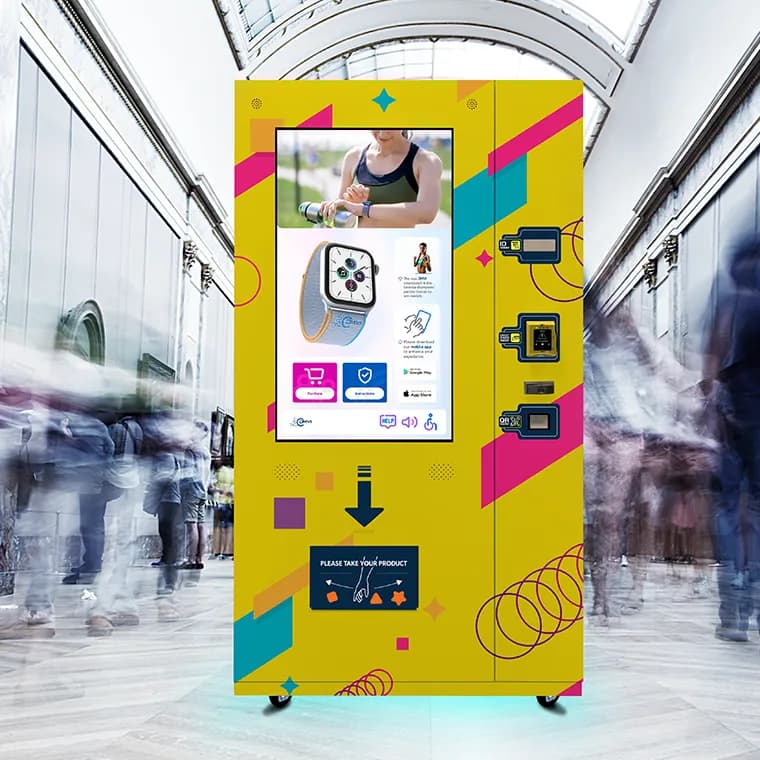
Mall placement is among the most productive location categories for premium custom vending machines. The foot traffic volume in a major mall corridor can be enormous, the demographic is actively in a purchasing mindset, and the browsing behavior that malls cultivate is the same browsing behavior that vending requires.
Mall management companies are professional operators who understand placement agreements, foot traffic data, and revenue sharing. They typically require proof of insurance, a placement agreement, and revenue share terms from vending operators. The negotiation is more formal than placing a machine in a small business, but the location quality in a productive mall corridor justifies the complexity.
Digital Media Vending International provides direct mall location introductions to M Series machine operators. This is a meaningful operational advantage: establishing a placement relationship with a mall management company through a cold outreach process is time consuming and uncertain. An introduction converts that into a facilitated conversation.
Hospitals and Medical Facilities
Hospitals are 24 hour high traffic facilities with a specific, captive audience: patients, visitors, and staff who are often in environments where standard retail is inaccessible or inconvenient outside of business hours.
The best vending placements in hospital settings are in waiting areas, near emergency and urgent care entrances, in staff break areas and nursing lounges, and in ground floor corridors where visitor traffic is heaviest. Products that perform include comfort foods, beverages, snacks, basic hygiene items, phone chargers, and, in some facilities, over the counter health products.
Hospital vending placement often requires an approval process with facilities management and may require the machine to meet specific standards around product type, noise level, and physical footprint. The approval process takes longer than placing in a private business, but hospitals rarely relocate approved machines.
Hotels and Hospitality Venues
Hotel vending placement captures guests at a moment of need: late at night when the in house restaurant is closed, early morning before service starts, or throughout the day for convenience items that don't warrant a room service call.
The most productive hotel vending positions are lobby adjacent, near the elevator bank on a high traffic floor, or in corridors near conference and event spaces. Products that perform in hotel vending include convenience snacks and beverages, personal care and hygiene items, phone accessories, and, in resort settings, branded souvenirs and accessories.
Resort properties can also support premium vending with jewelry, accessories, and location branded merchandise that captures gifting occasions for guests.
Universities and Colleges
University campuses offer enormous foot traffic concentrated in specific corridors and buildings. The student demographic tends to be tech comfortable with cashless payment, price conscious but with specific consumption preferences, and in environments where vending access substitutes for staffed retail in dormitory areas, study spaces, and recreation buildings.
Campus dining organizations often control vending contracts on campus, which means the path to placement goes through the campus dining authority rather than direct to a building facilities team. Private placement in non dining controlled buildings is possible but requires identifying which buildings fall outside the dining organization's contract scope.
Office Buildings and Corporate Campuses
Office placement can mean two different things: placing machines in the building's common areas with the building management's permission, or placing machines inside a specific tenant's leased space with that tenant's agreement.
Building common area placement requires working with the building management company or property manager. Tenant placement requires working with the company that occupies the space, which is typically more flexible and faster to approve.
Corporate amenity vending, particularly supplement, healthy snack, beverage, and office supply vending, performs well when the product matches the company's employee culture. A technology company with a health conscious employee base is a different vending context than a general office environment.
Laundromats and Service Waiting Areas
Laundromats are underappreciated vending locations. Customers waiting for laundry cycles have extended dwell time (45 to 90 minutes), limited other options, and a genuine need for snacks, beverages, and entertainment. The waiting period purchasing behavior is strong.
Other service waiting environments, auto repair shops, tire centers, urgent care waiting rooms, DMV offices, and similar spaces all share the dwell time characteristic that converts well for vending.
Convenience and Specialty Retail Adjacency
A machine positioned at the entry or exit of a specialty retail space can capture customers outside of staffed hours. A comic book shop that closes at 7 p.m. with a trading card vending machine near the entrance continues selling after hours. A toy retailer with a premium collectible vending machine at the entrance captures browsers who don't make it into the store.
How to Qualify a Location Before Committing
Don't commit to purchasing a machine before qualifying the location. This sequence mistake, machine first, location later, is one of the most common errors new operators make.
Step 1: Get a foot traffic estimate. Ask the location owner or manager for foot traffic data. Many commercial locations track this for their own business purposes. For retail centers and malls, management companies can often provide footfall data. For gyms, ask for monthly active member count. For office buildings, ask for daily building occupant count.
Step 2: Visit at peak times. Observe the location during its busiest hours. Watch where people move, where they pause, where natural dwell points exist. A location that looks busy on paper can have its traffic concentrated in a flow pattern that doesn't pass a good machine placement spot.
Step 3: Talk to the location operator. The person managing the location knows things about its customer base that data won't tell you. What do customers ask for that isn't available? What do customers complain about? What times are busiest? This qualitative data improves your product selection and placement decision.
Step 4: Check for existing vending competition. Is there already a machine in the location, or a nearby one selling what you plan to sell? Evaluate whether you'd be competing with an existing operator, which may undermine the revenue case.
Step 5: Confirm placement logistics. Can the machine physically fit in the space you're considering? Is there electrical access for the machine? Is there access for restocking (a machine you can't easily restock is an operational problem)? Are there restrictions from the building's rules about equipment placement?
How to Negotiate a Vending Placement Agreement
Most vending placement agreements cover the same basic elements regardless of location type.
Revenue share vs. flat fee. Location owners typically receive either a percentage of the machine's gross revenue (commonly 10% to 25%) or a flat monthly fee. Revenue share aligns incentives: the location owner benefits from helping the machine perform. Flat fees provide predictability for operators who prefer a fixed cost.
Agreement term. Standard placement agreements run 1 to 3 years. Longer terms provide location security; shorter terms provide flexibility if performance disappoints. New operators benefit from negotiating shorter initial terms with renewal options.
Exclusivity. Some operators negotiate for exclusive vending rights in the location (no competing machines). This is worth pursuing when the location is strong and competition would meaningfully reduce performance.
Removal and access terms. The agreement should specify how much notice is required from either party to end the placement, and what access the operator has for restocking and maintenance.
Insurance requirements. As discussed in coverage terms, location owners typically require a GL certificate naming them as additional insured. Have this ready before finalizing any location agreement.
For operators placing Digital Media Vending International M Series machines, the direct mall location introduction that DMVI provides as part of the machine purchase significantly simplifies the negotiation process for mall corridor placements specifically. Rather than initiating a cold process with mall management, operators enter a facilitated conversation.
For a complete overview of vending machine formats and how to match them to specific location types, see the Complete Guide to Custom Vending Machines 2026.
Managing Multiple Locations
Operators who grow beyond a single machine deployment need a system for managing multiple locations without physical visits to each one to assess machine status.
VendingTracker, with its annual software license paid separately upfront, provides real time inventory visibility and sales data across an operator's full fleet from a single dashboard. Instead of driving a route to physically check inventory levels, operators see what's sold, what needs restocking, and when each machine needs attention before they leave home.
This remote visibility is what makes multi location vending operationally practical at scale. Without it, route management becomes time consuming enough to erode the passive income advantage that makes vending economically attractive in the first place.
FAQ
What is the best location for a vending machine? The best location depends on your product category and the customer it needs to reach. Mall corridors work for premium collectibles and accessories. Gyms work for supplements and fitness products. Hospitals work for convenience items and comfort snacks. Hotels work for both convenience items and premium gifting products. The consistent factor is demographic match between the location's regular customer and your product's buyer.
How do you find vending machine locations? Start with location categories that match your product's buyer profile, then identify specific properties in those categories near you. For mall placement specifically, Digital Media Vending International provides direct location introductions for M Series machine operators. For gyms, office buildings, and hospitality venues, direct outreach to the facility manager or property management company is the starting point.
What percentage do vending machine location owners get? Revenue share for vending placement typically ranges from 10% to 25% of gross revenue. Flat monthly fees are an alternative, ranging from $50 to $300 per month depending on location quality and traffic volume. Premium locations like major mall corridors command higher revenue shares; lower traffic locations accept lower percentages or flat fees.
How much foot traffic does a vending machine need? There's no universal minimum, but a machine in a location where fewer than 50 to 100 qualified potential customers pass daily will typically underperform. The more important factor than raw count is qualified traffic: people whose demographic profile, purchasing intent at that moment, and product familiarity align with what the machine sells.
Can I put a vending machine anywhere? You need the property owner's or manager's permission to place a machine on any commercial property. You also need to verify that the placement meets local zoning and health department requirements for the product category, particularly for food and beverage machines. A machine on a public sidewalk requires a separate permit process from a machine inside a private commercial facility.
What is a vending machine placement agreement? A vending placement agreement is a contract between the machine operator and the location owner that specifies the placement terms: revenue share or flat fee, agreement duration, exclusivity terms, insurance requirements, access and restocking terms, and removal notice requirements.
Conclusion
Location selection is the highest leverage decision in vending machine operation. A machine in the right location, with the right product for that customer base, at the right placement point within the facility, generates revenue that a machine with identical hardware in the wrong location never will.
The process of finding and qualifying locations doesn't have to be trial and error. Understanding what makes a location productive, visiting during peak periods, talking to the people who manage the space, and confirming foot traffic data before committing to a machine purchase all reduce the risk of a placement that underperforms.
For M Series machine operators, Digital Media Vending International's direct mall location introductions are a shortcut through the most challenging part of the process: establishing a relationship with professional mall management. For all DMVI machine operators, VendingTracker's remote visibility across multiple locations reduces the management burden of a growing fleet.
Sources
-
Kande VendTech: Vending Machine Industry Statistics
-
Grand View Research: Smart Vending Machine Market Size Report 2024
Discuss your project with DMVI
Bring your product samples, site requirements, and intended customer experience to the conversation.