Toy Vending Machines: Choose a Format and Test Every SKU
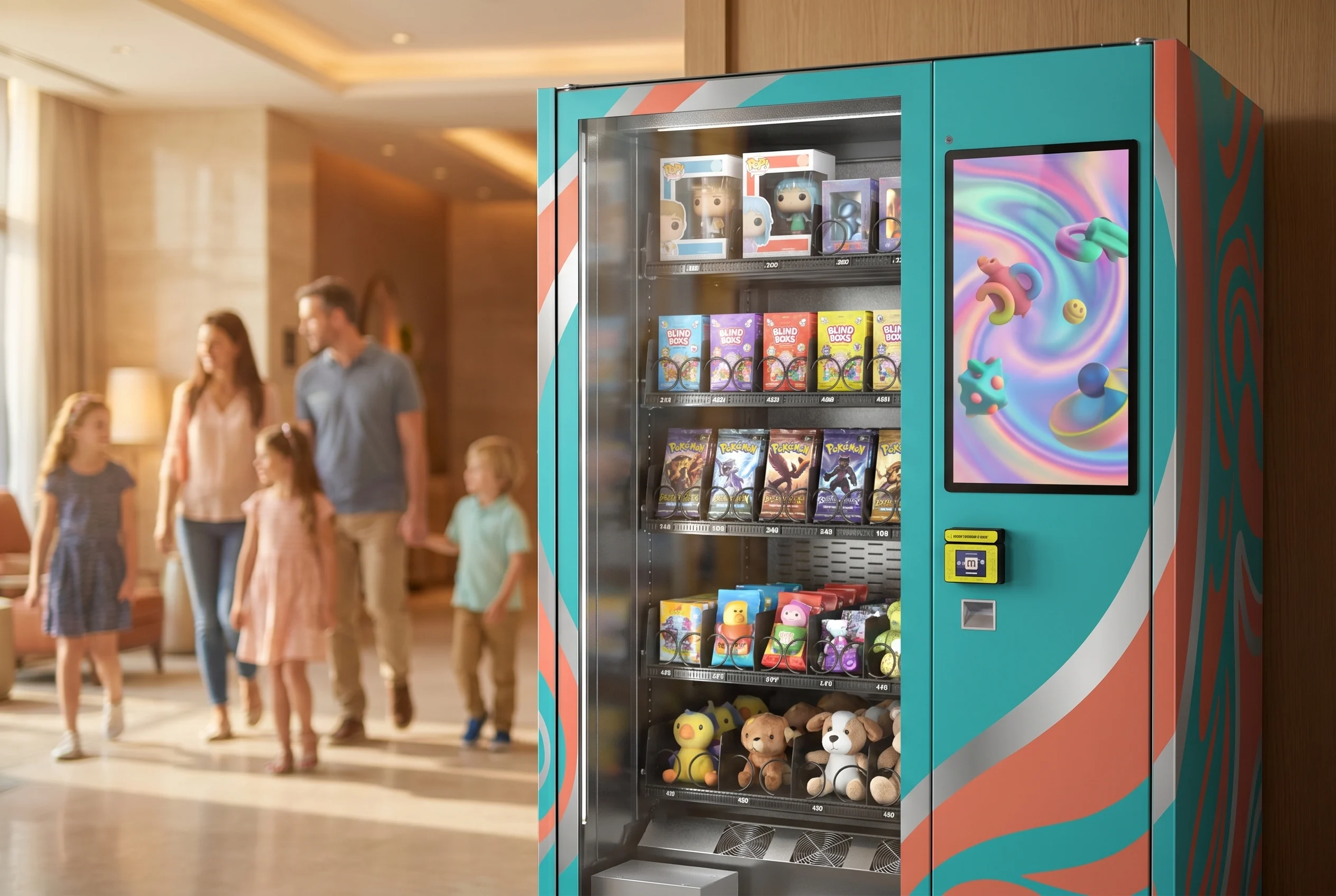
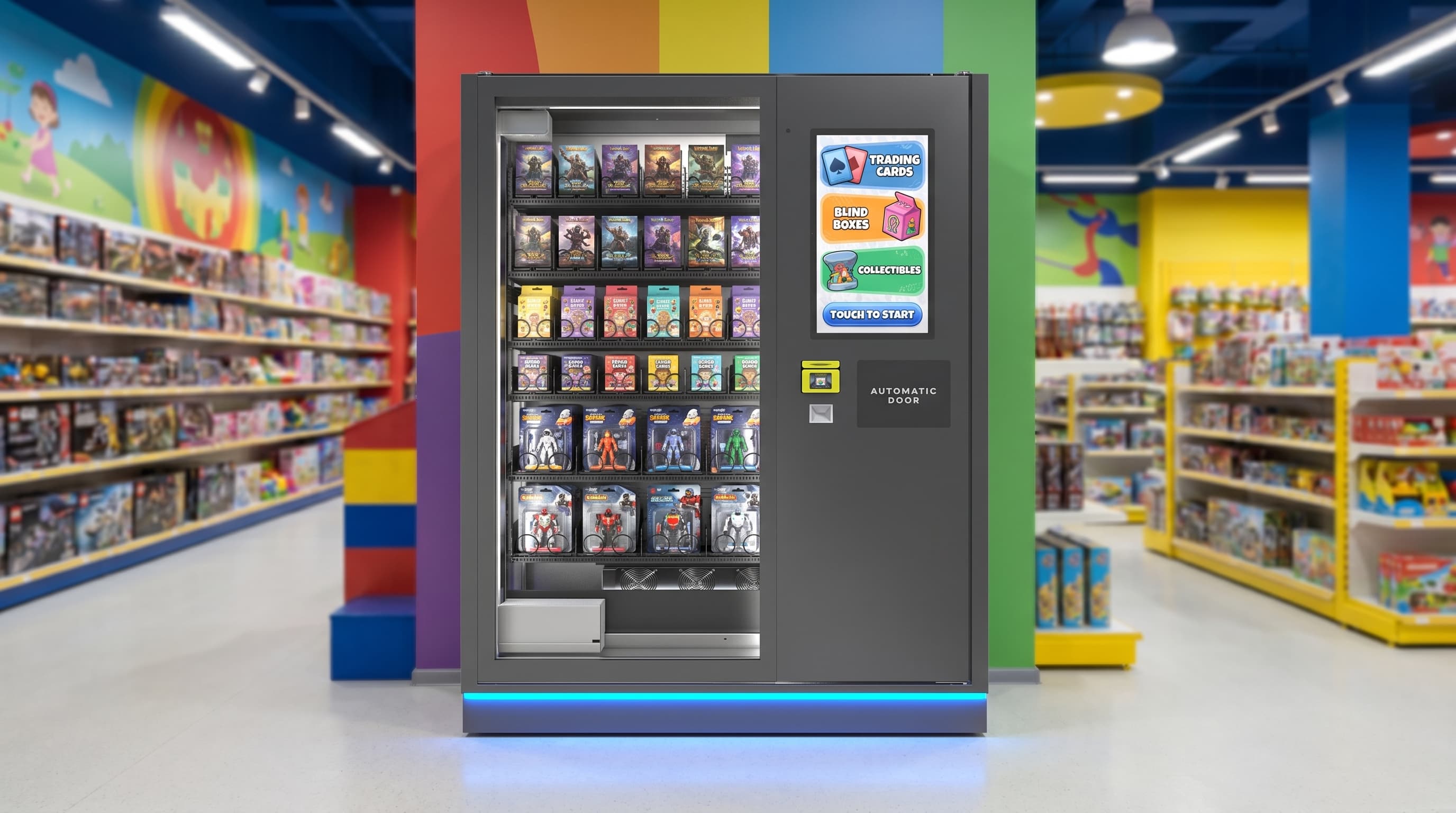
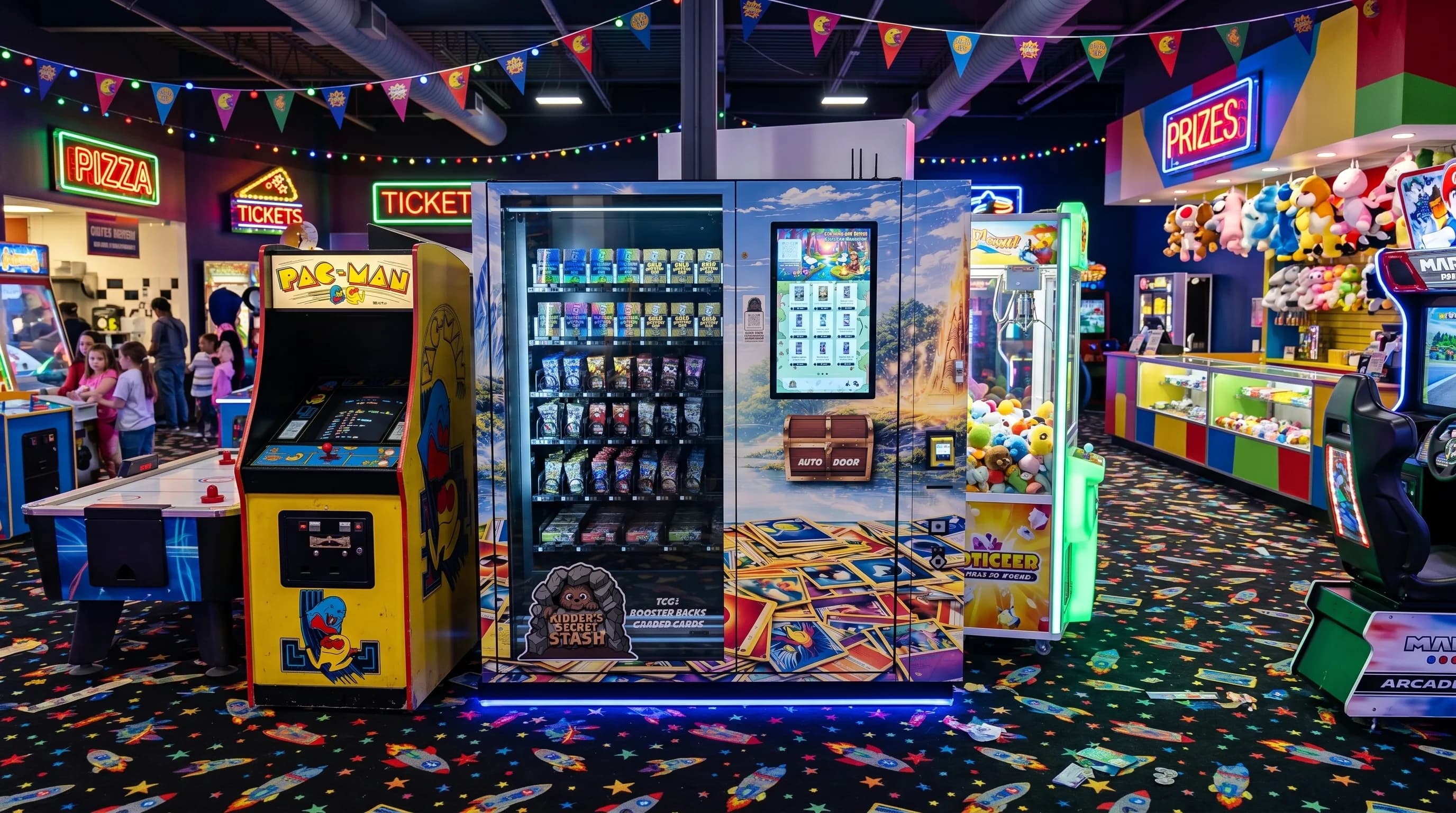
A capsule, a sealed card pack, and a boxed collectible are three different handling problems. Calling all three “toys” does not establish that they belong in the same vending configuration.
Choose equipment by working backward from the products and the purchase experience you want to provide. Then test each stock-keeping unit, or SKU, in its finished packaging before committing it to the assortment. This guide provides a format-selection process and a repeatable SKU test record, complementing the category discussion in our toy vending machines guide.
Start with the transaction the customer expects
Write down what a buyer is choosing. Is it a specified product, a sealed blind box from a named series, or a capsule containing an assortment item? Does the customer select a particular SKU, a product series, or simply one item from a disclosed mix?
Those differences affect the dispensing arrangement, inventory records, and product information. A machine that releases a random capsule does not necessarily provide selection of a particular character. Conversely, a digital selection screen does not reveal which undisclosed variant is inside a sealed blind box.
Define the intended customer experience before comparing cabinets:
- What the buyer can choose and what remains unknown.
- How many items each purchase contains.
- The package condition the buyer should receive.
- The information needed before payment.
- How a failed delivery, damaged package, or incorrect selection will be handled.
Avoid starting with a claim that premium products always require custom equipment. A suitable existing configuration may work; another product may need adaptation or a different format. Testing determines the fit.
Compare complete delivery systems, not labels
Use this table to frame a supplier discussion, not as a compatibility guarantee.
| Format or mechanism | Candidate products to evaluate | Important test question |
|---|---|---|
| Capsule dispenser | Products enclosed in compatible capsules | Does the capsule size and loaded mixture dispense as intended? |
| Coil-based configuration | Suitable packs, bags, or boxes | Does the actual package advance and arrive in acceptable condition? |
| Belt-based shelf transport | Packages suited to the specific shelf arrangement | What happens after the package leaves the belt? |
| Elevator-assisted delivery | Products needing a controlled transfer path | Do pickup, transfer, and retrieval work with the actual package? |
| Compartment-based retail | Items assigned to compatible compartments | Does selection, payment, access, and inventory handling match the intended sale? |
A conveyor and an elevator describe different parts of a delivery system; they are not interchangeable guarantees of drop-free handling. Coils do not inevitably damage packaged toys, and a machine marketed for collectibles does not automatically protect every box.
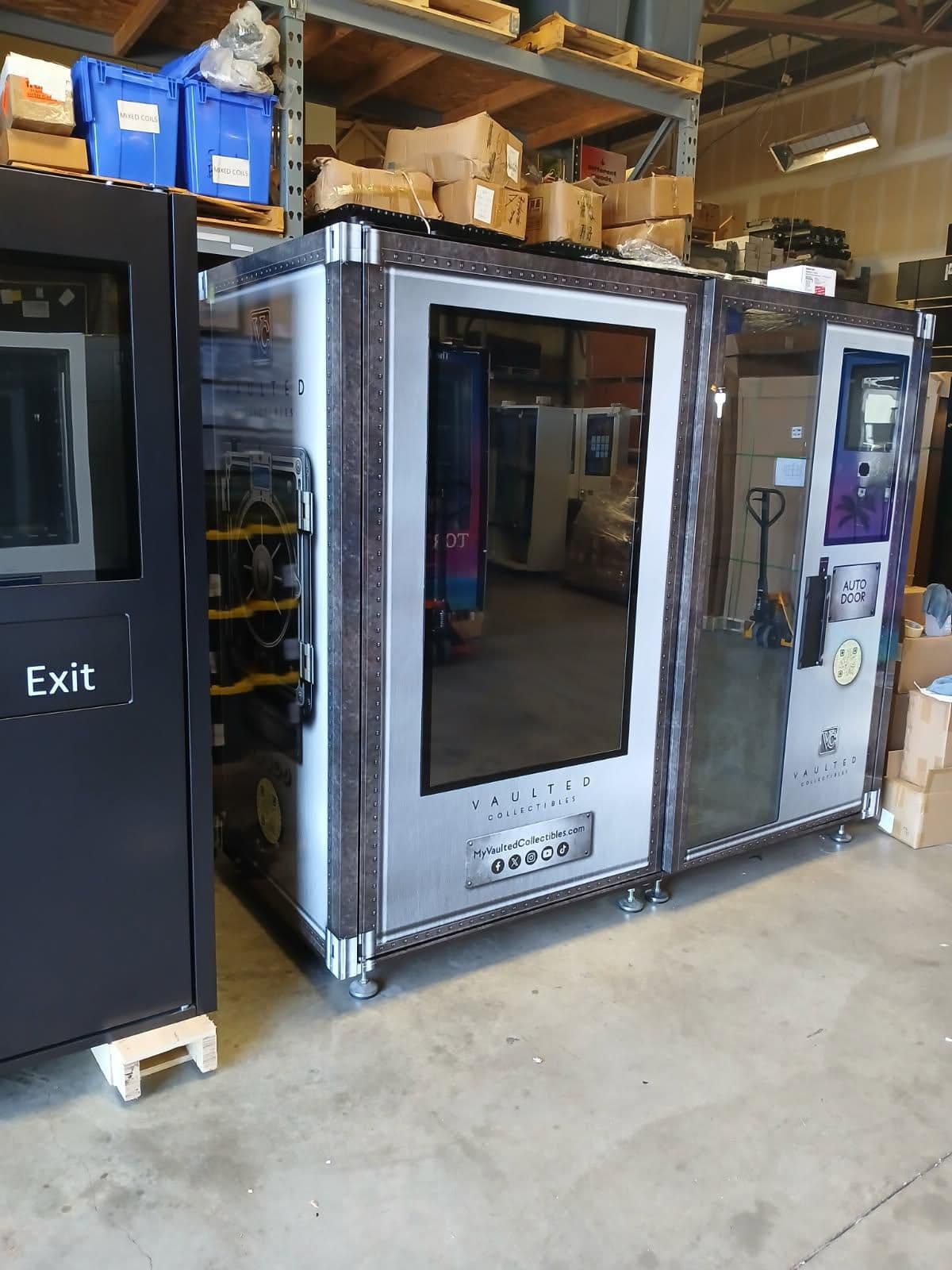
Wall-mounted versus freestanding describes installation format, not the dispensing mechanism. Confirm both. Do not assume a wall unit has the same product capacity, delivery path, or installation requirements as a larger cabinet.
Create a SKU qualification sheet
For every proposed item, collect finished samples from the intended supplier. Record outer dimensions, weight, package material, seals, hanging tabs, and any irregular or compressible parts. Include the manufacturer or supplier identifier and package revision so the tested item can be traced.
Look beyond whether the product physically fits:
- A flexible bag may fold differently from a rigid box.
- A blister pack may have edges or tabs that catch.
- A plush item may change shape under compression.
- A collector box may remain functional while suffering unacceptable cosmetic damage.
- A supplier may change packaging without changing the product name.
Ask the equipment supplier which variations must be tested. Do not assume one successful sample qualifies an entire toy category or every release in a series.
Test loading, dispensing, and retrieval as one workflow
Agree on the test quantity, loading conditions, and acceptance criteria with the supplier. Include the stock positions and loading levels relevant to the intended setup. A single successful demonstration is not evidence of a known long-term failure rate.
Use a record that another operator can follow:
| Field | Example of the information to capture |
|---|---|
| Test identity | Date, SKU, package revision, and exact machine configuration |
| Loading setup | Position, orientation, spacing, and stock level |
| Attempt result | Correct item delivered, failed delivery, or multiple delivery |
| Condition | Seal intact, box condition, and visible product damage |
| Customer retrieval | Package accessible through the intended retrieval area |
| Recovery | Adjustment or service action, then retest result |
| Decision | Accepted combination, revision required, or not suitable |
Keep unsuccessful results as well as successful ones. If an adjustment solves a problem, document the final setting so replenishment staff can reproduce it. Agree how the accepted setup will be checked on the delivered machine.
Make product listings accurate and useful
Use images that match the stocked series or product. Clearly distinguish a specific item from a blind assortment; a collection image should not imply that every pictured item is included in one purchase.
Check legitimate sourcing and your rights to use product images, logos, or character artwork. Do not imply an endorsement or licensing relationship between a merchandise brand, the operator, and DMVI™ merely because its products are stocked.
For sealed mystery products, rely on substantiated supplier information and review applicable disclosure requirements. Do not invent rarity odds, guaranteed values, or promises that repeated purchases will complete a collection. Buying more sealed boxes can still produce duplicates.
Check the product's age grading, warnings, and applicable safety requirements with the supplier and responsible compliance advisers. Do not describe a product as suitable for young children simply because it is small or sold through a toy machine. Plan how required information will be available to the buyer.
Plan assortment changes as controlled updates
Keep a versioned loading map showing which product belongs in each position. Before introducing a new series, confirm that its packaging matches a qualified combination or arrange fresh testing. Update the physical stock, selection labels, images, price, and inventory records together, using the functions actually supported by the selected system.
Do not assume software can identify the hidden character inside a sealed box. Track the sellable SKU at the level the supplier and system support. Verify any remote listing, inventory, or configuration feature in the quote and demonstration rather than assuming it is included.
Use actual operating records to decide what to keep:
- Sales by SKU while the item was available.
- Stockouts and replenishment intervals.
- Failed deliveries and packaging complaints.
- Returns, refunds, and unsold stock.
- Time spent loading, servicing, and supporting customers.
Change a limited part of the assortment at a time where practical. Record changes in price, location access, promotions, and product availability so you do not mistake every sales movement for a change in product popularity.
Check site access and total cost before buying
Confirm the venue's permission, product restrictions, actual customer access hours, replenishment access, and any location charges. Unattended equipment does not make a closed shop accessible after hours. Assign customer support and maintenance responsibilities; toy vending still requires operating work.
Build the budget around the quoted equipment and tested assortment. Include inventory, unsold stock, packaging, venue charges, processing, labor, delivery, installation, software, connectivity, insurance, and service where applicable. Do not treat a revenue range from another operator as a minimum or a forecast for your site.
DMVI's standard machine financing requires a 25%–50% machine-value deposit. Shipping, the payment terminal, annual software license, wrap, and selected topper are separately priced and paid upfront as applicable, along with applicable taxes and quoted extras. The quoted interest rate is 8%–15%, depending on repayment ability and other approval conditions. The remaining machine balance is paid in 12 monthly payments beginning 30 days after shipment.
The written quote and agreement specify the interest calculation, total charge, and payment amounts. Financing is discretionary; a UCC filing applies and a personal guarantee may be required. DMVI no longer offers all-inclusive leases. The AI fridge program is separate and does not inherit these standard terms.
Finish with an approved assortment, not a category assumption
The useful result of equipment selection is a documented list of products, packages, loading arrangements, and customer-facing information that work together. It is not a blanket assertion that a machine can sell any toy or that a particular category guarantees demand.
Contact DMVI with your sample products, proposed assortment, location details, and acceptance requirements to discuss a configuration and testing scope. Keep that qualification process in place as the assortment changes.
Discuss your project with DMVI
Bring your product samples, site requirements, and intended customer experience to the conversation.