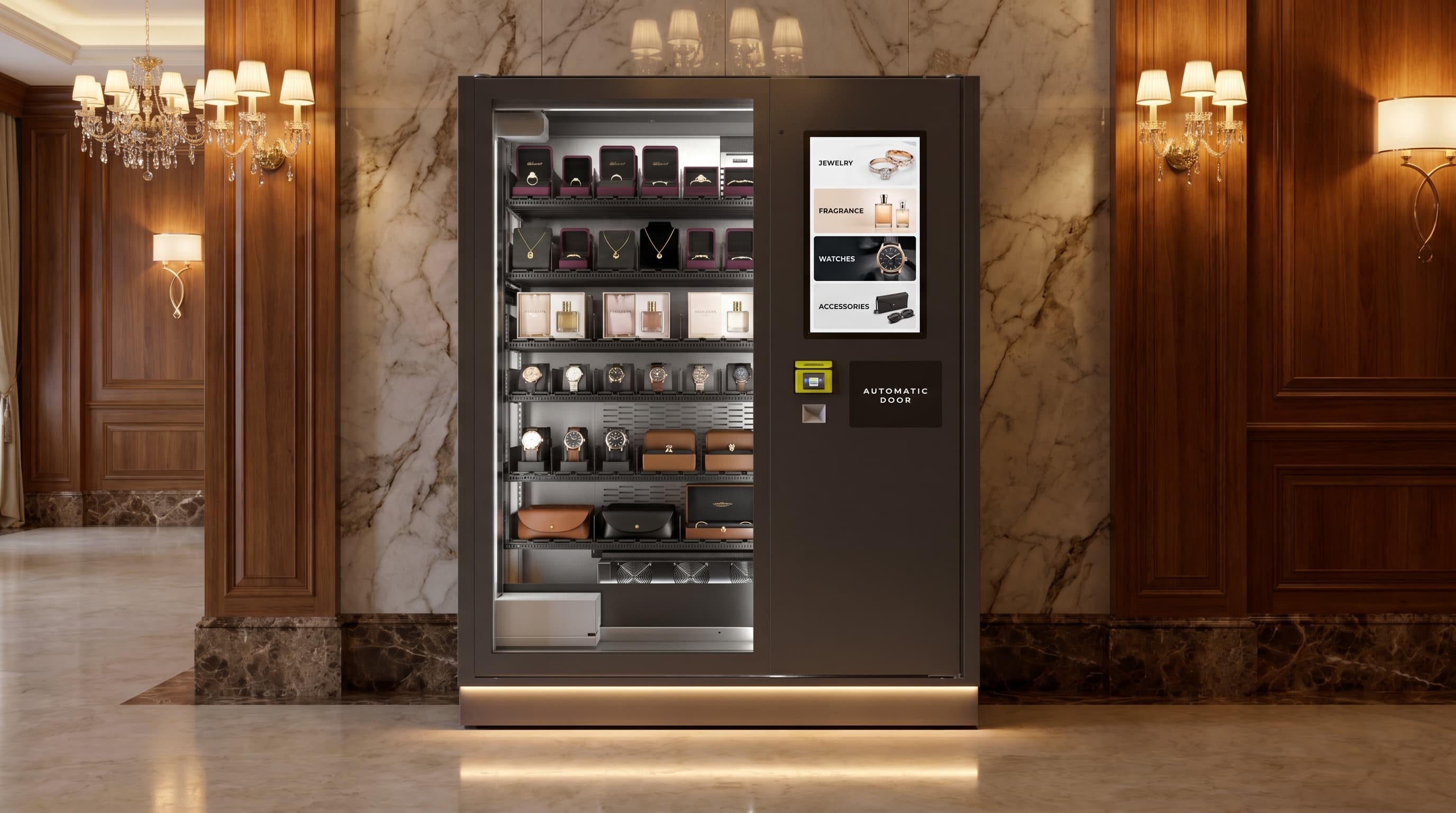
Jewelry Vending Machines: A Packaging Validation and Launch Checklist
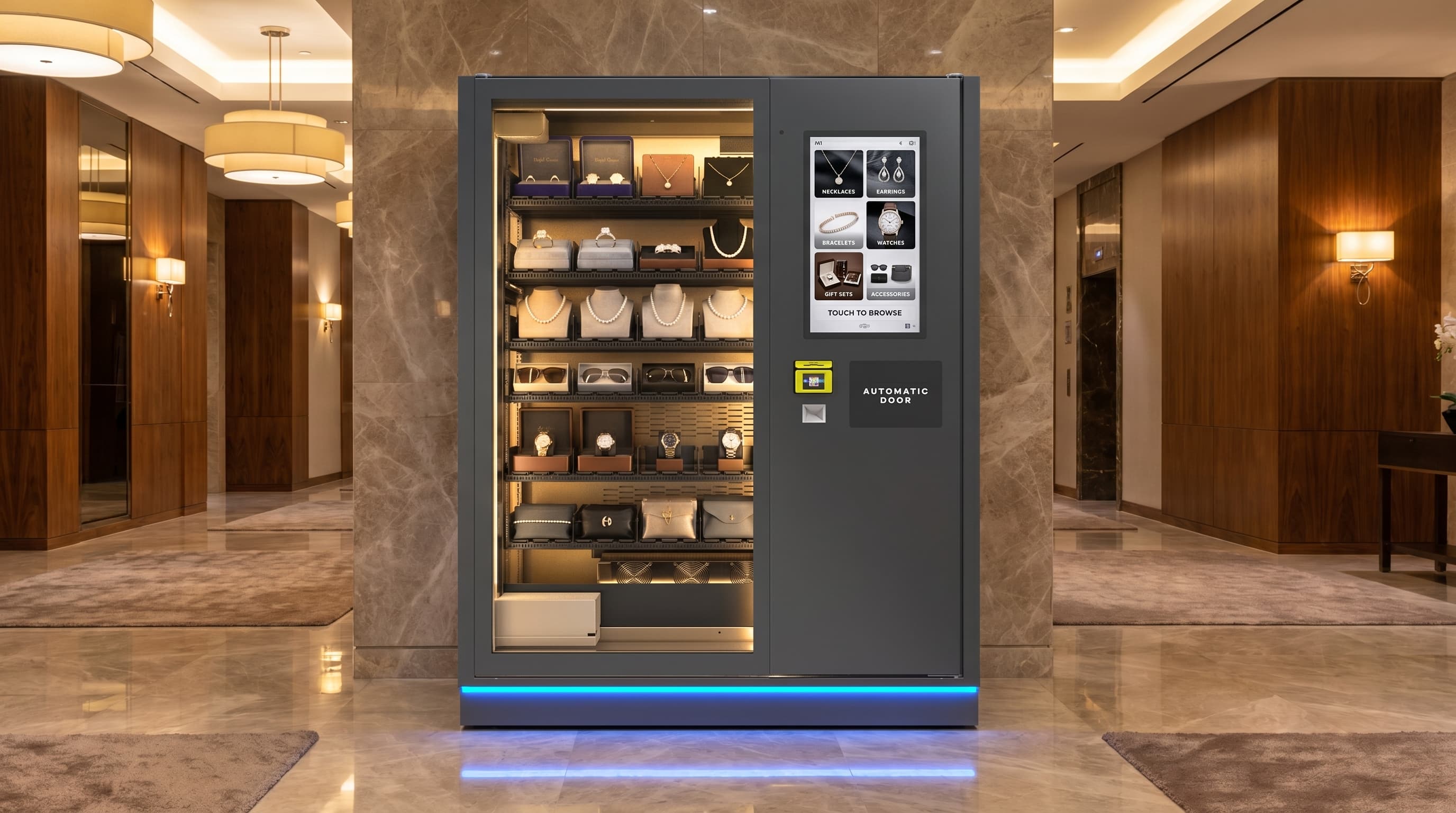
Before choosing a jewelry vending machine, test the complete retail package—not just the necklace, bracelet, or ring inside it. A piece that looks right in a display can still shift inside its box, catch during dispensing, or reach the customer with a damaged presentation case.
This checklist takes an operator from product samples to a documented launch decision. It focuses on packaging, delivery, customer information, and operating responsibilities rather than predicting which venue or price point will sell best. Our jewelry vending machines article introduces the broader retail concept; the next step is validating your specific assortment.
1. Build a sample record for each product
Give each proposed product and package combination its own record. The same bracelet in a different box may need another test, even if its stock-keeping unit, or SKU, has not changed.
Record:
- Product identifier, supplier, and package revision.
- Outer dimensions and weight, including sleeves, labels, and seals.
- Package material, rigidity, opening method, and any projecting tabs.
- How the jewelry is restrained inside the package.
- Required orientation and acceptable delivery condition.
- Product photographs and the information shown before purchase.
Use finished retail samples, not empty substitute boxes. Check for loose chains, detached earrings, shifting inserts, and closures that can open during handling. A protective outer carton may solve a handling problem but change the dimensions, presentation, and cost; test the revised package as a new combination.
2. Confirm the entire dispensing path
Ask the supplier to show how the exact package moves from its loaded position to the retrieval area in the proposed configuration. Shelf transport and final delivery are separate steps. A conveyor moving a box forward does not, by itself, establish that the box reaches the customer without a drop.
Do not assume all jewelry requires an elevator or that every coil mechanism is unsuitable. Suitability depends on the package, mechanism, loading arrangement, and accepted delivery condition. An elevator or compartment-based configuration may be worth evaluating, but its label is not a guarantee against damage.
Request confirmation of the actual cabinet, dispensing mechanism, usable package limits, and retrieval opening. If the plan depends on a viewing window, lighting, or a particular display, identify those features in the quote rather than inferring them from another model's photograph.
3. Agree on a test and acceptance record
Set the test procedure and acceptance criteria with the supplier before ordering. Include representative samples and the package variations you expect to receive. Agree on the number of trials and loading conditions; there is no universal trial count that proves every jewelry package will work reliably.
| Check | What to record |
|---|---|
| Loading | Orientation, position, spacing, and approved adjustments |
| Dispensing | Attempts, successful deliveries, jams, and unintended multiple deliveries |
| Retrieval | Whether the buyer can remove the package without opening the cabinet |
| Presentation | Box condition, seal integrity, insert position, and jewelry condition |
| Recovery | Staff action required after a failure and any affected customer transaction |
Inspect delivered samples rather than judging only from a demonstration video. Keep photographs of acceptable and unacceptable results. Retest after changes to the package, supplier, loading arrangement, or relevant machine configuration.
A successful test supports approval of the tested combination. It does not establish compatibility with every item you may stock later.
4. Make the listing match the item delivered
Customers cannot ask a sales associate to explain a clasp, check a ring size, or compare materials. Provide the information needed to understand the actual item before payment.
Use accurate photographs and clear descriptions of size, quantity, materials, finish, and what is included. Substantiate claims such as precious-metal content, gemstone identity, hypoallergenic properties, or branded authenticity; do not turn a supplier's vague description into a stronger promise.
For size-dependent products, make the selected size unambiguous and test that the selection maps to the correct stock position. If selling a surprise assortment, explain what is and is not specified before purchase. Do not show a particular item as guaranteed when the customer may receive something else.
Confirm rights to use third-party logos and images. Stocking a branded product does not establish a partnership between its brand, the operator, and DMVI™.
5. Plan security and customer support at the site
Review the proposed inventory value, cabinet access, key control, replenishment procedure, and incident response with the property manager and relevant providers. Confirm any specified locks, alarms, or monitoring features in writing. No generic machine format makes a deployment theft-proof or establishes insurance coverage.
Agree who reconciles stock, investigates a discrepancy, and responds when a buyer reports a failed delivery or damaged item. Make the operator's support contact and applicable return or refund policy easy to find. Test the supported payment and refund workflow before launch; do not assume a failed vend automatically produces a refund.
Also confirm customer access hours. A machine inside a locked hotel shop or closed mall is not publicly accessible simply because the equipment can operate unattended.
6. Separate product margin from business profit
Use tested demand and an itemized budget, not a venue ranking or an assumed daily sales target. For a simple hypothetical calculation, suppose a product sells for $45 and its product cost is $15. That leaves $30 in product gross profit per sale, a 66.7% product gross margin rounded to one decimal place.
| Hypothetical volume over 30 trading days | Gross sales | Product cost | Product gross profit |
|---|---|---|---|
| 5 sales per day: 150 sales | $6,750 | $2,250 | $4,500 |
| 8 sales per day: 240 sales | $10,800 | $3,600 | $7,200 |
These are arithmetic examples, not observed results or forecasts. Product gross profit is not net income or available owner cash. Account for packaging costs not included in product cost, venue charges, processing fees, returns, losses, insurance, labor, travel, software, connectivity, maintenance, and other applicable expenses. Separately plan equipment purchases, deposits, taxes, and financing cash flows. This table is not a payback or ROI model.
DMVI's standard machine financing requires a 25%–50% machine-value deposit. Shipping, the payment terminal, annual software license, wrap, and selected topper are separately priced and paid upfront as applicable, along with applicable taxes and quoted extras. The quoted interest rate is 8%–15%, depending on repayment ability and other approval conditions. The remaining machine balance is paid in 12 monthly payments beginning 30 days after shipment.
The written quote and agreement specify the interest calculation, total charge, and payment amounts. Financing is discretionary; a UCC filing applies and a personal guarantee may be required. DMVI no longer offers all-inclusive leases. The AI fridge program is separate and does not inherit these standard terms.
7. Use a launch gate, then review actual results
Before opening, confirm that the accepted packages match the delivered stock, selections match inventory positions, prices and descriptions are correct, and the support process works. Obtain the venue's authorization and record replenishment and service responsibilities.
During the initial operating period, track deliveries, package-condition complaints, returns, stock discrepancies, sales, and operating effort. Record availability alongside sales: a sold-out product and a fully stocked product did not have the same opportunity to sell.
Stop offering a package that repeatedly fails until the cause is resolved and the revised combination is tested. Expand the assortment only when the new products meet the same checks.
Bring samples to the equipment discussion
An attractive jewelry concept becomes a more useful equipment brief when it includes real packages, acceptance criteria, product information, and a site operating plan. Contact DMVI with those details to discuss a configuration and sample-testing scope. The aim is to establish what works for your products before committing to a launch.
Discuss your project with DMVI
Bring your product samples, site requirements, and intended customer experience to the conversation.