Used Vending Machines: An Inspection and Total-Cost Worksheet
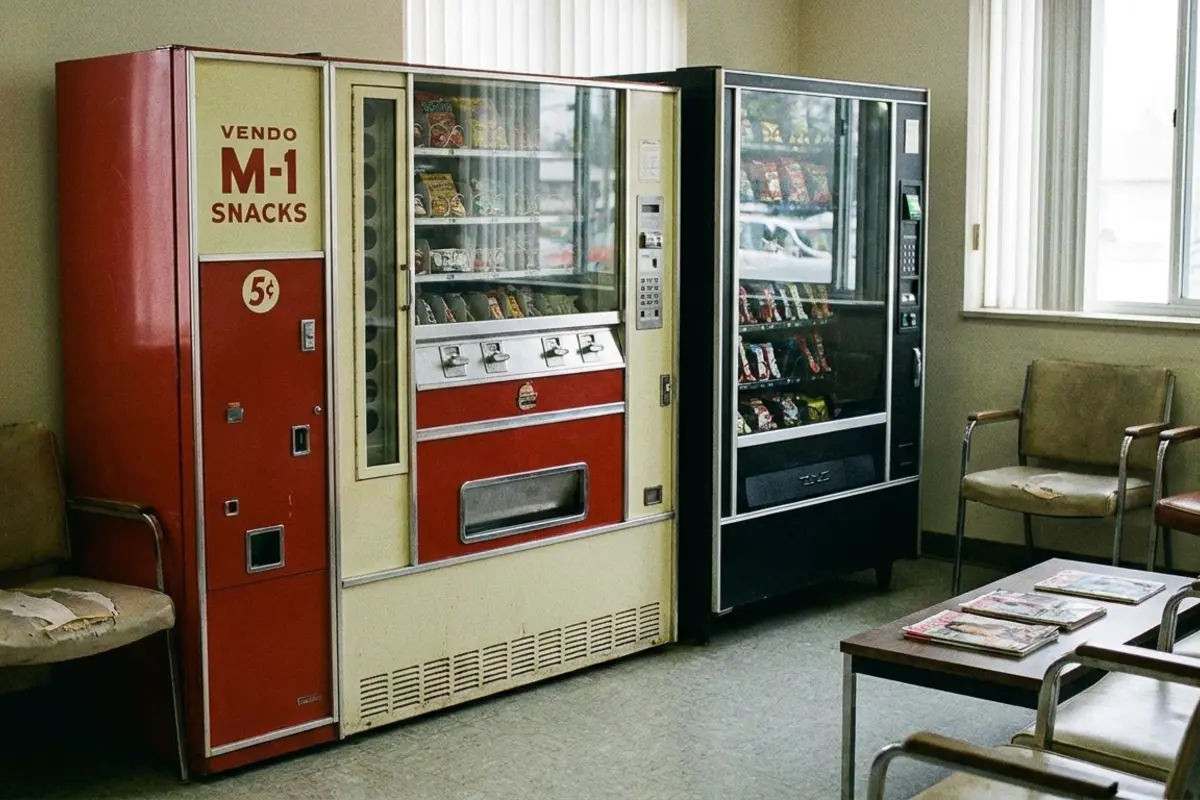
A used vending machine may be a sensible purchase. It may also need repairs, account transfers, or transport arrangements that change the apparent bargain. The decision depends on the actual machine, its condition, and the job it must perform—not simply whether it is new or used.
Used equipment can have cashless payment, remote management, and warranty coverage. New equipment can have separately priced options and service exclusions. Compare documented configurations rather than assuming that age determines every capability.
For the broader purchasing decision, see new vs. used vending machines. This guide provides a practical inspection sequence and a cost worksheet for evaluating a specific listing against a new-machine quote.
Identify the asset before discussing the price
Request photographs of the model and serial labels, the interior, the delivery area, and any visible damage. Obtain the age where documented, maintenance records, repair history, manuals, keys, and a list of included accessories.
Establish the seller's authority to sell the machine. Clarify whether the terminal or any other component is leased, financed, or owned by another party, and obtain appropriate documentation for the transaction. Buying equipment does not automatically transfer a location agreement, customer accounts, software rights, or an existing merchant-processing arrangement.
Write the included items into the sale terms. “Working machine” is too vague to settle whether software access, payment hardware, delivery, or a missing key is included.
Arrange an inspection suited to the equipment
Have a qualified technician inspect electrical, refrigeration, and other systems that require specialist assessment. Do not remove protective covers, bypass safety devices, or improvise electrical tests to evaluate a listing.
Inspect the cabinet, doors, locks, hinges, seals, shelves, delivery path, and signs of corrosion or water damage. For temperature-controlled equipment, request a documented performance check against the manufacturer's specifications and the intended product requirements. A brief display reading does not establish reliable performance under operating conditions.
Ask which parts are still available and what known defects will cost to repair. Get written estimates where practical. If the seller will not allow a meaningful inspection, treat the missing evidence as unresolved risk rather than assuming the machine works.
Test your products and the customer journey
Use the intended retail packages in the proposed arrangement. Check selection, payment, dispensing or access, retrieval, and the transaction record. Agree with the seller on an authorized way to test cancellations, failed deliveries, and refunds.
Test more than a convenient sample item. Variations in package dimensions, weight, or rigidity can change performance. Record the tested products, loading arrangement, failures, damage, and agreed corrective work.
Coil equipment is not limited to ordinary snacks, and a belt or elevator is not a universal guarantee of gentle handling. What matters is whether the specific machine can reliably handle the assortment you intend to sell.
Verify accounts, licenses, and connectivity
A working card reader on the seller's account is not proof that it can be transferred to yours. Before purchase, confirm the terminal's status and onboarding requirements with the relevant provider through its supported process. Clarify compatibility, activation costs, processing fees, connectivity, and any outstanding obligations affecting transfer.
For management software, establish whether the license is transferable, whether the model remains supported, and what features and fees apply after the sale. Request your own authorized account rather than relying on the seller's credentials. Plan the appropriate removal of the previous owner's access and data.
If a retrofit is needed, obtain a compatibility assessment and an installed quote. Do not budget only for a reader and assume the controller, wiring, software, and account setup are already suitable.
Price the move and the return to service
Record the machine's dimensions and weight, access restrictions at both sites, required handling equipment, and who is responsible for loading, transport, placement, and commissioning. Confirm the manufacturer's transport instructions, especially for refrigerated equipment.
Check the destination's power, connectivity, clearances, floor or mounting requirements, and permitted operating environment. An indoor machine does not become outdoor-approved because a roof covers it.
Confirm warranty and return terms in writing, including parts, labor, shipping, time limits, and exclusions. Some used sales include dealer or refurbished-equipment coverage; some do not. Neither “used” nor “new” tells you the full remedy if the machine fails.
Build two comparable worksheets
First compare the cost to acquire and prepare each option. Then compare operating costs over the same chosen period. Use the same product requirements, location, access assumptions, and service expectations for both.
| Cost category | Used-machine evidence | New-machine evidence |
|---|---|---|
| Equipment and required options | Sale terms and included-item list | Itemized configuration quote |
| Inspection and repairs | Technician findings and repair estimates | Any commissioning work outside the quoted scope |
| Payment and software setup | Transfer or retrofit quotes | Hardware, activation, and license charges |
| Delivery and installation | Handling, freight, and site-work quotes | Included scope and separately quoted work |
| Recurring ownership costs | Applicable software, connectivity, service, and repair allowance | Applicable software, connectivity, service, and repair allowance |
| Operating costs | Stock, labor, processing, utilities, venue costs, insurance, and waste | The same categories using the proposed configuration |
Include applicable taxes and avoid counting an item twice when it appears in a bundled quote. Identify unknowns rather than entering zero. A repair allowance is a planning assumption, not evidence that failures will stop at that amount.
For a simple hypothetical acquisition example, suppose a used machine costs $1,500, inspection and repairs cost $600, payment setup costs $500, and transport and commissioning cost $700. The subtotal is $3,300—not $1,500. Those figures are illustrative, not current market prices. They exclude tax, opening stock, site work, licenses, operating expenses, and other applicable charges, so they are not a complete launch budget or a payback forecast.
Keep financing separate from equipment cost
Do not compare the full price of a used machine with one installment on a new machine. Compare total acquisition costs, then show when cash is due under each payment arrangement.
DMVI™ standard machine financing requires a 25%–50% deposit on the machine value. Shipping, the payment terminal, the annual software license, the wrap, and any selected topper are separately charged and paid upfront, as applicable. The quoted interest rate is 8%–15%, depending on ability to repay and other approval conditions. The remaining machine balance is repaid in 12 monthly payments, starting 30 days after shipment. The written quote and agreement establish the interest calculation, exact amounts, applicable taxes, and other charges. There is no universal installment or all-inclusive lease. The AI-fridge program is separate and does not inherit these standard terms.
For a financed option, record the deposit, upfront charges, installment dates, total financing charge, and any balance remaining at the end of your comparison period. Do not add the full machine purchase price and principal repayments as if they were separate costs. Unknown interest calculations should remain unresolved until the lender or supplier supplies the schedule.
Make the decision from fit and verified costs
Buying new does not establish a revenue forecast, and buying used does not impose a universal earnings ceiling. Demand, product suitability, pricing, access, replenishment, and uptime all affect the outcome. Gross sales are not net income.
A used machine is a credible option when its condition, supported features, transfer requirements, and complete costs fit the operation. A new machine may be preferable when the required configuration, documented support, or reduced uncertainty justifies the difference. Neither conclusion should rest on a single sticker price.
Bring the intended assortment, site requirements, and comparison worksheet to DMVI for a new-machine proposal you can assess against the specific used equipment under consideration.
Discuss your project with DMVI
Bring your product samples, site requirements, and intended customer experience to the conversation.