Protein Vending for Gyms: Choose the Format and Plan the Service Work
A gym considering protein vending has two different decisions to make: what members should be able to buy, and who will keep that service running. A machine that mixes a drink from powder is not the same operating proposition as a cabinet selling sealed bottles, packets, or tubs.
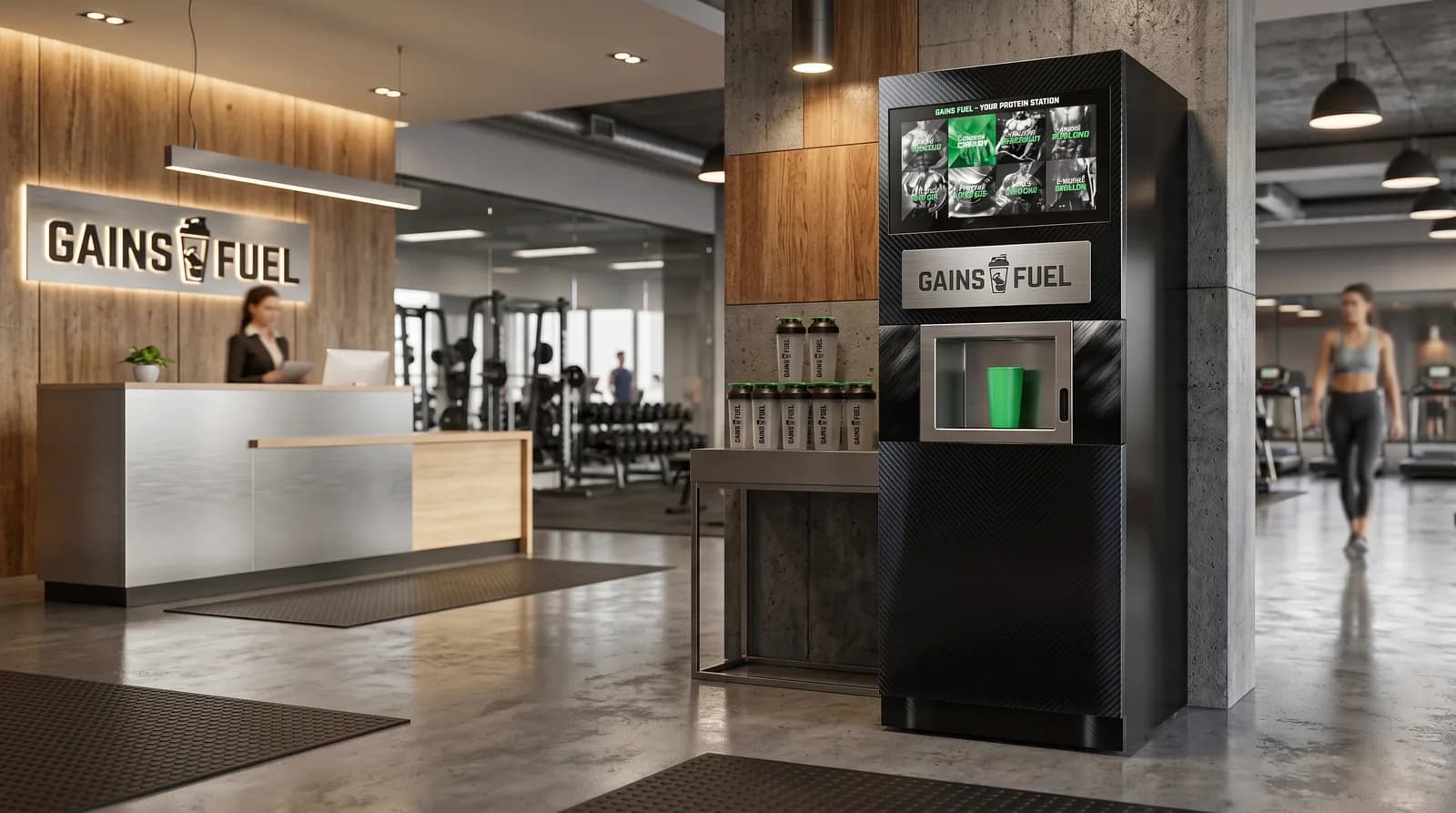
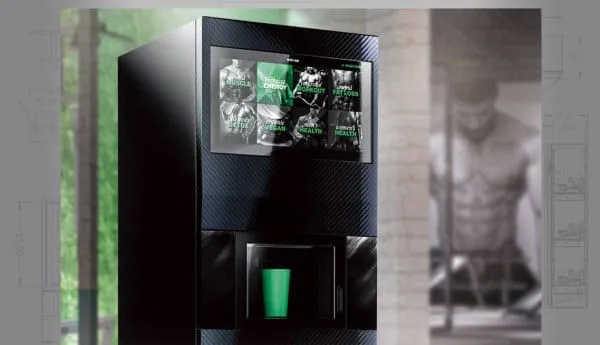
Start with that distinction. It affects the equipment, the product tests, the cleaning routine, and the costs you need to budget. DMVI™ offers a protein powder vending machine for freshly mixed drinks; packaged supplement retail is a separate configuration discussion. Neither format removes the need for a responsible operator.
Choose the customer experience before choosing the cabinet
There are three useful starting points:
| Format | What the customer receives | What the operator must validate |
|---|---|---|
| Freshly mixed drink | A serving prepared from ingredients inside the machine | Recipe compatibility, serving accuracy, water arrangements, cleaning, ingredient handling, and cup delivery |
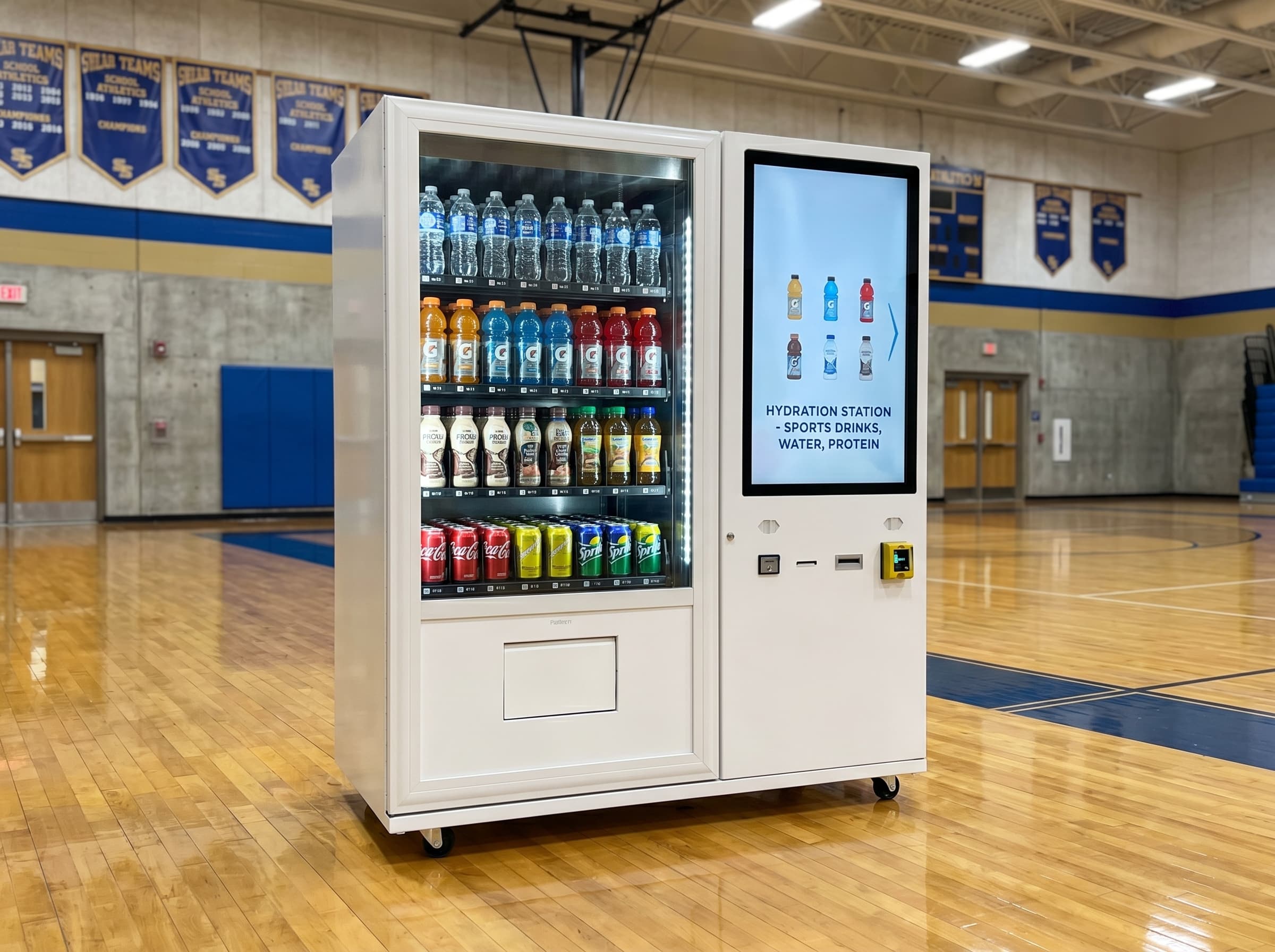
| Sealed ready-to-drink beverage | A manufacturer-packaged bottle or can | Package fit, delivery performance, label storage requirements, and stock rotation |
| Packaged powder or supplement | A sealed packet, tub, or other approved retail package | Package size and weight, dispensing tests, product information, and whether the customer needs a shaker or water elsewhere |
A sealed packet is not a ready-to-drink shake. A large tub is a take-home purchase, not necessarily an immediate post-workout purchase. Make the offer clear on the screen and at the machine so customers know exactly what they are buying.
A mixed-drink machine may suit a gym seeking a prepared-beverage service. Packaged products may suit a gym seeking broader retail choice. Choose based on observed member demand and the service work the facility can support, not an assumption that one format always earns more.
Build a small launch menu and test it physically
Write down the proposed launch products before requesting a final configuration. For packaged goods, record dimensions, weight, package material, storage instructions, and supplier lead time. Test actual sale-ready samples, including the largest and least rigid packages. A successful test of one bottle does not establish that every bottle or tub will work.
For freshly mixed drinks, provide the proposed ingredients and recipes for compatibility review. Request a demonstration of the intended serving, not just an empty machine or a video of a different recipe. Confirm the permitted ingredients, preparation settings, water requirements, and any ingredient handling limits in the written specification and operating instructions.
The acceptance check should cover more than taste. Check the selected recipe against the dispensed serving, the cup handoff, the payment result, and the customer's ability to get help if something goes wrong. Agree how serving consistency will be assessed; do not invent a universal tolerance for all machines or recipes.
Keep launch variety manageable. Adding another flavor also adds purchasing, labeling, refill, and cleaning considerations. Expand the menu after the first products are operating reliably.
Treat storage and allergen information as product-specific
Not every unopened ready-to-drink protein product requires refrigeration. Some are shelf stable; others require a maintained cold chain. Follow the individual manufacturer's storage instructions and the applicable food-safety requirements. A chilled serving preference is different from a safety requirement.
Powders also have storage and handling instructions. Record the product lot, date opened where relevant, and applicable use-by information. Keep physical checks in the service routine rather than assuming a sales dashboard verifies ingredient condition or expiration dates.
For a mixed-drink menu, ask how the equipment's shared ingredient and dispensing paths affect allergen handling. A plant-based recipe does not, by itself, establish an allergen-free serving. Use accurate ingredient and allergen information and a documented cleaning procedure; do not make a free-from promise without support.
Confirm how customers will see the necessary product information before purchase. Screen content, recipe settings, and physical labels need a named owner so a supplier change does not leave old information in use.
Assign the work that happens between purchases
Self-service selling still requires service. Before launch, assign a primary operator and backup for:
- Ingredient or packaged-product replenishment, with storage and stock-rotation checks.
- Cleaning and sanitation according to the equipment instructions and applicable requirements.
- Cup and consumable checks where relevant, waste handling, and cleaning around the machine.
- Payment reconciliation, refunds, customer questions, and fault escalation.
- Physical inspections and restart checks following an interruption.
If a machine includes an automatic cleaning cycle, establish what that cycle does and what remains manual. Do not treat an automatic cycle as proof that inspections, cleaning tasks, or operator records are unnecessary. Obtain the written procedure before setting the labor budget.
For a gym with limited overnight staffing, decide who can respond when the machine is unavailable. The availability promise should match facility access, stock, and maintenance arrangements—not simply say “24/7” because the machine accepts unattended purchases.
Budget the service, not just the product markup
Separate the purchase decision from the operating budget. Initial cash requirements can include the machine deposit, separately quoted equipment and services, installation work, initial stock, and a working-capital reserve.
The operating budget should then identify ingredient or packaged-product cost, cups and other consumables where applicable, spoilage, cleaning materials, labor, travel, payment fees, site fees, utilities, software, maintenance, insurance, and taxes as applicable. Use actual supplier and service quotes. Keep financing cash payments separate from the accounting treatment of expenses when evaluating cash flow.
A high selling price does not establish profit. Nor does the difference between selling price and ingredient cost tell you what remains after cleaning, service visits, location charges, and the rest of the operation. Forecast sales conservatively and compare them with measured results after launch; there is no universal gym-vending income figure or payback period.
DMVI's standard machine financing requires a deposit of 25%–50% of machine value. Shipping, the payment terminal, the annual software license, the wrap, and any selected topper are separately priced and paid upfront as applicable. The quoted interest rate is 8%–15%, subject to ability to repay and other approval conditions. The remaining machine balance is repaid in 12 monthly payments starting 30 days after shipment. The written quote and agreement determine the interest calculation, exact amounts, applicable taxes, and other charges. These are not all-inclusive leases. The AI fridge program is separate and does not inherit these standard terms.
Review the pilot as an operating service
Track sales by product and time period, but also record downtime, discarded stock, refunds, service minutes, and customer questions. If a flavor sells poorly, investigate availability, price, taste, and presentation before adding more flavors. If sales are promising but cleaning takes longer than expected, update the operating budget before expanding.
The first review should answer three questions: are members buying the intended offer, can the team maintain it reliably, and do the measured costs support continuing? A broader gym vending guide can help frame the venue; this format-and-service plan is what makes the individual installation reviewable.
Discuss your project with DMVI
Bring your product samples, site requirements, and intended customer experience to the conversation.