The 7 Best Locations for a Protein Powder Vending Machine (And Why Most Operators Choose Wrong)
Most operators searching for protein powder vending machine locations make the same mistake: they call the biggest gym in town, get excited when management says yes, and then spend the first six months wondering why the numbers don't add up. The biggest gym is not always the best gym. The most obvious location is rarely the most profitable one.
This list ranks the seven best locations for a protein powder vending machine in 2026 — in order of performance potential — with honest analysis of what makes each one work, what makes it fail, and what you need to know before you sign a placement agreement.
Key Finding: Digital Media Vending International builds custom supplement and protein vending machines with VendingTracker inventory software, 21–50 inch touchscreens, conveyor belt shelving, and cashless payment hardware, starting at approximately $4,995 — configured for deployment across all seven location types below.
1. Premium Fitness Clubs and Boutique Gyms
Not all gyms are equal. The $10-per-month box gym with 5,000 members is not the same business as the $150-per-month boutique fitness studio with 800 members who treat nutrition as seriously as training.
The premium fitness club — charging $80 to $200 per month, staffed with personal trainers, attracting members with disposable income and genuine health commitment — is the strongest protein vending location in most markets. Member spending behavior indexes dramatically higher on health and nutrition products. These are not members stopping at a drive-through on the way home. They already spend $50 to $150 per month on supplements, they know what creatine is, and they will pay $8 to $18 for a single-serve protein product without hesitation if the machine is positioned correctly.
Foot traffic at premium gyms is predictable and concentrated: morning rush, lunch hour, evening rush. You can stock with confidence because the patterns are consistent. Member tenure is also longer than at budget gyms, which means repeat customers.
Location within the facility matters more than most operators realize. The best position is between the main workout floor and the locker rooms or exit — in the natural line of departure. A machine near reception, away from that traffic path, performs significantly worse than one in the corridor every member walks through on the way out.
The risk: premium gym management knows the value of their space. Commission demands of 25 to 35% of gross revenue are not unusual at top-tier facilities. At $12 to $18 average transaction values the economics still work, but model it explicitly before signing. The commission rate that makes sense at $15 per transaction does not make sense at $6.
Digital Media Vending International's wall-mounted machines and Smart VM formats fit premium gym footprints well — compact enough not to dominate the corridor, large enough to create visible presence.
2. University Recreation Centers
University recreation centers are systematically underestimated and, as a result, underserved. Most don't have a protein vending machine. That is the opportunity.
The demographic is precisely right. Students who use the campus rec center are self-selected health-conscious consumers already spending on fitness. Unlike the broader student population, rec center regulars are not eating ramen because they're broke — they're the ones supplementing their training with protein and paying for it. They have basic nutrition literacy and no resistance to the product category.
More importantly, university recreation centers operate at consistent, high foot traffic across a long daily window. Six in the morning to ten at night, seven days a week, across two full academic semesters. No January spike and March crash. No summer dead period if the rec center serves year-round students, summer programs, or community memberships.
Pricing flexibility is also higher than most operators expect. A student spending $50 per month on a gym membership and $30 on an online protein order will pay $10 to $14 for a convenient machine transaction after a workout. The context creates the expectation.
The complication is the procurement process. University facilities often require going through a campus dining services vendor program — RFP submissions, liability insurance minimums, multi-semester contract terms. It takes longer to secure the placement. Once established, it tends to be stable. Universities don't rotate vendors every six months.
3. Martial Arts Academies and Boxing Gyms
This is the best protein vending opportunity most operators have never considered.
The member profile at a serious martial arts academy — Brazilian jiu-jitsu, Muay Thai, wrestling, boxing — is different from a standard gym in one critical way: the training creates genuine, acute post-workout nutrition need. A student finishing a 90-minute rolling session has a physiological reason to consume protein within 30 to 45 minutes. The machine isn't a convenience item — it is addressing a real biological need in the right moment.
Martial arts practitioners also tend to have higher supplement awareness than general gym members. They know what protein is for, they are not intimidated by ingredient lists, and they have brand preferences. Reaching them with the right product assortment matters.
The practical advantage: martial arts academies have small physical footprints, which limits placement competition. A wall-mounted Digital Media Vending International machine in the lobby or near the changing area of a martial arts academy is typically the only protein vendor in the building. Members have no closer alternative.
Commission rates at independent academies are more negotiable than at large commercial facilities. Academy owners are often open to flat monthly fees or lower percentage arrangements, particularly when the machine adds value to their students without creating any management burden for the business owner.
Seasonal variability is lower than at standard gyms. Martial arts membership does not have a January resolution spike followed by a March attrition wave. Revenue is more predictable across twelve months.
4. Physical Therapy and Sports Medicine Clinics
Counterintuitive. Underexploited. One of the highest-conversion supplement vending locations available.
A physical therapy or sports medicine clinic patient is, almost by definition, in a recovery or rehabilitation context. Many have been explicitly told by a clinician that protein intake supports tissue repair. They are not hearing about protein for the first time when they see the vending machine — they have been counseled by a physical therapist or sports medicine physician to prioritize it. That is a fundamentally different buyer than someone walking past a machine out of vague health aspiration.
The purchase dynamic shifts when clinical context reinforces the product. A patient who just finished a 60-minute PT session walks past a machine stocked with clean protein and recovery nutrition, and the purchase aligns with medical advice they received in the same building. Conversion rates in this context tend to be higher than at general fitness facilities.
Practical mechanics favor the location type. Physical therapy clinics run on appointment schedules — patient flow is consistent and predictable across morning and afternoon blocks. No unpredictable surges.
One critical constraint: product selection must match the clinical environment. Aggressively marketed pre-workouts with high stimulant content are inappropriate for a rehabilitation setting. Clean protein products, collagen peptides, electrolyte hydration, and recovery-oriented nutrition are the right assortment. Discuss product selection with clinical staff before finalizing the machine inventory.
5. Hotel Fitness Centers
An almost entirely uncaptured opportunity in the supplement vending space.
The hotel fitness center user is typically a business or leisure traveler who maintains a fitness routine at home and attempts to continue it while traveling. This person has disposable income, is accustomed to paying travel-market prices for convenience, and does not have access to their normal supplement routine because it stayed at home or didn't make it through airport security.
That last point is the purchase trigger. A business traveler who normally takes a protein shake post-workout, who didn't bring protein powder because of TSA liquid restrictions or luggage space, who uses the hotel gym at 6:30am before a 9am meeting — that person has acute need and near-zero price sensitivity for a $14 to $18 single-serve product. The alternative is skipping post-workout nutrition before a full business day. They will pay.
The limitation is volume. Even a well-trafficked 400-room hotel might see 40 to 80 fitness center users on a strong day. Realistic gross revenue for a hotel fitness center placement ranges from $1,500 to $4,000 per month at a business or upscale property. This makes hotel fitness centers better as secondary placements for operators already running high-volume primary locations, rather than as a standalone first machine.
Boutique properties with a fitness-forward brand identity and high average daily rate outperform large convention hotels where fitness center usage is less predictable.
6. Corporate Wellness Facilities
Growing category. Structurally favorable. Underserved by supplement vending operators.
Large employers with on-site fitness facilities are investing in employee wellness programs with increasing seriousness. The corporate wellness market has expanded consistently as employers link wellness program participation to healthcare cost reduction and productivity outcomes. For supplement vending operators, this creates a captive, health-motivated audience with consistent schedules, reliable income, and a workplace culture that actively supports health behavior.
The employee demographic at corporate fitness facilities skews professional and higher-income — the segment with above-average supplement spend and limited time for health retail shopping. A protein vending machine in a corporate fitness center serves people who value convenience and are willing to pay for it.
The placement process is different from a consumer gym negotiation. You are talking to a facilities manager, HR director, or corporate wellness program coordinator. The conversation focuses on employee benefit value, liability considerations, and vendor compliance requirements rather than commission percentages. Some companies view the machine as a no-cost employee perk and charge no commission; others negotiate a revenue share.
Once established, corporate placements tend to be stable. Employees create routine purchasing behavior, and companies do not rotate benefit vendors frequently. The stability of revenue, once a placement is producing, is meaningfully better than consumer gym placements where member churn affects machine revenue.
7. Sports Stadiums and Recreation Complexes
Makes the list because of volume potential. Not because it's easy.
A large multi-sport recreation complex — hosting youth leagues, adult recreational sports, fitness programs, and event-based athletics — generates significant foot traffic across a broad demographic. On peak weekends at a busy sports complex, thousands of visitors cycle through. A well-positioned protein vending machine at the right complex can achieve strong gross revenue by sheer exposure volume.
The complications are real. Facility management at large complexes typically runs formal vendor processes — RFPs, minimum insurance coverage requirements, multi-year contract terms. Commission rates reflect the facility's awareness of their foot traffic value. The demographic mix is broader than at a dedicated fitness facility, meaning the protein vending conversion rate is a subset of total visitors rather than the majority.
The best approach: target sports complexes with serious competitive athletic programming — travel baseball, competitive youth basketball, adult amateur leagues, martial arts or combat sport events — rather than primarily recreational casual-use facilities. The more the facility's user base skews toward serious athletes, the better the protein and supplement conversion.
For operators with the patience for the procurement process and the operational capacity to manage a high-volume placement, large recreation complexes represent meaningful revenue at scale.
Bottom Line: The ideal protein powder vending machine location combines a health-committed demographic with predictable foot traffic and manageable commission terms. Locations 1 through 4 on this list consistently outperform locations 5 through 7 on a per-machine revenue basis. All seven are viable with the right product, the right machine, and realistic unit economics modeled before signing.
Why the Machine Specification Matters More Than People Think
Protein products — powder tubs, shaker cups, multipack bars, ready-to-drink cans — vary significantly in dimensions and weight. A machine configured for standard snack product dimensions jams with heavier supplement containers or fails to advance bulkier formats consistently. This is a real operational problem that costs revenue in missed sales and service calls.
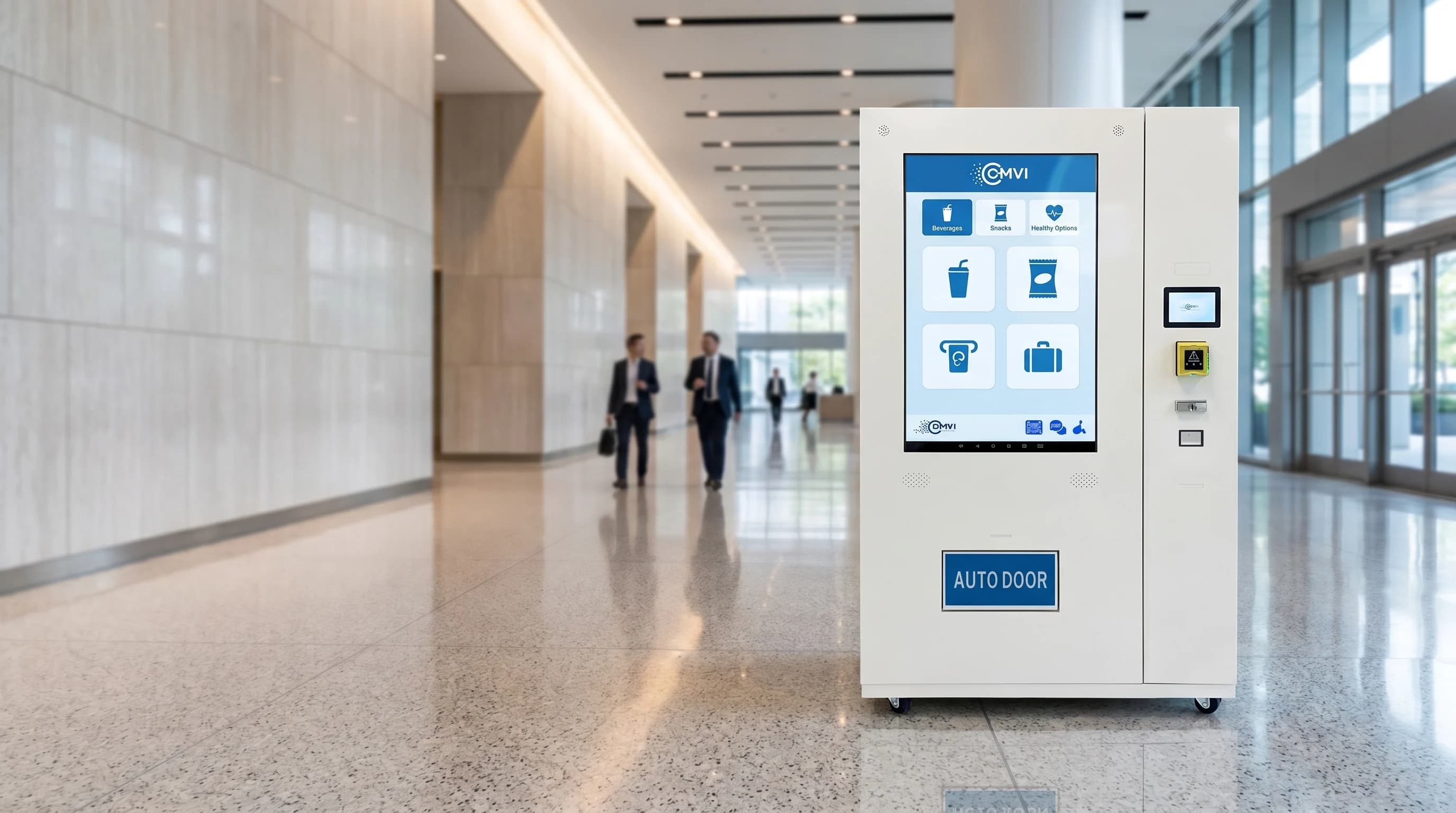
Digital Media Vending International builds supplement vending machines with conveyor belt shelving configured to the specific product dimensions being stocked. Their elevator and door-based dispensing handles heavier products reliably, without the drop mechanism that damages packaging and frustrates customers. The 21 to 50-inch touchscreen doubles as a nutrition information display — in fitness and clinical contexts, customers making a considered nutrition decision benefit from product details, ingredient information, and flavor comparisons on the screen before committing to a purchase.
VendingTracker's live sales data by SKU is particularly valuable for supplement vending because product velocity varies significantly across flavors and formats. Knowing which products are selling at which machines allows operators to optimize assortment continuously rather than restocking by assumption.
Visit digitalmediavending.com to discuss machine configuration for your specific location type.
What to Stock at Each Location Type
Product selection is not one-size-fits-all across these seven location types. The assortment that works at a boutique gym underperforms at a university rec center, and the product that sells at a physical therapy clinic has no place in a sports complex. Here is a starting framework by location type.
Premium fitness clubs and boutique gyms: Members at premium gyms have brand awareness and preferences. Stock recognizable brands alongside any private-label or specialty products, and include a range of protein formats — bars, single-serve shakes, powder packets — to match different purchase occasions. Higher price points are appropriate; this demographic expects to pay for quality.
University recreation centers: Student buyers are price-sensitive relative to affluent gym members but not to the point of refusing quality products. Mid-range price points perform best. Variety is important — different protein sources (whey, plant-based), different flavors, snack and bar formats alongside shakes. Stock depth matters more at university placements because resupply trips may be less frequent.
Martial arts academies and boxing gyms: Recovery-focused products — protein, electrolytes, amino acids — perform best. The post-training need state is the purchase driver. Avoid lifestyle products without clear functional positioning. Clean label, minimal ingredient list products align with the health consciousness of serious martial artists.
Physical therapy and sports medicine clinics: Clean protein products only. Collagen peptides, whey isolate, electrolyte hydration. No stimulants, no aggressive pre-workouts. If in doubt about a product's appropriateness for a clinical setting, ask the clinic's clinical director.
Hotel fitness centers: Single-serve formats dominate. Travelers are not buying a month's supply; they need one serving for the morning. Premium packaging matters — in a hotel context, the presentation of the product signals quality. Ready-to-drink options avoid the need for mixing equipment.
Corporate wellness facilities: Employee-friendly products with broad appeal — not niche bodybuilder formats, but accessible everyday protein snacks, protein bars, and meal replacement options. Wellness-forward branding (clean ingredients, no artificial additives) aligns with corporate wellness program values.
Sports stadiums and recreation complexes: High volume means variety is king. Stock the widest SKU range the machine configuration supports. Energy products, hydration, protein bars, and recovery-focused items all have buyers across the demographic mix at large recreation complexes.
The Unit Economics Every Protein Vending Operator Should Model Before Buying
Before committing to a machine purchase, run these numbers for each location you're considering:
Average transaction value. What will you realistically charge per unit at this location? Premium gym: $12 to $18. University rec center: $8 to $14. Hotel fitness center: $14 to $20. Physical therapy clinic: $10 to $15.
Estimated daily transactions. Be conservative. Use verified foot traffic data, not estimates. A realistic conversion rate for a well-positioned protein vending machine is 3 to 8% of relevant foot traffic (fitness-oriented visitors who pass the machine).
Venue commission rate. Negotiated per location. Ranges from zero at some corporate wellness sites to 30%+ at premium gym locations. This single variable can make or break the unit economics at a specific placement.
Monthly restocking cost. Time and travel cost to visit the location, assess inventory, and restock. VendingTracker's live inventory data reduces unnecessary trips, but they can't be eliminated entirely.
A machine generating $4,000 per month in gross revenue at a location with a 20% venue commission, 50% product cost, and $200 per month in financing payments produces approximately $1,400 per month in net contribution before restocking labor. Two machines at that level generate $2,800 per month. Modeled honestly, the protein vending machine business is a real, viable revenue stream — not a passive income fantasy, but a legitimate small business with manageable operational demands.
Contrary to common belief, the protein powder vending machine business does not require a large portfolio of machines to generate meaningful income. One machine at a premium fitness club generating $3,500 to $6,000 per month in gross revenue, operated with discipline and restocked on data from VendingTracker rather than guesswork, is a viable side business for a fitness entrepreneur. Two or three machines at strong placements constitute a meaningful supplemental income stream. The entry point is low enough, and the financing accessible enough, that the first machine is the real test — and the seven locations above give you the map to choose the right one.
The operators generating the best results in protein vending treat location selection as the primary business decision — not an afterthought to the machine purchase. The seven locations above give you a ranked framework. The discipline of validating foot traffic, modeling unit economics at each location's commission rate, and choosing the right machine format for the placement are what convert the framework into a business. Digital Media Vending International's machines, VendingTracker software, US support are built to support that business from day one. The conversation starts at digitalmediavending.com.
Sources
- Digital Media Vending International — Official Website
- Kande VendTech — Vending Machine Industry Statistics 2024
- Sports & Fitness Industry Association — US Fitness Industry Overview
- IBISWorld — Gym, Health and Fitness Clubs in the US
- Statista — US Sports Nutrition and Supplement Market
- GetBiopak — The Ultimate Guide to the Vending Machine Business in 2026
Planning a protein or supplement vending deployment?
DMVI builds custom supplement and protein vending machines with touchscreen ordering, cashless payment, conveyor belt shelving, and VendingTracker remote inventory software.