Running a Mixed Vending Machine Portfolio: How Operators Manage Multiple Product Categories Across a Route
Most vending machine content is written for operators focused on a single product category. The Pokémon operator runs Pokémon machines. The cupcake operator runs food machines. The beauty operator runs beauty machines. The advice is product-specific because starting with a single category is the right approach, it limits variables, simplifies operations, and produces clean performance data.
But operators who have been running a vending machine business for 12 to 24 months often arrive at a natural inflection point: the first category is performing well, the operations are understood, and the question becomes whether to add more machines in the same category or expand into new categories. This guide is for that operator.
Running a multi-category vending machine portfolio is more operationally complex than a single-category route, but it produces two advantages that single-category operators do not have: revenue risk diversification and the ability to match machine deployments to venue opportunities rather than being constrained to venues that fit a single product type. Understanding how to manage that complexity, using VendingTracker across a mixed fleet, selecting category combinations that work operationally, and matching machine formats to each category, is what separates multi-category operators who thrive from those who create operational chaos.
Why Operators Expand Into Multiple Product Categories
The decision to diversify into multiple product categories is usually driven by one or more of the following situations:
A new venue opportunity that does not fit the existing category. An operator running beauty product machines at hotels may encounter an FEC looking for a vending machine partner. The FEC is a strong venue, high foot traffic, strong demographics, but the beauty product category is wrong for the environment. Expanding into TCG or collectible products allows the operator to capture the FEC opportunity without forcing a product-context mismatch.
Revenue concentration risk from a single category. An operator running only Pokémon vending machines has concentrated risk in a single product category. If TCG card supply becomes constrained, if a competitor enters the key venues, or if the collectibles market softens, the entire route is exposed. Adding a second category, beauty products at hotel machines, supplements at gym locations, distributes that risk across product categories that are not correlated with each other.
Seasonal revenue variability. Some product categories are strongly seasonal. TCG releases drive spikes around major set releases and holiday seasons. Fitness supplements peak in January and taper through spring. Beauty products at hotel locations peak in summer travel and holiday gifting seasons. A portfolio spanning multiple categories can run counter-cyclical revenue streams that smooth overall route performance across the year.
Location opportunities that require different product categories. As a route grows, the operator encounters venue opportunities across different environments, not just the venue type where they started. A gym opportunity requires a different product than a hotel lobby opportunity, which requires a different product than a mall corridor opportunity. A multi-category portfolio enables the operator to say yes to venue opportunities that a single-category approach would require passing on.
Category Combinations That Work Operationally
Not all product category combinations make operational sense. The combinations that work best share enough operational characteristics, similar restocking frequency requirements, compatible machine formats, manageable supplier relationships, that managing them together does not create disproportionate complexity.
TCG/Collectibles + Gaming Accessories: The most natural combination for operators serving gaming venue environments. Both categories serve the same demographic, vend well from the same machine formats (Option 4 and M1), and can be managed with overlapping supplier relationships. DMVI's guidance on stocking multiple TCG brands alongside Pokémon provides the specific SKU strategy for managing this within a single machine.
Beauty/Personal Care + Hotel Amenities: These categories serve the same location type, hotels and premium hospitality venues, with compatible purchase occasions. A machine stocked with specialty beauty products can include travel essentials and personal care accessories without meaningful operational complexity. The demographic, the venue, and the purchase context align, and the restocking cadence is similar. DMVI's beauty and fragrance vending guide covers this category combination in a hotel and airport context.
Fitness/Supplements + Active Lifestyle Accessories: Supplement products at gym and fitness venues combine naturally with active lifestyle accessories, fitness equipment accessories, hydration products, performance gear items. The demographic is consistent, the purchase context aligns, and both categories tolerate similar pricing levels. DMVI's protein powder vending machine guide covers the supplement category specifically.
Specialty Food + Hospitality Essentials: Cupcake and specialty food machines at hotel corridors combine naturally with personal care essentials in the same deployment environment. A hotel property with a food machine in the dining corridor and a personal care machine in the guest room corridor serves different needs in different locations within the same property, using different machine formats. DMVI's pastry vending machine guide covers the specialty food category in detail.
Categories that work less well together operationally:
Very-high-perishability products (fresh baked goods, fresh food) combined with non-perishable products (collectibles, electronics) create different restocking frequency requirements that complicate route planning. A route that requires daily restocking visits for food machines and twice-weekly visits for collectible machines is harder to optimize than a route where all machines follow similar restocking patterns.
Highly regulated categories (vape, age-restricted alcohol) combined with open-access categories create different compliance requirements that are manageable but require deliberate attention. Operators running regulated products should understand the compliance requirements for each category independently before combining them in the same route.
Revenue Risk Management Across a Mixed Portfolio
The primary strategic benefit of a multi-category portfolio is risk distribution. Understanding which risks are diversified and which are not helps operators build a portfolio that genuinely manages risk rather than creating an illusion of diversification.
Product category risk. A multi-category portfolio distributes exposure to product-specific risks. A disruption to TCG card supply chains does not affect supplement or beauty product machines. A seasonal downturn in fitness product demand does not affect hotel amenity machines. Across categories, the revenue streams are largely uncorrelated, meaning that not all categories will experience headwinds simultaneously.
Venue type risk. A portfolio spanning multiple venue types distributes exposure to venue-specific disruptions. A hotel that closes for renovation affects only the machines in that property. A gaming venue that reduces hours or closes affects only those placements. An operator with machines at hotels, gyms, gaming venues, and retail corridors is not exposed to a single venue category underperforming.
Seasonal risk. Different product categories peak at different times of year. DMVI's seasonal vending strategy guide covers Pokémon-specific seasonality, applicable as a template for understanding other categories' seasonal patterns. A portfolio that combines a category peaking in Q1 (fitness) with a category peaking in Q4 (collectibles/holiday) produces more balanced quarterly revenue than a single-category route exposed to one seasonal pattern.
What multi-category portfolios do not diversify away:
Location quality risk remains. Machines at poor locations in any category underperform. Diversifying product categories does not compensate for systematic location selection errors.
Operational execution risk remains. A poorly managed multi-category route generates complexity without the revenue benefit. The operational foundation described in DMVI's vending machine operations data guide needs to be strong before adding categories, not used as a substitute for that foundation.
Using VendingTracker to Manage a Mixed Fleet
The primary operational challenge of a multi-category portfolio is data visibility: knowing what is happening across machines with different products, different restocking needs, and different performance profiles simultaneously. VendingTracker's multi-machine dashboard is the management tool that makes this practical.
Unified inventory view across all machines. The dashboard shows current inventory levels for every product slot in every deployed machine, regardless of machine format or product category. An operator can see at a glance that the Wall-Mounted beauty machine at Hotel A needs restocking, that the Option 4 TCG machine at the FEC has three slots running low, and that the M1 collectible machine at the mall is performing at full velocity, all from the same browser view.
Sales comparison across categories. VendingTracker's reporting shows revenue by machine and by time period, enabling the operator to compare performance across categories directly. Knowing that the TCG machines are generating 60% of portfolio revenue at 40% of deployment cost, while the beauty machines are generating 25% at 35% cost, tells the operator where to prioritize format upgrades, location improvements, or product changes.
Product-specific velocity analysis across the fleet. For operators running the same SKU across multiple machines in different category contexts, a widely purchased item like a popular energy product that appears on both a gym machine and a hotel machine. VendingTracker enables direct velocity comparison across deployment contexts. Knowing that the same product sells three times faster at the hotel than at the gym is actionable information for future restocking and pricing decisions.
Alert management across a multi-category fleet. Low-inventory alerts and machine health alerts apply across all machines. For a mixed-category fleet, the operator needs to triage alerts by urgency, a perishable food machine at a low-inventory threshold requires faster response than a non-perishable collectible machine at the same threshold. Building a clear alert response priority system, documented in the operational procedures, keeps the operator focused on the highest-urgency situations first.
DMVI's guide to using vending machine data to make operational decisions covers product selection data analysis applicable across categories.
Matching Machine Formats to Each Category
A multi-category portfolio often requires multiple machine formats, because different product categories and venue types suit different machines. DMVI's lineup provides the format range that a diversified portfolio needs.
Wall-Mounted ($4,995) is the right format for space-constrained locations across any product category: salon waiting areas (beauty products), small gym lobbies (supplements), hotel corridors (personal care, specialty food). Its zero-floor-space requirement makes it deployable in venues where larger formats are not viable.
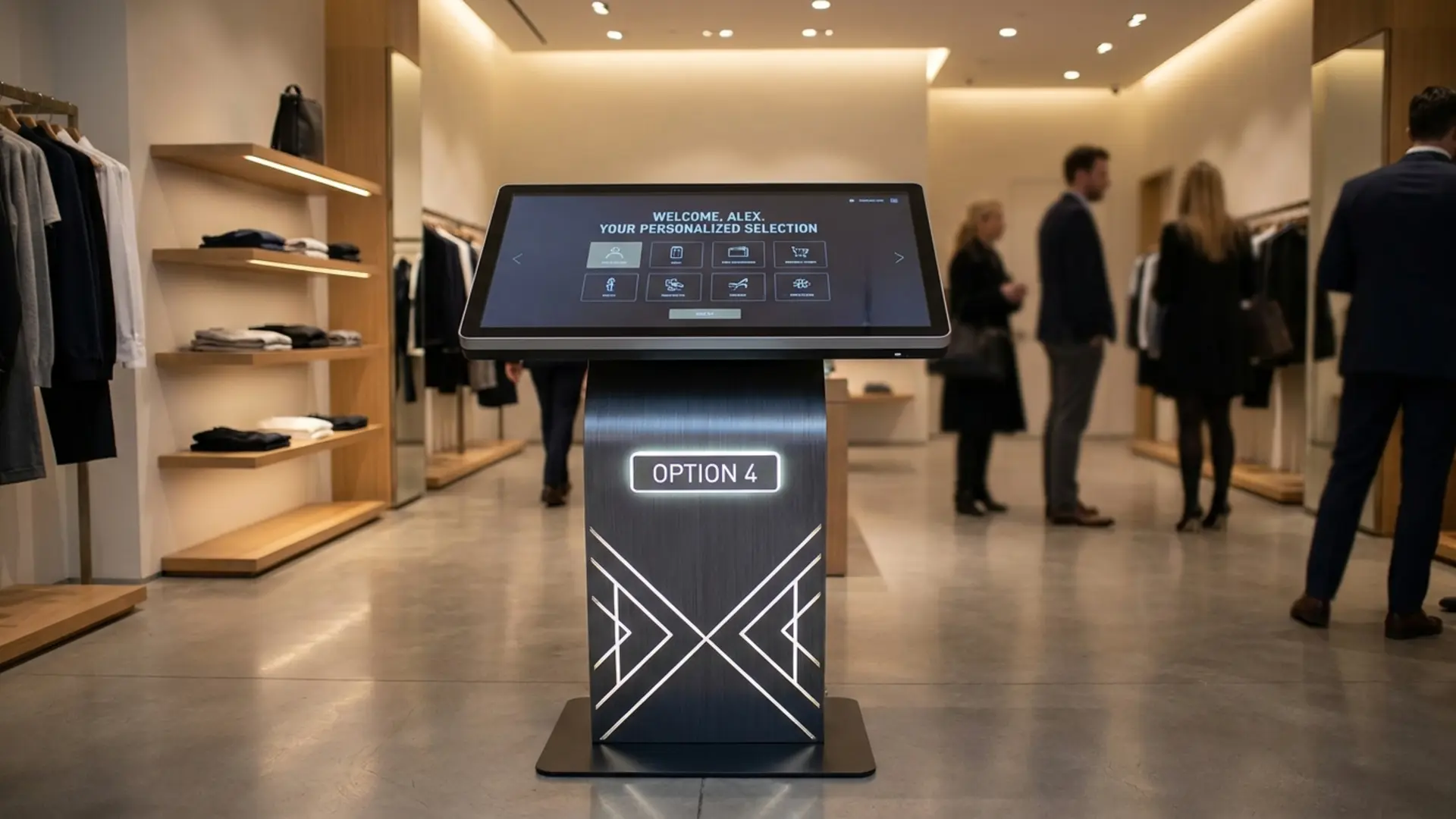
Option 4 ($12,995) with four product zones is purpose-built for gaming and entertainment venue deployments, where multiple product types (packs, boxes, accessories) in a single freestanding unit drive higher average transaction values. It is also effective for mid-tier retail and hospitality venues where product variety expands the purchase occasion.
M1 ($21,995 purchase) with 140-SKU capacity and items up to 9"×9"×7" is the flagship format for premium high-traffic deployments across any category: mall corridor collectibles, premium hotel lobby amenity machines, high-traffic FEC deployments. Its maximum format breadth handles every product type in the specialty vending category.
All DMVI machines across all formats run VendingTracker, use Nayax cashless payment hardware, and are supported by California-based technical support. The multi-format portfolio runs on unified software infrastructure regardless of the format diversity within the route.
Digital Media Vending International for Multi-Category Operators
Digital Media Vending International builds machines for the full range of product categories and venue types that a diversified vending portfolio requires. Their lineup. Wall-Mounted through M-Series, covers the format range needed for multi-venue, multi-category deployments, and VendingTracker provides unified management across all of them from a single dashboard.
DMVI is a Made in California certified manufacturer, founded in 2009, with more than 2,000 deployments across 22 countries. Every machine includes NFC and contactless payment via Nayax, VendingTracker cloud management, custom vinyl wrap, and California-based technical support.
See DMVI's diverse vending revenue streams guide for strategic guidance on building multi-revenue-stream vending operations.
Visit digitalmediavending.com to discuss machine configurations for a multi-category portfolio.
The Operational Reality of Running Multiple Categories
The strategic benefits of a multi-category portfolio are real. So is the operational complexity. Operators who expand into multiple categories without acknowledging and planning for the added complexity create routes that are harder to manage and perform less well than a focused single-category operation.
The specific complexities that increase with category diversity:
Supplier management. Each product category typically has different wholesale distributors, different purchasing minimums, different fulfillment timelines, and different relationship requirements. A Pokémon card distributor operates very differently from a beauty product supplier or a supplement wholesale account. Managing multiple supplier relationships requires more administrative attention than a single category.
Restocking vehicle and logistics. Different product categories require different handling during transport. Fresh food products need temperature management. Fragile collectible products need protective packaging. Beauty products with glass containers require careful loading. A mixed-category restocking run carries more logistical complexity than a single-category run, and the vehicle requirements may differ.
Staff training if hired. A route employee who handles restocking across multiple product categories needs training on product handling requirements, restocking procedures, and recognition of product condition for each category. Training and supervision complexity increases with category diversity.
The solution is not to avoid multi-category portfolios, it is to add categories incrementally, with each addition planned deliberately, and to build the operational systems before adding the next category rather than managing the complexity retroactively. VendingTracker's unified dashboard reduces the data management burden significantly. The physical logistics and supplier management need to be planned at each expansion stage.
The operators who run successful multi-category portfolios are not managing through improvisation. They have written restocking procedures, documented planograms, supplier contacts organized by category, and a VendingTracker dashboard they review weekly. The portfolio complexity is real; the management tools exist to handle it. A multi-category vending machine portfolio built on strong operational systems and VendingTracker visibility is a more resilient business than a single-category route. The complexity is real and manageable. The revenue and risk diversification benefits are also real. Building toward it deliberately, one category at a time, is the path that works. Digital Media Vending International builds machines across the format range that a diversified portfolio requires, from Wall-Mounted compact units at $4,995 to M-Series flagship machines at $21,995. VendingTracker unifies management across all of them. The multi-category portfolio is manageable when the infrastructure is right. The portfolio approach scales in complexity with each category added, but scales in resilience and revenue potential at the same rate. Building it deliberately and monitoring it through VendingTracker is what keeps complexity from outpacing the business's ability to manage it.
Conclusion
A multi-category vending machine portfolio is not an inevitable next step for every operator, and it is not the right step until the single-category foundation is solid. But for operators who have validated their first category, understand their operational systems, and are encountering venue opportunities that do not fit a single product type, diversification is the path to a more resilient, higher-revenue, and more strategically flexible business.
Digital Media Vending International's machine lineup and VendingTracker platform are built for this. Start the conversation about multi-category deployment options at digitalmediavending.com.
Sources
-
DMVI — Diverse Vending Machine Revenue Streams: How Operators Build Routes That Survive Slow Months
-
DMVI — What to Sell in a Vending Machine: How to Choose Products That Actually Vend Well
-
DMVI — How to Read Your Vending Machine Data and Make Decisions From It
-
DMVI — Should You Stock Other TCGs Alongside Pokémon? Lorcana, MTG, One Piece & Yu-Gi-Oh
-
DMVI — Beauty and Fragrance Vending Machines: Hotel and Airport Guide
-
DMVI — Pokémon Vending Machine Seasonality: Holiday, Set-Release & Back-to-School Revenue Spikes
Want to diversify your vending portfolio?
DMVI can help design a multi-category vending fleet with the hardware and software visibility needed to manage it properly.