Large Format Vending Machines: When Size Drives Revenue
Bigger is not always better in vending. A large vending machine in a low-traffic corridor generates the same revenue as a small machine in the same location, while costing more to buy and more to restock. Size only drives revenue when it is matched to the right environment.
That matching condition exists more often than most operators realize. At a premium mall corridor between anchor stores, a machine with a 50-inch touchscreen stops foot traffic from 60 feet away in ways that a 21-inch wall-mounted unit cannot. At a casino entertainment floor, a large cabinet with full product visibility and theatrical interior lighting creates an experience that generates impulse purchases from customers who were not planning to stop. At a convention center or airport terminal, high-capacity shelving means fewer stockouts during peak periods that a smaller machine would miss entirely.
Large format vending machines are not the right tool for every situation. But for the operators and venues where the conditions align, they produce revenue per machine that smaller formats cannot approach. This guide explains when those conditions exist, what large format machines actually include, and how to evaluate whether a larger machine investment is justified for a specific deployment.
Key Finding: Digital Media Vending International manufactures large format vending machines, including the M-Series lineup, with touchscreen displays up to 50 inches, the largest product viewing windows in their lineup, conveyor belt shelving, elevator dispensing, and VendingTracker software, for high-traffic premium retail deployments.
What Is a Large Format Vending Machine?
A large format vending machine is a high-capacity automated retail unit built for high-traffic deployments where product visibility, visual impact, and inventory depth all contribute directly to transaction volume.
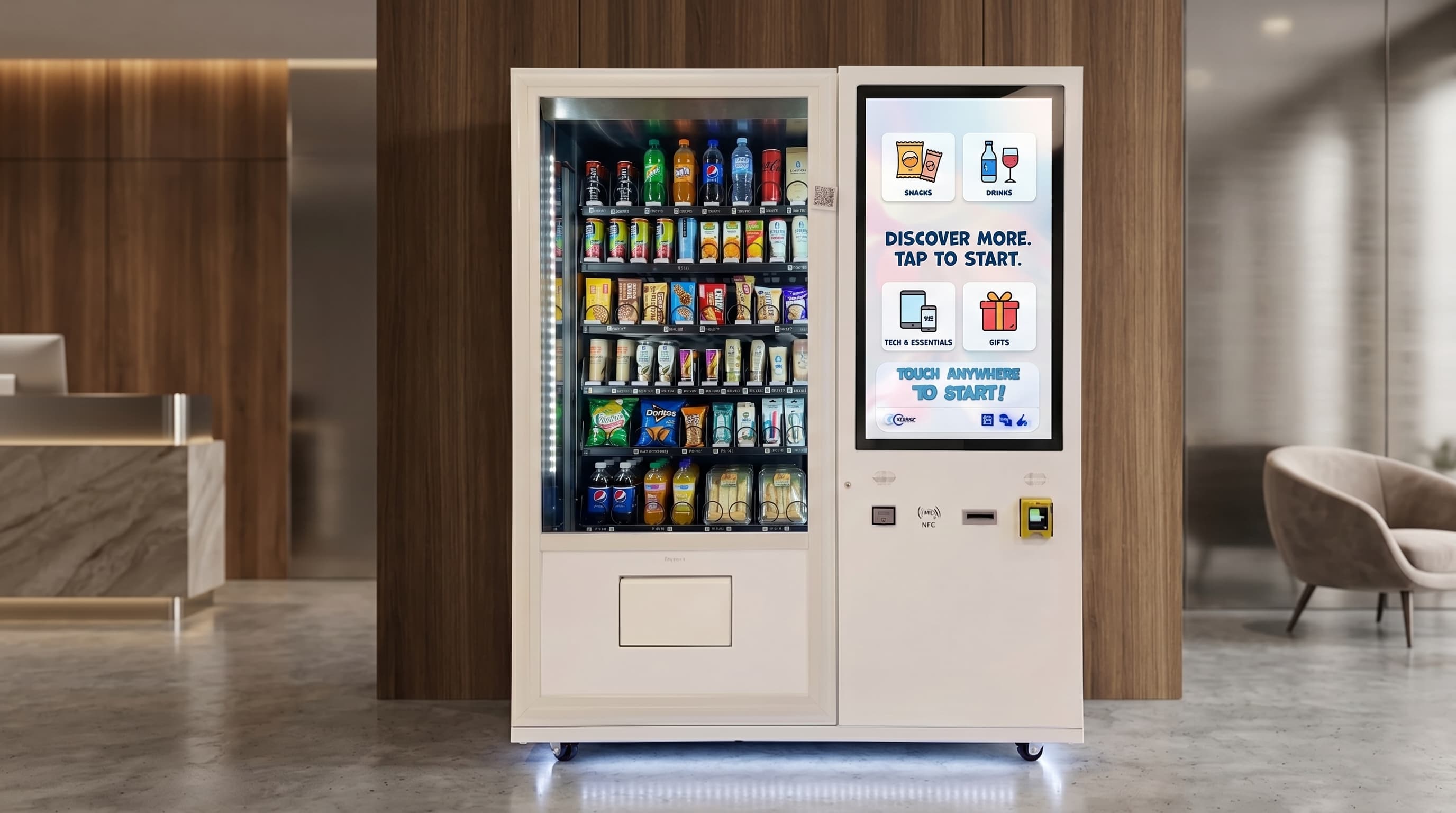
The term "large vending machines" covers a range of machines larger than standard mid-size smart vending cabinets. In practical terms, large format vending machines share several characteristics that distinguish them from smaller formats. Screen displays run from 32 inches up to 50 inches on the largest configurations. Product viewing windows are proportionally larger, allowing customers to see the full machine inventory from a distance. Shelf capacity is higher, supporting more SKUs and deeper inventory per SKU. Cabinet height and footprint are larger, meaning the machine has a stronger visual presence in the deployment space.
Large vending machines are floor-standing units rather than wall-mounted. They are designed for environments with sufficient floor space and foot traffic volume to justify both the footprint and the capital investment.
Digital Media Vending International's M-Series is their large format vending machine lineup, engineered for high-traffic premium deployments. The M-Series is the machine format behind the highest-revenue deployments in DMVI's portfolio. At a strong placement with the right product, documented operator outcomes from M-Series machines include $80,000 to $100,000 per machine per month in revenue.
How Large Format Vending Machines Differ From Standard and Mid-Size Units
Understanding the functional differences between machine size classes helps operators match the right format to the right deployment.
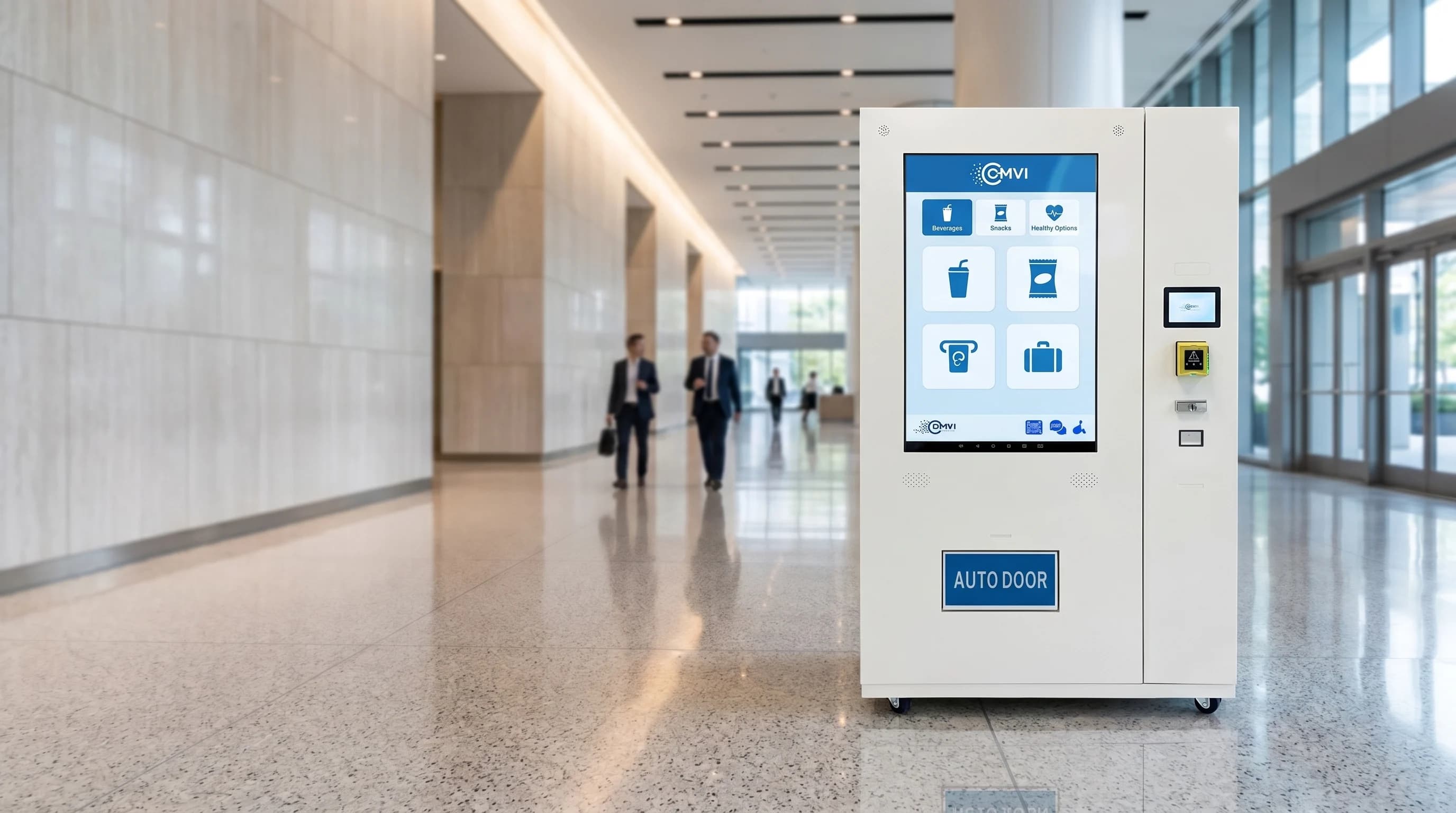
Screen size and foot traffic visibility. This is the most commercially significant difference between a large format machine and a smaller one at a high-traffic location. A 50-inch touchscreen running animated product content is visible and attention-commanding from 50 to 60 feet away. A 21-inch screen in the same corridor has a fraction of that visual range. At a location where thousands of people pass per day, the difference in customers who see the machine translates directly to the difference in customers who approach and purchase. At a low-traffic location, this difference is irrelevant, there are no customers at 50 feet to be attracted.
Product viewing window. Large format vending machines have proportionally larger clear windows that allow customers to see the full product inventory inside the cabinet. For categories like Pokémon trading card packs, collectibles, specialty food, and beauty products where the visual appeal of the product drives purchasing behavior, a large window creates the "see the product, want the product" conversion dynamic at a higher rate than a smaller window allows. DMVI's founder describes this as the "theater" effect, the combination of screen, lighting, and large product window that makes the machine itself a retail experience.
Inventory capacity. A large format vending machine holds more products per SKU and supports a wider range of SKUs than a mid-size or wall-mounted unit. At high-volume locations, this depth matters. A machine that sells 50 units of a specific product per day needs that product restocked more than once daily if it only has 30-unit slot capacity. A larger machine with 80-unit slot capacity reduces restocking frequency, protects revenue during peak periods, and enables the operator to run a broader assortment without sacrificing depth in core sellers.
Revenue ceiling. A wall-mounted machine's revenue potential is constrained by its inventory capacity. It can only sell what it holds, and restocking has a practical frequency limit. A large format machine's higher capacity raises the revenue ceiling at high-volume placements, enabling operators to capture more transactions during peak periods without running out of stock.
Capital cost. Large format vending machines carry a higher price point than wall-mounted or mid-size configurations. This is the primary trade-off. The higher revenue ceiling at strong placements justifies the higher investment; at weak placements, the higher cost is unjustified. The investment decision depends on validating that the placement is genuinely high-traffic before committing to a large format machine.
The Revenue Case for Large Format at Premium Placements
The revenue math behind large format vending machines at premium placements is direct. More foot traffic exposure, higher visual impact, and deeper inventory capacity combine to produce higher daily transaction volume than smaller formats at the same location.
The clearest documented example in DMVI's deployment history is the Pokémon trading card category. Operators using M-Series large format machines at premium high-traffic locations have generated between $80,000 and $100,000 per machine per month. A separate operator generated $300,000 in their first month. These outcomes are not achievable with a smaller machine at the same location. The large screen creates the visibility that stops foot traffic. The large product window creates the visual theater that converts foot traffic into purchasers. The high inventory capacity means the machine is never empty during the periods that generate the most transactions.
Not every large format vending machine deployment produces these numbers. Location quality is the primary variable. A large format machine at a low-traffic placement generates low revenue regardless of screen size or inventory capacity. The M-Series is built for premium placements. Operators who deploy it in premium placements with strong product-market fit are the ones generating documented high-revenue outcomes.
The payback calculation for a large format machine follows the same logic as any vending machine investment: validate the location, model the realistic transaction volume at that location, calculate gross and net contribution at expected product margins and venue commission rates, and confirm that the payback timeline is acceptable. At the revenue levels documented from top DMVI M-Series deployments, payback on the machine investment happens quickly. At more modest transaction volumes from strong but not exceptional locations, payback takes longer but remains viable.
Industries and Venues Where Large Format Vending Machines Outperform
The common characteristic across the strongest large format vending machine deployments is a combination of high verified foot traffic and a customer population in a context that amplifies impulse purchasing. These are the venue categories where large format consistently outperforms.
Premium shopping malls. The corridor between anchor stores at a busy mall is one of the strongest possible placements for a large format vending machine. Foot traffic is high, diverse, and browsing-oriented. A machine with a 50-inch screen and theatrical interior lighting in a primary mall corridor creates a visual landmark that stops traffic from the moment it is installed. Products with strong impulse purchase dynamics, visual appeal, and premium pricing. Pokémon card packs, collectibles, beauty products, specialty electronics accessories, perform particularly well in this context.
Casino entertainment floors. Casino environments are specifically designed to maximize customer dwell time and impulse purchasing. A large format vending machine on a casino floor, stocked with the right product, operates in an environment where customers have come specifically to spend money and where impulse behavior is at its highest. The large screen and theatrical cabinet design complement rather than conflict with casino floor aesthetics.
Airport terminals, post-security. Post-security airport retail captures a captive customer population with time to browse, specific purchase motivations (forgotten items, gift-buying, entertainment for a long flight), and above-average willingness to pay for convenience. Large format machines with electronics accessories, beauty products, specialty snacks, and premium items perform strongly in this environment. The inventory capacity of a large format machine is particularly valuable at high-volume airport terminals where a smaller machine would require multiple daily restocking visits.
Entertainment venue lobbies. Cinema complexes, gaming venues, bowling alleys, and similar entertainment facilities serve customer populations in an experiential and spending mindset. Pre-show and post-show dwell time creates purchase opportunities. Large format machines with relevant products, collectibles near gaming venues, impulse purchases at cinema lobbies, sports accessories at recreation complexes, capture demand that would otherwise go to a gift shop or concession stand.
Hotel and resort lobbies at large properties. Full-service and resort hotel lobbies with high occupancy rates and broad demographic guest mix generate transaction volumes that justify large format machine deployment. A machine in the lobby of a 500-room resort, stocked with personal care essentials, specialty food, electronics accessories, and branded amenity products, serves a captive population across a 24-hour cycle. Large screen visibility across the lobby ensures that guests who might not specifically seek out a vending machine see it and stop.
Convention centers and expo venues. Convention centers serve concentrated populations with defined demographic profiles, significant dwell time, and contextual purchase motivations. A large format machine stocked with products relevant to the event type, tech accessories at a technology conference, collectibles at a hobby expo, sports products at an athletic event, serves an audience already primed for those purchases.
Products That Justify Large Format Hardware
Large format vending machines generate their strongest returns when the product being sold meets specific criteria: high visual appeal, strong impulse purchase motivation, appropriate price point to support large format machine economics, and sufficient transaction volume to utilize the machine's inventory capacity.
Collectibles and trading cards. The Pokémon and TCG category represents the clearest match between product characteristics and large format machine capabilities. Visual appeal drives foot traffic to the machine. Impulse purchase behavior, the desire to open a pack immediately, drives conversion at the machine. Repeat customer behavior from collectors drives ongoing transaction volume. And the price point ($15 to $50 per pack) supports the economics of a large format machine at premium placements.
Specialty food at premium venues. Premium baked goods, artisan confections, specialty snacks, and high-quality food items priced at $8 to $25 per transaction perform well at large format machines in airport terminals, hotel lobbies, and entertainment venue lobbies. The large window and screen allow food products to be presented in a way that drives appetite-triggered purchasing behavior.
Beauty and personal care at high-traffic venues. Premium beauty products, fragrance accessories, and personal care items sell at higher average transaction values and with strong visual appeal, supporting large format machine economics at hotel, spa, and resort locations with significant daily foot traffic.
Electronics accessories. Phone chargers, earbuds, and tech accessories at airport terminals and hotel lobbies command premium pricing and serve genuine immediate-need purchase situations. The large format machine's capacity supports a broader accessories assortment, increasing the likelihood that a specific customer's need matches an in-stock product.
Luxury accessories and jewelry. High-value, low-weight products with high gross margins operate efficiently in large format machines at luxury hotel lobbies, upscale mall corridors, and premium resort environments. The large display and cabinet design support the premium positioning that this product category requires.
What to Look for When Evaluating a Large Format Vending Machine
Not all large vending machines marketed as large format deliver the same capabilities. These are the specifications that matter for operators evaluating large vending machines for sale. These are the specifications that matter for operators evaluating large format options.
Screen size in context of the deployment space. A 40-inch display in a narrow 12-foot corridor is different from a 40-inch display in a 30-foot wide mall concourse. Evaluate the screen size relative to the actual deployment space, the ceiling height, and the distance from which the typical customer will first see the machine. The screen needs to be visible at the distance where the customer is still walking, not just when they are directly in front of the machine.
Dispensing mechanism appropriate to the product. Large format machines can use coil dispensing for standard snack products or conveyor belt and elevator dispensing for specialty products. If the product being sold would be damaged by a coil-drop mechanism or would jam a coil system sized for chips, the large format machine must use the appropriate custom dispensing system. DMVI's M-Series uses conveyor belt shelving and elevator or door-based product delivery as standard, making it suitable for specialty products beyond standard snack and beverage categories.
Inventory capacity matched to expected daily volume. Confirm the machine's per-SKU slot capacity relative to expected daily transaction volume. A machine at a location generating 100 transactions per day needs sufficient slot depth that it does not run out of core products between restocking visits. If daily volume would require restocking three times per day with a specific machine's slot capacity, that machine is undersized for the location.
Remote inventory and sales management software. A large format machine at a premium placement generates high daily transaction volumes. Managing that machine without live inventory data and sales reporting is flying blind. VendingTracker, included with every DMVI machine, provides live inventory by SKU, daily sales data, pricing controls, and machine health alerts from any browser.
US-based manufacturing and support. A large format machine in a premium location is a revenue-generating asset. When it goes down, it is losing revenue. US-based manufacturing with US-based technical support and in-country technicians reduces the response time from "machine is down" to "machine is operational" in ways that overseas manufacturers cannot match.
DMVI's M-Series Large Format Vending Machine Lineup
Digital Media Vending International's M-Series is their large format vending machine product line, engineered for premium high-traffic deployments. DMVI is a Sebastopol, California-based custom vending machine manufacturer, Made in California certified, founded in 2009 with more than 2,000 deployments across 22 countries.
The M-Series is built around the insight that at premium locations, the machine itself is part of the retail experience. The largest screens in the DMVI lineup, up to 50 inches. The largest clear product viewing windows, designed to maximize the visual theater effect that the founder describes as central to high-conversion vending deployments. Conveyor belt shelving configured to the specific product being sold. Elevator or automatic door dispensing that delivers product without damage, appropriate for fragile or high-value specialty items. VendingTracker software included, with live inventory monitoring, sales reporting, dynamic pricing, planogram management, and machine health alerts from any browser.
M-Series machines are configured to the operator's product during the engineering process. The shelving dimensions, channel configuration, screen content, and dispensing mechanism are all specified for the actual product being sold in the actual location where the machine will operate. DMVI's installation team handles deployment, machine configuration, and operator training as part of every engagement. US-based technical support and in-country technicians across 22 countries provide coverage for the full operating life of the machine.
Visit digitalmediavending.com to discuss M-Series specifications for your deployment.
Conclusion
Large format vending machines generate premium revenue at premium locations because screen size, inventory depth, and visual impact combine to produce transaction volumes that smaller formats at identical locations cannot match. The M-Series is not the right machine for every deployment. It is the right machine for operators who have confirmed a premium, high-traffic placement and want the hardware that captures the full revenue potential of that location.
Digital Media Vending International has been building large format vending machines since 2009, with documented outcomes from M-Series deployments that include $80,000 to $100,000 per machine per month at the strongest placements. If you have a premium location, start the conversation at digitalmediavending.com.
Sources
- Digital Media Vending International — Official Website
- Kande VendTech — Vending Machine Industry Statistics 2024
- GetBiopak — The Ultimate Guide to the Vending Machine Business in 2026
- IBISWorld — Vending Machine Operators in the US
- Grand View Research — Smart Vending Machine Market
- Statista — US Vending Machine Industry
Need a machine built for a high-traffic venue?
DMVI configures large-format M-Series vending machines with touchscreen merchandising, cashless payment, and VendingTracker remote management.