Ice Cream Vending: Build a Cold-Chain and Restocking Plan
A frozen dessert can leave a supplier in good condition and still arrive at a vending machine unsuitable for sale. The weak point might be the delivery handoff, a long restocking route, an overloaded storage freezer, or a cabinet fault that nobody is assigned to investigate.
Choosing the machine is only one part of an ice cream vending business. The operator also needs a cold-chain plan: a documented way to maintain the product's required conditions from receipt through customer purchase, with clear decisions when those conditions are uncertain.
This guide focuses on packaged frozen desserts and the replenishment work behind them. It does not cover equipment that mixes, prepares, or dispenses soft serve. Those systems have different preparation, cleaning, and food-handling requirements.
Start with the product's requirements, not a generic temperature
For each proposed product, obtain the supplier's storage and handling instructions. Record the exact package, required storage conditions, expiry information, and any transport restrictions. Confirm the food-safety requirements that apply to the operation with the responsible local authority.
Do not treat “below freezing” as a complete specification. Product quality and safe handling depend on the actual goods, their history, and the applicable instructions. A single temperature range copied from another machine's brochure is not a substitute for matching product requirements to equipment performance.
Keep the initial assortment manageable. Bars, sandwiches, cups, and tubs can be candidates, but none is automatically compatible because it is sold frozen. Package dimensions, rigidity, seals, and the way the customer receives the item all matter. Include accurate ingredient and allergen information; a dairy-free label does not mean a product is free of every allergen.
Match frozen storage and the sales format separately
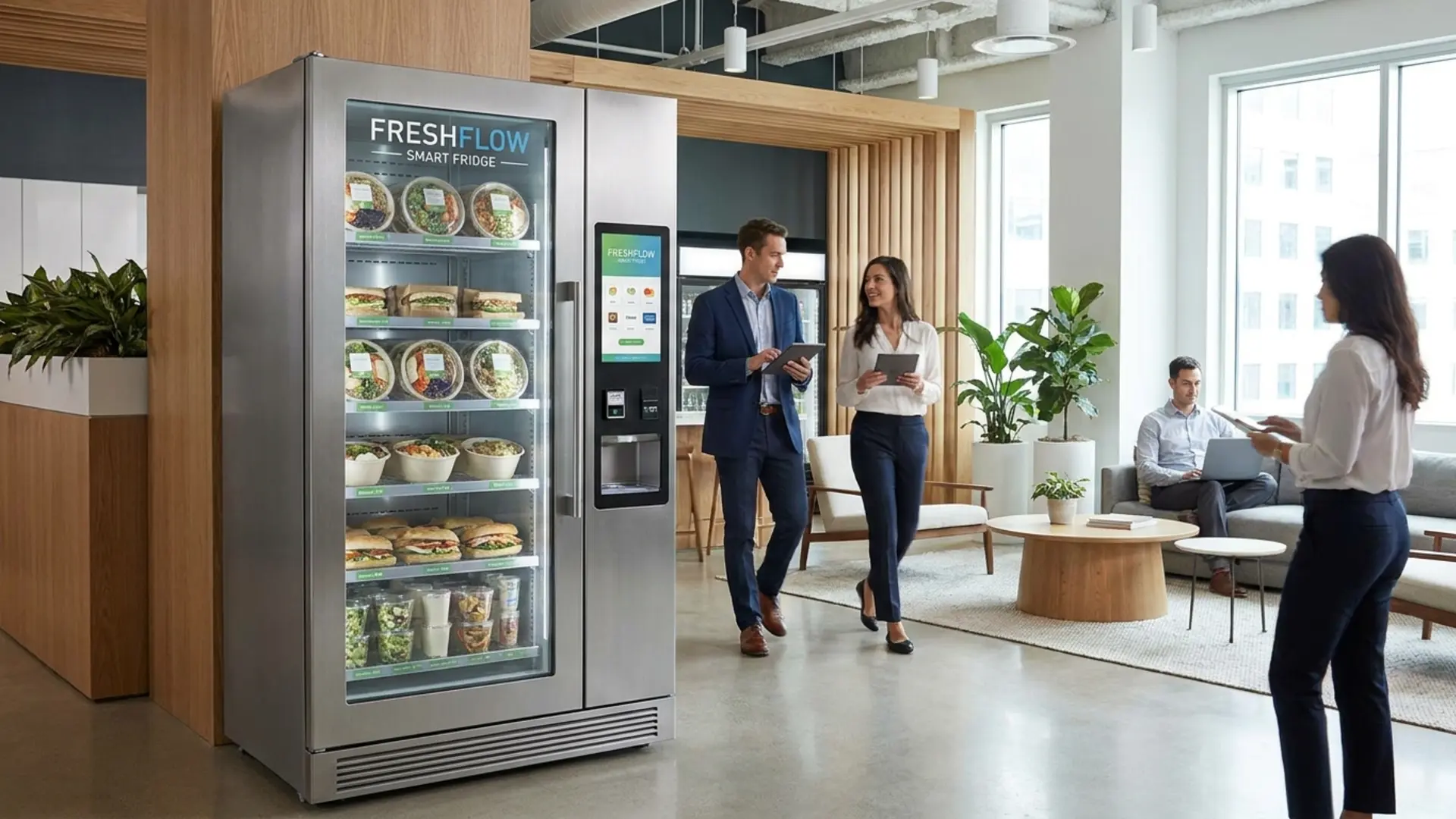
A chilled cabinet and a frozen-capable cabinet are different equipment choices. DMVI™ offers a frozen AI freezer version as well as refrigerated AI fridge versions. That confirms the existence of a frozen option, not the suitability of an unspecified model for every dessert or location.
Request the exact cabinet specification for your assortment. The review should cover permitted ambient conditions, product-storage capability, power requirements, loading instructions, cleaning, maintenance, and the documented response to faults. Establish what monitoring, alerts, or sales controls are actually available in that configuration.
Then check the sales workflow. A dispensing machine must deliver the approved package reliably. A door-access system needs an approved product arrangement and a recognition and payment workflow that supports the proposed items. These are separate checks from whether the cabinet can maintain the required storage conditions.
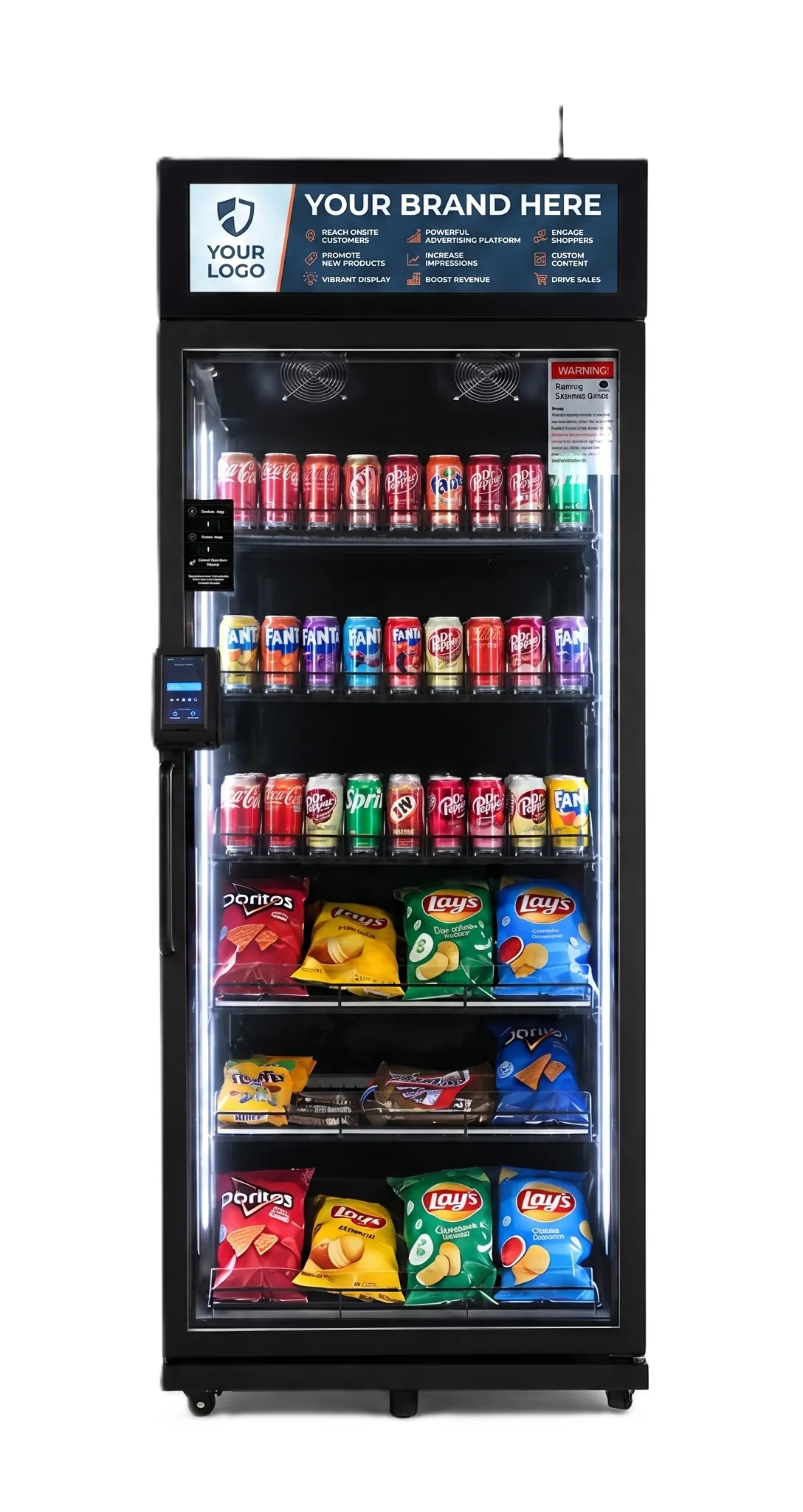
For a broader explanation of the door-access category, see AI smart fridges. Do not transfer chilled-fridge temperature specifications or commercial terms to a freezer.
Map the journey from supplier to cabinet
Write down every handoff before ordering the first inventory. The route may include supplier delivery, receiving, backstock storage, loading the vehicle, travel, and replenishment. Each stage needs an assigned person and a way to verify that the applicable handling requirements are met.
| Stage | Plan before launch | Record during operation |
|---|---|---|
| Receiving | Who accepts deliveries and what makes a shipment unacceptable | Supplier, product, lot or date information, required checks, and exceptions |
| Backstock | Suitable frozen storage, stock rotation, and separation of held goods | Inventory, required storage records, and items removed from sale |
| Transport | A validated method for maintaining the required conditions on the actual route | Departure and arrival information and the checks required by the handling plan |
| Replenishment | Access arrangements and the manufacturer's loading procedure | Stock added, stock removed, package condition, and required cabinet checks |
| Customer sale | Approved products and a working sales process | Sales, complaints, refunds, and equipment exceptions |
Do not assume an insulated carrier, a short drive, or a familiar route is adequate without validating it for the load and conditions. Delays at a loading dock or a locked venue can change the trip substantially. Build access arrangements into the route plan rather than leaving them to the driver to resolve with frozen stock waiting.
Test the actual frozen package
Arrange supplier-approved testing with the product in its intended frozen condition and retail packaging. A room-temperature empty box is not a complete stand-in for a filled frozen item.
For dispensing equipment, assess package movement, delivery, retrieval, and visible damage in the intended loading arrangement. For a door-access configuration, follow the supplier's product-registration and recognition tests. Check that the displayed description, price, and resulting transaction match the item.
Document what passed. If a supplier changes a cup shape, wrapper, label, or pack size, review the change before substituting it. Do not assume a new package behaves like the previous one simply because the flavor and selling price are unchanged.
Testing should use the manufacturer's approved procedure. Do not improvise power failures, bypass interlocks, or deliberately warm saleable stock to test a fault response.
Make restocking a controlled handoff
Before adding inventory, check the cabinet and the records required by your operating plan. Resolve alarms, uncertain storage history, damaged packages, or other exceptions before mixing new stock into the existing load.
Prepare the replenishment quantity and loading order in advance. Follow the manufacturer's instructions for door opening, airflow, loading limits, and return to service. More inventory is not automatically better if it obstructs required airflow or exceeds the approved arrangement.
Rotate stock using the applicable expiry and handling rules. Count removals separately from sales so waste does not disappear into an unexplained inventory adjustment. Keep held stock identified and unavailable for purchase while its disposition is being decided.
At the end of the visit, complete the prescribed checks and record any unresolved issue. Someone other than the route driver may need authority to approve service work, refunds, or disposal; establish that responsibility beforehand.
Decide what happens when refrigeration or power fails
The response plan needs a named contact, an escalation route, and an approved method for stopping sales when required. Confirm how the selected equipment behaves during a power or communications interruption. An AI label does not prove that temperature alerts, remote lockout, or offline operation are included.
If the product's storage history is uncertain, follow the food-safety plan and applicable requirements for holding, assessing, and disposing of affected stock. A restored temperature display is not evidence that the earlier exposure was acceptable. Do not return stock to sale merely because it has become frozen again.
Have a qualified service provider assess equipment faults within the agreed service scope. Document the checks and authorization required to reopen. For a poolside or other exterior location, obtain explicit equipment approval for that environment; overhead cover alone does not establish suitability.
Budget for the route, not only the cabinet
Use a model-specific quote and actual supplier costs. Include backstock storage, transport, replenishment labor, electricity, cleaning, maintenance, processing, software, connectivity, venue charges, insurance, and waste where applicable. Account for closure days and access restrictions as well as the hours when customers can buy.
Track gross sales, product cost, product gross profit, and operating expenses separately. Product gross profit is sales less product cost; it is not take-home income. Seasonal demand, stockouts, disposal, and service interruptions can all change the result. A busy summer week is not a verified annual forecast.
Request the AI freezer's current pricing and applicable program. The AI-fridge program remains separate from standard DMVI machine financing, and freezer eligibility or terms should not be inferred from either arrangement.
Build the operating plan before placing the order
Bring the proposed products, package samples, site conditions, supply route, and service responsibilities to DMVI. The useful outcome is an equipment proposal matched to a workable cold-chain plan—not a promise of unattended sales without ongoing work.
A frozen dessert business is ready to launch when the operator can explain how stock arrives, stays within its requirements, reaches the customer, and is removed from sale when something goes wrong.
Discuss your project with DMVI
Bring your product samples, site requirements, and intended customer experience to the conversation.