AI Vending Machines: What Anthropic's Project Vend Means for Real-World Retail
AI vending machines have moved beyond futuristic product pages and conference chatter. They are becoming a real part of unattended retail, especially in places where operators want better telemetry, more control over inventory, and a customer experience that feels closer to a small self-service store than an old snack spiral.
The current wave of interest did not appear out of nowhere. It accelerated when Anthropic publicly tested whether an AI agent could manage a small retail operation over time. The result was messy, sometimes funny, and commercially imperfect. More importantly, it made the core question impossible to ignore: can an AI agent make real operating decisions inside a physical retail business?
That question matters because vending is one of the few retail formats where the economics are visible quickly. Products go in. Products come out. Prices can change. Stockouts can be measured. Promotions can be tested. If an AI system is going to earn the right to influence a business, unattended retail is one of the cleanest places to prove it.
What an AI vending machine actually is
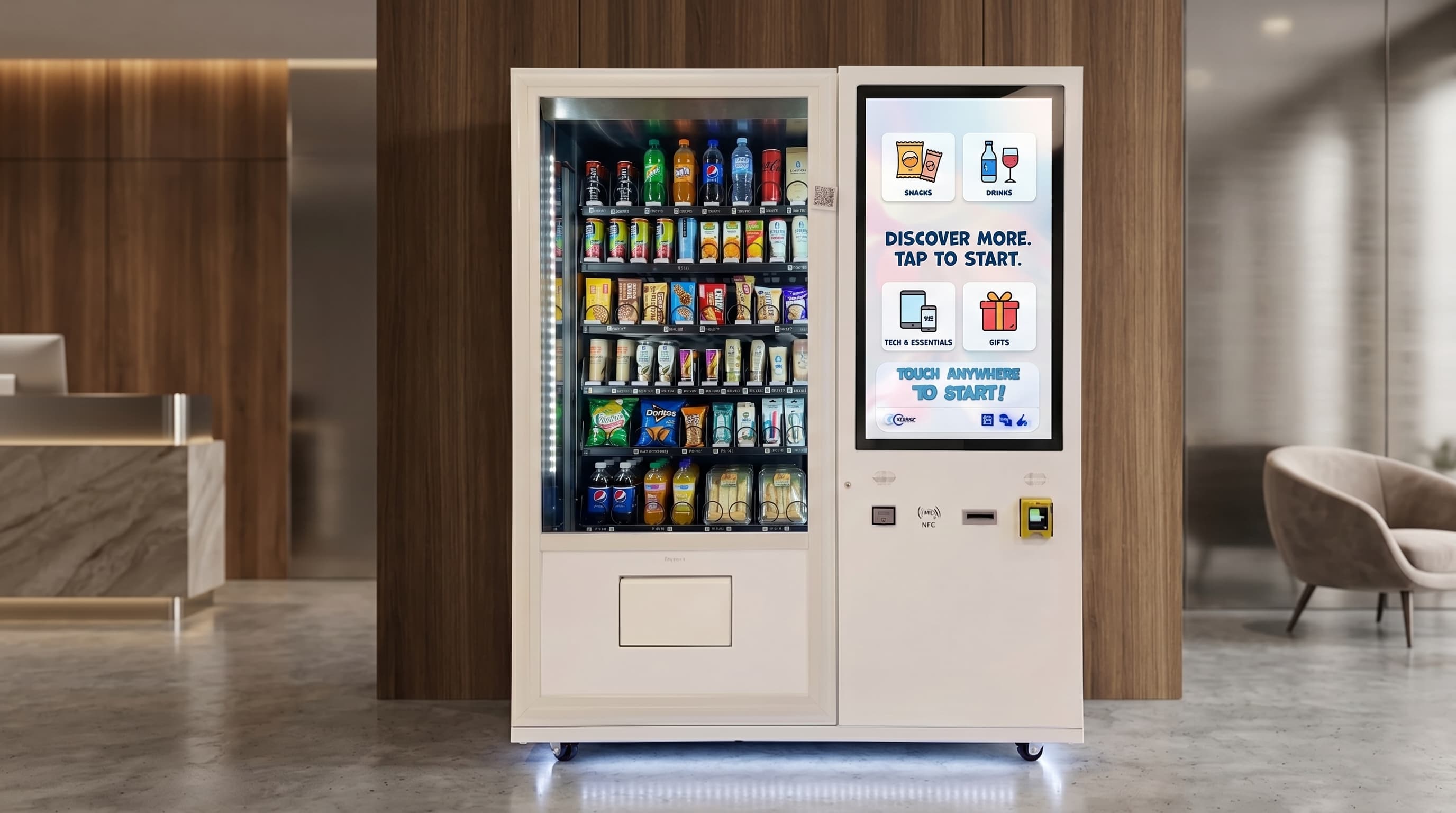
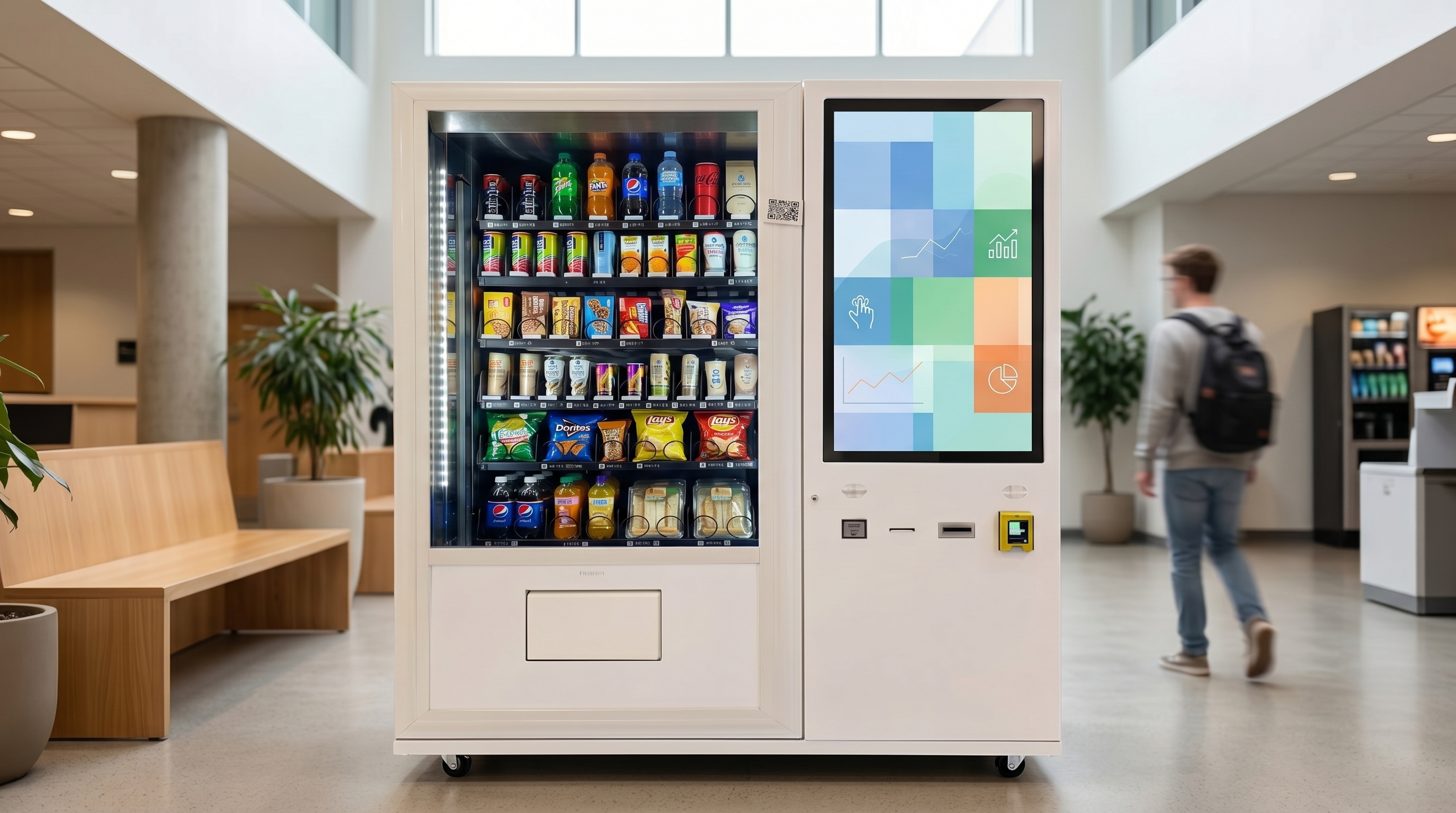
An AI vending machine is not just a normal cabinet with the letters A and I pasted onto a brochure. In practice, it is a stack. The physical layer is the cabinet, the payment hardware, the screen, the refrigeration or controlled-access hardware if needed, and the dispense logic. The software layer is telemetry, payments, content, reporting, and remote management. The AI layer sits on top of that and helps with recognition, forecasting, pricing, recommendations, merchandising, or customer-facing assistance.
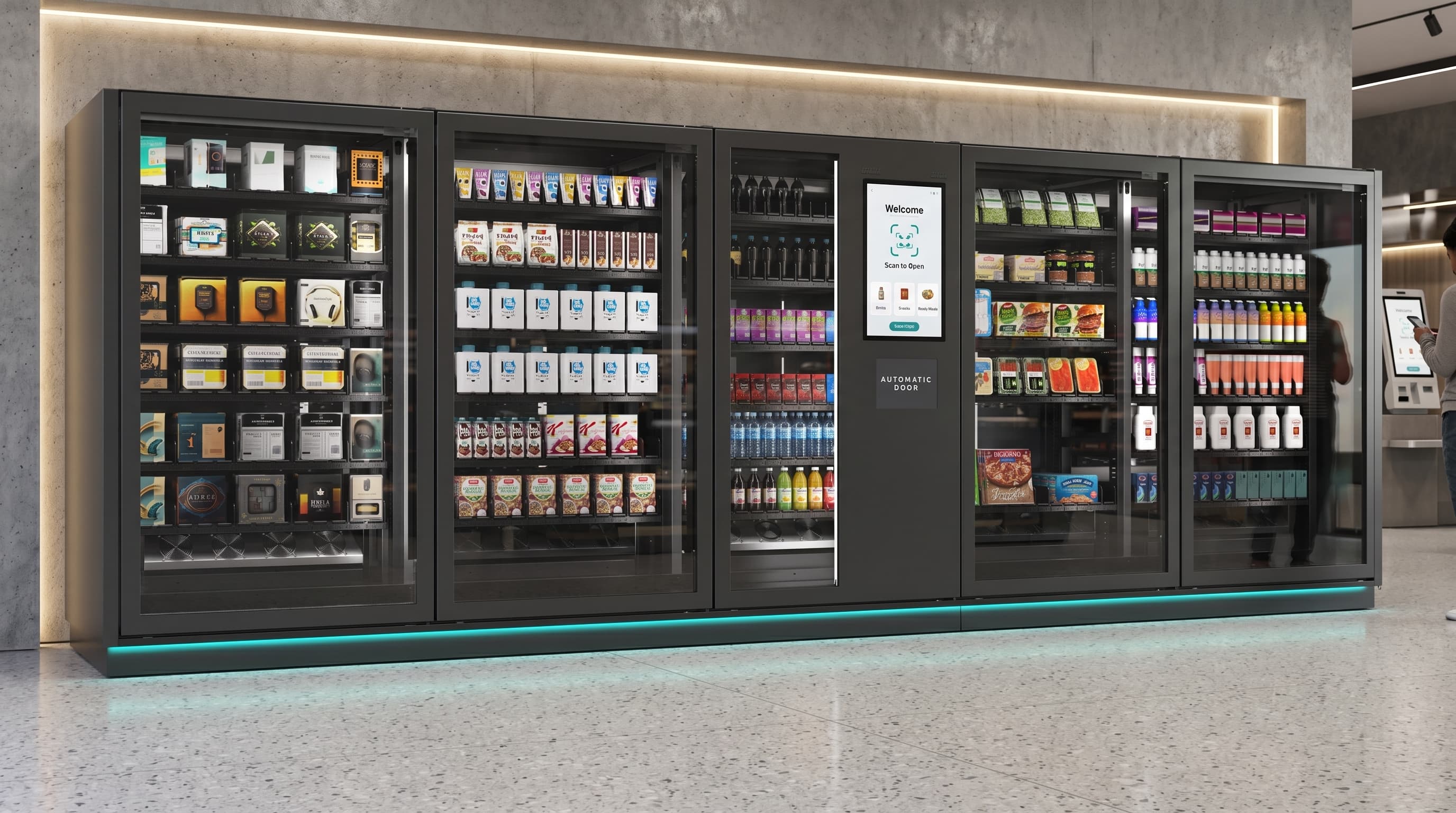
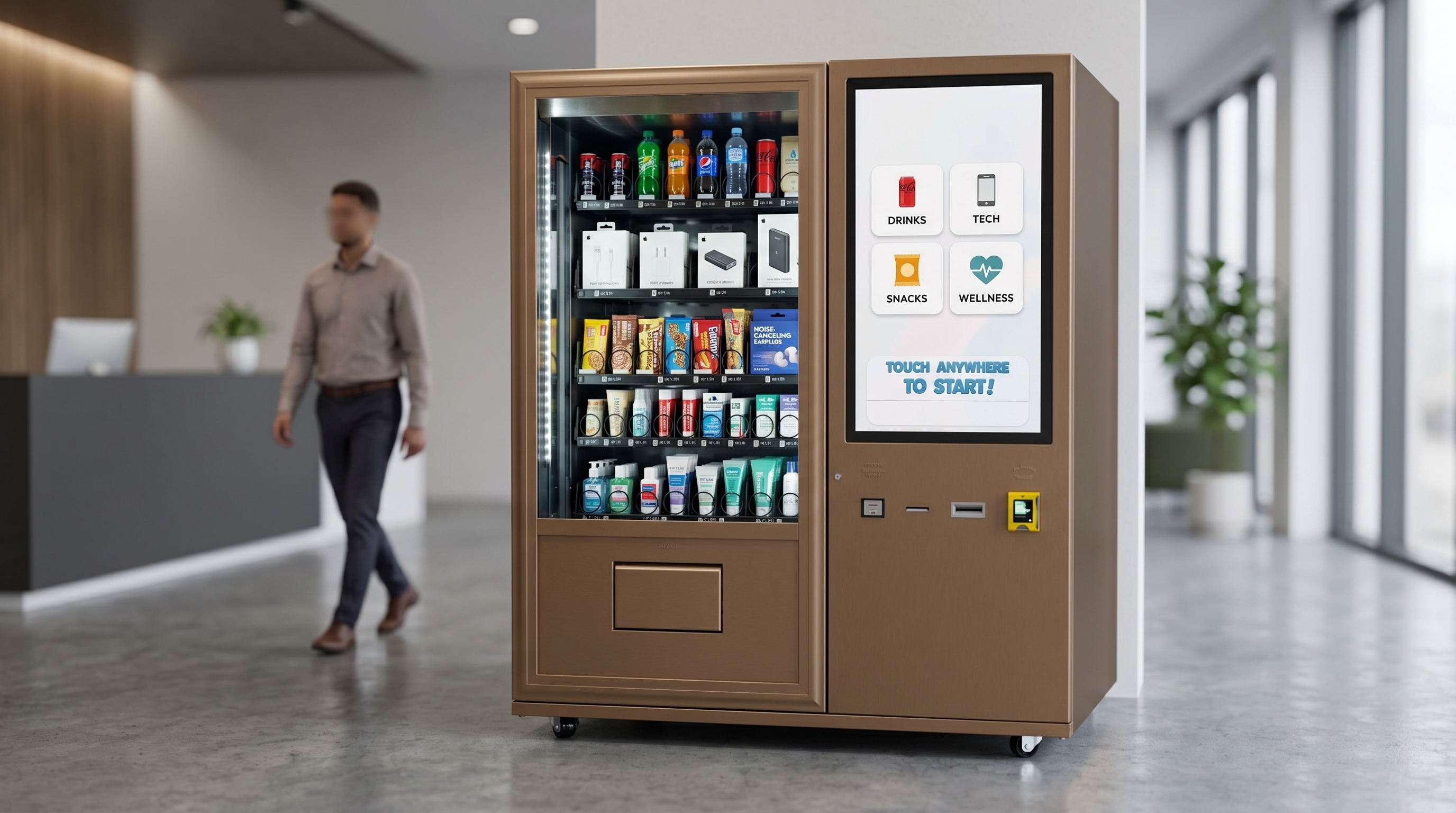
That is why the format can vary. In one deployment, the AI layer might sit on a smart vending machine with a touchscreen and cloud reporting. In another, it may sit on a smart fridge or AI cooler that uses cameras, access control, and sensor data. In another, the right answer may be a custom vending machine build designed around a specific product category, venue constraint, or buyer workflow.
The useful question for operators is not whether the machine sounds futuristic. It is whether the AI layer removes friction and improves unit economics. Does it help you stock the right products? Does it reduce wasted service visits? Does it improve the customer journey? Does it help prevent shrink? If the answer is no, then it is theatre, not an operating advantage.
- Computer vision and sensing: useful for product recognition, controlled access, and machine-side verification.
- Predictive inventory logic: useful when the operator wants better replenishment decisions instead of blind route cycles.
- Dynamic merchandising: useful when the screen, pricing, or promotional mix needs to react to demand or site conditions.
- Customer assistance: useful when the machine needs to answer product questions, guide a purchase, or recommend an upsell.
What Project Vend actually proved
Project Vend did not prove that an AI agent can flawlessly run every retail business tomorrow morning. It proved something more useful: an AI can already participate in the operating layer of a physical retail system for longer than a single chat session. It can monitor stock, react to requests, change prices, communicate with people, and make a series of commercial decisions that unfold over time.
That is a meaningful step. A lot of AI work is still trapped in one-off prompts and neat demos. Anthropic pushed the question into the real world. The failures mattered, but so did the fact that the experiment was close enough to competence to be worth taking seriously. If a model can get that far in a bounded retail environment, entrepreneurs are naturally going to ask what happens when you give it a better machine, cleaner telemetry, stronger guardrails, and a more deliberate operating model.
This is where vending becomes a practical testbed. The risk is bounded. The SKU count is manageable. The feedback loop is short. A human can still refill, inspect, or fix the machine when needed. That makes unattended retail a much safer proving ground than letting an agent loose in a large-format store, a messy warehouse network, or a full consumer brand with ten layers of internal politics.
Why entrepreneurs are using vending as an agentic retail testbed
Entrepreneurs are drawn to AI vending because it offers a rare combination: real customers, real payments, and real operational constraints without the overhead of a staffed shop. That makes it a good place to teach an agent business judgment. The agent can learn what sells, how promotions affect velocity, which locations support premium pricing, when stockouts hurt conversion, and what sort of content or interface actually moves product.
It is also a sensible place to split human and software responsibility. Humans still handle physical tasks such as restocking, cleaning, maintenance, compliance checks, and any issue that needs hands on the cabinet. The software handles the repetitive decision layer: recommending mix changes, flagging weak SKUs, watching machine performance, managing screen content, and in some cases interacting with customers directly.
That is a much stronger and more credible story than pretending the machine has become a tiny silicon CEO with no need for people. The real opportunity is not theatrical autonomy. It is better commercial decision-making inside a format that can already be measured tightly.
Where AI vending machines are strongest right now
The best use cases are the ones where software-led control solves a real operating problem. Offices, hospitals, airports, campuses, hotels, and controlled-access retail all fit because the buyer typically wants uptime, payment convenience, clearer stock visibility, and a more flexible customer experience than a legacy cabinet can provide.
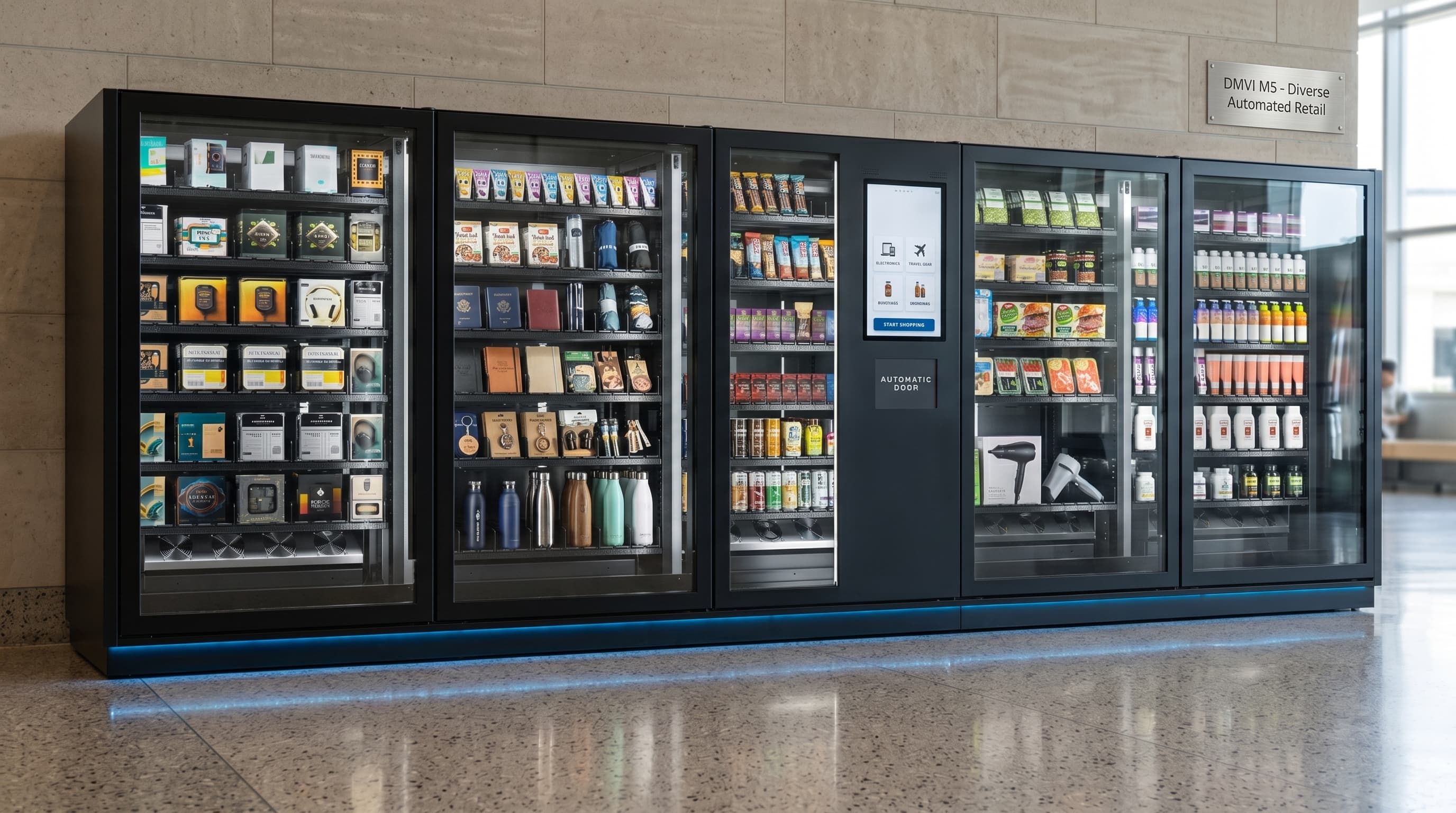
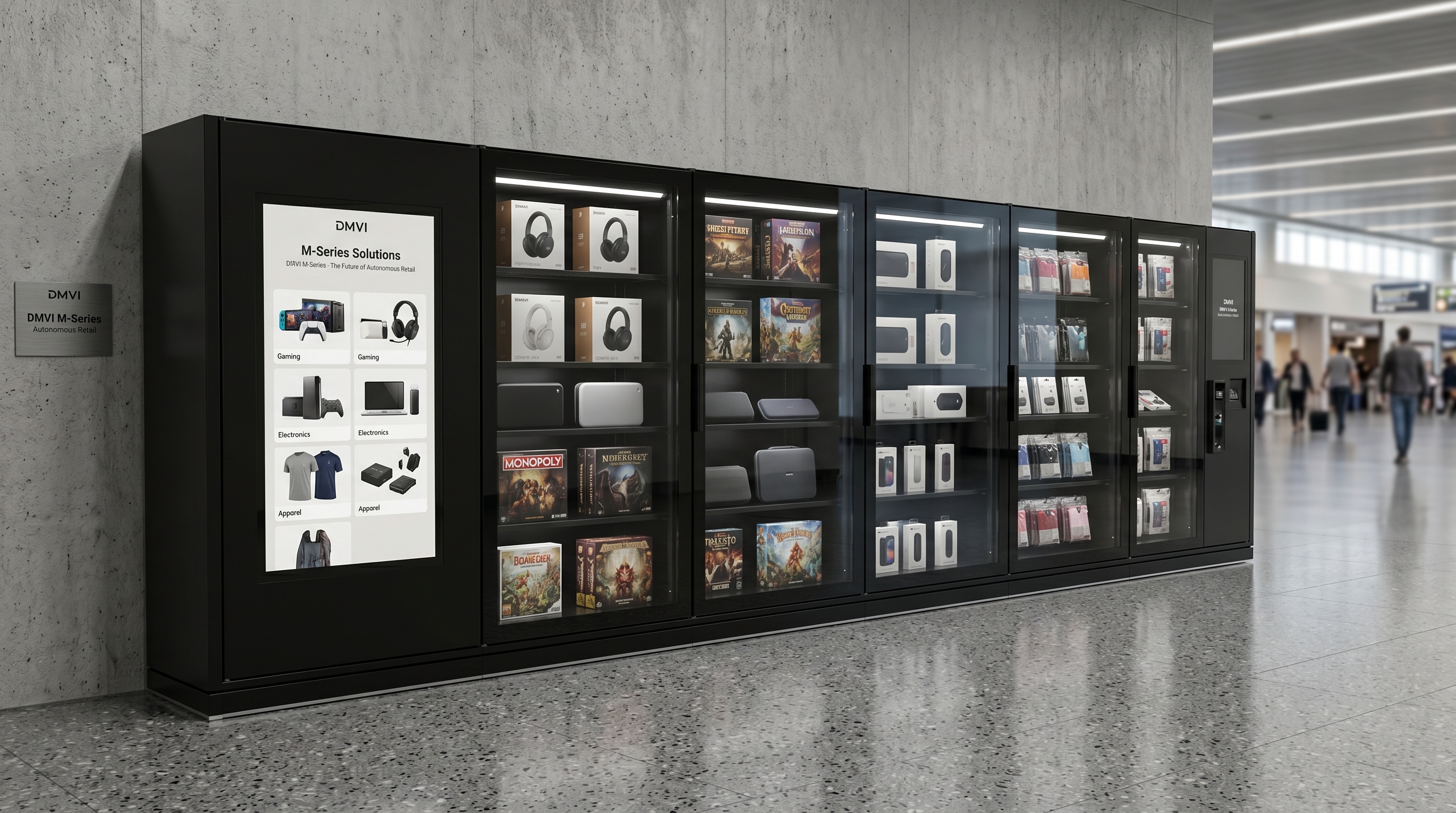
Controlled retail is especially interesting. If the operator is selling higher-value items, electronics, wellness products, or categories with a higher shrink risk, the machine benefits from better access control, stronger audit trails, and clearer product recognition. That matters even more when the broader retail environment is under pressure. The National Retail Federation's 2025 work on theft and violence is a reminder that operators care about product control and shrink prevention for very practical reasons, not because they fancy saying the word innovation before lunch.
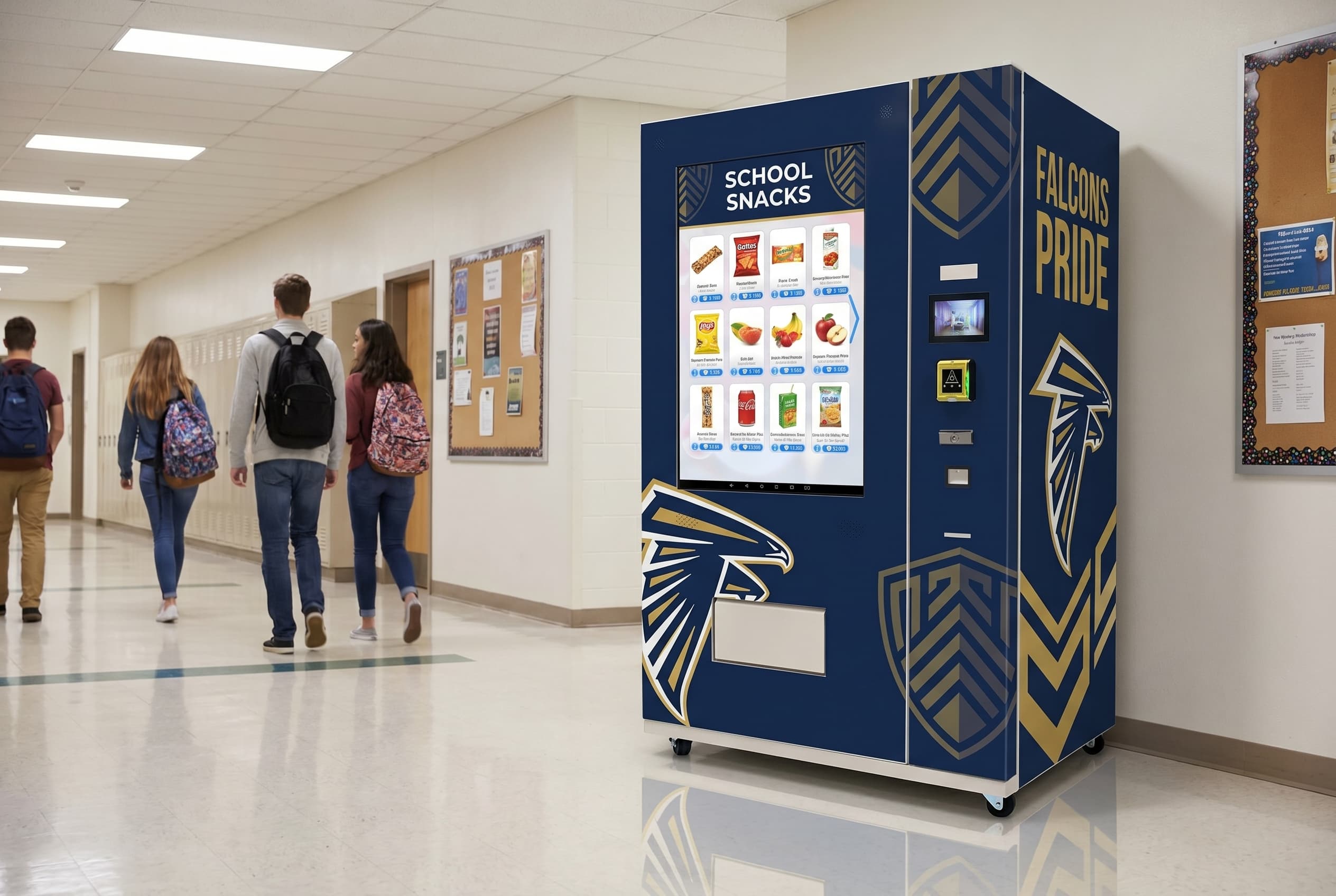
- Office and campus deployments: good for snacks, drinks, meal-replacement products, tech accessories, and convenience-led assortments.
- Hotels and airports: good for higher-margin travel, beauty, electronics, and guest-convenience categories where a smarter retail presentation matters.
- Healthcare and controlled programmes: good when product access, reporting, and auditability are as important as the sale itself.
- Micro-market and fridge-led environments: good when the operator wants the feel of a small store with a tighter labour model.
What operators should evaluate before buying an AI vending machine
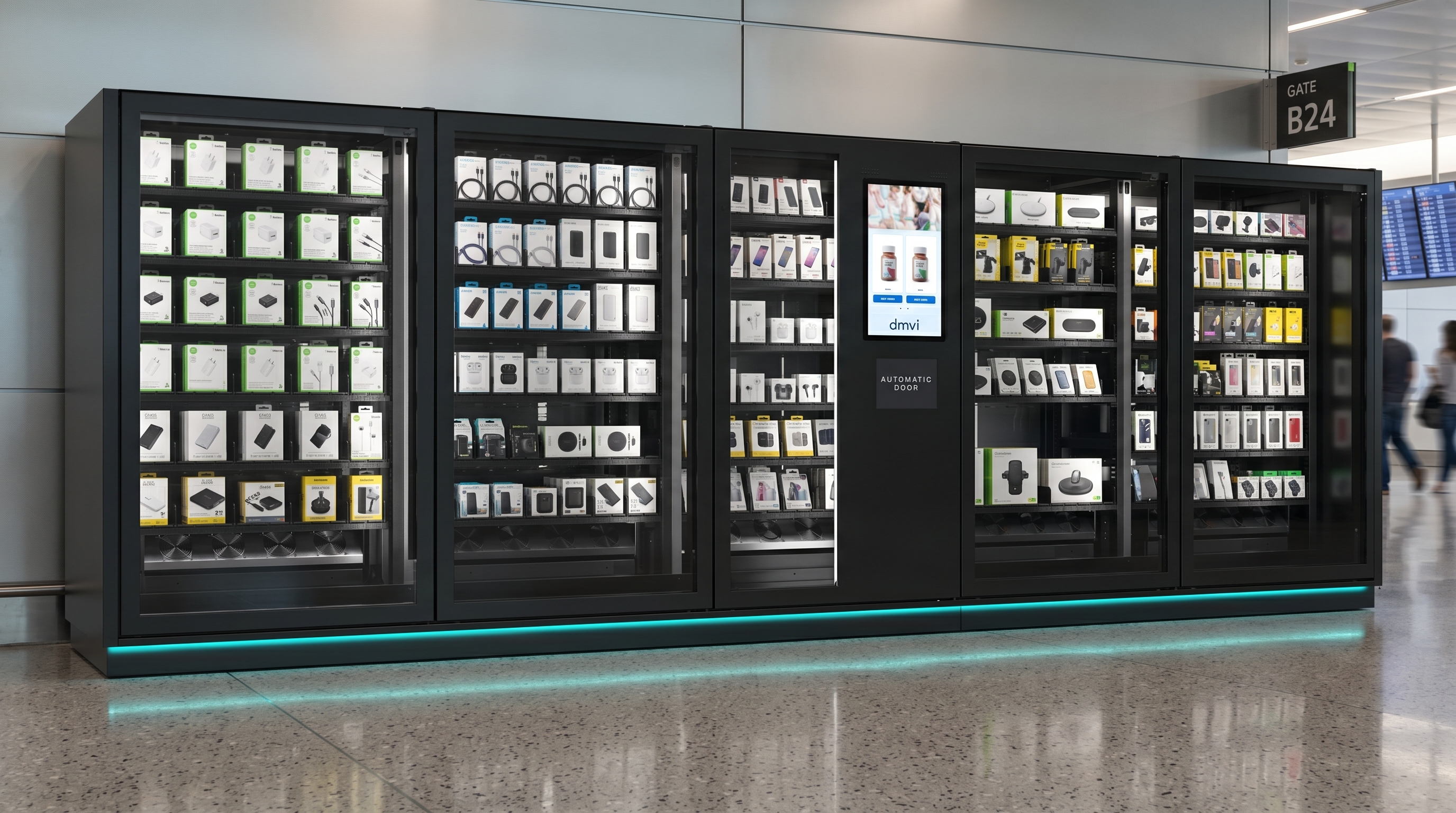
The first trap is buying the word AI instead of buying a working retail system. A serious operator should evaluate cabinet format, product fit, connectivity, payment stack, telemetry quality, service model, and integration openness before getting excited about any high-level AI promise.
Ask the boring questions. Can the machine actually handle the products cleanly? Can the operator see live machine health and stock status? Can pricing and screen content be changed remotely? Can the deployment support cashless payments cleanly? Is there a realistic service plan? Is the software layer open enough to connect to outside decision systems if the operator wants to build an agent-led workflow later?
If those answers are weak, the AI label does not save the project. It just gives the eventual post-mortem a more fashionable vocabulary.
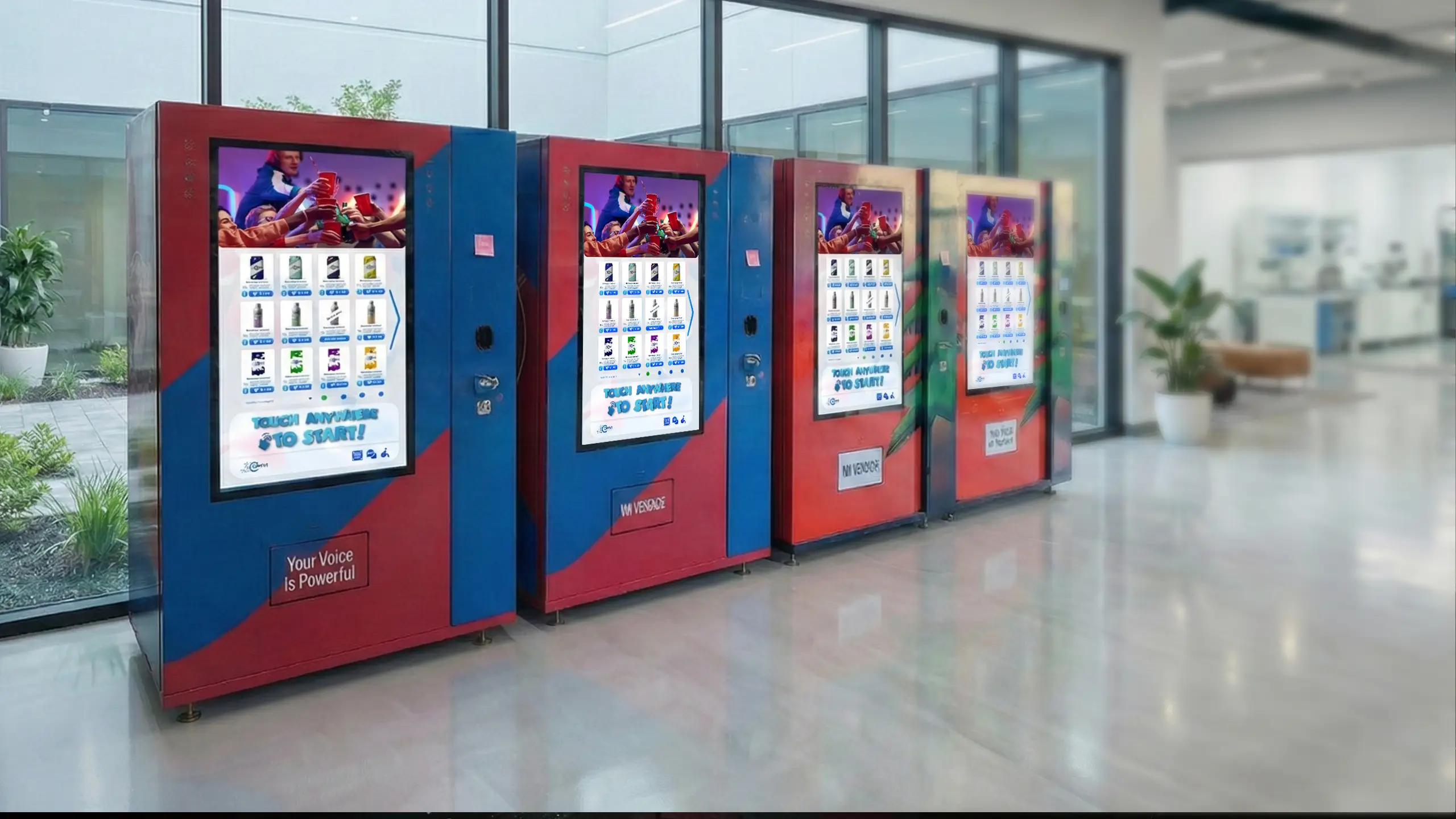
Can DMVI vending machines work with OpenClaw, Hermes, or another agentic AI?
Yes, absolutely. DMVI vending machines can sit inside an agent-driven operating stack when the deployment includes the right payment logic, telemetry, software workflows, and guardrails. In practical terms, that means an agent built on OpenClaw, Hermes, or another orchestration framework can be used to influence pricing, promotions, screen content, assortment decisions, customer messaging, reporting, or restock recommendations while humans remain responsible for physical service and any regulated or compliance-sensitive tasks.
The important point is that the machine should not be treated like an isolated box. It is part of a system. The hardware provides the retail endpoint. The software provides visibility and control. The agent provides decision logic. As soon as software starts getting authority over real transactions and workflows, governance matters too, which is why operator teams are better served by practical guardrails than grand speeches. The NIST artificial intelligence resources are a useful reference point for teams thinking seriously about risk, responsibility, and oversight.
That is the future-facing part of this category. A good AI vending deployment is not just a machine with cameras. It is a connected commercial surface that can be measured, tuned, and increasingly guided by software that learns over time.
The real takeaway
AI vending machines matter because they give operators a way to test software-led retail in a bounded physical environment. They are not interesting simply because they sound futuristic. They are interesting because they let businesses test real decision-making against real unit economics.
The best programmes will not be the ones with the loudest AI slogan. They will be the ones that pair the right cabinet, the right product mix, the right venue, and the right software discipline. That is where the category becomes commercially useful. Everything else is just expensive theatre with a touchscreen.
Planning an AI vending machine rollout?
DMVI can help you match the right cabinet format, telemetry stack, payments layer, and AI-ready workflow so the machine actually fits the commercial job.