
Trading Card Vending Machines: Operator Guide to Pokémon-Style Automated Retail
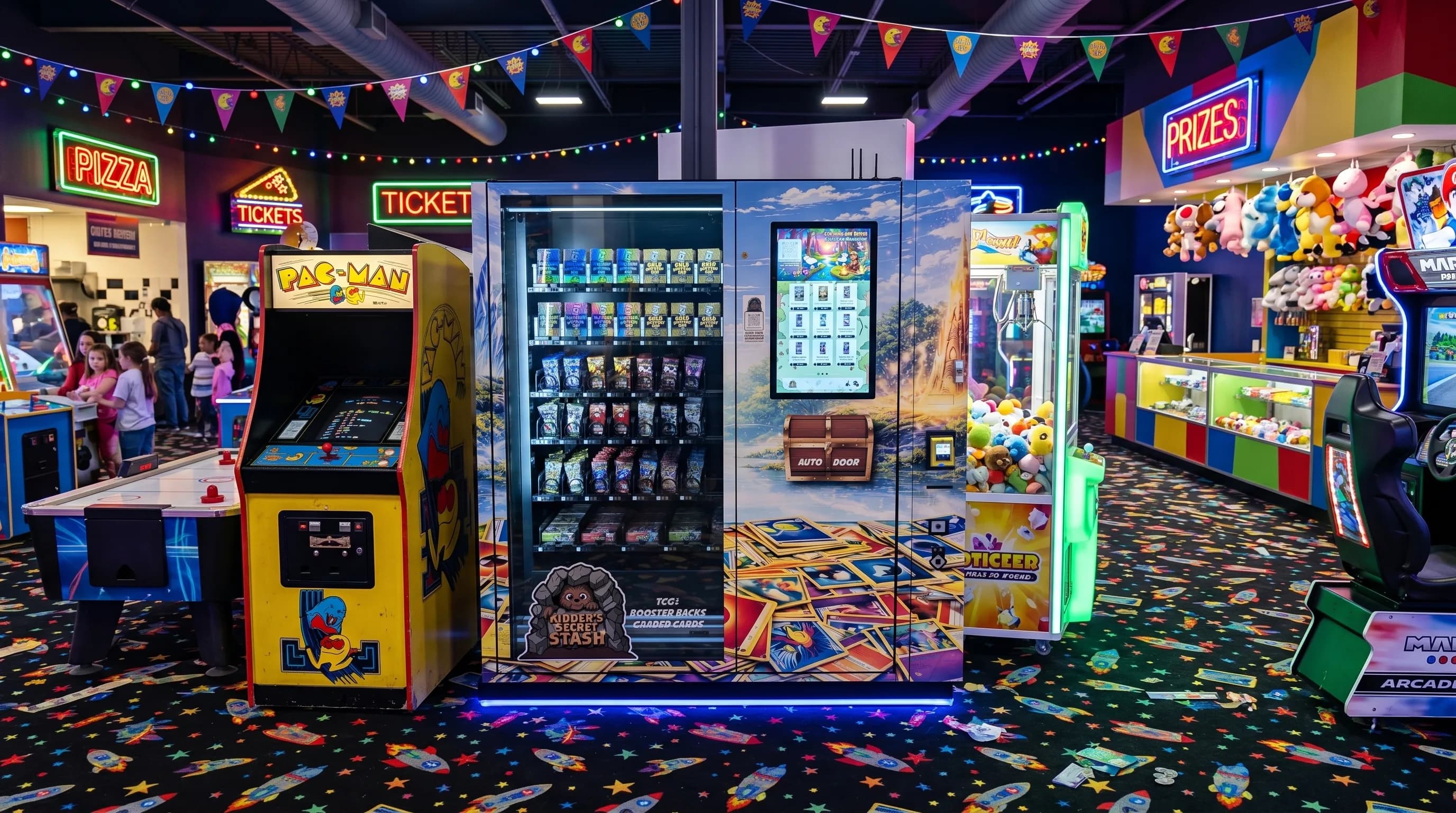
A trading card vending machine is an automated retail kiosk configured to sell collectible card products such as booster packs, tins, boxed sets, and limited drops through a secure dispense mechanism with cashless payment and remote inventory control. The category fits automated retail unusually well because transaction values are higher than snack vending, collector behaviour is highly repeat-driven, and 24/7 access suits the impulse and scarcity dynamics that surround trading-card releases.
That does not mean the category is easy. Collectibles create a more demanding retail environment than standard convenience goods. Packaging condition matters, authenticity matters, and theft prevention matters rather a lot when a small sealed product can carry a surprisingly large resale premium.
Why trading cards work in automated retail
Trading cards and adjacent collectibles combine repeat purchase behaviour with strong fandom cycles. Customers do not simply buy once and move on. They come back for new sets, chase cards, gifts, sealed collecting, and impulse purchases tied to releases or store visits. That makes a well-placed machine more like a recurring hobby touchpoint than a one-off snack stop.
The category also works because the products are compact, recognisable, and easy to merchandise when the machine is configured properly. A shopper can understand the offer quickly, especially if the machine focuses on known branded products, clear price points, and clean presentation rather than a chaotic wall of boxes yelling for attention.
Official Pokémon machines are real category context, not a DMVI affiliation
The category’s visibility has been helped by the official Pokémon Automated Retail Vending Machine program, which sells genuine Pokémon TCG products through dedicated machines in selected retail environments. That program is useful context because it shows the category can support branded automated retail at real consumer scale. DMVI is not affiliated with The Pokémon Company, and any operator using licensed IP products needs authorised sourcing and brand-compliant merchandising rather than wishful thinking and a laminated sticker.
The broader lesson is that collectible vending can work commercially when the product is genuine, the venue is right, and the machine is built for the category rather than borrowed from snack vending and asked to behave itself.
Machine configuration is not optional for collectibles
Collectors care about packaging condition far more than snack buyers do. Bent corners, crushed edges, scuffed display windows, or rough dispensing can materially reduce perceived value before the customer has even opened the item. That is why standard coil-and-drop dispensing is often a poor fit for many collectible formats.
Operators need to think carefully about shelf geometry, product support, dispense path, and how different SKU sizes will behave inside the machine. A trading-card program may include booster packs, tins, boxed trainer sets, and other formats that do not belong in a one-size-fits-all snack spiral. The more premium or fragile the collectible, the less tolerance there is for lazy hardware assumptions.
Authentication, chain of custody, and shrink control
Counterfeit and tampered product risk is a much bigger issue in collectibles than in ordinary vending categories. Product should be sourced through authorised distributors, logged at intake, and tracked through the loading process so the operator can reconstruct what was placed in the machine and when. If a customer disputes authenticity or packaging condition, the operator needs real records, not a vague hope that someone probably stocked the right box on Thursday.
Theft control also matters because sealed products can have disproportionate resale value. Reinforced fronts, secure product channels, careful anchoring, and machine placement in sensible environments all matter. A trading card vending machine should be treated more like a compact high-value retail point than a cheerful impulse machine full of crisps and sugar.
SKU-drop timing changes the operating model
Collectibles do not behave like stable commodity vending. Demand spikes around releases, reprints, restocks, and online hype cycles. A hot set can move quickly, while slower or overprinted stock can sit. That means operators need better SKU discipline and more intentional release timing than a typical snack route requires.
Remote visibility helps because the operator can see sell-through and schedule restocks around new-set demand. But the machine still needs a coherent planogram strategy. Scarcity without order just creates disappointment. A good collectible program feels curated and deliberate, not like somebody emptied a hobby-shop shelf into a cabinet and hoped for the best.
Where trading card vending tends to perform best
The strongest venues are places where the target collector audience is already present: malls, game and hobby stores, family entertainment venues, arcades, selected transit or airport retail environments, and conventions or fan-heavy destinations. These locations make commercial sense because the product already fits the shopper mindset.
The weaker locations are generic sites with no obvious collectible-buying context. Novelty can attract a few first looks, but recurring sales usually depend on customer-product fit, not on the machine being weird enough to photograph once for social media.
What operators should ask before deploying
They should ask whether the machine protects packaging condition, whether authorised supply is secure, how high-value SKUs will be dispensed safely, what the release-and-restock rhythm will be, and which venue genuinely matches the audience. They should also be explicit that licensed-branded product programs have sourcing, compliance, and merchandising obligations that do not disappear because the product is being sold through a machine.
Trading card vending can absolutely work. It works best when the operator treats collectibles as a serious retail category with its own security, sourcing, and merchandising rules — not as a cute side quest for a generic machine.
Evaluating a trading card or collectible vending program?
DMVI helps operators assess cabinet fit, product protection, sourcing controls, and venue strategy before turning collectible retail into an unattended machine format.