
Salad Vending Machine: A Refrigerated Fresh-Food Program, Not a Snack Cabinet With Lettuce
Cold-chain controlled fresh-food vending for offices, hospitals, campuses, plants, and other high-traffic sites that need proper grab-and-go meal access.
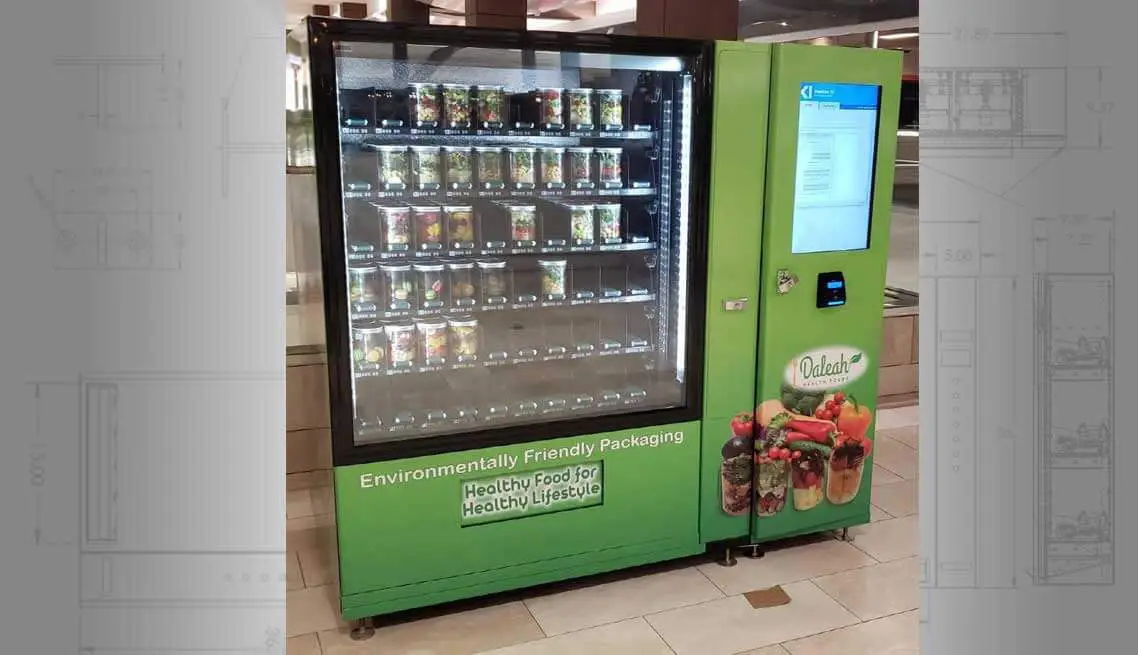
A salad vending machine is a refrigerated self-service cabinet built to dispense fresh, short-shelf-life items such as salads, wraps, grain bowls, protein boxes, yoghurt, and fruit cups under controlled cold-chain conditions. It is fresh-food retail in an unattended format. Snack vending with healthier SKUs dropped in does not work.
This format earns its floor space only when refrigeration, packaging, refill cadence, and telemetry are engineered together from day one. Otherwise, perishables turn a nice idea into waste.
REFRIGERATED FRESH-FOOD PROGRAMS
What fresh-food vending actually demands
This format works in environments with enough daily traffic and predictable demand windows to justify perishable inventory: corporate offices, manufacturing sites, hospitals, university campuses, gyms, transit hubs, large-format coworking buildings, and shift-based workplaces where canteen hours never quite cover everyone. It does not work as a novelty fixture in a slow lobby.
Cold chain is the whole job: The FDA's Safe Food Handling guidance sets refrigerator storage at 40°F or below as the consumer baseline for perishables. A salad vending program needs verified internal temperature, a logged temperature feed, and a clear alarm path when the cabinet drifts. Without that loop, the program is a liability.
Packaging has to fit the cabinet, not the other way around: Bowl-heavy menus often point toward pick-from-shelf or smart-fridge logic. Wraps and boxed sandwiches may suit refrigerated spiral or carousel logic. Yogurts, fruit cups, and side snacks can support a hybrid zoned layout. The menu should drive the hardware conversation.
Refill rhythm and FIFO matter every day: Perishables need daily or every-other-day replenishment in most workplace environments, documented FIFO rotation at refill, sell-by enforcement that is stricter than wishful thinking, and a pull-and-credit workflow for anything removed before sale.
Telemetry matters more on perishables: Real operators need live sales velocity, stock-on-hand, cabinet temperature history, and a way to see waste against forecast. In unattended hardware, that usually sits on top of the payment and audit foundations familiar from MDB and DEX.
Cashless should be the default: Fresh-food buyers are workplace adults with phones, not people hunting coins. Contactless tap, NFC wallets, and app or QR checkout are standard patterns in the unattended world described by Stripe's unattended payment terminal guide and in practical vending-payment comparisons such as Aurency's review of NFC, QR, and mobile wallets.
DMVI is the cabinet manufacturer. Food safety compliance, commissary operation, transit handling, allergen labeling, and sell-by policy still sit with the operator and their food-service partner rather than with the machine vendor.
COLD CHAIN, PACKAGING FIT, FIFO, AND PAYMENT FLOW HAVE TO WORK AS ONE PROGRAM
Dedicated refrigerated machine, smart fridge, or broader fresh-food setup?
The right cabinet path depends on the menu, the traffic curve, and how much operational complexity the site can actually support.
Dedicated refrigerated vending machine
Best for mid-to-high traffic sites with mostly packaged salads, wraps, bowls, and other consistent SKUs. Strong controlled dispense and mature unattended-payment logic, but less forgiving of awkward packaging.
Smart fridge
Best when assortment diversity matters more than rigid dispense geometry. Strong for bowl-heavy menus and grab-and-go feel, but it assumes the operator is comfortable with identity-tied checkout and a different shrink profile.
Hybrid fresh-food micro-market
Best for larger buildings that can support chilled plus ambient merchandising together. Wider assortment and better basket-building, but it needs more footprint and a more mature refill operation behind it.
What buyers should confirm before ordering
The most useful scoping conversations are the ones grounded in traffic, menu, refill logistics, and the actual operating team rather than in optimistic renderings.
Traffic pattern and daypart curve
Estimate daily throughput, lunch spikes, overnight demand, and weekend behavior before discussing cabinet size or SKU count.
Menu and packaging fit
Know whether the program is bowl-heavy, wrap-heavy, snack-adjacent, or genuinely mixed, because that changes the hardware path immediately.
Commissary and refill model
Distance from prep site, refill cadence, FIFO discipline, and who actually rotates product all matter more than lofty wellness language.
Telemetry and dashboard expectations
The operator should know what stock, temperature, waste, and payment data need to be visible after launch rather than bolting that question on at the end.
Branding and screen requirements
If the cabinet sits in a workplace, healthcare, or campus environment, wrap, messaging, and on-screen merchandising should match the host environment instead of feeling generic.
Payment stack and support model
Confirm contactless, mobile-wallet, QR, or app-linked expectations early, along with who handles customer support when a payment or door event fails.
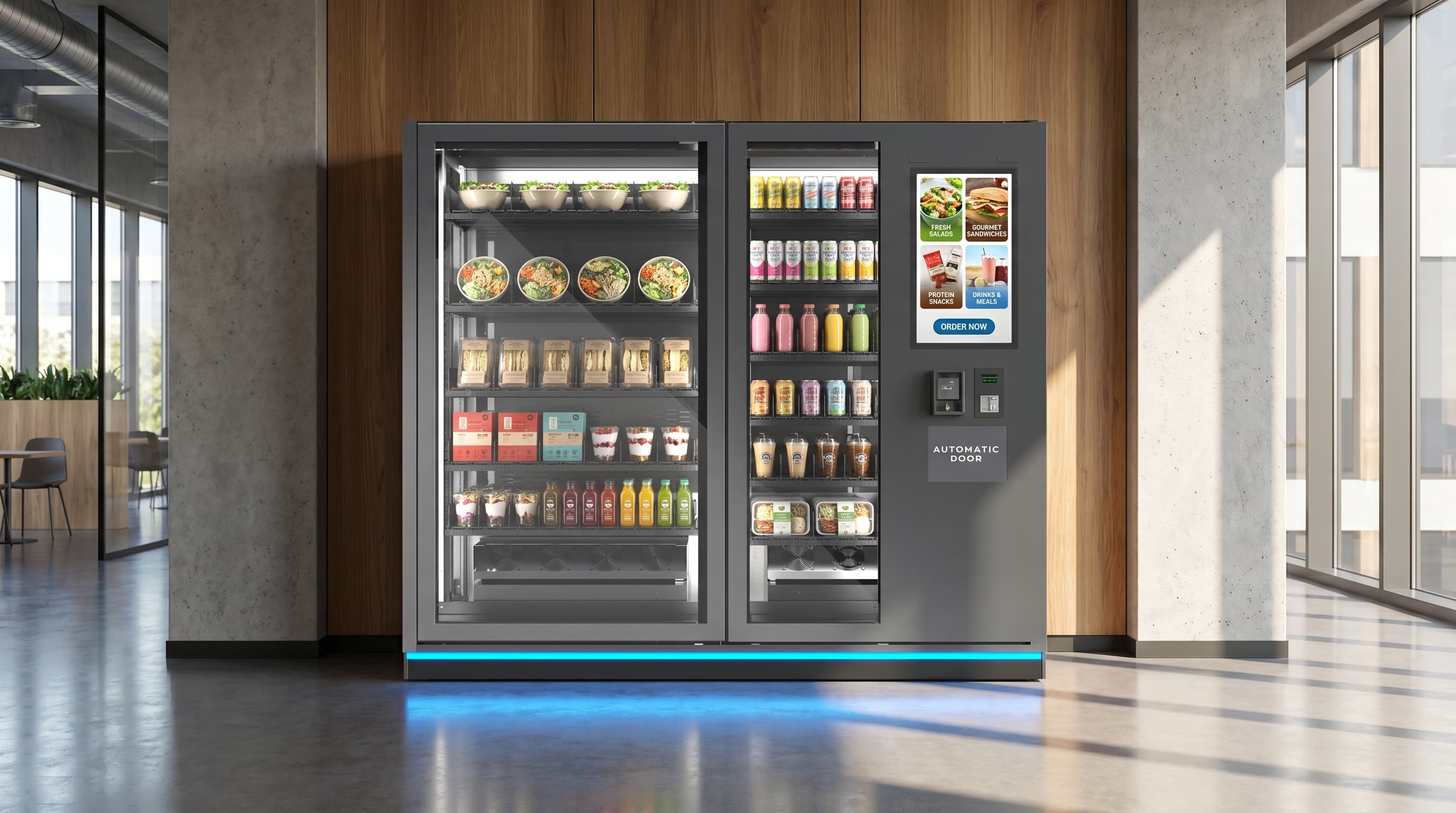
Not sure whether this should be a refrigerated machine, a smart fridge, or a wider fresh-food setup?
Bring the menu, traffic estimate, refill model, and food-service partner into the first scoping call. DMVI can help size the cabinet path around the real operation rather than around a generic healthy-vending wish list.
Salad Vending Machine FAQs
A salad vending machine is a refrigerated self-service cabinet that dispenses fresh perishable items such as salads, wraps, grain bowls, protein boxes, yoghurt, and fruit cups under continuous cold-chain control. It only works well when telemetry, FIFO discipline, packaging fit, and replenishment cadence are all engineered together rather than guessed at later.
FDA consumer guidance is to keep refrigerated perishables at 40°F or below. A salad vending cabinet should stay at or below that range continuously, with logged temperature reporting and alarm thresholds. The operator and commissary partner still own the working temperature policy, transit handling, and food-safety compliance under local rules.
They perform best in sites with predictable daily traffic and demand windows that canteens do not fully cover: corporate offices, manufacturing plants, hospitals, university campuses, gyms, transit hubs, and large coworking buildings. They struggle in slow lobbies because perishables punish low-velocity rooms with waste and short-date pullbacks.
A dedicated refrigerated machine fits tighter high-velocity programs. A smart fridge fits wider assortments and more flexible packaging. A fresh-food micro-market suits larger sites that can support a broader footprint with chilled and ambient sections together. DMVI scopes the path against menu mix, traffic pattern, refill model, and the operator's real reporting workflow.
No. DMVI configures the cabinet, refrigeration spec, dispense logic, payment stack, telemetry, and branding. The operator and commissary partner own food sourcing, preparation, transit, sell-by enforcement, allergen labeling, and food-safety compliance under FDA and local rules. The cabinet supports the program; it does not replace operator responsibility.