Custom Vending Machines for Retail
How branded automated retail earns its floor space
Custom vending machines for retail are automated retail units configured to a specific brand, product mix, and venue context rather than generic snack cabinets with a nicer wrap. The real retail question is not whether automated retail can sell products. It is whether a given square foot of retail space earns more as a staffed counter, a passive display, or a branded machine that trades longer hours for lower labor cost.
For DMVI custom vending machines, pricing ranges, model options, and quote requirements, start with the custom vending machines page. For in-stock touchscreen units, compare smart vending machines for sale.
Quick answer: A custom vending machine is an automated retail unit built around a specific product, venue, brand, and customer journey. For retail programs, the machine only earns its floor space when the cabinet format, touchscreen UX, payment flow, planogram, inventory reporting, and service cadence are planned together. DMVI builds custom vending machines with touchscreen shopping, cashless payments, IoT telemetry, live inventory, VendingTracker software, and deployment support.
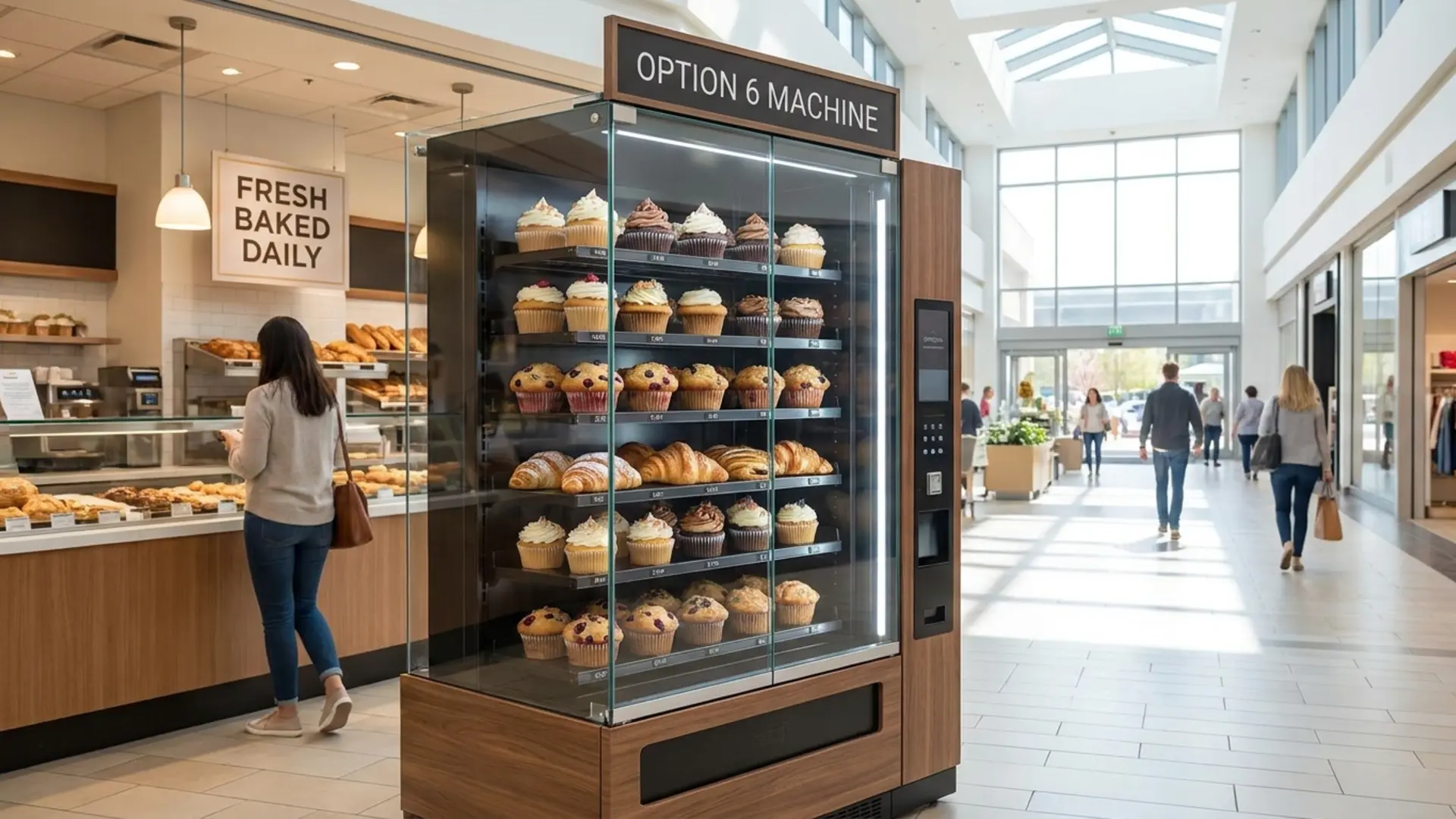
For the right categories, custom vending wins because it compresses merchandising, checkout, and after-hours trading into a compact footprint. The machine still has to earn its place, but when the use case is clear it can outperform a weak counter concept rather than merely decorating the floor plan.
Where custom vending wins inside a retail floor plan
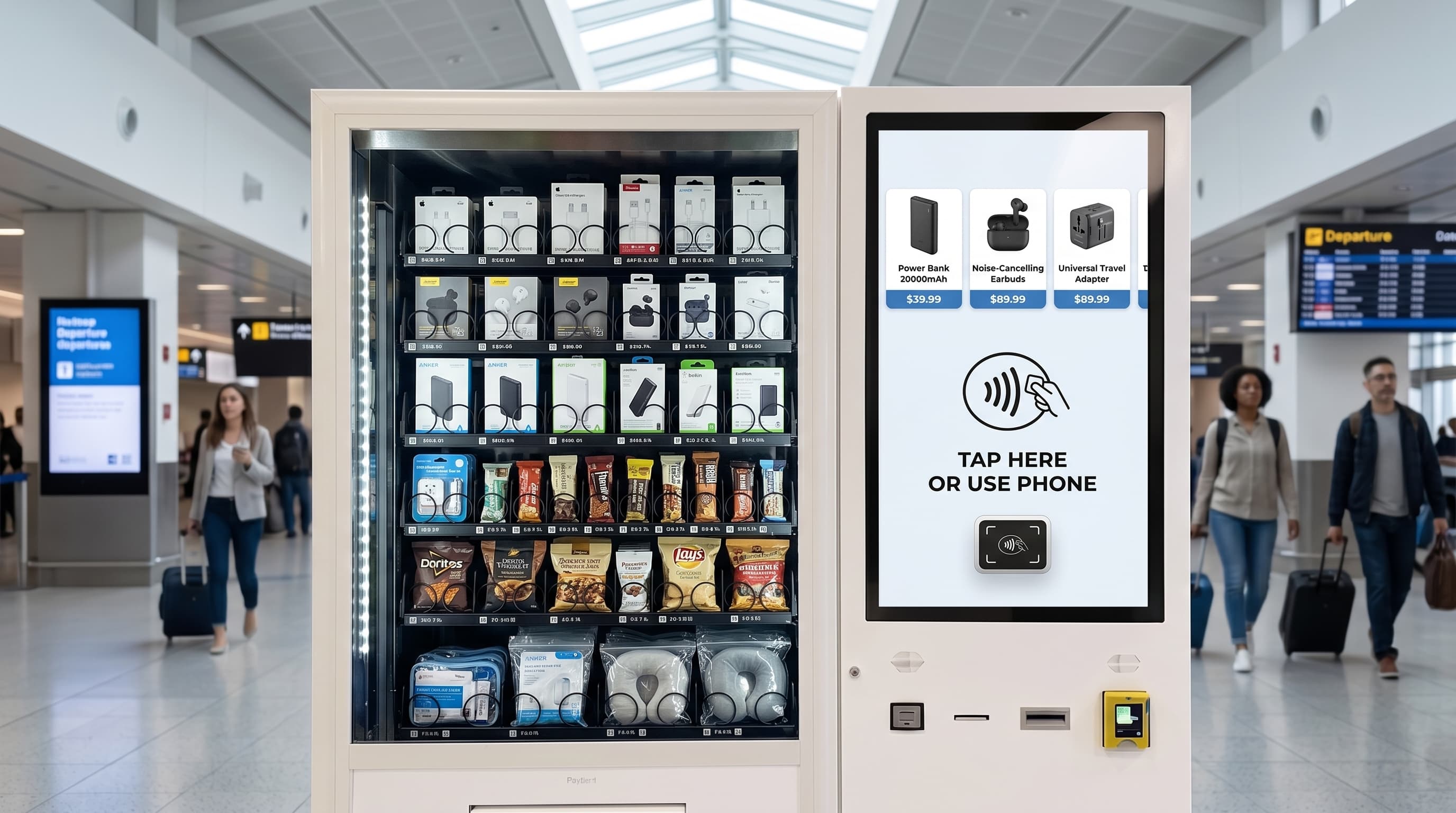
Custom vending works best when the assortment is narrow, the buying mission is clear, and the operating window is wider than the retailer wants to staff. Travel essentials, beauty and fragrance, electronics accessories, collectibles, and small high-margin gift goods are the obvious fits because the customer understands the purchase quickly and the products do not require human explanation to get over the line.
That is also why custom vending usually performs better in retail-adjacent environments such as hotels, airports, transport hubs, and mixed-use venues than in spaces where a full-service shop is already doing the heavy lifting. The machine should solve a retail gap, not compete with a healthy staffed counter for the sake of novelty.
When should a retailer use a custom vending machine?
A retailer should use a custom vending machine when the product is easy to understand, the buying mission is quick, and the location can support unattended sales without weakening the customer experience. It works especially well when a branded automated retail unit can extend trading hours, reduce labor dependency, or serve a compact area where a staffed counter would not pay for itself.
The best candidates have clear packaging, predictable restocking, practical payment requirements, and enough margin to justify the cabinet, software, service, and location costs. If the product needs heavy consultation or frequent human intervention, a custom vending machine may still help, but it should be scoped as part of a broader assisted-retail model.
Cabinet, software, and payment are one decision
A retail vending deployment is really three linked systems: the cabinet, the software layer, and the payment stack. The cabinet controls footprint, lighting, finish, and dispensing method. The software controls content, pricing, reporting, and customer flow. The payment stack decides whether the machine feels current or faintly stranded in the past.
That is why bolt-on thinking usually fails. A premium-looking cabinet with clumsy cashless acceptance or weak touchscreen logic underperforms because the customer experiences the whole system, not the spec sheet in separate columns. Serious retail deployments scope the hardware and software together from the start.
Planogram discipline still decides whether the machine works
Custom vending does not remove merchandising work. It makes weak merchandising more visible. The retailer still needs a real assortment plan, sensible SKU ratios, a sell-through threshold for each slot, and a content plan for the screen. If the planogram is lazy, the machine simply exposes that laziness in higher definition.
This is where custom vending stops being a branding exercise and becomes retail operations. A cabinet should be treated like a very small unattended store: reviewed by product performance, restocked against actual movement, and adjusted when the mix is not earning enough for the space it occupies.
Finish and brand fit decide whether the machine stays on the floor
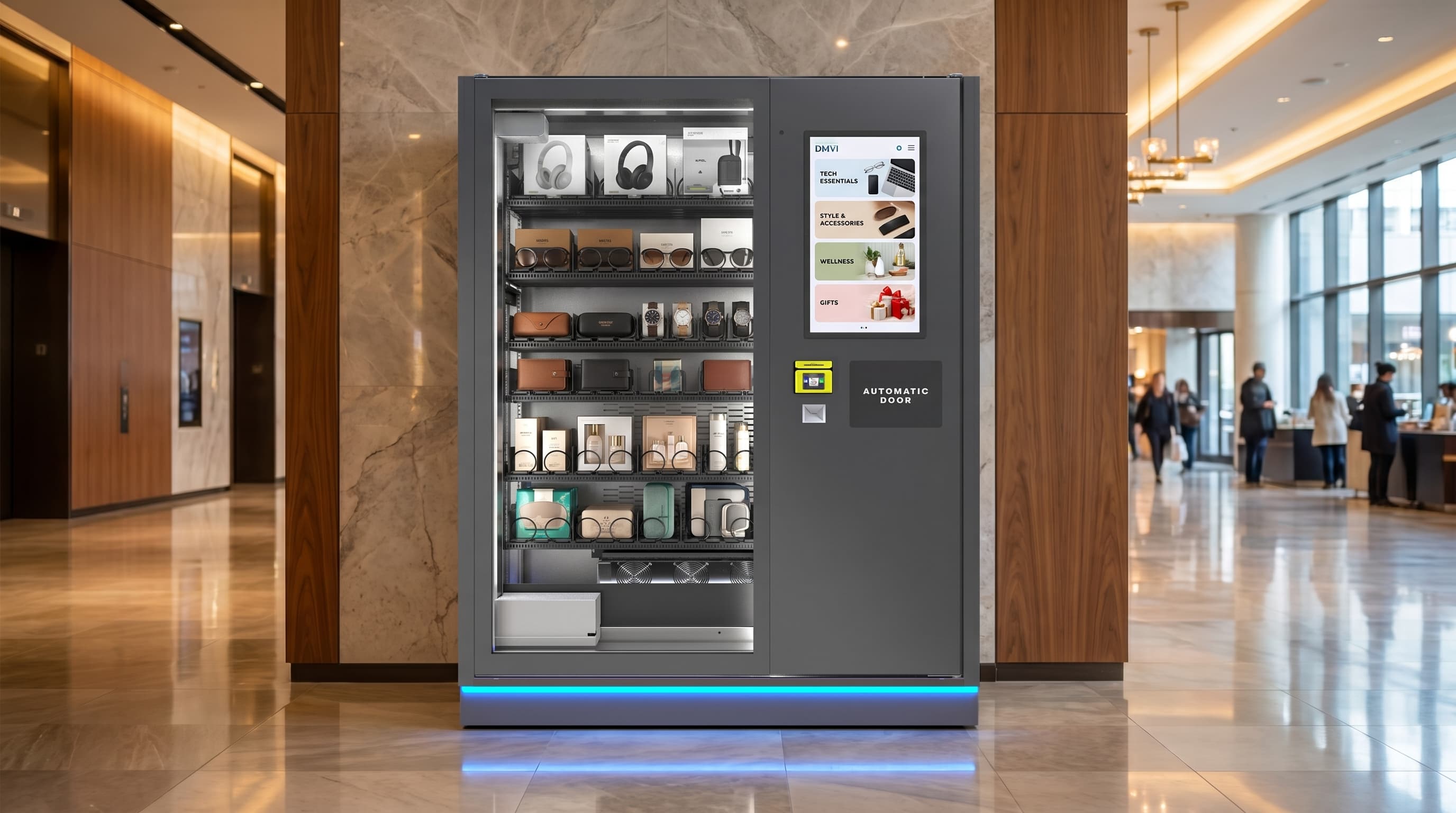
The machine has to look like it belongs in the venue. A generic snack-style cabinet dropped into a premium environment sends the wrong signal and often gets judged as equipment rather than retail. A branded cabinet with considered lighting, correct scale, and a finish that matches the surrounding environment is far more likely to survive internal scrutiny after the initial excitement wears off.
This matters because retail teams do not just evaluate revenue. They also evaluate whether the machine supports brand perception, traffic flow, and the overall feel of the floor. In retail, ugly can be unprofitable even when it vends.
Service model is the line between asset and liability
A custom vending machine becomes a retail asset only if the service model is clear. Stocking, cleaning, refund handling, remote reporting, and ownership of small failures all need to be defined before launch. Too many deployments die because everyone assumes the venue staff will somehow absorb the machine into their day without a real process.
The best custom retail vending programs are not mysterious. They are simply disciplined: the machine has a defined purpose, the assortment is managed, the payment flow works, and someone owns the service cadence. That is the difference between a profitable automated retail node and an expensive prop.
What makes DMVI custom vending machines different?
DMVI builds custom smart vending machines around the product, venue, payment flow, inventory workflow, and brand experience rather than treating customization as a wrap-only exercise. A typical project can include touchscreen shopping, cashless payments, IoT telemetry, live inventory visibility, VendingTracker software, custom cabinet options, and deployment support.
Digital Media Vending International is a U.S. custom vending machine manufacturer based in Sebastopol, California. Since 2009, DMVI has built smart vending machines, wall-mounted machines, large-format M-Series machines, smart lockers, and automated retail systems for brands, operators, agencies, and enterprise teams, with more than 2,000 deployments across 22 countries.
Custom vending machine buying checklist
Before quoting a custom vending machine, define the operational details that decide whether the project is practical, profitable, and serviceable after launch.
- Product dimensions, packaging, weight, fragility, and temperature needs.
- Location type, available floor or wall space, power, connectivity, and access rules.
- Payment requirements, including card, contactless, mobile wallet, age control, or account-based payment needs.
- Touchscreen content, brand requirements, product media, and promotional workflow.
- Inventory reporting, telemetry, restocking workflow, refund handling, and service ownership.
- Number of machines, rollout timeline, budget range, and any pilot success criteria.
If you are planning a branded retail vending deployment, the fastest path is to start with DMVI's custom vending machines page and then prepare the product and location details needed for a quote.
Planning a branded retail vending deployment?
See DMVI custom vending machines built around your product, location, payment flow, and inventory workflow.