
Asset Management Lockers — Software-Managed Issue and Return for Tools, Devices, and PPE
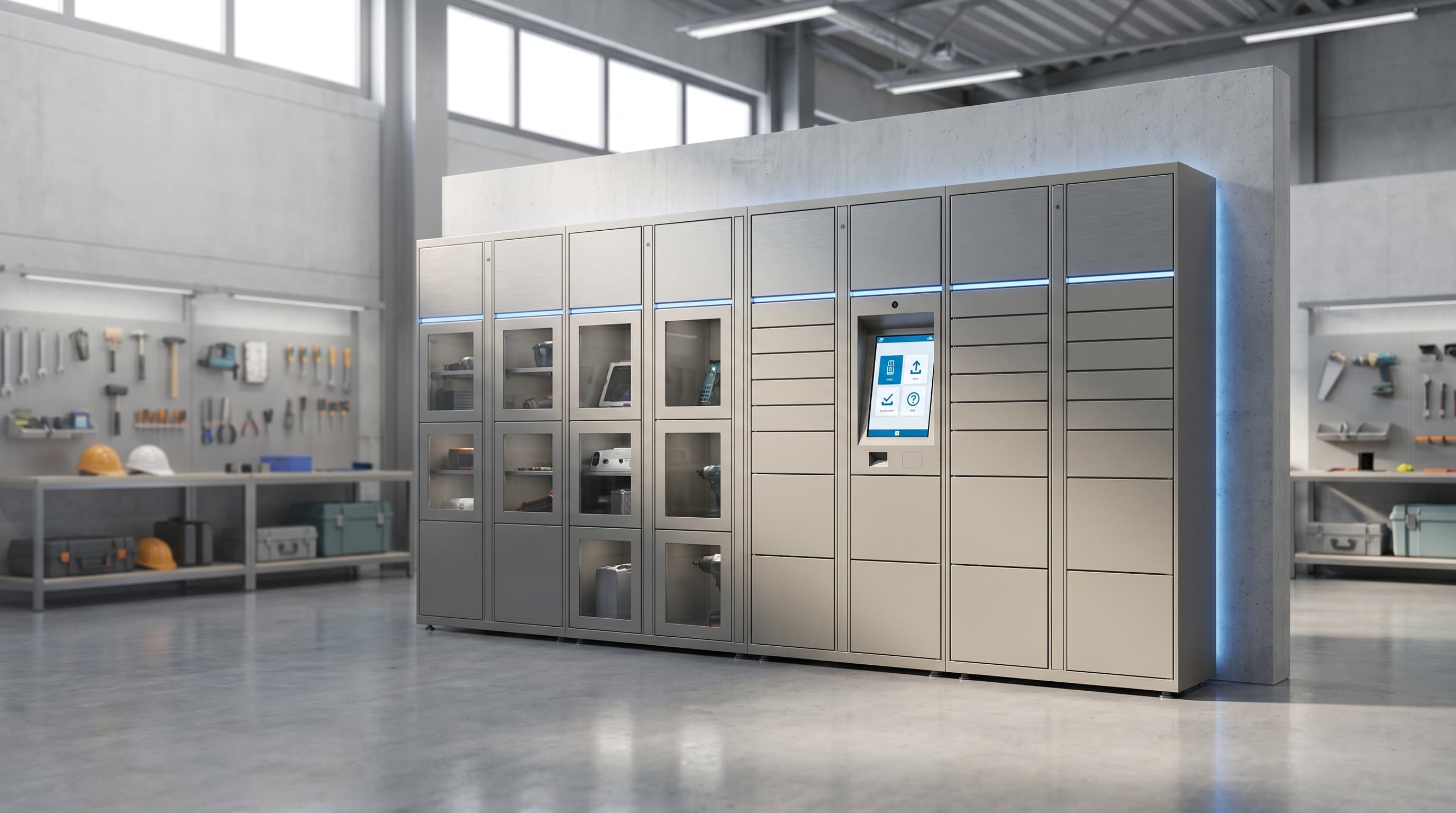
An asset management locker is a software-managed electronic locker system that controls the recurring issue, return, and audit of accountable equipment — tools, IT devices, PPE, radios, keys, test instruments, and shared kit (Wikipedia: Smart lock). The cabinet is the smaller half of the product. The working half is the permission model, the audit trail, the overdue-return logic, and the exception escalation that keep equipment moving between authorised users without depending on a sign-out sheet, a stores desk, or somebody's memory.
Why issue-and-return programmes break (and how an asset locker fixes them)
Most issue-and-return programmes break in the same three places. Equipment leaves without a clear authoriser. Equipment comes back without a clear timestamp. Equipment that does not come back becomes invisible until it is replaced.
Asset management lockers fix the structural problem by attaching every issue, every return, and every override to a named user, a timestamp, and a permission rule. The cabinet enforces the workflow. The software enforces the accountability. Loss falls because the audit chain stops being optional.
Most issue-and-return programmes break in the same three places
- Equipment leaves without a clear authoriser.
- Equipment comes back without a clear timestamp.
- Equipment that does not come back becomes invisible until it is replaced.
Asset-Control Workflows
IT device issue and return
Laptops, tablets, scanners, mobile devices, and accessories issued under user-level permission, returned with timestamp, and charged in-bay where applicable.
Tool and engineering custody
Calibrated tools, test instruments, and engineering kit with overdue-return alerts and clearer replacement-cost visibility.
Recurring key and credential issue
Vehicle keys, premises keys, access cards, and controlled credentials with chain-of-custody logging.
PPE and regulated stock issue
Respirators, hearing protection, gas detectors, and other PPE where user-level traceability is a compliance line, not a nice-to-have.
Shift-change equipment issue
24/7 industrial sites, depots, and multi-shift operations that need issue without a staffed stores attendant on shift.
Shared-equipment accountability
Fleet devices, shared instruments, and pool kit moving between users without losing the audit trail.
What the Software Controls
User permissions
Role-based, team-based, or named-user access so only authorised people open the right compartments.
Audit trail
Every issue, every return, and every operator override logged with user, timestamp, and compartment.
Overdue alerts
Items past their return window surface in the management layer instead of disappearing until replacement time.
Exception chasing
Failed access, unreturned assets, and admin overrides aggregate into one queue for faster follow-up.
Physical access integration
RFID/NFC corporate badge, PIN, QR, mobile-app access, and operator override paths can be scoped around the real site workflow.
Explore related locker workflows
Compare adjacent accountability workflows
Asset-control programmes often overlap with secure release and broader self-service collection, so these are the most relevant pages to compare next.
Secure Handover Lockers
A closer fit when the main job is one-time controlled release of a sensitive item rather than day-to-day issue and return.
Locker Vending Systems
Use the broader transaction page if the workflow combines collection, returns, permissions, and self-service access across several item types.
Electronic Lockers
Return to the main locker hub if you are still comparing accountable-equipment workflows with parcel, rental, or public-facing pickup models.
Want a cleaner issue-and-return process?
Tell DMVI what assets you need to control, who uses them, how returns should work, whether access needs to run 24/7, and what audit visibility matters. We can scope the right asset locker approach from there.
Frequently asked questions
An asset management locker is a software-managed electronic locker system that controls recurring issue and return of accountable equipment — IT devices, tools, PPE, keys, and shared kit. Each access is tied to a named user, a timestamp, and a permission rule, replacing sign-out sheets and stores-desk handovers with an automated audit trail.
Asset management lockers handle IT devices such as laptops, tablets, scanners, and radios; tools and test instruments; PPE and safety gear; vehicle and premises keys; and other reusable accountable kit. Compartment sizing, in-bay charging, and locking mechanism are scoped around the actual equipment mix rather than sold as a one-size cabinet.
Yes. 24/7 access is one of the primary commercial reasons sites adopt asset lockers. The software-managed access path replaces a staffed stores desk so multi-shift operations, depot teams, and field engineers can issue and return equipment whenever the work happens, with the audit trail intact.
Yes. Role-based, team-based, and named-user permissions are core to the asset-locker model. The same physical bank can serve general staff, supervisors, contractors, and visitors with completely different compartment access and override rights, all controlled from the management layer.
Not necessarily. Asset lockers usually act as the physical-access layer underneath an existing asset-management platform — feeding issue, return, and audit events into ServiceNow, ITAM, EAM, or a homegrown asset register via API. The locker handles custody; the platform handles the lifecycle.