Narcan Vending Machines for Sale for Public-Health Naloxone Access
Availability: SCOPED FOR PUBLIC-HEALTH, HEALTHCARE & NONPROFIT DEPLOYMENTS
Public-health
focused
Multilingual
touchscreen
Cloud
managed
Narcan Vending Machines for Sale: Cabinet Options & Pricing
Configured Narcan vending machine projects are quoted based on cabinet format, touchscreen requirements, software, climate control, branding, shipping, installation, and service requirements. Typical configured cabinet projects start from $4,995, with fully customized or outdoor smart deployments quoting higher depending on volume and specs.
Disclaimer: DMVI supplies vending-machine hardware, software, and deployment support; we do not provide medical, legal, or regulatory advice and do not supply naloxone or Narcan. Operators must follow federal, state, local, clinical, and program-specific requirements for naloxone sourcing, storage, signage, training, and distribution.
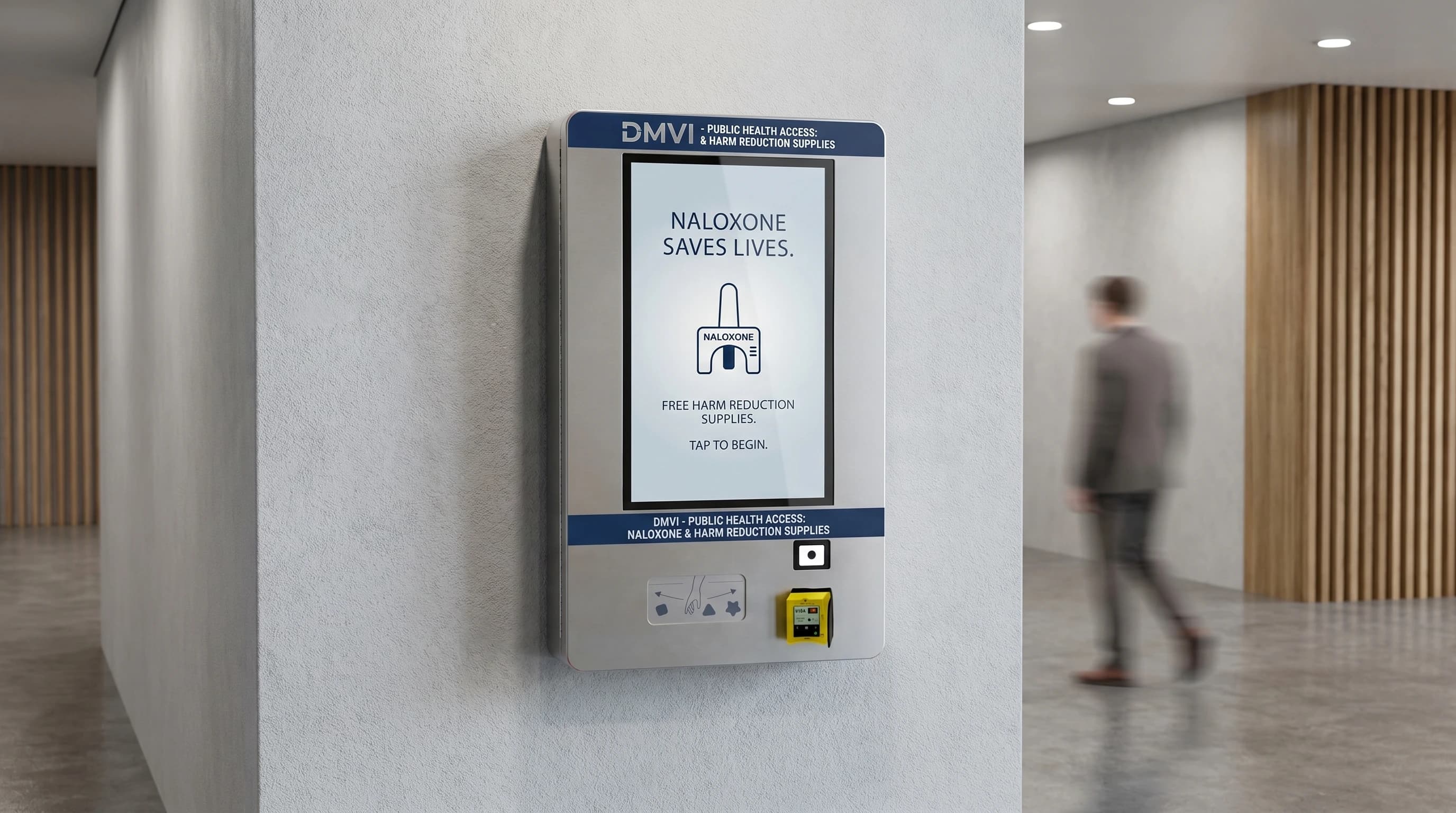
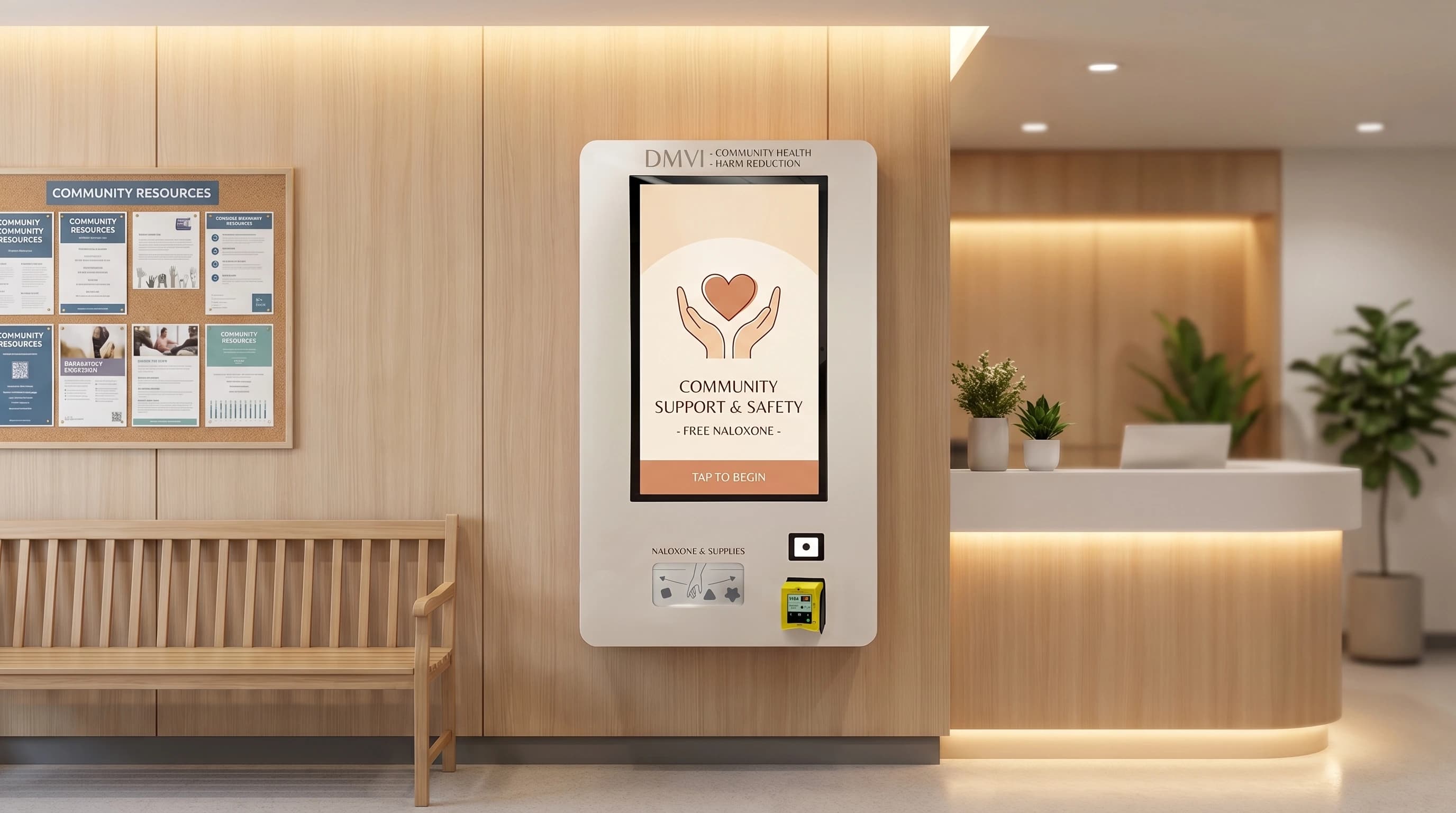
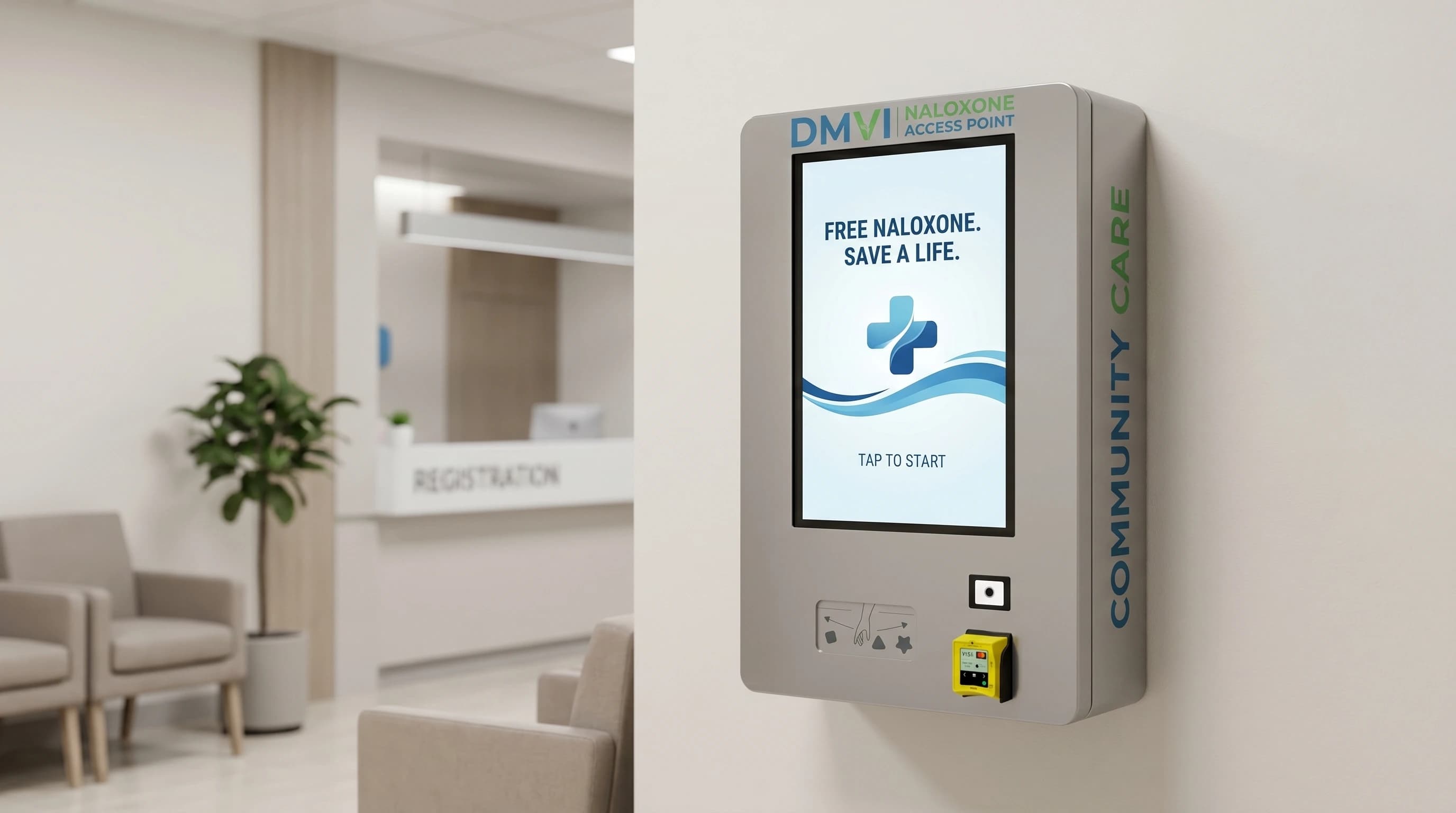
Wall-Mounted / Compact Naloxone Cabinet
Ideal for narrow corridors and smaller shelters. Starts from $4,995 based on configuration.
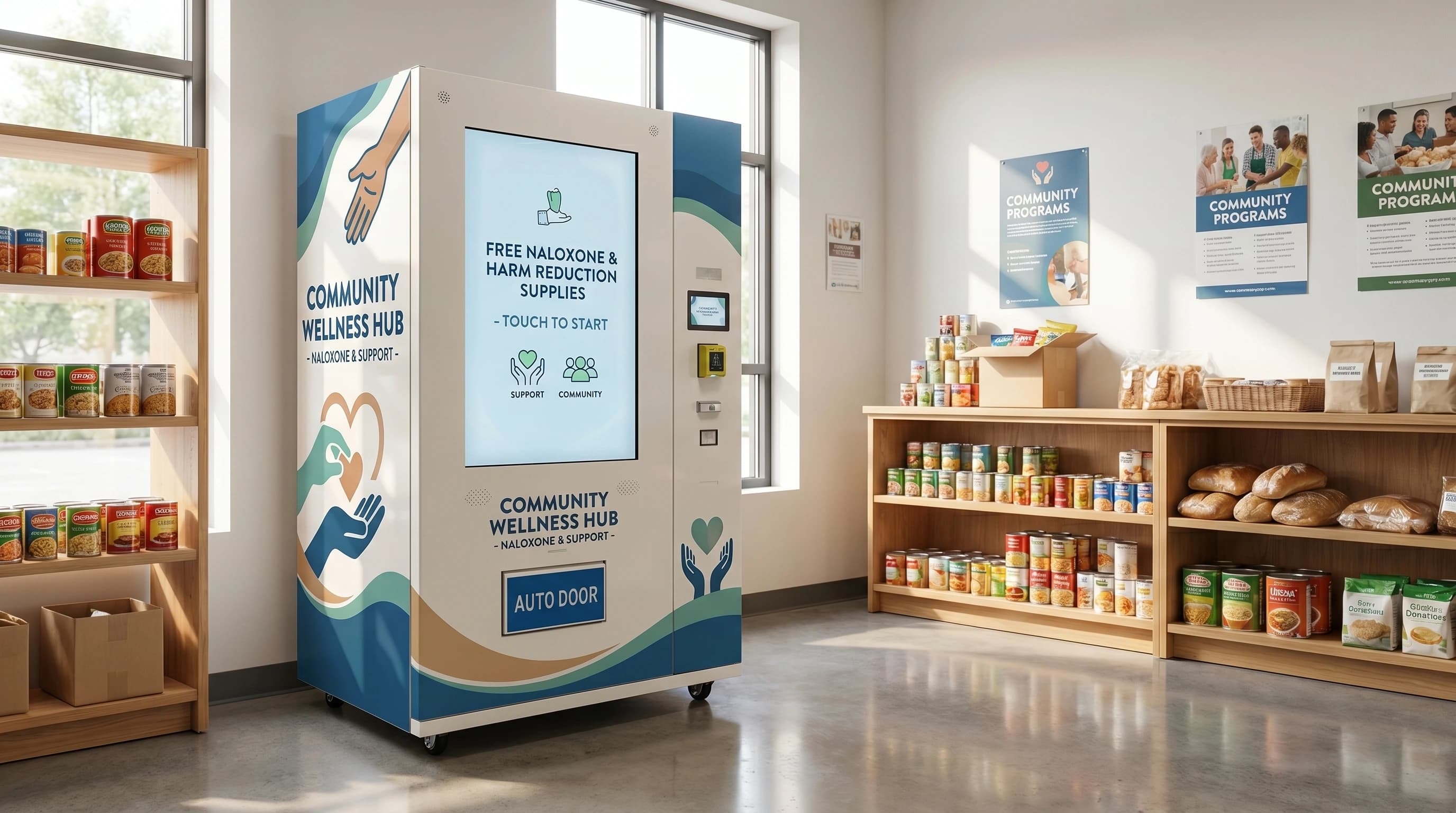
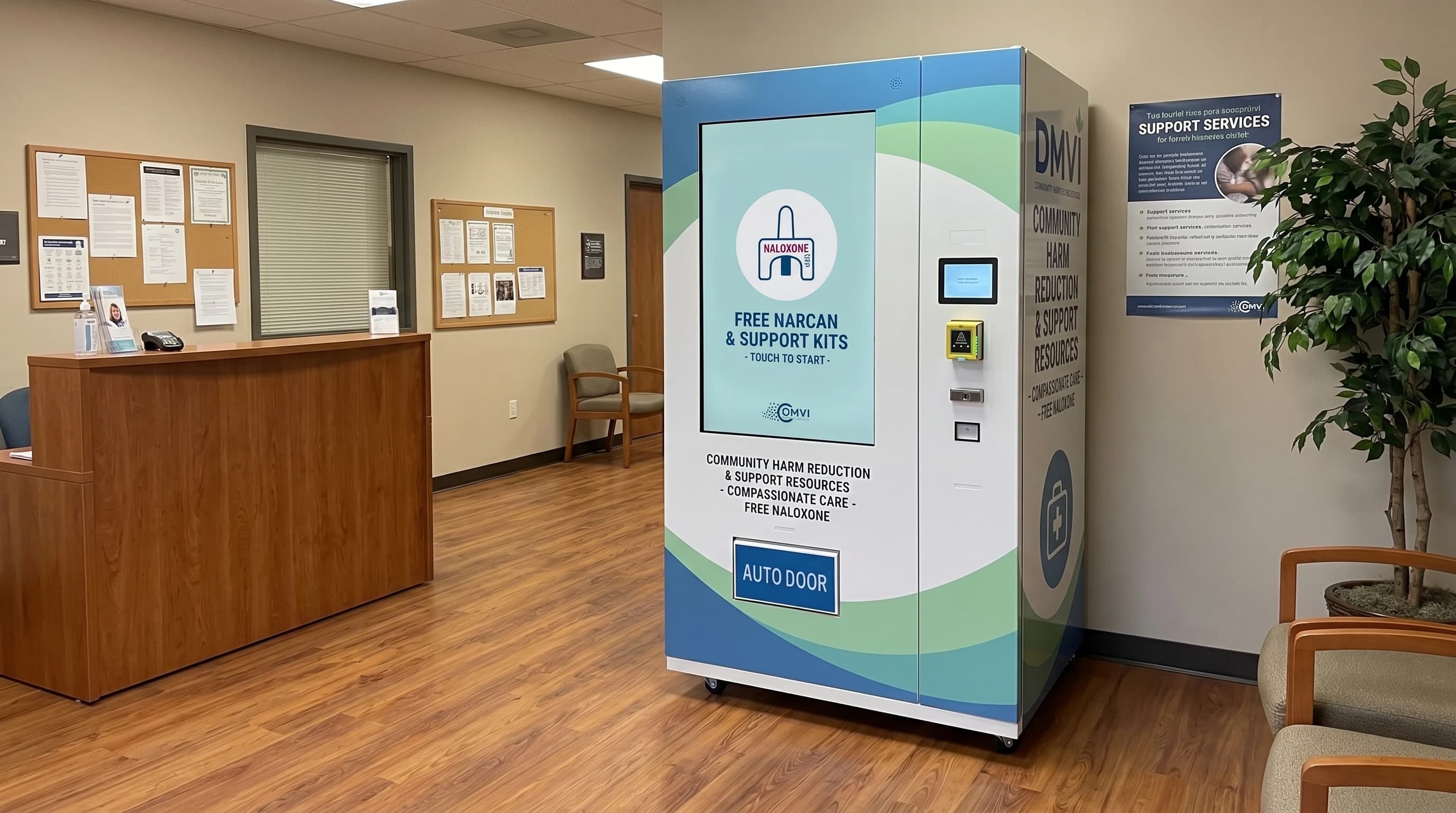
Freestanding Harm Reduction Machine
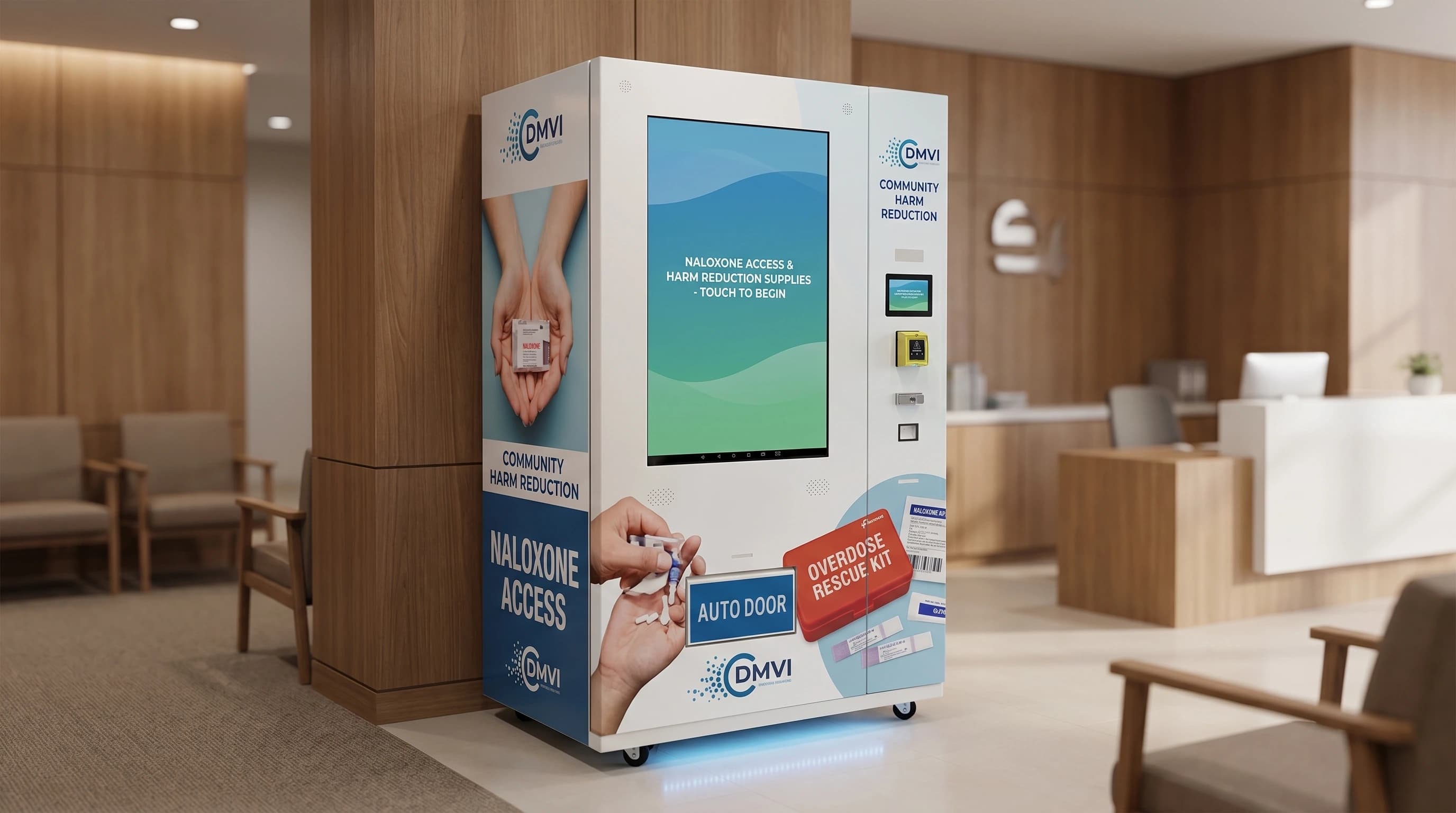
Standard floor-standing cabinet with high capacity for naloxone, hygiene kits, and test strips. Starts from $9,495.
Smart Touchscreen Dispenser
Includes interactive multilingual UI, age/identity verification workflows, and educational video playback. Starts from $12,995.
Custom & Outdoor Builds
Weather-resistant cabinets and fully custom hardware configurations for public parks and transit hubs. Request quote.
What public-health buyers should evaluate before ordering a Narcan vending machine
Public-health value comes from compressing the gap between an overdose and a dose. That means the cabinet, the dispense policy, the content layer, and the restock plan have to work as one deployment model rather than as a generic machine with a worthy product inside.
Free or low-cost naloxone, twenty-four-hour access, and operator-configurable policy
- Free or low-cost naloxone dispense with operator-configurable pricing from zero to cost-recovery
- Twenty-four-hour access for locations where overdoses do not respect business hours
- Naloxone-appropriate cabinet design with climate-control options where the deployment requires it
- Operator-configurable dispense policy with daily caps, per-visit caps, and optional anonymous dispense
- Public-health branding surface for overdose-response guidance and approved local resources
Public-health deployment logic
A public-health intervention shaped like a vending machine
Naloxone reverses opioid overdose by displacing opioids from the brain's opioid receptors and restoring normal breathing, typically within two to three minutes (CDC Stop Overdose — Naloxone). The cabinet's job is to compress the gap between an overdose and a dose by extending the hours and geography where naloxone is reachable beyond what a staffed counter can deliver.
Climate-controlled when the medicine requires it
Outdoor placements in summer-hot or winter-cold regions may need climate-controlled variants so storage conditions stay inside labeled requirements.
Custody-grade restock and audit-trail telemetry
Every door cycle writes a structured event so the operator can report on dispense volume, dispense location, stock turnover, and service activity.
Dispense-policy configuration is the operator's lever
Daily caps, per-visit caps, optional anonymous dispense, and optional ZIP-code or county prompts should follow the public-health model the operator is running.
Stock continuity is the real success metric
An empty cabinet is worse than no cabinet at all because the public-health promise has been broken. Restock SLAs and supply continuity matter more than cabinet aesthetics.
The cabinet is also an education surface
On-screen UI can carry approved naloxone instructions, signs of opioid overdose, and pathways to ongoing harm-reduction services rather than acting as a silent dispenser.
The operator owns the clinical and regulatory posture
DMVI ships the cabinet; the operator owns the naloxone supply chain, public-health reporting, on-screen education content, and the clinical or regulatory decisions around deployment.
Planning a Narcan or naloxone deployment?
Show DMVI the site types, climate exposure, dispense rules, content needs, and rollout goals so the cabinet path and program logic can be scoped properly.
Three procurement realities
What public-health buyers need to get right beyond the cabinet itself
- The operator owns the clinical and regulatory posture. DMVI ships a cabinet; the operator owns the naloxone supply chain, the dispense policy, the public-health reporting, and the approved on-screen education content.
- Stock continuity is the success metric. A Narcan vending machine that is empty is worse than no cabinet at all, because the public-health promise has been broken.
- The cabinet is also an education surface. Approved overdose-response guidance, naloxone instructions, and local support pathways should live on the screen when the operator wants them there.
For broader program context, see harm reduction vending machines. For the software-specific side of deployment oversight, see Narcan and harm-reduction vending software.
Narcan & Naloxone Access Gallery
Showing 20 of 25
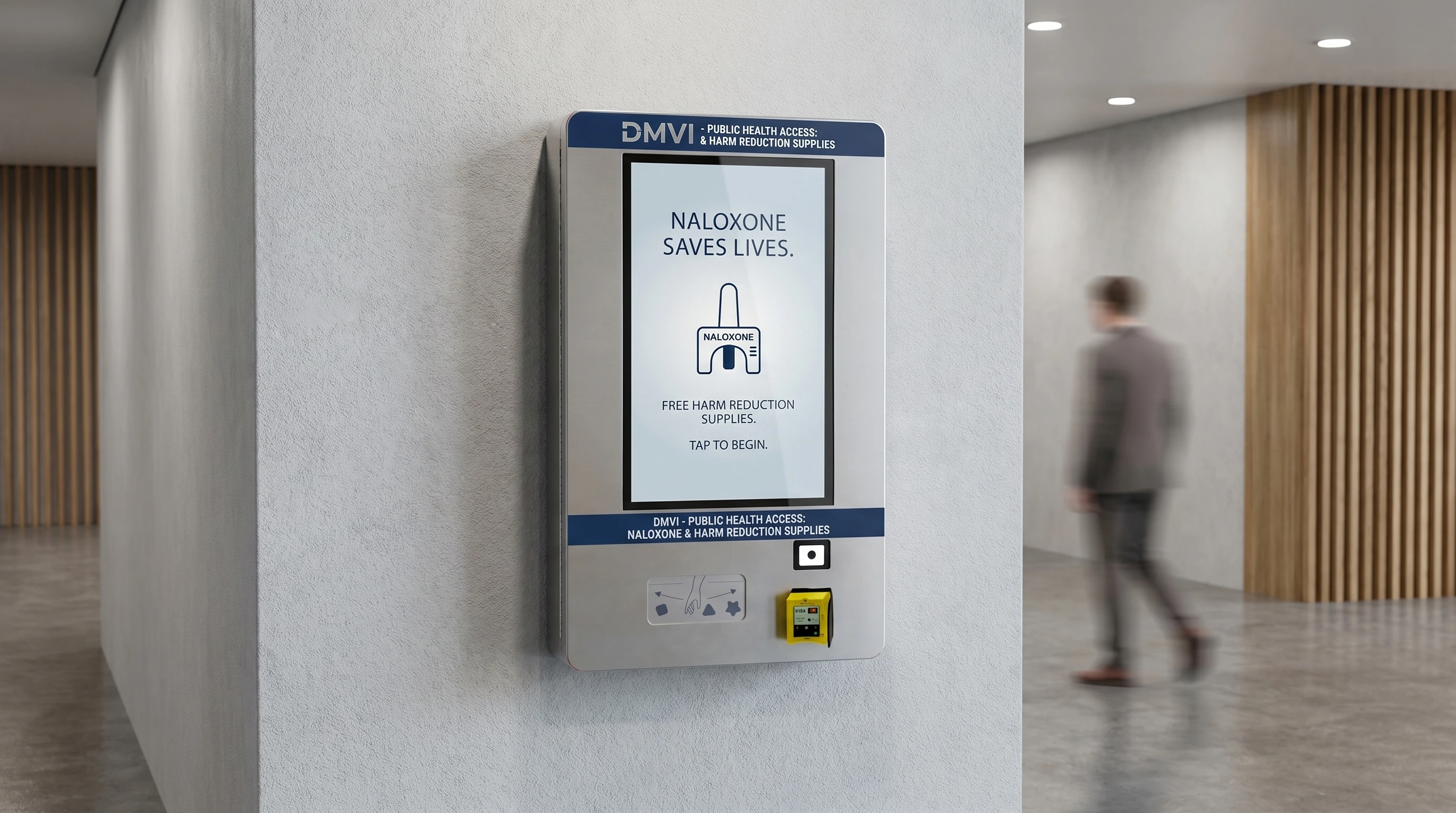
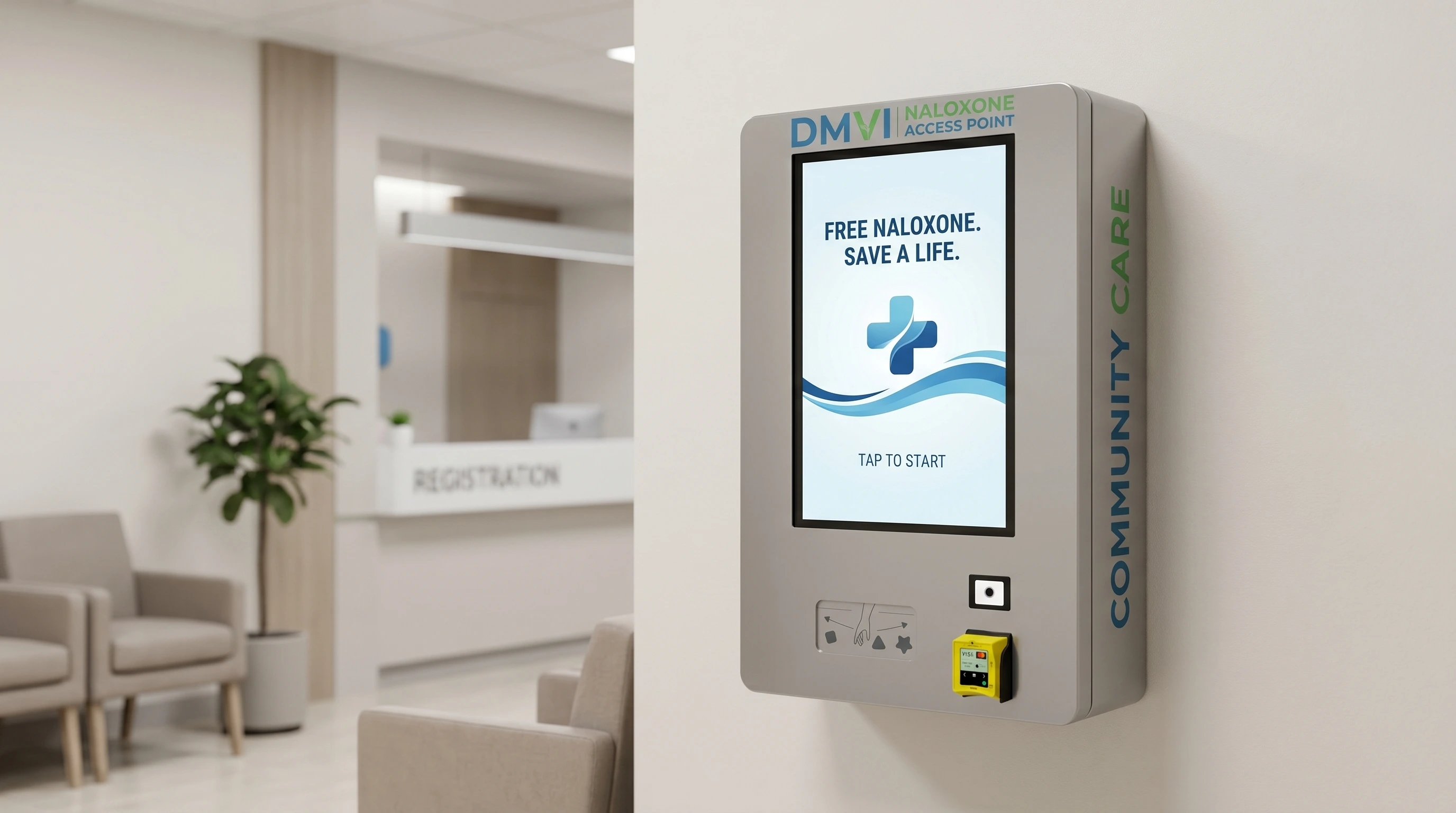
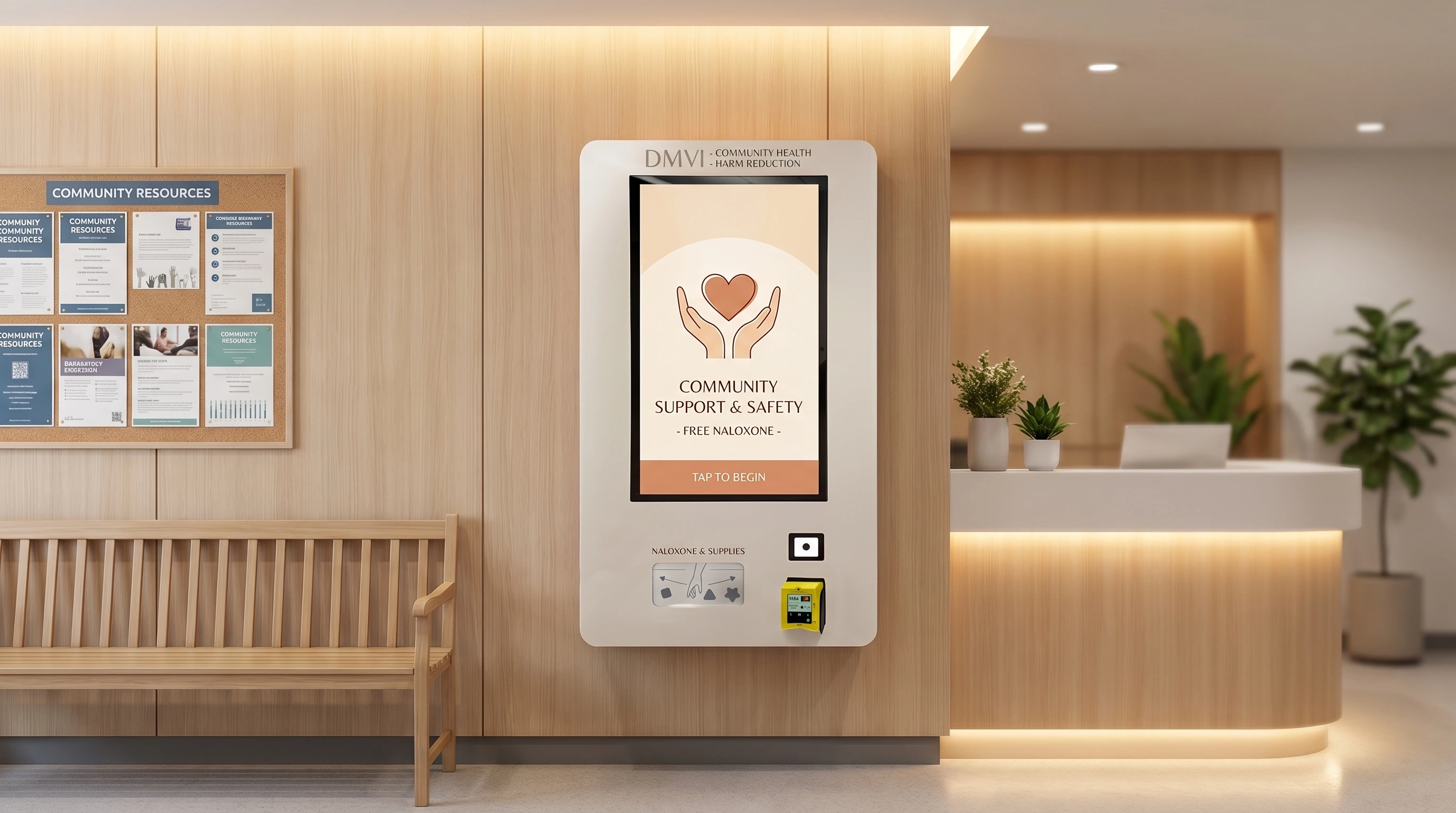
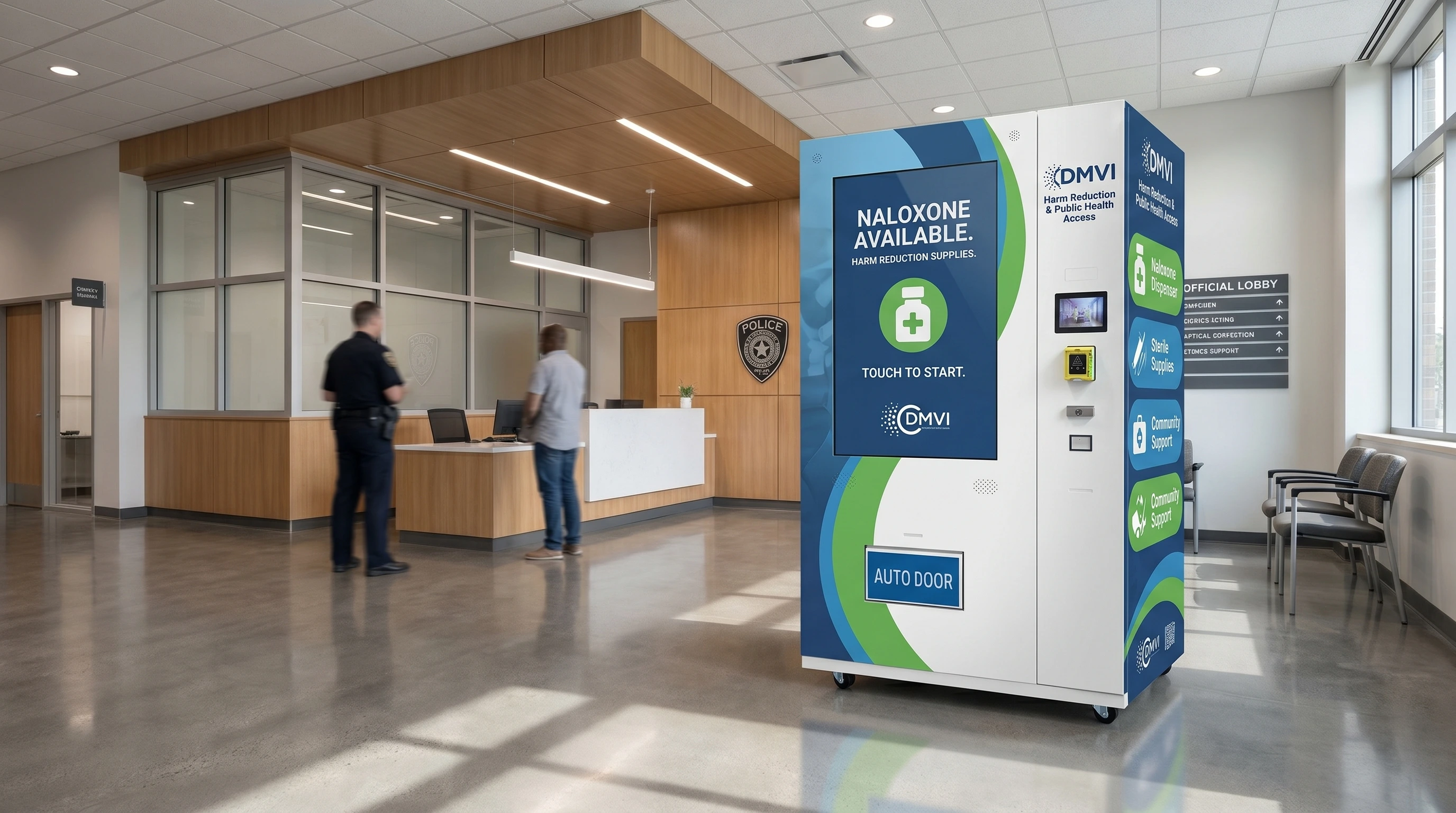
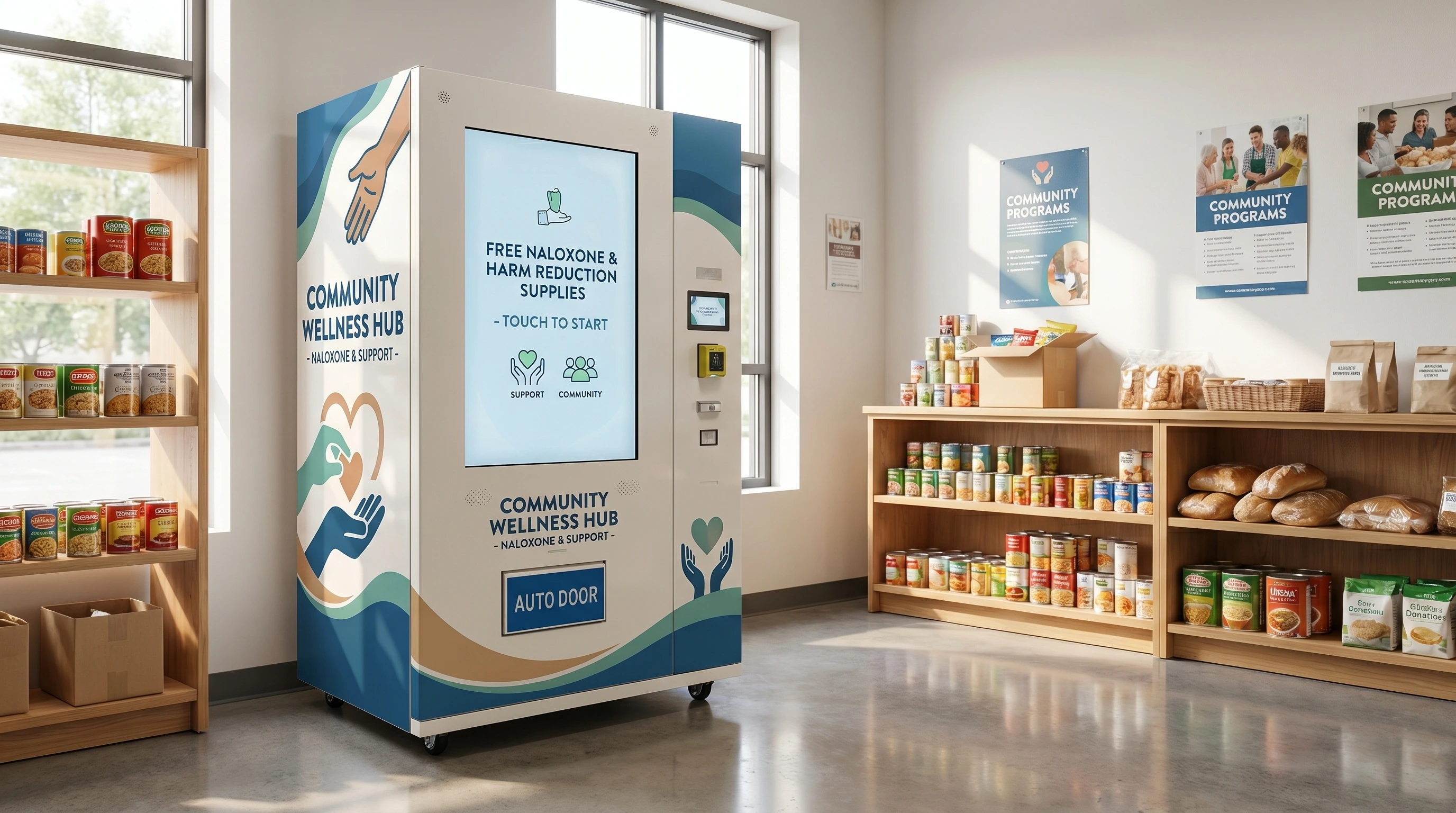
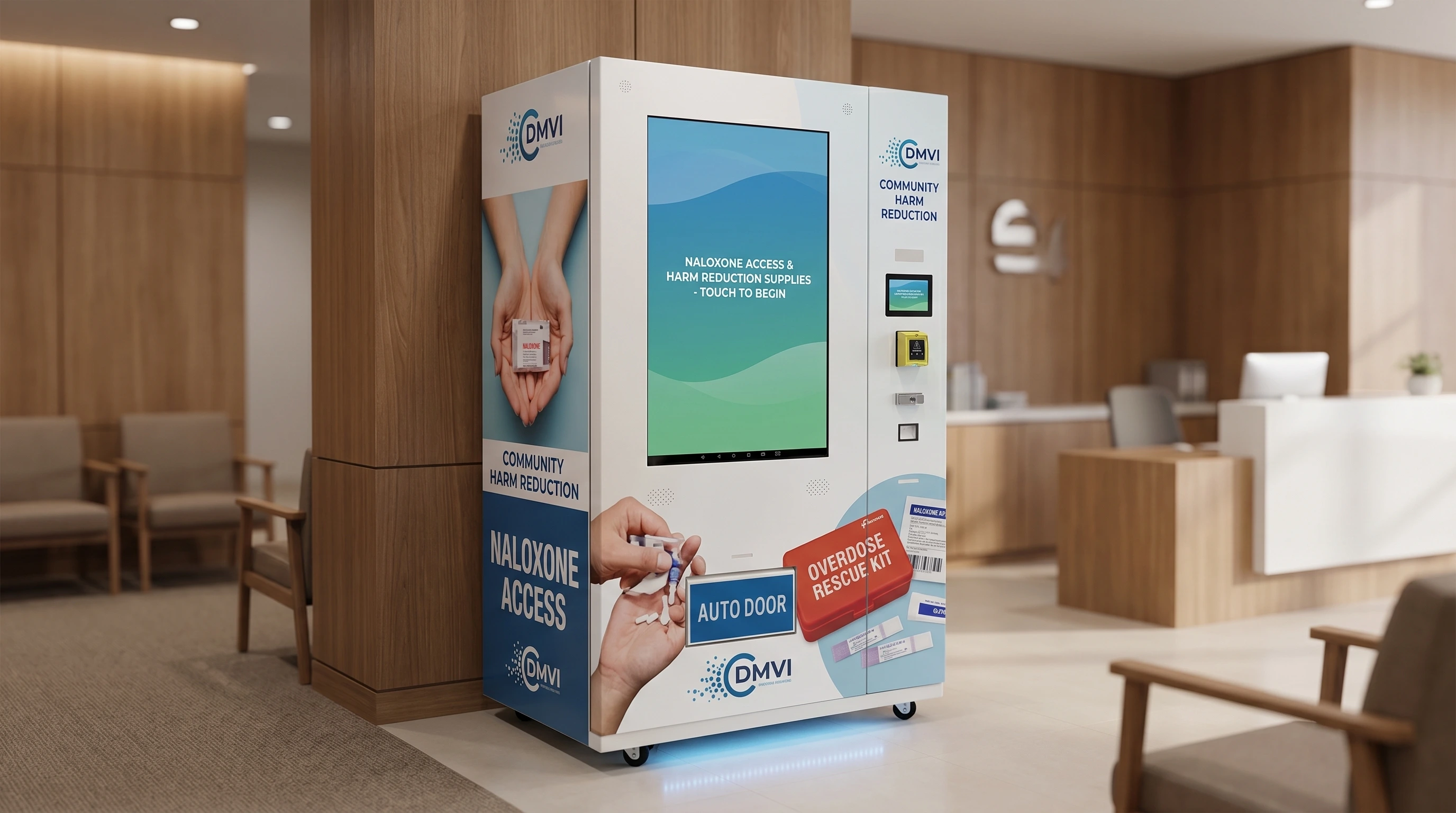
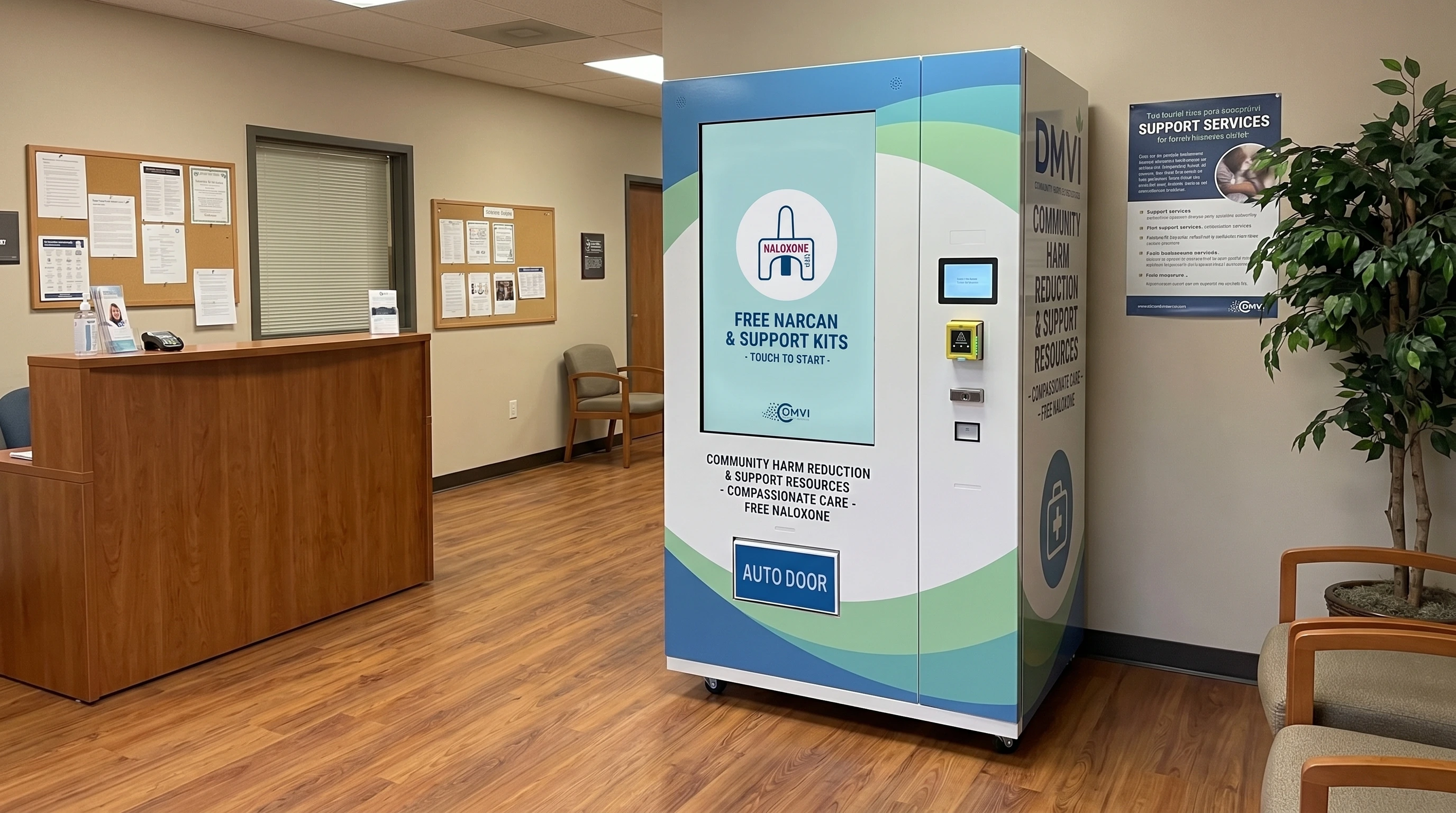
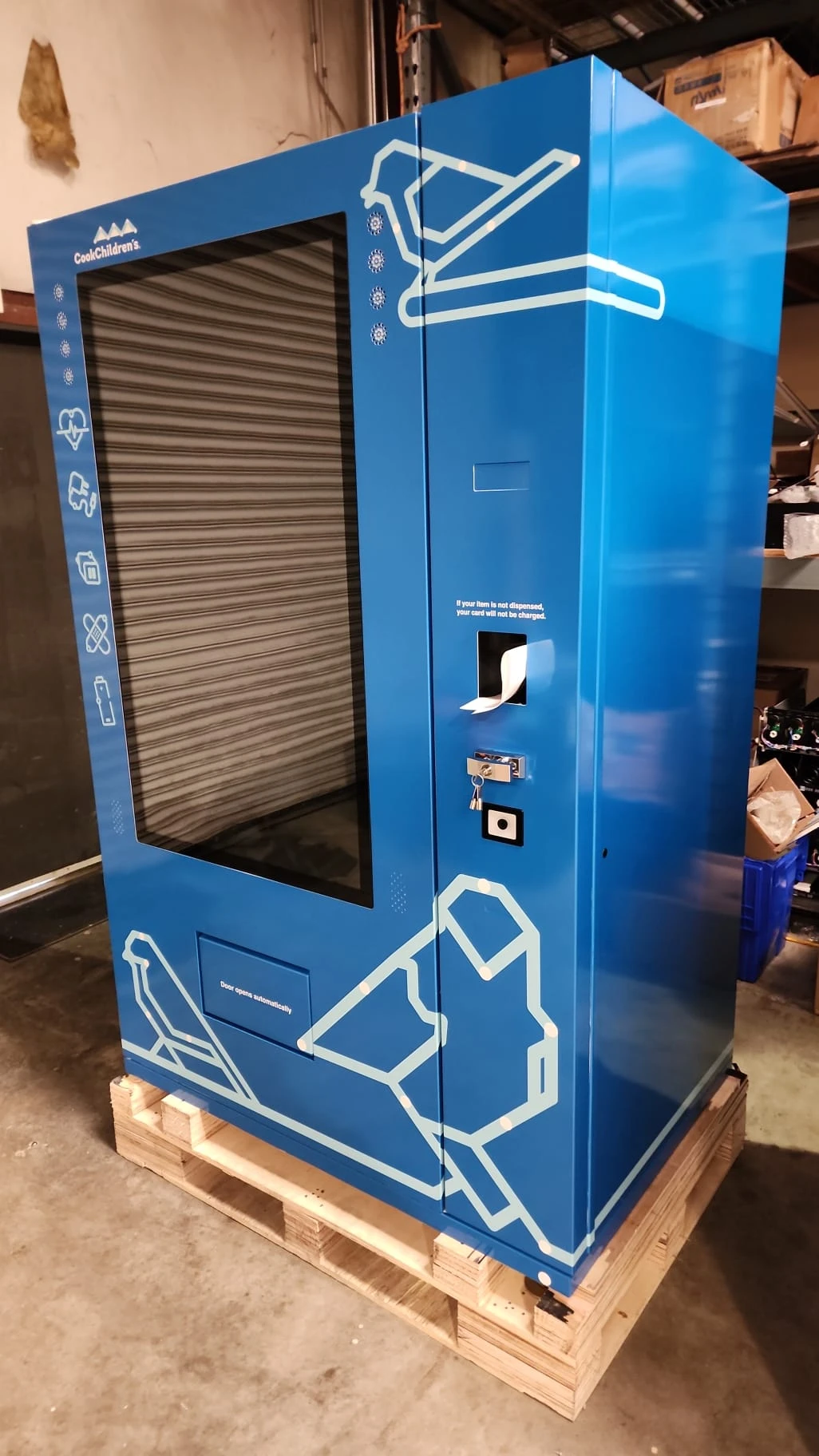
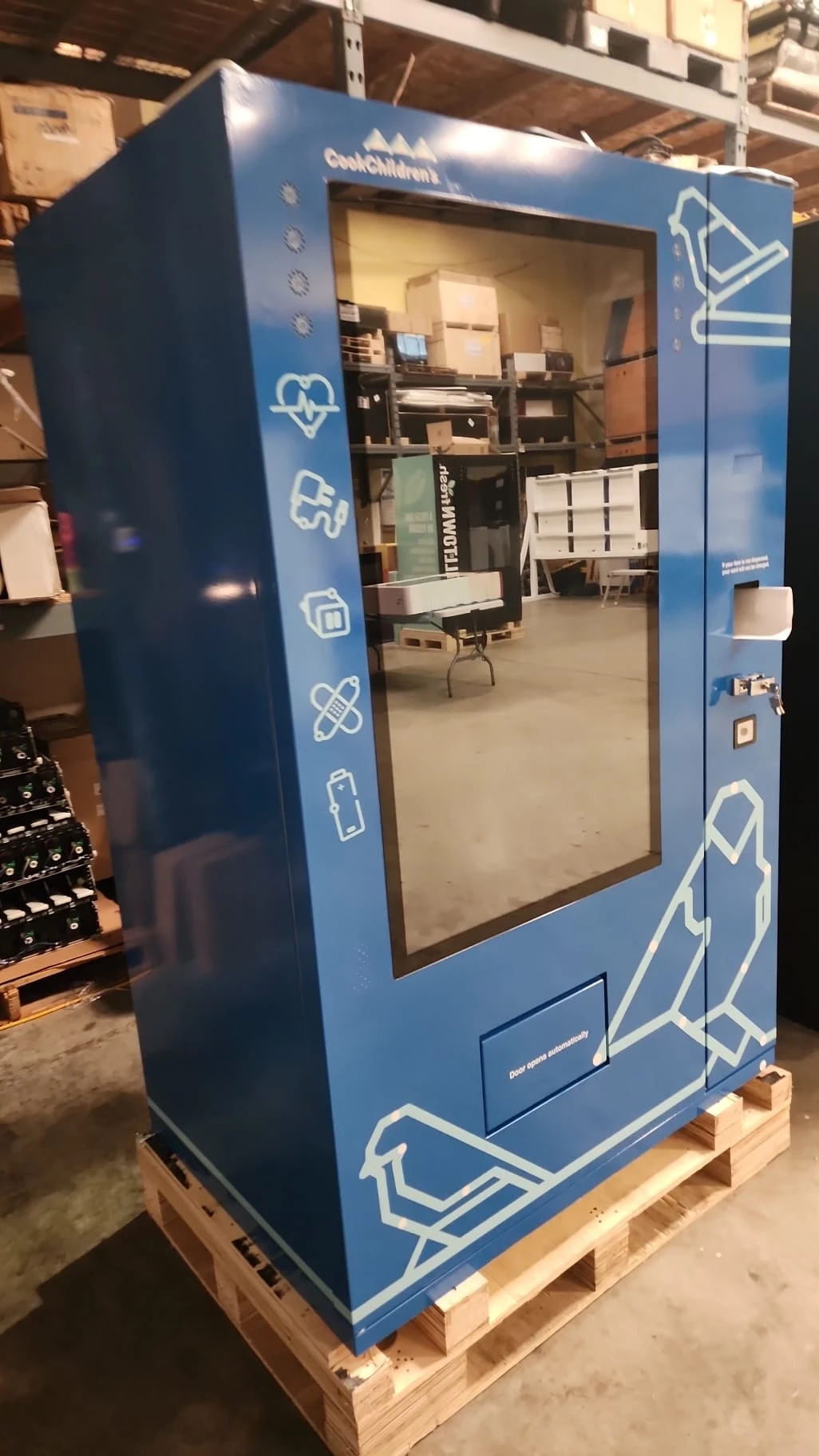
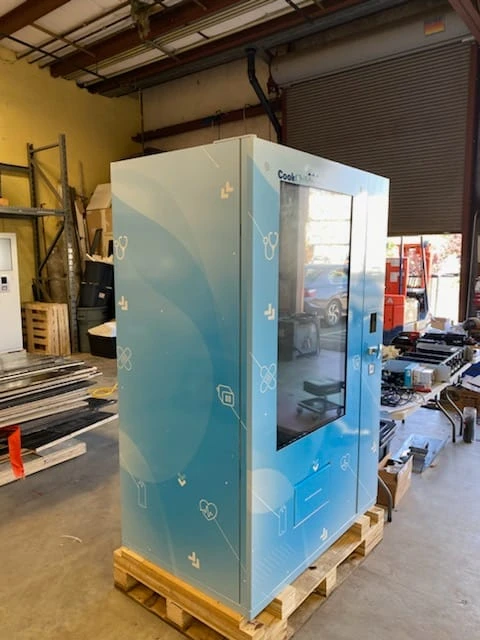
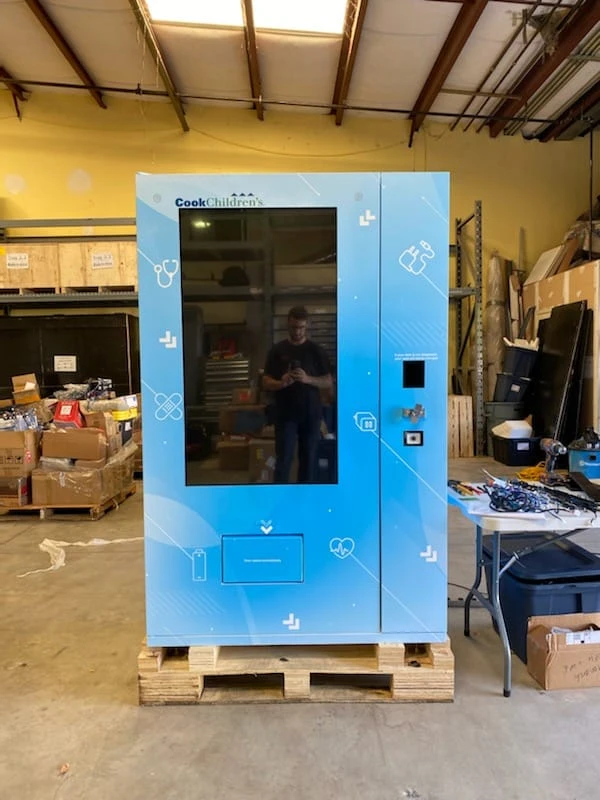
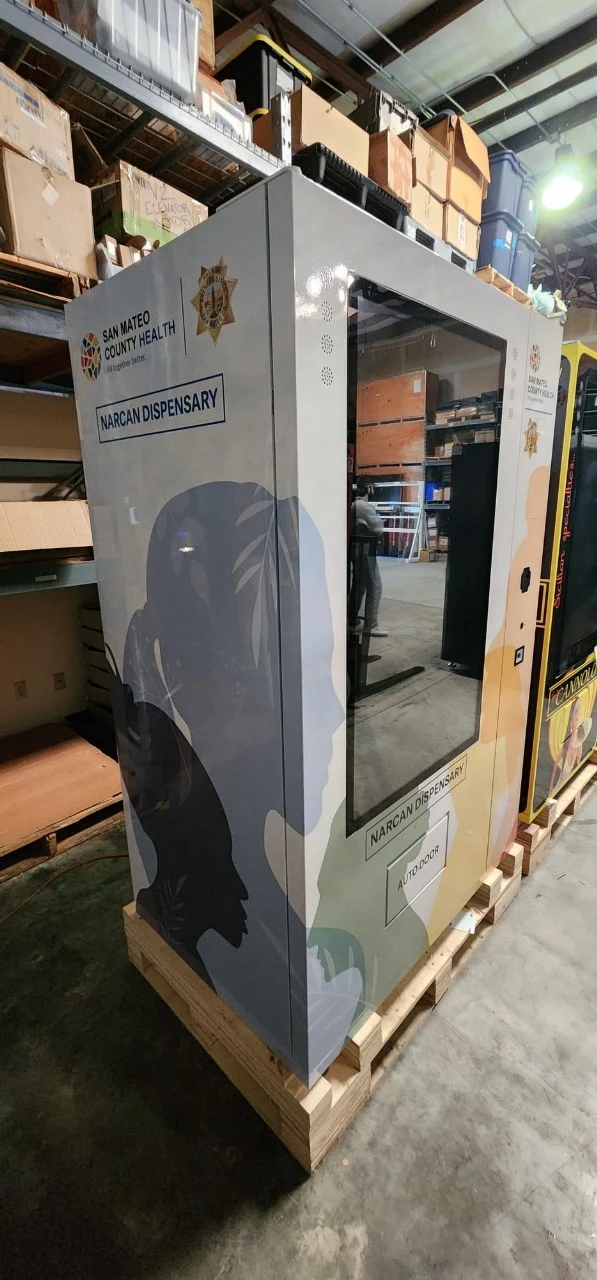
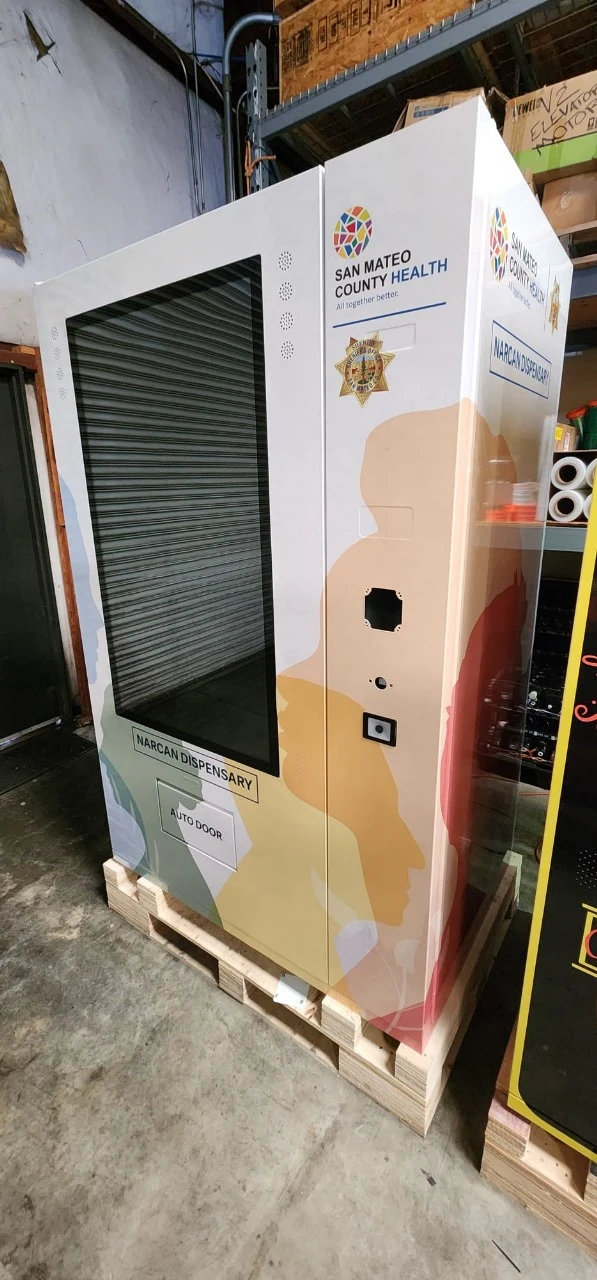
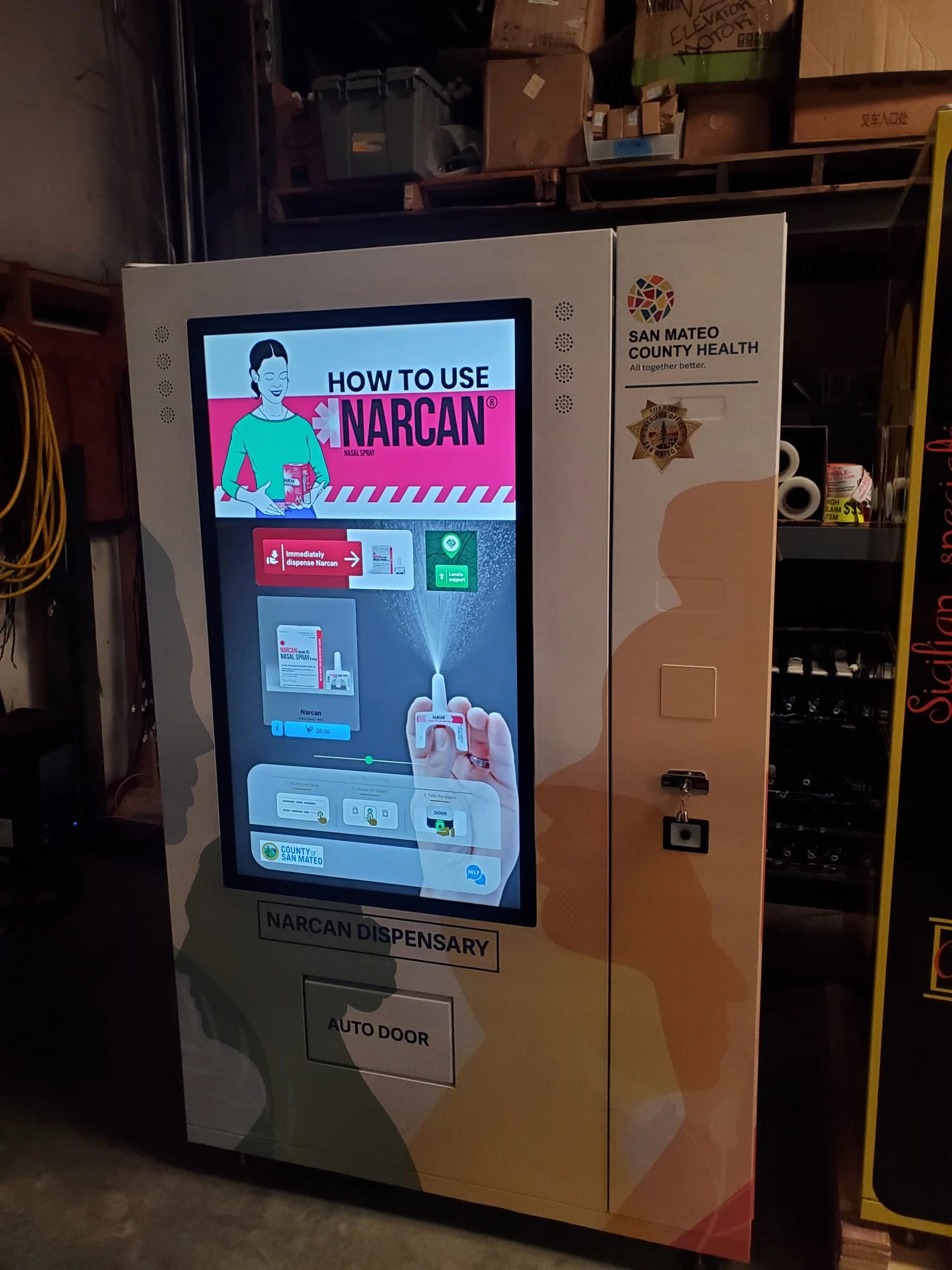
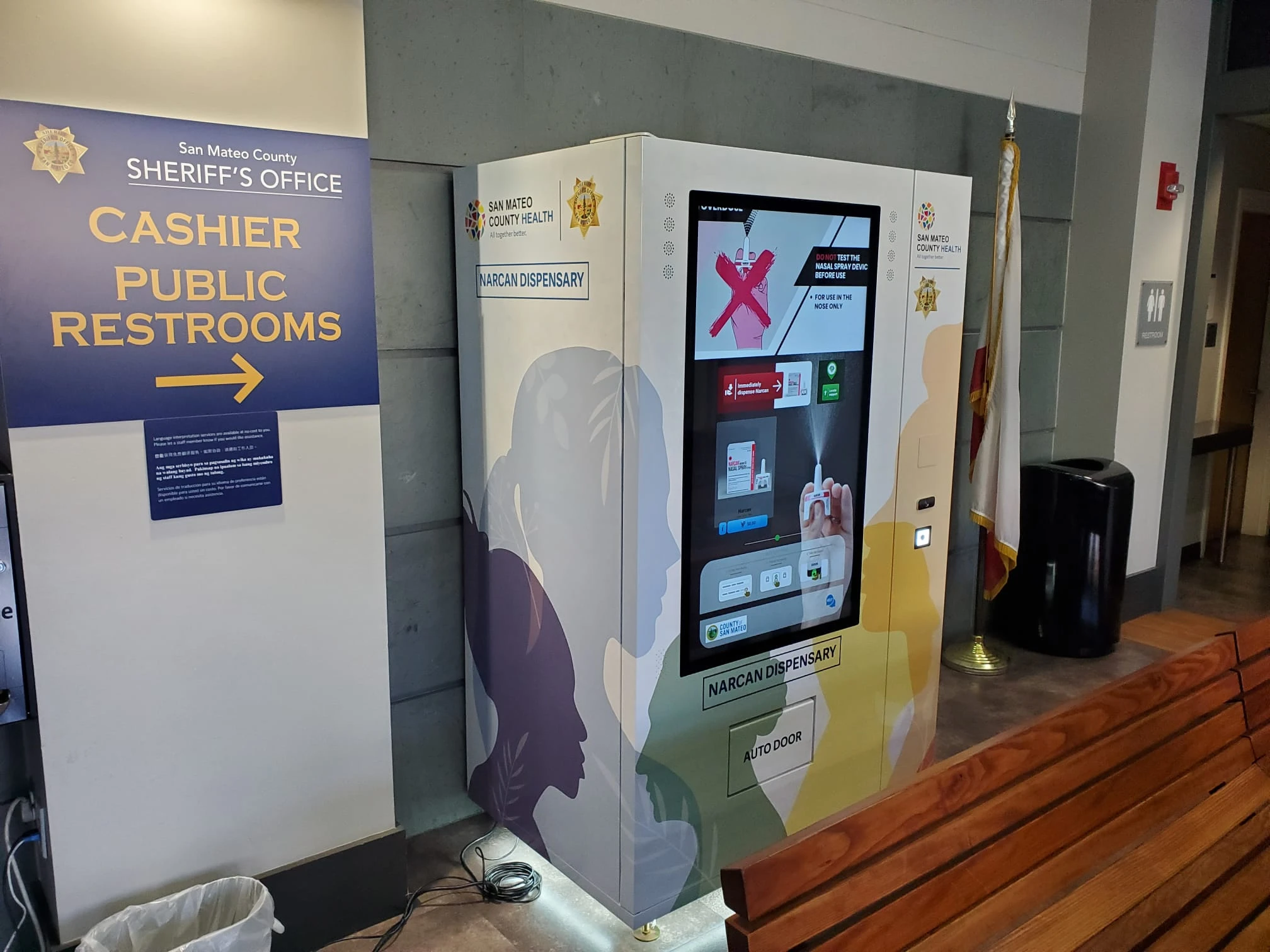
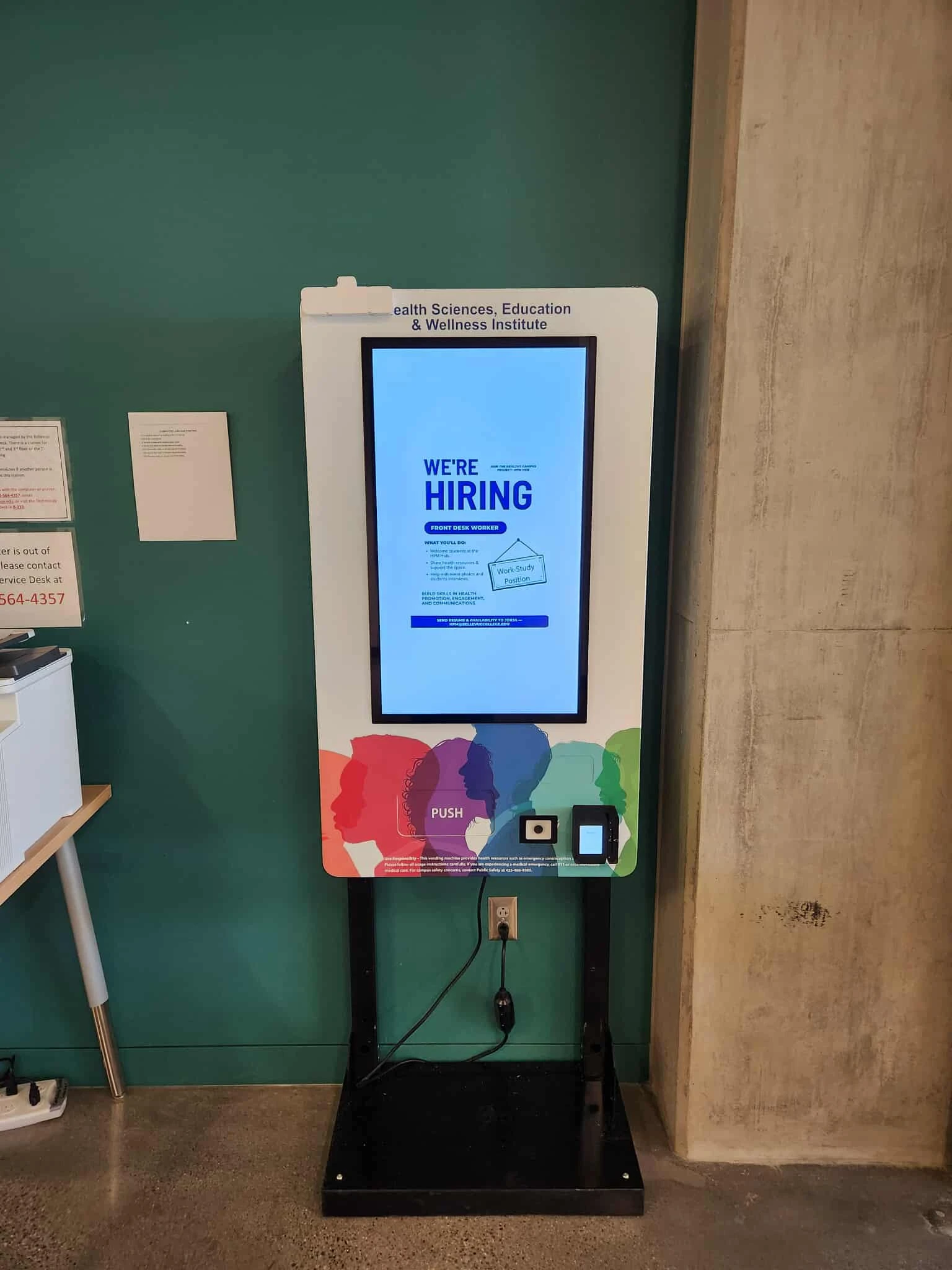
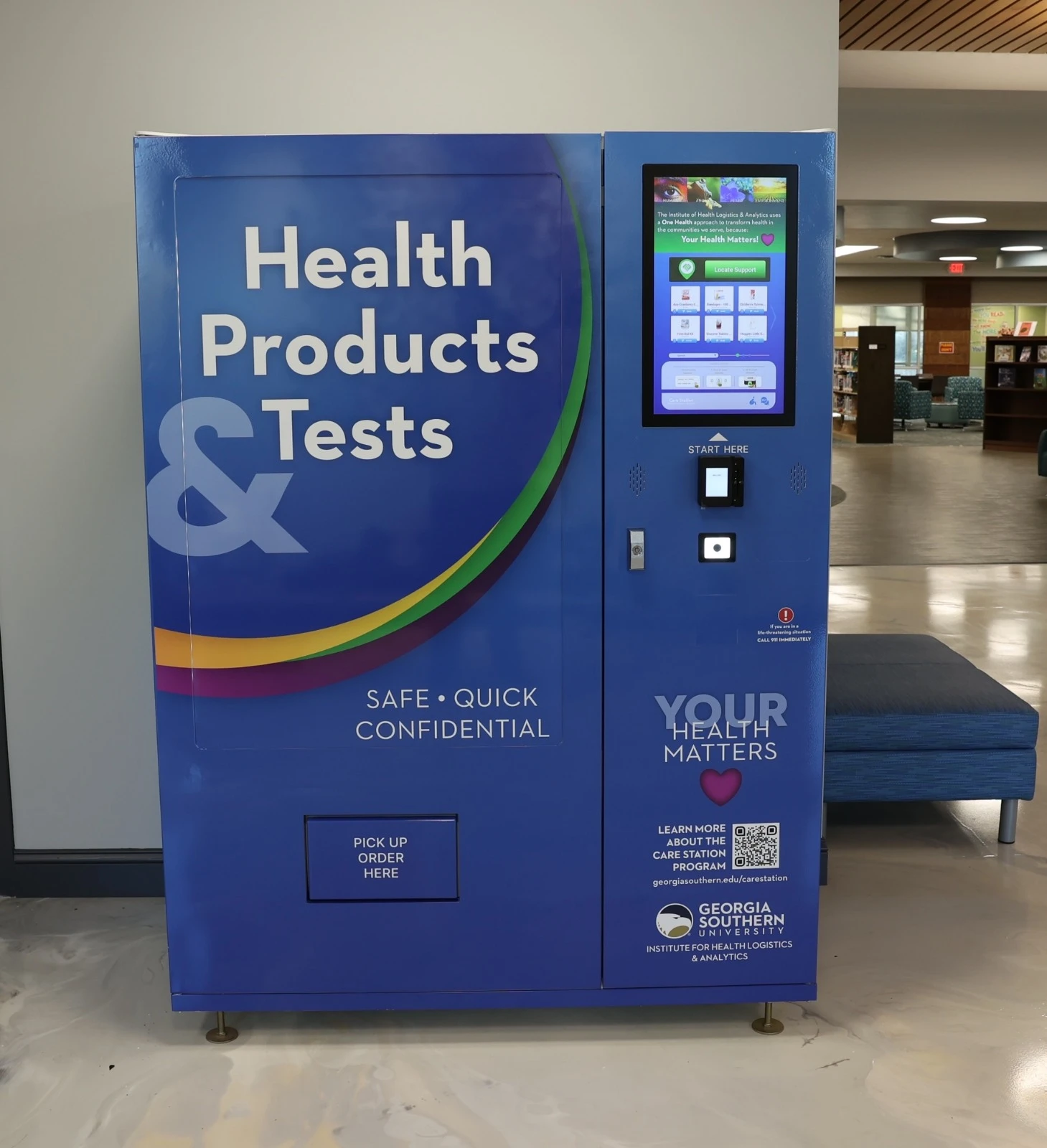
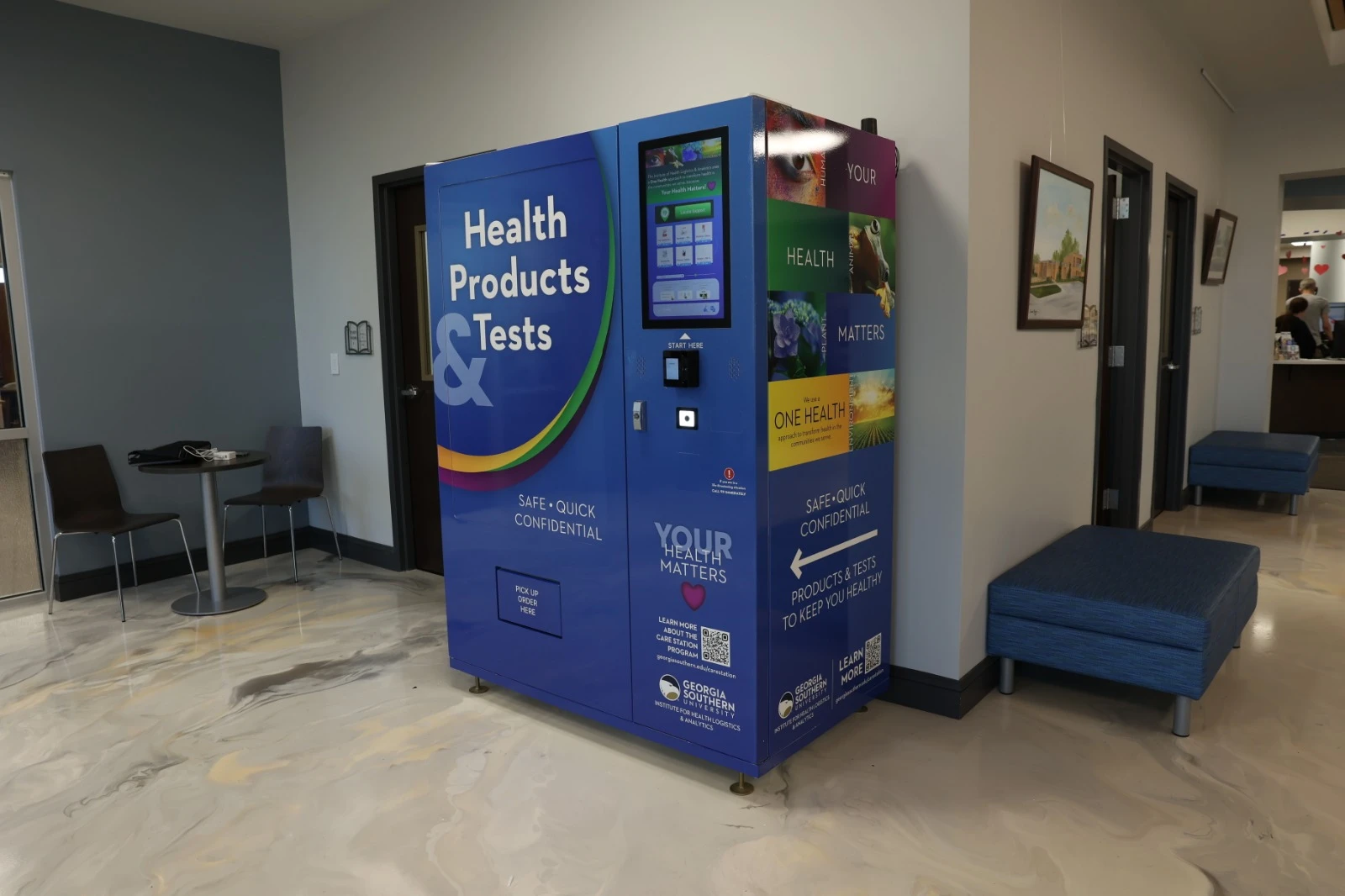
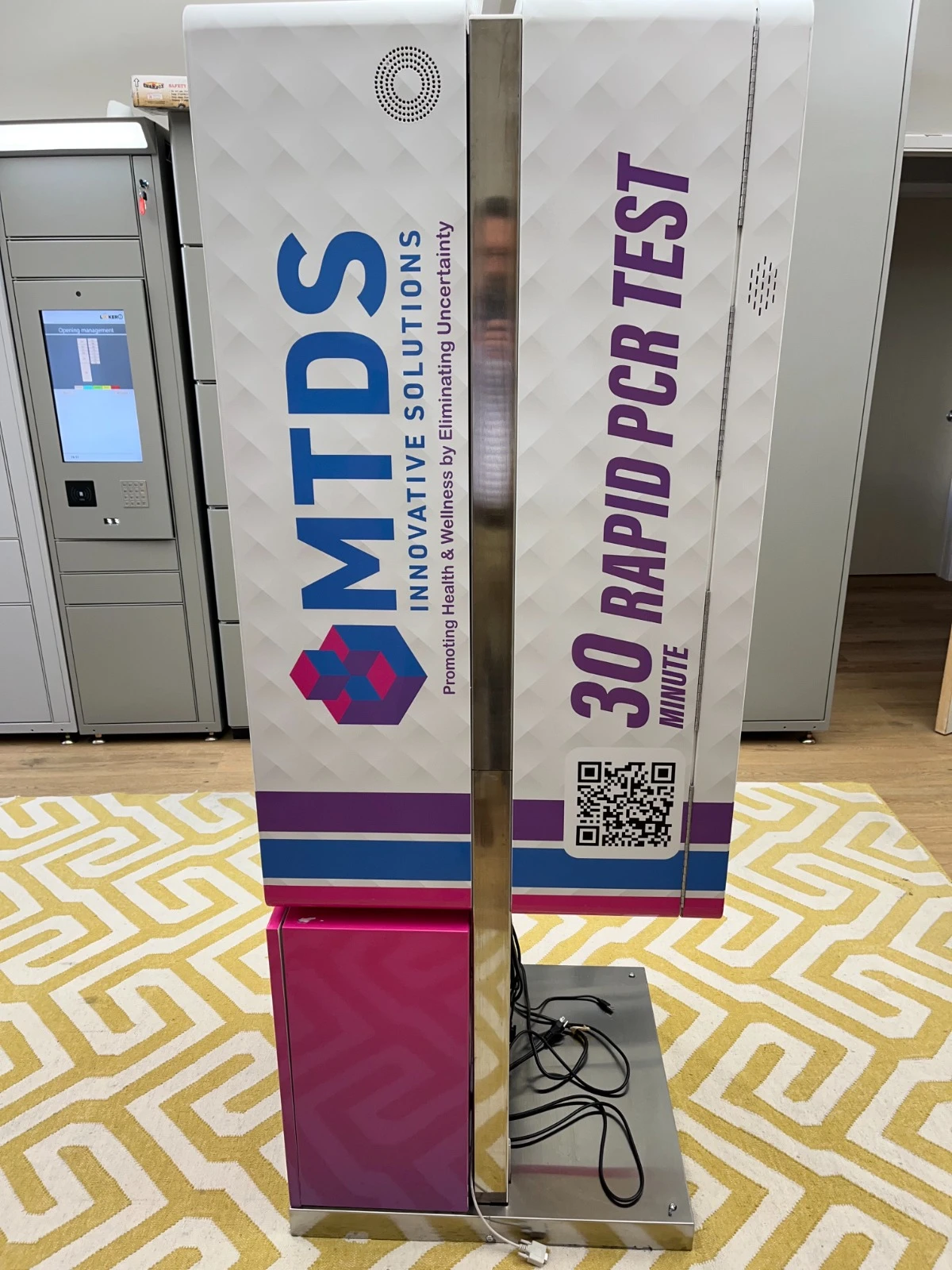
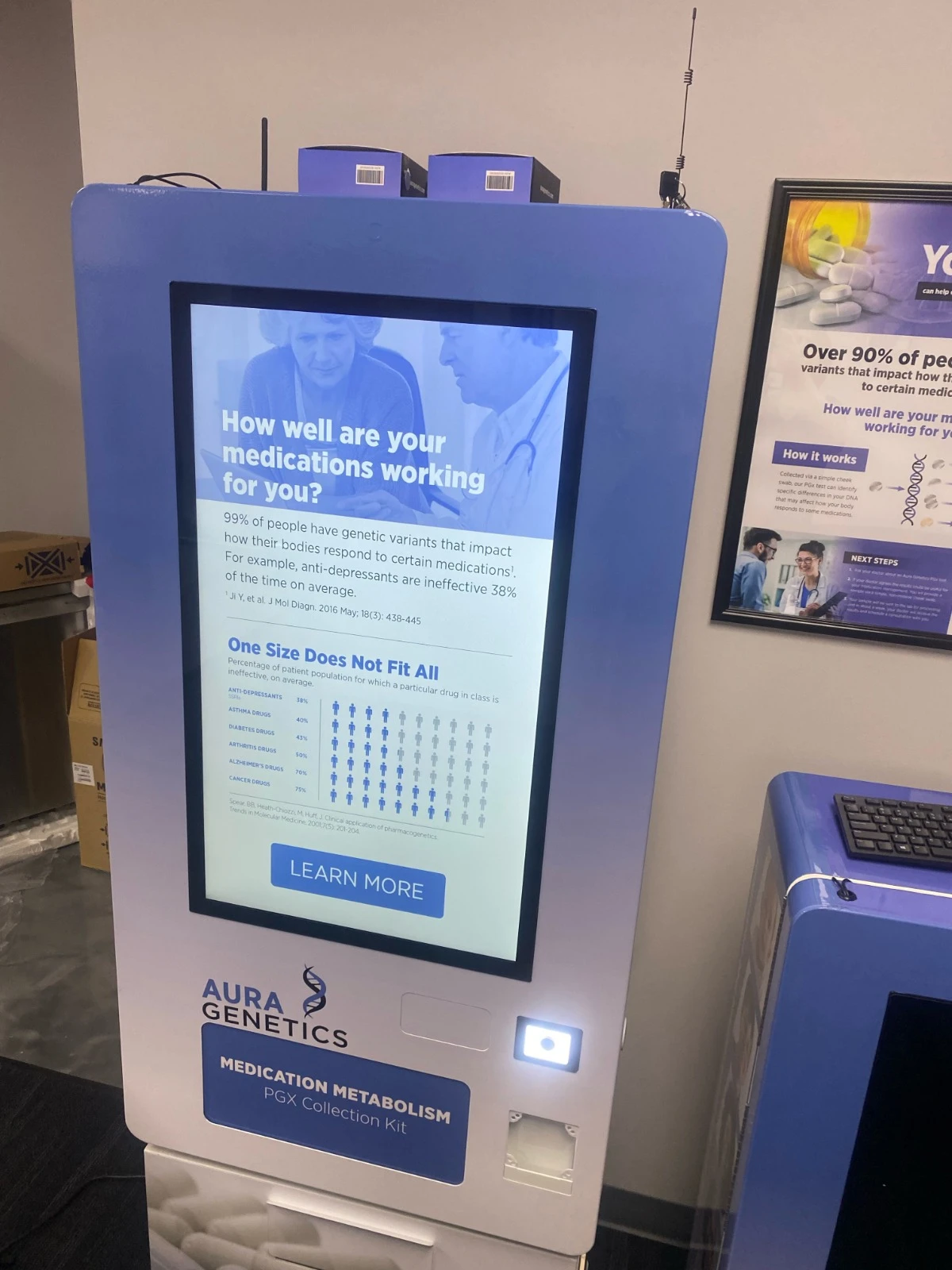
Image 1 of 20
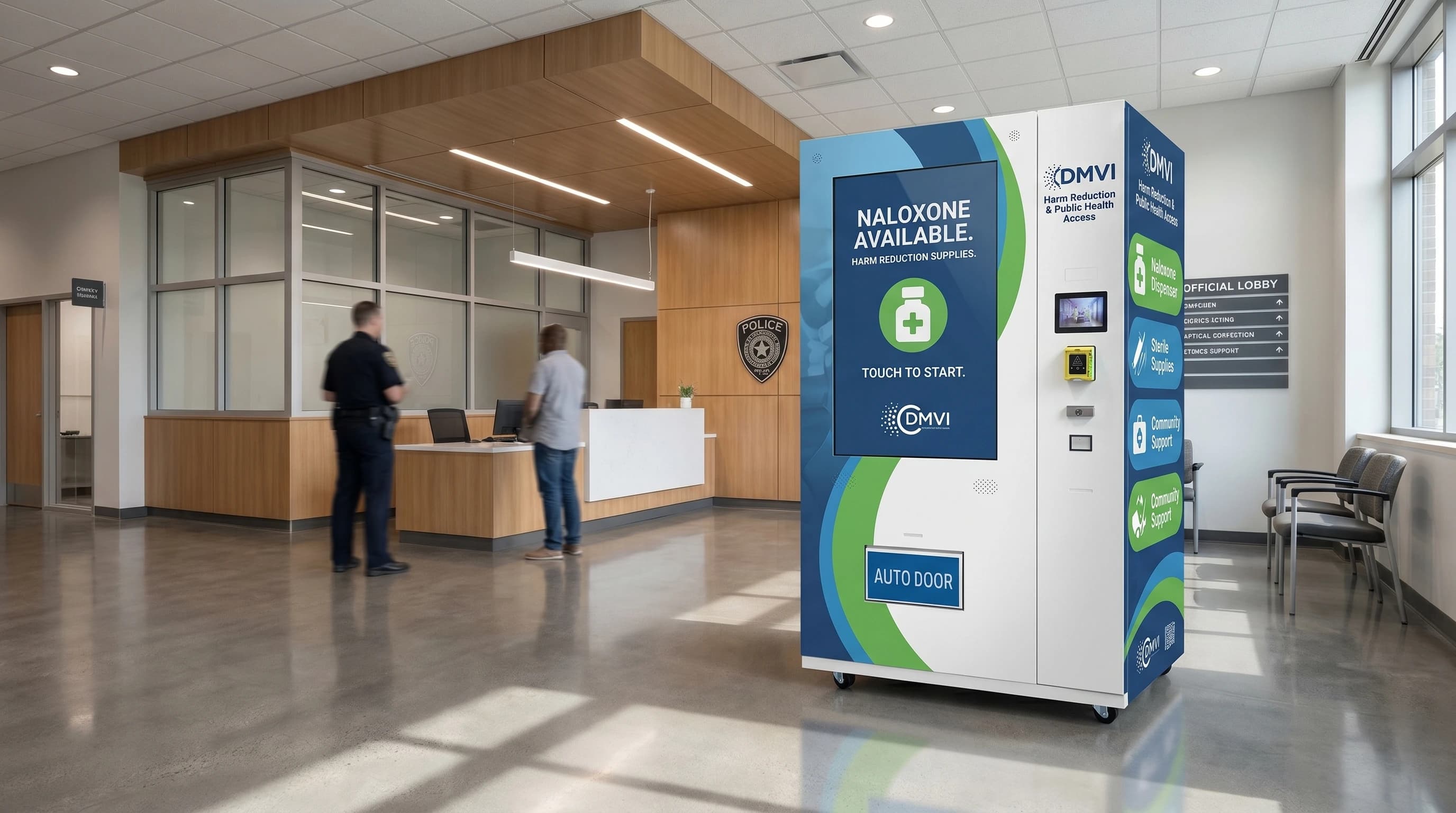
Narcan vending machine in a police station
Deployment realities across counties, campuses, transit, and hospitals
Managed public-health deployment
The strongest programs treat the machine as part of a managed naloxone-access model with clear site rules, approved content, and a realistic operating plan.
Anonymous or low-friction access when the operator wants it
Optional anonymous dispense and light-touch reporting prompts help programs preserve access while still collecting the aggregate data they actually need.
Climate and location matter
Transit hubs, campuses, courthouses, hospital lobbies, and harm-reduction storefronts all behave differently. The cabinet path has to match the placement reality.
Book your deployment review
Review venue mix, restock cadence, content needs, and the right cabinet path for your naloxone program.
Education and resource content belong on the screen
Approved overdose-response guidance, signs of opioid overdose, and local-service pathways turn the machine into a stronger public-health touchpoint than a silent dispenser.
Why public-health teams deploy Narcan vending machines
Twenty-four-hour access where the need actually happens
The public-health value is concentrated in the hours when no staffed counter is open and a bystander needs naloxone immediately.
Better stock and field visibility for operators
Cloud-based oversight helps counties, hospitals, universities, and nonprofits track stock continuity, service activity, and deployment health across one site or many.
A machine that can guide the next step
When the screen presents approved instructions and local-resource information, the cabinet becomes more useful than a machine that only dispenses a box.
FAQs
A Narcan vending machine is a vending-machine cabinet that dispenses naloxone — typically the nasal-spray form sold under the brand name Narcan — free or at low cost, twenty-four hours a day, to anyone who can reach the cabinet. Public-health agencies, hospitals, universities, transit authorities, and harm-reduction programs deploy these cabinets to compress the gap between an opioid overdose and a naloxone dose, especially in locations and hours where a staffed counter is not viable.
Procurement starts with a deployment brief covering the venue, expected dispense volume, climate exposure, restock cadence, and dispense-policy configuration. DMVI ships the cabinet; the operator owns the naloxone supply chain, the dispense policy, the public-health reporting, and the on-screen education content. Funding routes commonly include county health-department budgets, state opioid-settlement funds, federal SAMHSA grants, and university student-health budgets.
Yes. Naloxone is a layperson-administrable opioid-overdose reversal medicine, available over the counter in all fifty US states, that restores normal breathing within two to three minutes under CDC guidance. It has no abuse potential, no effect on someone who has not taken opioids, and the FDA has approved nasal-spray and intramuscular forms for layperson use. Multiple doses may be needed for fentanyl-involved overdoses, which is why most cabinet dispense policies allow more than one dose per visit.
The cabinet itself is a one-time capital cost configured to the venue — climate-controlled or standard, mid-format or M-Series, on-screen education content included. The recurring cost is the naloxone supply, which the operator sources through their existing public-health supply chain. Many county health departments dispense at zero cost to the recipient, funded through opioid-settlement funds, SAMHSA grants, or county public-health budgets. DMVI does not sell naloxone — we ship the cabinet that the operator stocks.
High-need, high-access locations: transit hubs, university residences and student unions, county courthouses, hospital lobbies, harm-reduction-program storefronts, public libraries in high-overdose-density neighborhoods, and emergency-department waiting areas. The placement principle is to compress travel time between an overdose and a dose, and to extend the hours when naloxone is reachable beyond what a staffed counter can deliver. Outdoor placements may need climate-controlled cabinet variants depending on regional temperature ranges.